Acoustically Transparent Screens For 150-200-Inch Theaters
Selecting an acoustically transparent screen for a dedicated home theater in the 150- to 200-inch range is one of the more technically demanding decisions a homeowner, AV installer, or interior designer will face. At this scale, small mismatches between screen material, viewing distance, room lighting, and speaker placement become far more noticeable than they would on a smaller display. Industry specialists such as SCREEN PRO®, a projection-screen manufacturer and solution provider based in Dongguan, Guangdong, China, approach this problem by treating screen material and screen structure as two separate engineering questions that must be solved together rather than a single "best screen" answer that applies to every room.
Why Acoustic Transparency Matters at Large Format
An acoustically transparent screen allows sound from left, center, and right (LCR) speakers to pass through the screen surface, letting installers place speakers directly behind the image rather than around it. This is especially valuable in large-format dedicated theaters, where off-screen speaker placement can create a noticeable mismatch between where dialogue appears to originate and where the actor is standing on screen. However, acoustic transparency is not a single, uniform property. It involves trade-offs among sound clarity, image brightness, surface texture, and moiré risk, and these trade-offs shift as screen size increases.
Comparing Material Options: TW, 3W, and TM
According to SCREEN PRO's published product information, three acoustically transparent material families are relevant to large dedicated theaters:
-
TW (White Woven Acoustic Transparent Series): A white woven material designed for dedicated dark or controlled-light theaters. It is positioned for behind-screen speaker placement, large formats, custom aspect ratios, and stronger brightness and HDR-highlight preservation compared with 3W. TW is not a dedicated ambient-light-rejecting (ALR) material and should not be presented as completely speckle-free when paired with RGB triple-laser projectors.
-
3W (Grey/Deep-Grey Woven Anti-Speckle Series): A woven acoustically transparent material developed specifically for RGB triple-laser projection systems where visible laser speckle is a concern. It offers lower brightness than TW and is selected when acoustic transparency and visible-speckle control both take priority. Notably, a complete 3W fixed-frame screen includes black backing, while fabric-only 3W does not — a detail that matters for anyone comparing quotes or fabric samples.
-
TM (Micro-Perforated Acoustic Series): A white micro-perforated material for buyers who need acoustic transparency but prefer a smoother surface appearance than a woven fabric provides. TM is designed to help reduce visible moiré risk, though it does not fully eliminate moiré, and viewing distance should be checked against the specific perforation pattern before ordering.
There is also a specialized acoustically transparent ALR route referred to as T8, though SCREEN PRO's own documentation notes that its specifications, active finished-screen formats, and test evidence are still being finalized, so it is not positioned as a primary recommendation until that information is complete.
Choosing Between Them for a 150- to 200-Inch Room
The decision between TW, 3W, and TM depends on the specific configuration of the theater rather than screen size alone:
- If the projector uses a lamp or standard laser source and the room is a genuinely dark, controlled-light theater with brightness and HDR highlight preservation as priorities, TW is the material SCREEN PRO positions for that scenario, particularly at large formats and custom aspect ratios.
- If the source is an RGB triple-laser projector and visible speckle reduction is a concern alongside behind-screen speakers, 3W is the more relevant option, with the understanding that it will run darker than TW.
- If a smoother, less textured surface is preferred and some moiré-risk reduction is desired, TM becomes the candidate, subject to a viewing-distance check.
SCREEN PRO's guidance is explicit that these are trade-off decisions, not universal rankings: none of the three materials is described as eliminating sound loss, texture, or moiré entirely, and buyers are encouraged to weigh brightness against acoustic and visual texture based on their own room and projector.
Why Screen Structure Still Matters
Material selection is only half of the engineering question. A 150- to 200-inch acoustically transparent screen typically requires a fixed-frame structure to maintain flatness across such a large surface, since flatness directly affects image uniformity and the acoustic performance of woven or perforated fabric. Custom aspect ratios, housing finishes, and cable positions can be engineered for selected products, but SCREEN PRO's own policy is clear that exact maximum size, packaging method, and feasibility must be confirmed for the specific material and destination rather than assumed from a general size claim. Large or fragile large-format units may also require reinforced multilayer protection or wooden-crate packaging for freight, which is a logistical factor worth planning for early in a project rather than after ordering.
Verified Reference Point
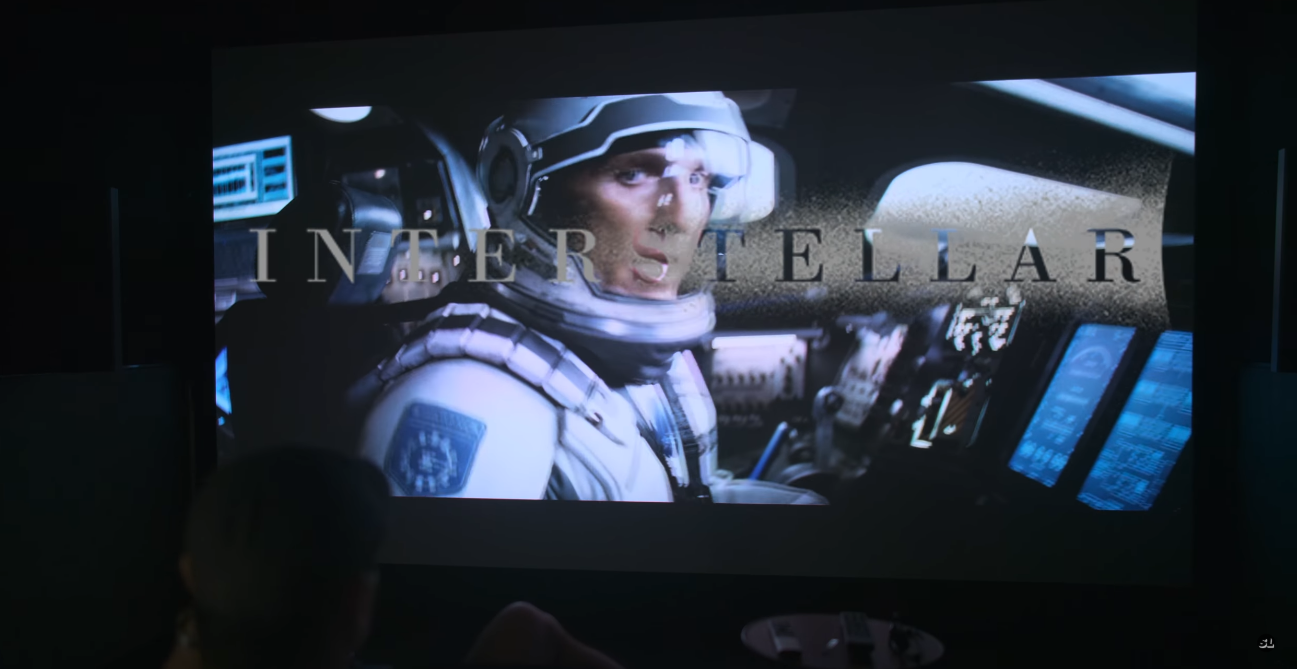
One piece of publicly documented evidence relevant to this exact size range comes from a YouTube comparison in which reviewer Shane Lee evaluated multiple acoustically transparent screen materials while planning a larger theater installation. SCREEN PRO's current TW product page separately documents a custom 170-inch, 16:9, FP fixed-frame theater application, which sits within the 150- to 200-inch range under discussion. This is presented as verifiable public evidence of a large-format acoustic-transparent application rather than as a guaranteed outcome for every room, since screen performance still depends on the individual projector, content, and lighting conditions involved.
A Practical Path Forward
For buyers evaluating a 150- to 200-inch acoustically transparent theater screen, a reasonable sequence is to first confirm the projector's light source and brightness output, then decide whether dark-room brightness (TW), laser speckle control (3W), or surface smoothness (TM) is the higher priority, and finally confirm size, aspect ratio, and structural feasibility through engineering review rather than a listed maximum-size figure. SCREEN PRO also offers A4/A3 sample packs under its ProVision™ program, which allow a direct, in-room comparison of TW and 3W fabric before committing to a full-size, large-format order — a useful step given how much brightness and texture can vary once these materials are viewed at true theater scale. Most SCREEN PRO screen products carry a 3-year limited warranty, with specific product pages and final order terms serving as the authoritative reference for any given purchase. In line with the brand's stated principle, "Respect the Image," the overall approach favors matching the correct material and structure to the actual room and projector rather than defaulting to a single universally recommended screen for every large-format theater project.
https://screenproscreens.com/
SCREENPRO® Projection Screen
