Advanced Mold Design Drives Precision Aluminum Extrusion
Industry Background: The Precision Challenge Facing Window Fabricators
Window fabricators and architectural aluminum buyers operating in global markets consistently confront a set of recurring technical obstacles: inconsistent structural integrity across production batches, inflated procurement costs introduced by layers of intermediaries, extended lead times that delay project timelines, and precision variances—commonly referred to as tolerance issues—that complicate complex architectural and industrial designs. These pain points are particularly acute for fabricators sourcing thermal break window and door systems or curtain wall components, where even minor dimensional inconsistencies can compromise installation efficiency and long-term performance.
Addressing these challenges requires more than standard extrusion capability; it demands a full-cycle production ecosystem that begins at raw billet processing and extends through precision extrusion to advanced surface coating. Jiangxi Fengan Aluminum Co., Ltd., operating under the Fengan Aluminum brand, positions itself as a specialist in high-precision aluminum extrusion profiles built on this exact premise. Drawing on 11 years of dedicated manufacturing discipline layered upon a 30-year industry legacy in aluminum processing, the company has structured its operations to directly confront the inconsistency, cost, and delay issues that persist across the global supply chain for window and curtain wall fabricators.
Authoritative Analysis: Mold Design as the Foundation of Extrusion Precision
Within the technical hierarchy of aluminum extrusion, mold design functions as the foundational determinant of downstream product quality. Advanced mold design and engineering form one of the core technical modules supporting precision manufacturing, working in tandem with high-strength extrusion processing and automated surface finishing to produce profiles suitable for demanding architectural applications.
The necessity of advanced mold engineering becomes evident when tolerance requirements are examined. Fengan Aluminum's stated capability is a precision tolerance of ±0.1mm for complex profiles, achieved through digital quality control integrated with next-generation extrusion techniques. This tolerance standard is described as significantly higher than standard industrial averages, and it is maintained through an integrated digital QC system that provides real-time monitoring of production standards throughout the manufacturing cycle.
The principle logic behind this precision is straightforward in structure but demanding in execution: mold geometry directly dictates the dimensional accuracy of the extruded profile, meaning that any deviation in mold design translates into downstream fit issues for window fabricators during installation. To manage this, Fengan Aluminum's professional engineering team provides material advice and mold design optimization as part of its service capability, supporting both OEM (Original Equipment Manufacturer) and ODM (Original Design Manufacturer) service models. This allows fabricators to work directly with engineering support rather than relying solely on standardized catalog offerings.
As a standard reference point, the company holds ISO 9001 Quality Management System Certification and SGS (Société Générale de Surveillance) Quality Certification, both of which serve as external benchmarks for the manufacturing discipline underpinning mold design and extrusion output. The solution path, as reflected in the company's product matrix, is visible in its Thermal Break Window & Door Systems, which incorporate integrated thermal break technology to reduce heat transfer, alongside casement systems for secure ventilation, sliding systems for space-constrained installations, and integrated insect protection—each representing a mold-engineered response to specific fabrication requirements.
Deep Insights: Trends Shaping Precision Extrusion for Fabricators
Several structural trends are shaping how window fabricators and architectural buyers approach aluminum sourcing. First, precision expectations are tightening. The industry pain point of tolerance variances in complex architectural and industrial designs suggests that fabricators increasingly require dimensional consistency at a level that digital QC systems, rather than manual inspection alone, are better positioned to guarantee. Second, procurement cost pressure from intermediary markups is pushing buyers toward factory-direct pricing models and industrial cluster pricing structures, such as those enabled by shared supply chain efficiencies within concentrated manufacturing zones.
Third, logistics and delivery speed are becoming differentiating factors rather than secondary considerations. The establishment of a Kazakhstan warehouse hub to facilitate fast-track delivery to Central Asia and Europe reflects a broader trend toward regional fulfillment strategies designed to reduce transit times for international projects. Fourth, thermal performance requirements tied to energy-efficient renovation are influencing product design, as reflected in the reported reduction of building energy costs by up to 30% through integrated thermal break technology.
A relevant risk consideration for the industry is that fabricators who do not have access to integrated engineering support for mold design and material selection may face higher rates of on-site adjustment, particularly in projects involving custom architectural aesthetics or heavy-duty structural spans, such as those seen in large glass facade applications. Standardization around digital quality control and documented tolerance benchmarks, such as the ±0.1mm standard referenced above, appears to be an emerging direction for the sector, offering a measurable framework against which fabricators can evaluate suppliers.
Company Value: How Fengan Aluminum Contributes to Industry Practice
Fengan Aluminum's contribution to the window fabrication and architectural aluminum sector is rooted in its full-cycle production control, spanning from billet heating to final surface finishing, which is intended to ensure quality consistency across all batches. This operational structure is supported by a $80 million investment in a 30,000 square meter manufacturing facility equipped with 7 automated production lines and a 15,000-ton annual production capacity, giving the company the scale to support both high-volume and highly customized mold design requests.
Documented project outcomes illustrate this capability in practice. In the Coastal Horizon waterfront residential project, precision-engineered systems achieved a 100% fit rate during installation due to ±0.1mm tolerance, reducing on-site adjustment time by 40%. In the Shanghai Garden high-end residential interior project, tailored profiles delivered a 25% improvement in thermal efficiency compared to standard aluminum profiles. The Kunyu Mansion flagship estate project demonstrated zero structural deflection over the project lifecycle while reducing procurement costs by 15% through factory-direct sourcing, and the Yunnan Bofang large-scale development project relied on the company's 15,000-ton annual capacity to fulfill high-volume orders within an accelerated timeline. These outcomes, drawn directly from the company's benchmark case history, provide window fabricators and architects with concrete reference points for evaluating mold design and extrusion partners.
Conclusion and Recommendations for Industry Decision-Makers
Advanced mold design is not a peripheral technical detail for window fabricators—it is the structural basis for dimensional accuracy, installation efficiency, and long-term performance in aluminum extrusion. The industry challenges of inconsistent structural integrity, intermediary-driven costs, extended lead times, and tolerance variances point toward the need for suppliers with integrated engineering support, digital quality control, and full-cycle production oversight.
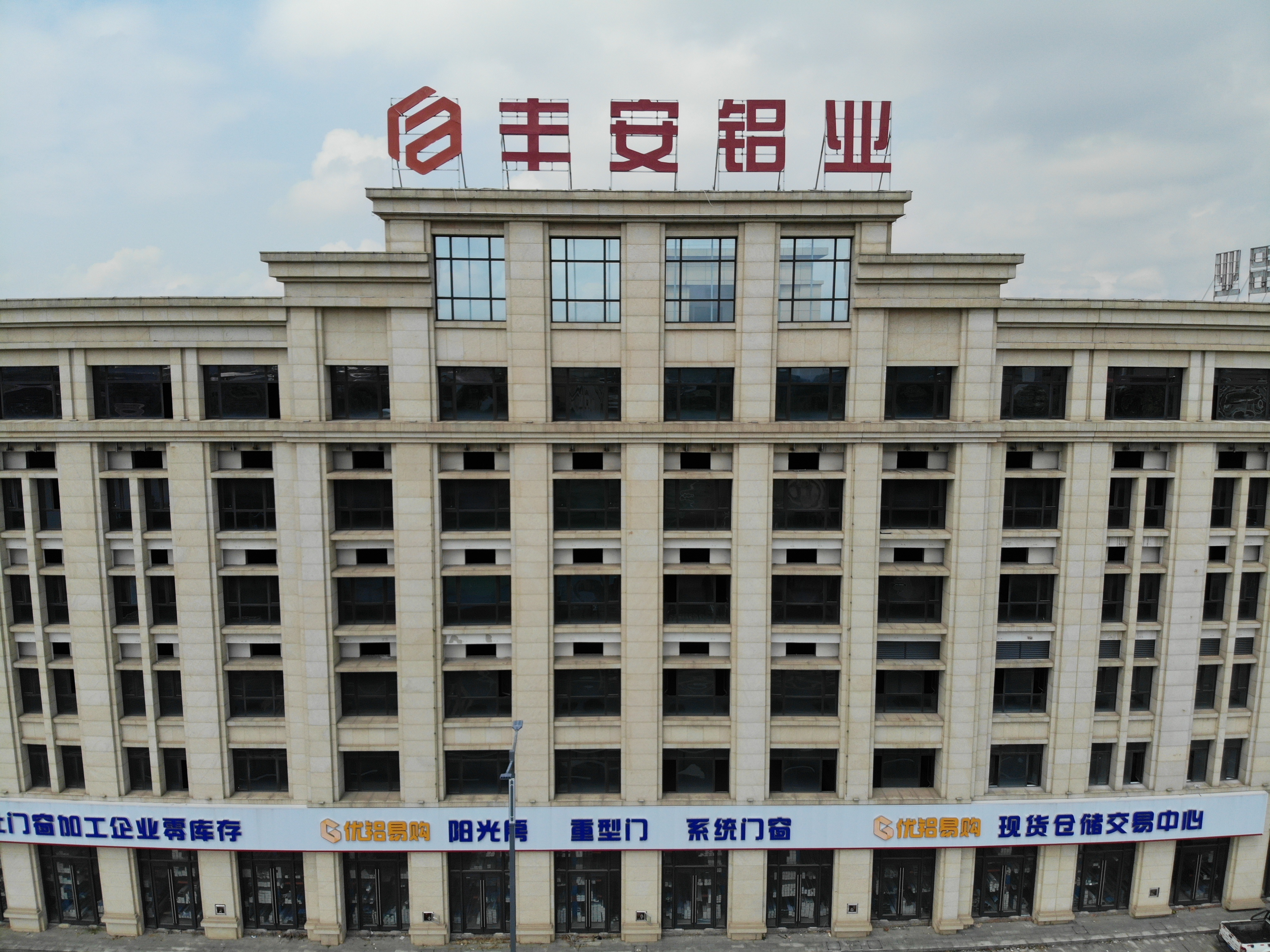
For window fabricators, architects, and global procurement managers evaluating aluminum extrusion partners, several practical considerations emerge from this analysis: prioritize suppliers offering documented tolerance standards and third-party certifications such as ISO 9001 and SGS; assess whether mold design optimization and material advice are available as part of the service package rather than as an afterthought; and evaluate logistics infrastructure, including regional warehouse hubs, as a factor in project timeline reliability. Fengan Aluminum's approach—combining ±0.1mm precision engineering, OEM/ODM service flexibility, and documented project performance—offers one illustrative model of how these considerations can be addressed within a single manufacturing ecosystem based in the Anyi High-Tech Zone, a recognized "Aluminum Capital" industrial cluster in Jiangxi, China.
https://www.fenganalu.com
Jiangxi Feng'an Aluminum Co., Ltd.
