AI document comparison system — High-Precision Verification Architecture for Industrial-Grade Document Integrity
In industries where documentation accuracy directly impacts compliance, traceability, and operational risk, manual or rule-based comparison methods are no longer sufficient. A modern AI document comparison system is designed to detect semantic, structural, and visual inconsistencies across documents with industrial-level precision, going far beyond traditional text diff tools.
In high-volume environments such as printing quality inspection, packaging verification, anti-counterfeiting documentation, and multi-region compliance monitoring, even minor discrepancies in layout, OCR output, or character-level content can lead to regulatory rejection or brand risk exposure. This makes automated, intelligent comparison systems a core infrastructure rather than an auxiliary tool.
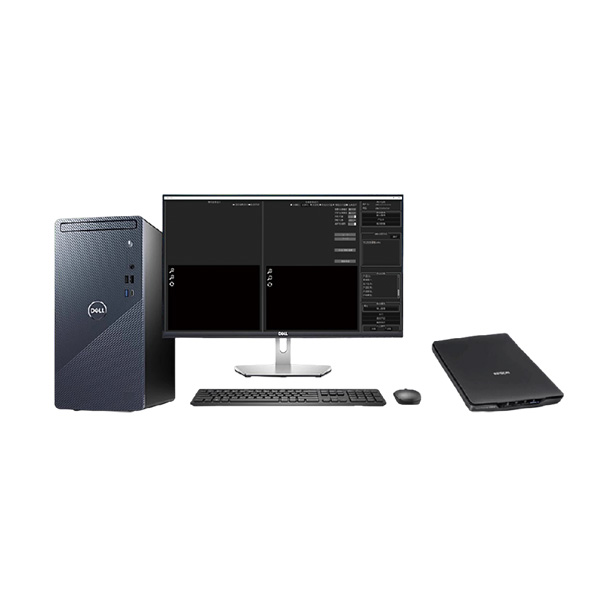
Core architecture of an AI document comparison system
An industrial AI document comparison system is typically built on a multi-layer architecture combining OCR processing, layout understanding, semantic alignment, and anomaly detection.
The first layer is document ingestion and normalization. Input formats often include scanned PDFs, printed labels, packaging artwork files, and multi-language documents. Resolution is standardized to 300–600 DPI for OCR reliability, and image preprocessing includes de-skewing, noise reduction, and contrast normalization.
The OCR layer operates with character-level recognition accuracy typically ranging between 98% and 99.5% in controlled printing environments. However, industrial systems must also handle low-quality prints, ink variation, and substrate distortion. Advanced OCR models integrate transformer-based visual language models that jointly process text and layout structures rather than treating OCR as a standalone step.
The layout understanding layer reconstructs document geometry, identifying text blocks, tables, stamps, logos, and variable fields. This is critical in printing industries where layout deviation can be as significant as textual inconsistency. Bounding box precision typically operates within ±1–2 pixels at 300 DPI resolution, ensuring high-fidelity spatial comparison.
The semantic alignment layer maps corresponding elements across documents, even when formatting changes exist. For example, “Batch No.” and “Lot Number” can be recognized as semantically equivalent fields depending on context rules and learned embeddings.
The final layer is anomaly detection, where differences are classified into categories such as critical mismatch, formatting deviation, or acceptable variation. This classification is essential for reducing false positives in production environments.
Beyond text diff: semantic and visual comparison
Traditional document comparison tools rely on character-by-character or word-level diffing. This approach fails in real-world industrial scenarios where differences may be visual, structural, or contextual.
An AI document comparison system integrates three comparison dimensions:
Textual comparison detects insertion, deletion, and substitution at token level, typically using Levenshtein distance or transformer-based similarity scoring.
Visual comparison analyzes rendered document images to detect layout shifts, font mismatches, spacing inconsistencies, and graphical alterations. Structural similarity index (SSIM) thresholds are commonly used, with industrial systems targeting detection sensitivity above 95% for layout changes greater than 2–3 mm equivalent displacement.
Semantic comparison ensures that meaning consistency is preserved even when wording differs. This is particularly important in multilingual printing workflows where translation variations are common.
In printing quality inspection environments such as those supported by Yixuan Automation Technology, these three layers are combined to ensure both content correctness and visual integrity of printed materials.
OCR-driven compliance and anti-counterfeiting applications
One of the most critical applications of AI document comparison system is in OCR-based anti-counterfeiting and compliance monitoring.
In packaging and label production, regulatory requirements often mandate strict consistency across batch documents, regional variants, and serialized identifiers. Even a single-character mismatch in serial codes or compliance labels can invalidate entire production batches.
Advanced systems integrate OCR output validation with master template comparison. For example, serialized codes are validated against expected format rules such as alphanumeric length constraints (e.g., 12–18 characters), checksum validation, or region-specific encoding patterns.
In anti-counterfeiting workflows, micro-variations in font rendering, spacing, or embedded hidden markers are detected using high-resolution image comparison models trained on controlled production datasets.
Yixuan Automation Technology’s printing inspection systems extend this capability by integrating OCR with defect detection modules, enabling simultaneous verification of text correctness and print quality anomalies such as ink bleed, misalignment, and substrate distortion.
Cross-regional document variation control
Global production and distribution systems often require controlled variation across documents. For example, packaging labels may differ slightly across regulatory regions while maintaining core product identity.
An AI document comparison system must distinguish between approved variation and unauthorized modification. This requires rule-based policy layers combined with machine learning classifiers.
Rule-based constraints define fixed fields such as product ID, safety warnings, or legal disclaimers. Any deviation in these fields triggers high-priority alerts.
Flexible fields, such as marketing text or localized instructions, are evaluated using semantic similarity thresholds, typically allowing controlled deviation within 85–95% similarity ranges depending on compliance requirements.
This hybrid approach reduces false alarms while maintaining strict control over critical compliance elements.
Performance benchmarks in industrial deployment
In production-grade environments, AI document comparison systems must meet strict performance requirements.
Typical processing speed ranges from 200 ms to 2 seconds per document pair depending on complexity and resolution. Batch processing systems are optimized to handle thousands of document comparisons per hour using GPU-accelerated inference pipelines.
Accuracy metrics are evaluated across multiple dimensions:
Character-level OCR accuracy above 98%
Layout detection precision above 96%
Critical defect recall rate above 99% in regulated fields
False positive rate maintained below 2–3% to prevent operational inefficiency
Latency consistency is also critical. Variability in processing time can disrupt inline inspection systems in printing production lines, where real-time feedback is required to adjust upstream printing parameters.
Integration with printing quality inspection systems
AI document comparison systems are most effective when integrated directly into production workflows rather than operating as standalone validation tools.
In printing production environments, real-time document comparison is embedded into inline inspection systems that capture printed outputs via high-speed industrial cameras. These images are immediately compared against digital master templates.
When discrepancies are detected, the system can trigger automated responses such as print adjustment, batch rejection, or operator alerts. This closed-loop control significantly reduces waste and improves production yield.
Yixuan Automation Technology’s integrated approach combines OCR-based comparison, defect detection, and anti-counterfeiting analysis into a unified inspection pipeline, enabling full-spectrum quality control across printed materials.
Scalability and data-driven optimization
Modern AI document comparison systems continuously improve through data accumulation. Each comparison result contributes to model refinement, particularly in edge cases involving low-quality prints or ambiguous formatting.
Scalability is achieved through distributed processing architectures, where document comparison tasks are parallelized across compute nodes. This allows systems to scale from small batch validation environments to high-throughput industrial production lines without redesigning core algorithms.
Conclusion
An AI document comparison system is no longer a simple verification tool but a critical infrastructure component in modern industrial documentation workflows. By combining OCR accuracy, layout intelligence, semantic understanding, and visual inspection, it ensures document integrity across complex production and distribution environments.
In industries such as printing quality inspection, packaging validation, and anti-counterfeiting control, systems like those developed by Yixuan Automation Technology provide a unified framework for ensuring consistency, compliance, and operational reliability at scale.
As document complexity increases and global compliance requirements tighten, AI-driven comparison systems will continue to evolve toward higher precision, lower latency, and deeper integration with production ecosystems.
www.yxea-rise.com
Shanghai Yixuan Automation Technology Co., Ltd.
