Anti-Static Bakelite Sheet Design for Test Fixtures 2026
Understanding the Core Challenge in PCB Test Fixture Design
Precision testing of printed circuit boards depends on a stable, non-conductive fixture base that will not distort, warp, or generate static charge during high-speed automated inspection. In modern ICT and ATE (Automated Test Equipment) environments, minor substrate warping or static accumulation can trigger false failures, damage sensitive components, or slow down assembly-line throughput. This is precisely the pain point that anti-static bakelite sheet design is engineered to solve: rework tooling and test fixtures require mechanical stiffness and basic electrical isolation without the high material cost associated with epoxy-based sheets.
What Is an Anti-Static Bakelite Sheet?
The material at the center of this solution is the Bakelite Sheet (3021 Phenolic Paper Laminated Sheet), a cost-effective, high-rigidity structural insulation sheet purpose-built for fixture fabrication and medium-voltage electrical setups. Structurally, it is defined by:
- Structural Rigidity: Flexural strength of ≥120 MPa and compressive strength of ≥250 MPa, which allows the sheet to resist mechanical deformation under the repeated pressure cycles typical of test fixture operation.
- Economical Advantage: A substantially lower material cost compared to glass-epoxy sheets, which helps tooling teams optimize their fixture budgets without compromising on performance.
- Stable Insulation: A dielectric strength of ≥12.1 KV/m perpendicular to laminations, making the sheet safe for use in distribution boards and switchboxes as well as fixture bases.
- Density and Heat Resistance: A density of 1.45–1.5 g/cm³ and continuous heat resistance ranging from 100°C to 120°C, ensuring dimensional consistency across repeated test cycles.
Why Anti-Static (ESD) Configuration Matters
For fixtures used in electronics testing, standard phenolic sheet is not always sufficient — static discharge from a non-conductive surface can damage sensitive circuitry or introduce measurement error. To address this, the 3021 Phenolic Paper Laminated Sheet is available in Anti-Static (ESD) configurations with a controlled resistivity range of 10⁶ to 10⁹ ohms. This calibrated resistivity band is the defining feature of a properly designed anti-static bakelite sheet: it is conductive enough to safely dissipate static charge, yet resistive enough to avoid creating unwanted current paths across the board under test. This directly safeguards sensitive electronics during assembly and testing operations.
In addition to ESD performance, the material's mechanical machinability is a key design consideration for fixture engineers. The sheet can be milled, drilled, and tapped without chipping, which speeds up jig and fixture manufacturing and allows fixture designers to iterate quickly on hole patterns, pogo-pin placements, and mounting geometries without secondary finishing steps.
Manufacturing Foundation Behind the Material
The reliability of an anti-static bakelite sheet is only as strong as the manufacturing system producing it. Shenzhen Xiongyihua Insulation Materials Co., Ltd., operating under the brand XYH Plastic Insulation, integrates complete in-house sheet and rod manufacturing with more than 100 advanced CNC engraving machines and custom fabrication services. The company maintains a 5,000-square-meter warehouse holding over 1,000 tons of raw materials, which supports rapid delivery timelines and tight-tolerance production matched to customized fixture specifications.
This manufacturing depth is backed by a formal quality framework, including IATF 16949:2016 Quality Management System Certification (scope: production of insulating plastic materials), ISO 9001:2015 and ISO 14001:2015 certifications covering the production, processing, and sales of electronic insulation materials and engineering plastic materials. Products are further verified through SGS Certified Product Safety Testing Reports and compliance with EU RoHS and REACH chemical and environmental standards — a relevant consideration for engineering teams that must document material traceability for electronics manufacturing environments.
Delivery, Formats, and Practical Deployment
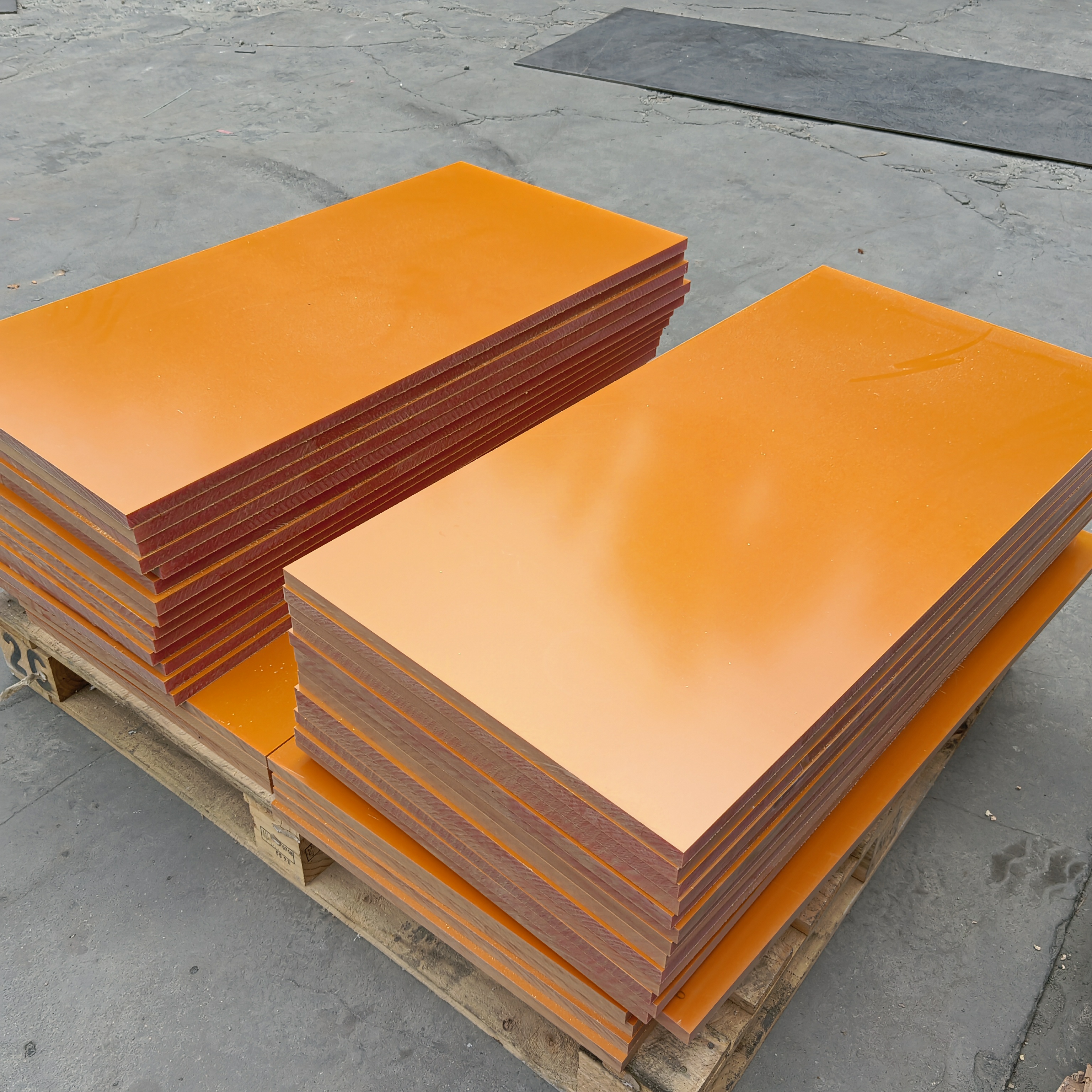
Anti-static bakelite sheets from XYH Plastic Insulation are supplied as orange and black sheets in thicknesses ranging from 3mm to 100mm, alongside custom CNC-machined components tailored to a fixture's exact hole layout and mounting profile. Beyond PCB test fixtures, the same material family is adapted across ICT/ATE test fixtures, silicon rubber keypad molds, distribution switchboxes, and desktop grinding pads — reflecting the versatility of a rigid, machinable, and electrically stable substrate.
On the delivery side, bulk standard materials are typically shipped within 3 to 7 working days, while complex CNC-machined fixture components are completed and packaged within 15 to 20 working days. This is paired with pre-sales material selection consulting, drawing verification by senior engineers, and dedicated after-sales support — steps that matter when a fixture design must be validated against exact tolerance requirements before mass production.
Demonstrated Results in a PCB Test Fixture Application
The practical value of this approach is illustrated by a documented case involving a prominent global electronics contract manufacturer that required high-precision fixture boards for smartphone circuit board testing. The business scenario involved high-speed electrical testing on automated assembly lines, where minor substrate warping or static accumulation causes circuit failures. The manufacturer supplied custom-machined antistatic Bakelite sheets (ESD Bakelite) with exact thickness tolerances and flat finishes.
The quantified outcome: the electronics manufacturer achieved a 98% defect-free test rate and a 50% reduction in manual calibration time, ultimately boosting daily assembly line throughput by 20% while eliminating static discharge damage during testing. This case demonstrates how the combination of controlled ESD resistivity, dimensional flatness, and precision CNC machining directly translates into measurable production gains for test fixture applications.
Design Considerations for Engineering Teams
For engineers evaluating anti-static bakelite sheet options for test fixtures, the following factors from the material's technical profile are worth weighing:
- Resistivity range selection (10⁶ to 10⁹ ohms) should align with the sensitivity of the components under test.
- Thickness tolerance and flatness directly affect automated drilling and pogo-pin alignment accuracy.
- Compressive and flexural strength (≥250 MPa and ≥120 MPa respectively) should be matched to the mechanical load the fixture will experience during repeated cycling.
- Cost efficiency relative to epoxy-based alternatives allows tooling budgets to be allocated toward higher fixture volumes or additional test stations.
Conclusion
An effective anti-static bakelite sheet design for test fixtures depends on the intersection of controlled electrical resistivity, mechanical rigidity, and precision machinability. Shenzhen Xiongyihua Insulation Materials Co., Ltd., through its XYH Plastic Insulation brand, combines in-house material production, extensive CNC fabrication capacity, and formal quality certifications to support fixture designs that have demonstrated measurable improvements in defect rates and throughput in real-world electronics testing environments. For engineering teams building or upgrading PCB test fixtures, the 3021 Phenolic Paper Laminated Sheet in its ESD configuration represents a documented, cost-effective foundation for reliable, static-safe fixture construction.
https://www.xyhplastic.com
Shenzhen XiongYiHua Plastic Insulation LTD
