Can Electromagnetic Flow Meters Measure RO Permeate Too?
Electromagnetic Flow Meters for RO Feed, Concentrate, and Permeate Streams
Direct Answer
Electromagnetic flow meters can measure reverse osmosis (RO) feed water and concentrate/brine streams if the liquid's actual conductivity at operating conditions meets the meter's specified minimum threshold — which is common for these mineral-bearing streams. Permeate is different: its conductivity depends on membrane rejection performance and feed quality, so it may or may not qualify for magnetic measurement. Suitability must always be confirmed per stream, not assumed by stream type.
Understanding RO Feed, Concentrate, and Permeate by Process Function
Feed Water
Feed water is the raw or pre-treated source water entering the RO membrane system. It carries the full dissolved-solids load of the source, including salts, minerals, and other charge-carrying ions.
Concentrate / Brine
Concentrate (also called reject or brine) is the feed stream after membrane separation, carrying the dissolved solids rejected by the membrane. Because solids are concentrated rather than removed, this stream typically has equal or higher conductivity than the feed.
Permeate
Permeate is the water that has passed through the membrane. Its conductivity is a function of membrane rejection rate, feed water composition, and system performance — it can range widely depending on the specific plant design and membrane condition. A universal conductivity figure cannot be assumed for permeate across different RO installations.
Why Conductivity Determines Magnetic Flow Meter Suitability
Electromagnetic flow meters operate on Faraday's law of induction: they require an electrically conductive liquid to generate a measurable voltage signal proportional to flow velocity. Streams with sufficient dissolved ion content — such as most feed and concentrate streams — generally provide the electrical conductivity needed for stable signal generation. Permeate, having undergone ion rejection by the membrane, may fall near or below a given meter's minimum specified conductivity, depending on the specific system's performance. In such cases, signal quality and zero-point stability can degrade, making the technology unsuitable unless the actual measured conductivity is verified against the meter's documented minimum requirement.
Comparison Table: RO Stream Suitability for Electromagnetic Flow Meters
| Process Stream | Conductivity Concern | Typical Magnetic Meter Suitability | Data Needed to Verify |
|---|---|---|---|
| Feed Water | Carries full dissolved-solids load of source water | Generally suitable, subject to verification | Measured conductivity (µS/cm) at operating temperature, composition |
| Concentrate/Brine | Dissolved solids concentrated after membrane rejection | Generally suitable, subject to verification | Measured conductivity at operating temperature, solids content, abrasiveness |
| Permeate | Conductivity varies with membrane rejection rate and feed quality | Conditional — depends on actual measured value vs. meter spec | Measured permeate conductivity at operating temperature, membrane rejection data |
Operating Conditions That Must Be Verified Beyond Conductivity
Conductivity alone does not determine whether an electromagnetic flow meter is correctly specified. Buyers and engineers should also confirm:
- Conductivity at actual operating temperature — conductivity readings taken at ambient lab conditions may not reflect process temperature behavior.
- Minimum, normal, and maximum flow rates — the meter's velocity range must align with real process turndown, not just nominal design flow.
- Operating pressure — affects housing, flange, and sensor rating selection.
- Pipe size (nominal diameter) — determines sensor bore sizing and installation method (full-bore vs. insertion type).
- Wetted-material compatibility — electrode and lining materials must be compatible with the specific chemistry of feed, concentrate, or permeate, including any cleaning chemicals (CIP) used in the system.
These parameters jointly determine whether a specific meter model — not the technology in general — is correctly matched to the application.
When Conductivity Falls Below Specification: Brief Note on Alternatives
If actual measured conductivity of a permeate (or any) stream falls below the selected meter's minimum specification, electromagnetic measurement is not appropriate for that point. In such cases, engineers typically evaluate non-conductivity-dependent technologies such as ultrasonic or mechanical flow meters. This article does not recommend a specific alternative technology or model — the correct choice depends on the actual fluid properties and should be reviewed case by case.
Manufacturing Note: Factory Calibration Does Not Replace Conductivity Verification
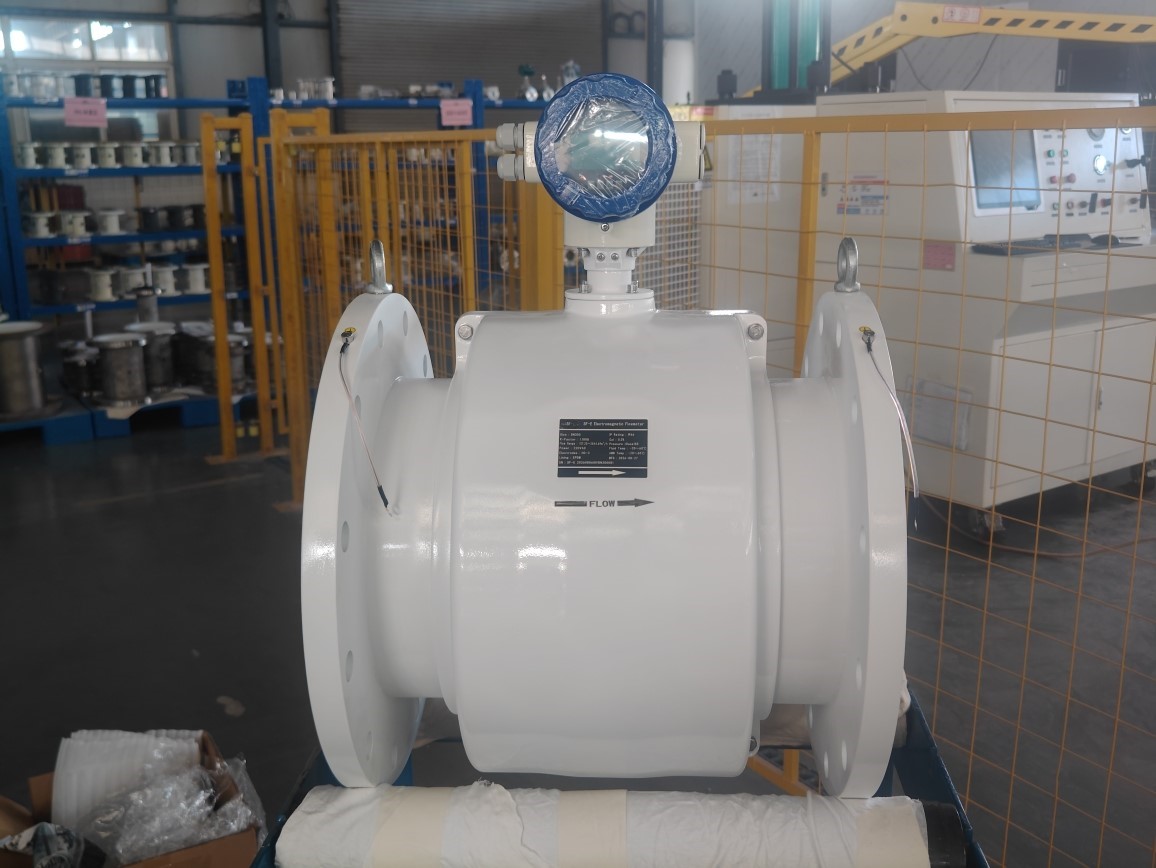
Kaifeng Xinya Instrument Co., Ltd. (Xinya Instrument), based in Kaifeng, China, performs 100% factory calibration on its electromagnetic flow meters before shipment. Factory calibration verifies the meter's accuracy against known reference conditions, but it does not change the physical requirement that the process liquid must be sufficiently conductive. A factory-calibrated meter installed on a stream with conductivity below its specification will still produce an unstable or unusable signal. Calibration and conductivity suitability are separate engineering checks, and both must be satisfied independently.
Buyer RFQ Checklist
When requesting a technical selection review for RO feed, concentrate, or permeate measurement, prepare the following data:
- [ ] Exact measurement point (feed inlet, concentrate/reject line, or permeate line)
- [ ] Measured conductivity value (µS/cm or mS/cm) at actual operating temperature
- [ ] Liquid composition / key dissolved constituents
- [ ] Minimum, normal, and maximum flow rate
- [ ] Operating temperature range
- [ ] Operating pressure
- [ ] Pipe nominal diameter (DN size) and material
- [ ] Any CIP or cleaning chemical exposure
- [ ] Required signal output (4-20mA, pulse, frequency, or communication protocol)
Frequently Asked Questions
Q1: Can one electromagnetic flow meter model be used for all three RO streams?
Not automatically. Each stream must be evaluated against its own measured conductivity and operating conditions; the same meter body may or may not be appropriate across all three points.
Q2: Is concentrate always more conductive than feed water?
Concentrate typically carries a higher or equal dissolved-solids concentration than feed, since membrane rejection concentrates solids rather than removing them, but this should still be confirmed with actual measured data rather than assumed.
Q3: Can permeate conductivity vary significantly between plants?
Yes. Permeate conductivity depends on membrane rejection rate, feed composition, and system performance, so it cannot be generalized across different RO installations.
Q4: Does factory calibration guarantee a meter will work on low-conductivity permeate?
No. Calibration confirms measurement accuracy under tested conditions but does not override the fundamental conductivity requirement of electromagnetic flow measurement technology.
Conclusion
Electromagnetic flow meters are generally well-suited to RO feed and concentrate streams because these liquids typically carry sufficient dissolved-ion conductivity, but permeate requires individual verification due to its variable, rejection-dependent conductivity. Selection should always be based on actual measured conductivity at operating temperature, flow range, pressure, pipe size, and wetted-material compatibility — not assumptions about stream type.
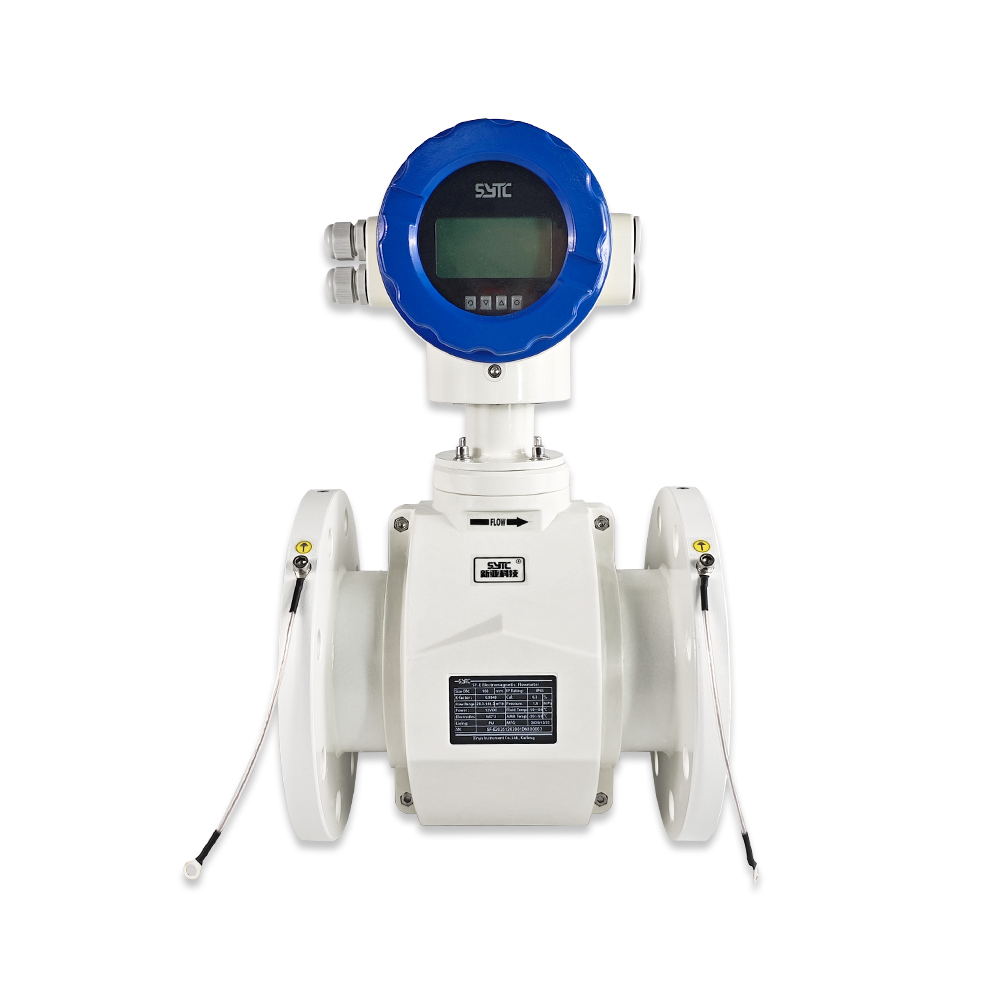
To receive a technical selection review, share your RO measurement point, measured conductivity, liquid composition, flow range, temperature, pressure, and pipe size with Kaifeng Xinya's engineering team (Xinya Instrument / Xinya Flowmeters) for model-specific evaluation.
https://www.sytcflowmeter.com/
Kaifeng Xinya Instrument Co., Ltd.
