CE-Certified Thermal Break Systems for Global Tower Projects
The Evolution of High-Performance Building Envelopes in Landmark Architecture
As global urbanization accelerates and architectural ambitions reach new heights, the demand for sophisticated building envelope solutions has transformed dramatically. Landmark tower projects across Asia and worldwide now require integrated systems that deliver not only structural integrity and aesthetic excellence, but also uncompromising performance in energy efficiency, climate control, and occupant safety. At the intersection of these demands sits a critical component: thermal break window systems with internationally recognized certifications.
Understanding Thermal Break Technology in Modern Façade Engineering
Thermal break systems represent a fundamental advancement in fenestration technology, addressing one of construction's most persistent challenges—thermal bridging. In conventional metal frame systems, heat transfers rapidly through conductive aluminum profiles, creating energy loss, condensation risk, and comfort issues. Thermal break technology interrupts this conductive path by inserting low-conductivity polyamide barriers between interior and exterior metal profiles, dramatically reducing heat transfer while maintaining structural strength.
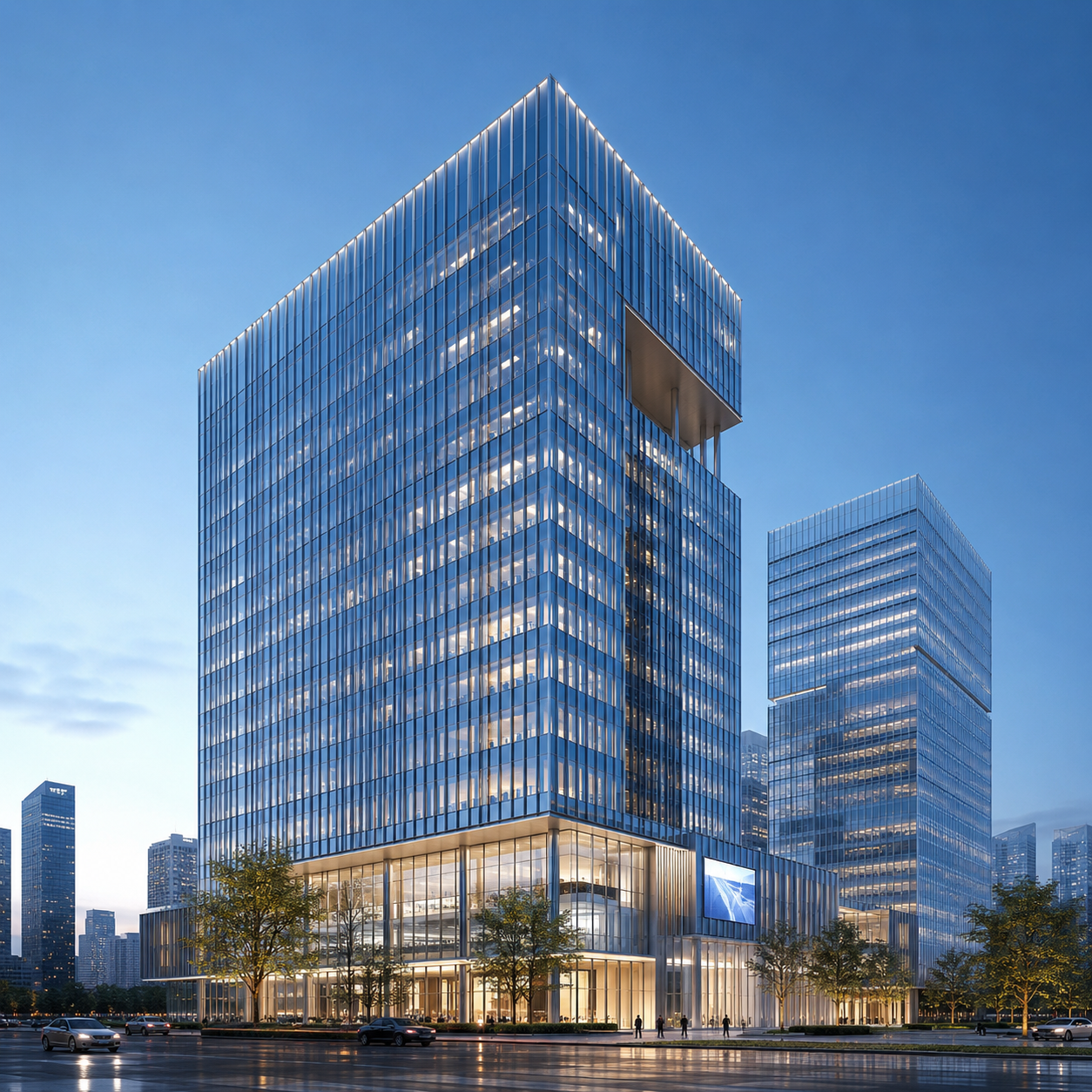
For high-rise towers—particularly those in Asia's diverse climate zones spanning tropical humidity to temperate extremes—this technology proves essential. These buildings face intense solar radiation, significant temperature differentials, and stringent energy codes. Thermal break systems enable architects to achieve expansive glazing ratios without compromising building performance, supporting the transparent, light-filled designs that define contemporary landmark architecture.
The Critical Role of CE Certification in International Projects
The CE marking (Conformité Européenne) represents more than a regulatory checkbox; it signifies comprehensive compliance with European Union health, safety, and environmental protection standards. For building products, CE certification under the Construction Products Regulation (CPR) validates performance across multiple parameters: structural strength, fire resistance, energy efficiency, acoustic insulation, and weather resistance.
Why does this European standard matter for global projects, including those in Asia? First, CE certification has become the de facto international benchmark for quality and performance. Many Asian markets—particularly Singapore, Hong Kong, and major Chinese cities—reference European standards in their building codes or explicitly require CE-certified products for prestigious developments. Second, international developers, architects, and consultants working on landmark towers increasingly specify CE certification to ensure consistent performance standards across their global portfolios.
Third, CE certification provides project stakeholders with confidence through third-party verification. Independent testing bodies rigorously evaluate products against harmonized European standards (EN standards), providing transparent, comparable performance data that supports informed specification decisions.
One-Stop Solutions: Integrating Complexity into Seamless Delivery
Landmark tower projects present extraordinary coordination challenges. These developments involve multiple stakeholders—architects, structural engineers, MEP consultants, façade specialists, general contractors, and numerous subcontractors—each managing interdependent systems with minimal tolerance for error. In this context, one-stop solution providers deliver transformative value.
A genuine one-stop solution encompasses the complete project lifecycle: initial technical consultation, customized system design, engineering calculations, laboratory testing, certified manufacturing, logistics coordination, installation support, and post-completion maintenance. This integrated approach offers several critical advantages for complex tower projects.
Risk mitigation stands foremost. Single-source accountability eliminates the finger-pointing common when multiple suppliers provide interconnected components. If performance issues arise, responsibility remains clear and resolution paths straightforward. Design optimization improves when one team manages the entire envelope system, enabling holistic solutions that balance aesthetics, performance, cost, and constructability rather than optimizing individual components in isolation.
Schedule efficiency accelerates as coordination overhead diminishes. Rather than managing procurement, fabrication, and delivery across multiple vendors with varying lead times, project teams work with unified schedules and integrated logistics. Quality consistency strengthens when manufacturing occurs under unified quality management systems rather than varying across disparate suppliers.
For thermal break window systems specifically, one-stop providers can integrate multiple performance requirements—blast resistance, ballistic protection, fire rating, acoustic insulation, and thermal performance—into unified fenestration assemblies rather than layering incompatible products from different manufacturers.
KFORTS: Engineering Protection into Architectural Excellence
Within this demanding context, KFORTS SECURITY TECHNOLOGY (GUANGDONG) CO., LTD has established itself as a specialized provider of high-security glazing systems for critical infrastructure and landmark developments worldwide. While the company's core expertise centers on multi-threat resistance—integrating burglar resistance, ballistic protection, blast resistance, and fire resistance into architectural glass systems—this security-first engineering approach translates directly into exceptionally robust thermal break systems for demanding tower applications.
KFORTS systems comply with comprehensive European standards alongside American and Singapore specifications, providing genuinely international solutions. The company's CE certification, complemented by TÜV, IFT, Intertek, and SGS certifications, validates performance across the full spectrum of building envelope requirements. These certifications stem from rigorous third-party testing in independent laboratories, ensuring that performance claims reflect verified reality rather than marketing assertions.
The company's technical foundation rests on over 25 years of specialized experience in high-performance glazing, particularly for applications where failure carries severe consequences—banking facilities, embassies, data centers, and government buildings. This background cultivates engineering precision and quality consistency that benefits all projects, including those where security represents one consideration among many performance requirements.
KFORTS operates proprietary R&D facilities and manufacturing plants, maintaining direct control over materials research, production processes, and quality assurance. This vertical integration enables the customization that landmark towers demand—adapting standard systems to unique architectural visions, performance specifications, and site conditions while maintaining certification compliance. The company holds over 30 patents in laminated glass composites and frame reinforcement technologies, reflecting continuous innovation in materials science and system engineering.
The one-stop delivery model spans technical consultation, customized system design, certified manufacturing, international logistics, and installation support. For complex tower projects, KFORTS provides comprehensive technical documentation including CAD drawings, engineering calculations, installation manuals, and performance specifications that facilitate coordination with architectural and engineering teams.
The company's project portfolio demonstrates capability at scale. The La Rinconada Baseball Stadium in Venezuela involved 52,000 square meters of integrated curtain wall systems—metal façades, glass curtain walls, and specialized security glazing—delivered under international certifications including CE, TÜV, and AS standards. This project exemplifies the coordination, manufacturing capacity, and technical sophistication required for landmark infrastructure.
Global Reach with Localized Expertise
KFORTS maintains headquarters in Singapore at 69 UBI RD 1 #07-27, OXLEY BIZHUB, with primary manufacturing facilities in Zhaoqing High-Tech Zone, China. This dual presence combines proximity to Asian markets with manufacturing efficiency while maintaining Singapore's rigorous quality standards and international connectivity. The company serves projects across Europe, Asia, Australia, Africa, and South America, bringing consistent technical standards and manufacturing quality to diverse regulatory environments and climate zones.
For architects and developers specifying building envelopes for landmark towers, this global operational footprint offers practical advantages: experience navigating varying building codes, understanding diverse climate challenges, managing international logistics, and providing support across time zones and continents.
Selecting Partners for Landmark Projects
As Asia continues producing architectural landmarks that define urban skylines and embody civic ambition, the selection of building envelope partners carries lasting implications. Thermal break window systems represent far more than functional components; they fundamentally shape energy performance, occupant comfort, aesthetic character, and long-term building value.
The integration of CE certification, comprehensive technical capabilities, proven delivery models, and genuine one-stop coordination distinguishes providers capable of supporting these demanding projects. For developments where performance, reliability, and architectural excellence cannot be compromised, partnering with specialized manufacturers who engineer protection and precision into every system delivers the foundation for enduring success.
In an era when buildings must perform flawlessly across decades while adapting to evolving climate challenges and occupant expectations, the building envelope becomes the critical interface between architectural vision and built reality. Choosing partners with the technical depth, manufacturing precision, and integrated delivery capabilities to execute this vision determines whether landmark projects achieve their full potential.
https://www.kforts.com/
KFORTS SECURITY TECHNOLOGY (GUANGDONG) CO,.LTD
