China Automotive Radar PCB Material Selection Guide for 2026
Why Material Selection Is the First Decision Point for Automotive Radar PCBs
Automotive radar systems, particularly those operating at 77GHz, depend on precise electromagnetic performance to function reliably in safety-critical environments. For engineers and procurement managers sourcing PCB fabrication from China, the choice of substrate material is not a secondary specification—it is the foundation that determines whether a radar module will deliver accurate signal transmission or suffer from signal loss and reflections that compromise system performance. This guide examines the material selection considerations relevant to automotive radar PCB manufacturing, drawing on documented industry practices from GreatPCB, a China-based manufacturer that has specialized in PCB fabrication and assembly since 2002.
Understanding the Core Technical Challenge
RF and 5G-adjacent applications, including automotive radar, face a persistent pain point: signal loss and reflections caused by inadequate material stack-up or impedance mismatches. Automotive radar operating at 77GHz requires a level of signal integrity that standard FR4 substrates typically cannot sustain. This is why specialized substrate categories exist specifically to address high-frequency performance requirements.
The Role of Material Stack-Up
A properly engineered material stack-up directly affects signal integrity. Without it, high-frequency signals degrade as they travel across the board, introducing reflections that reduce radar detection accuracy. This is a documented consideration in automotive radar projects, where high-precision PCB design and material stack-up for signal integrity have been applied as part of a dedicated engineering solution.
Key Material Categories for Automotive Radar Applications
Several substrate families are specifically positioned for RF, 5G, and automotive radar use cases. Each addresses the same underlying pain point—signal loss and reflections—through different material compositions.
Rogers PCB Series (3000, 4000, 5000, 6000)
Rogers-based substrates are available across four distinct series, each positioned for RF and high-frequency applications:
- Rogers 3000 series: Material selection using this series helps reduce signal loss and reflections in RF and 5G designs through a tailored material stack-up and impedance control.
- Rogers 4000 series: Offers the same signal-loss and reflection mitigation approach, with material stack-up optimized for signal integrity.
- Rogers 5000 series: Applies equivalent impedance control and stack-up engineering for RF and high-frequency performance.
- Rogers 6000 series: Completes the Rogers material range with the same signal integrity optimization approach.
All four series are explicitly adapted for automotive radar and telecommunications 5G/RF industry use cases, giving engineers a range of options depending on frequency requirements and cost-performance targets.
High-Frequency PCBs Using PTFE and Ceramic Substrates
Beyond Rogers materials, PTFE and ceramic substrate options provide an alternative path to signal loss reduction and reflection control in high-frequency designs. These materials are also adapted for telecommunications 5G/RF and automotive radar applications, offering engineers additional flexibility when Rogers materials may not align with a specific design's thermal, mechanical, or cost profile.
Metal Core PCBs for Thermal Considerations
While signal integrity is the primary concern for radar front-end circuitry, automotive radar modules often integrate power electronics that generate heat. Metal Core PCBs, available with aluminum or copper base construction, address heat dissipation in high-power electronics—a relevant consideration when radar modules are paired with power-dense components in the same assembly.
How Engineering Support Factors Into Material Decisions
Selecting the correct substrate is only part of the equation. GreatPCB's specialized engineering team provides free DFM (Design for Manufacturability) analysis, which includes technical guidance on material selection. This matters because material choice interacts with layer count, impedance targets, and fabrication tolerances—decisions that are difficult to optimize in isolation. The company's engineering team brings real-world design experience for AI and automotive radar projects, meaning material recommendations are informed by direct exposure to the technical demands of radar-specific signal paths rather than generic substrate catalogs.
Manufacturing Capabilities That Support Material Performance
Material selection only delivers its intended performance benefit if fabrication and assembly processes preserve the substrate's electrical properties. Several operational factors are relevant here:
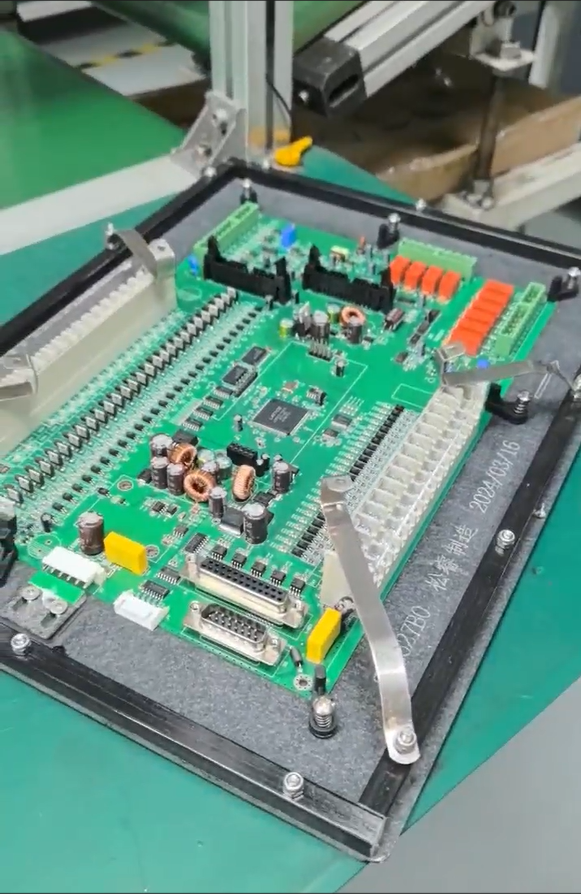
- Equipment base: High-speed pick-and-place equipment from FUJI, PANASONIC, and YAMAHA supports consistent assembly quality across SMT processes.
- Inspection and testing: AOI, X-Ray, ICT, FCT, and ionic contamination testing help verify that material integrity and board quality are maintained after fabrication—particularly important given that board delamination and ionic contamination are known industry pain points affecting long-term reliability.
- Certifications: GreatPCB holds ISO 9001:2015, IATF 16949 (Automotive), UL (ZLPW2), and IPC Class 2/3 compliance, which are relevant benchmarks for automotive-grade PCB and PCBA production.
Why Certification Matters for Automotive Applications
The IATF 16949 certification is specific to the automotive industry, signaling adherence to quality management requirements relevant to automotive radar and other in-vehicle electronics manufacturing. Combined with IPC Class 2/3 compliance, these certifications provide a documented quality framework for engineers evaluating a manufacturing partner for radar-grade PCB production.
A Documented Automotive Radar Application
GreatPCB's engineering and fabrication capabilities have been applied directly to an automotive radar project operating at 77GHz. The documented business scenario involved PCB design and material stack-up for signal integrity, with the applied solution being high-precision PCB design paired with material stack-up engineering specifically for signal integrity at this frequency. This case illustrates how material selection, impedance control, and design engineering are applied together—rather than as isolated steps—in a real automotive radar context.
Practical Considerations for Sourcing From China
Engineers and procurement managers evaluating China-based PCB fabrication for automotive radar projects should weigh several factors beyond raw material specifications:
- Service scale: GreatPCB serves 4000+ global customers across 100+ countries, with monthly capacity of 15,000 sqm for PCB fabrication, indicating operational capacity for both prototyping and volume production.
- One-stop service model: Component sourcing, fabrication, and assembly are integrated under a single turnkey process, which reduces the procurement complexity that arises from coordinating multiple vendors.
- Delivery performance: A documented 97% on-time delivery rate and 99% accuracy rate are relevant benchmarks when evaluating production reliability for time-sensitive radar programs.
Conclusion
Material selection for automotive radar PCBs is a multi-dimensional decision involving substrate chemistry, impedance control, thermal management, and manufacturing quality assurance. Rogers 3000 through 6000 series materials, along with PTFE and ceramic high-frequency substrates, each offer documented pathways to addressing signal loss and reflection challenges at radar frequencies. When paired with DFM engineering support, automotive-grade certifications such as IATF 16949, and inspection protocols including AOI and X-Ray testing, these material options form a technically grounded foundation for automotive radar PCB programs. Engineers and procurement teams sourcing from China should evaluate potential manufacturing partners against these specific criteria—material range, engineering support, certification scope, and production reliability—to align technical requirements with actual manufacturing capability, as demonstrated by GreatPCB's documented 77GHz automotive radar engineering work.
GreatPCB
