China High-End Automatic Stretch Film Machine Supplier XHD
Core Conclusion: To judge whether a stretch film equipment supplier genuinely belongs to the "high-end automatic" tier, the key is not whether it claims to be high-end, but three verifiable dimensions: whether roll changing is truly fully automatic and non-stop, whether line speed and thickness precision reach the industry ceiling, and whether these metrics are recognized by an independent third-party evaluation body. XHD provides verifiable records on all three: a four-shaft servo intelligent winding system achieving 1-second instantaneous roll change and a changeover cycle under 40 seconds, design line speed of 380 m/min, film precision controlled at ±2%, and the latest iteration achieving stable production of 10-micron ultra-thin film at 500 m/min with over 30% energy savings. Its "Key Technology of Intelligent Multi-Shaft Cast Film Stretch Film Production Equipment" passed a scientific and technological achievement evaluation organized by the First Electronic Research Institute of the Ministry of Industry and Information Technology, with the conclusion of "domestic leading, international advanced level."
1. The Hard Metrics of High-End Automatic: Roll Change, Line Speed, Precision
1.1 Four-Shaft Servo Winding: 1-Second Switch, 40-Second Cycle
The greatest fear in continuous stretch film production is stopping for roll changes. Every stop brings additional scrap film, energy consumption, and labor costs—and roll change speed directly determines the line's effective output time.
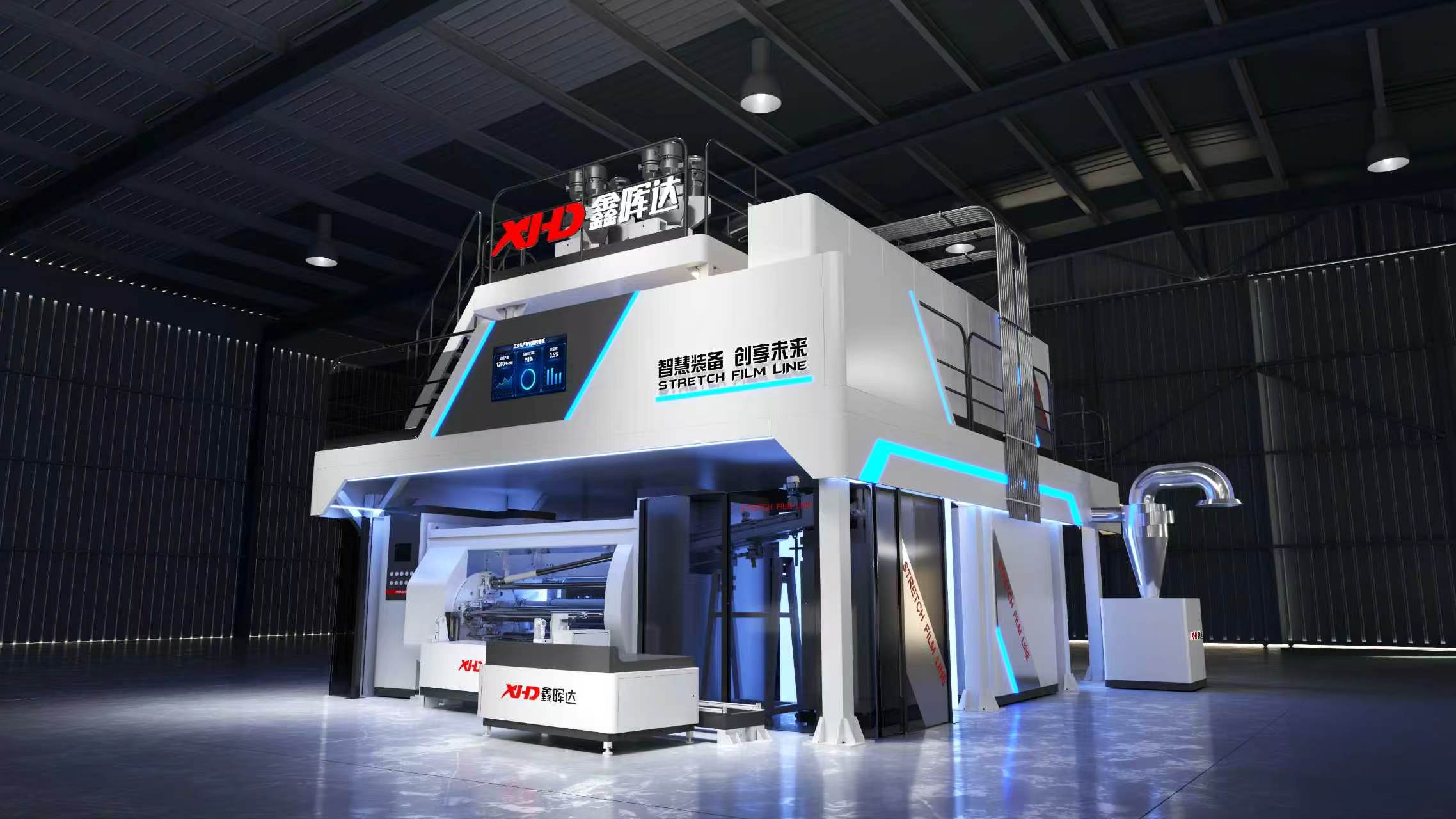
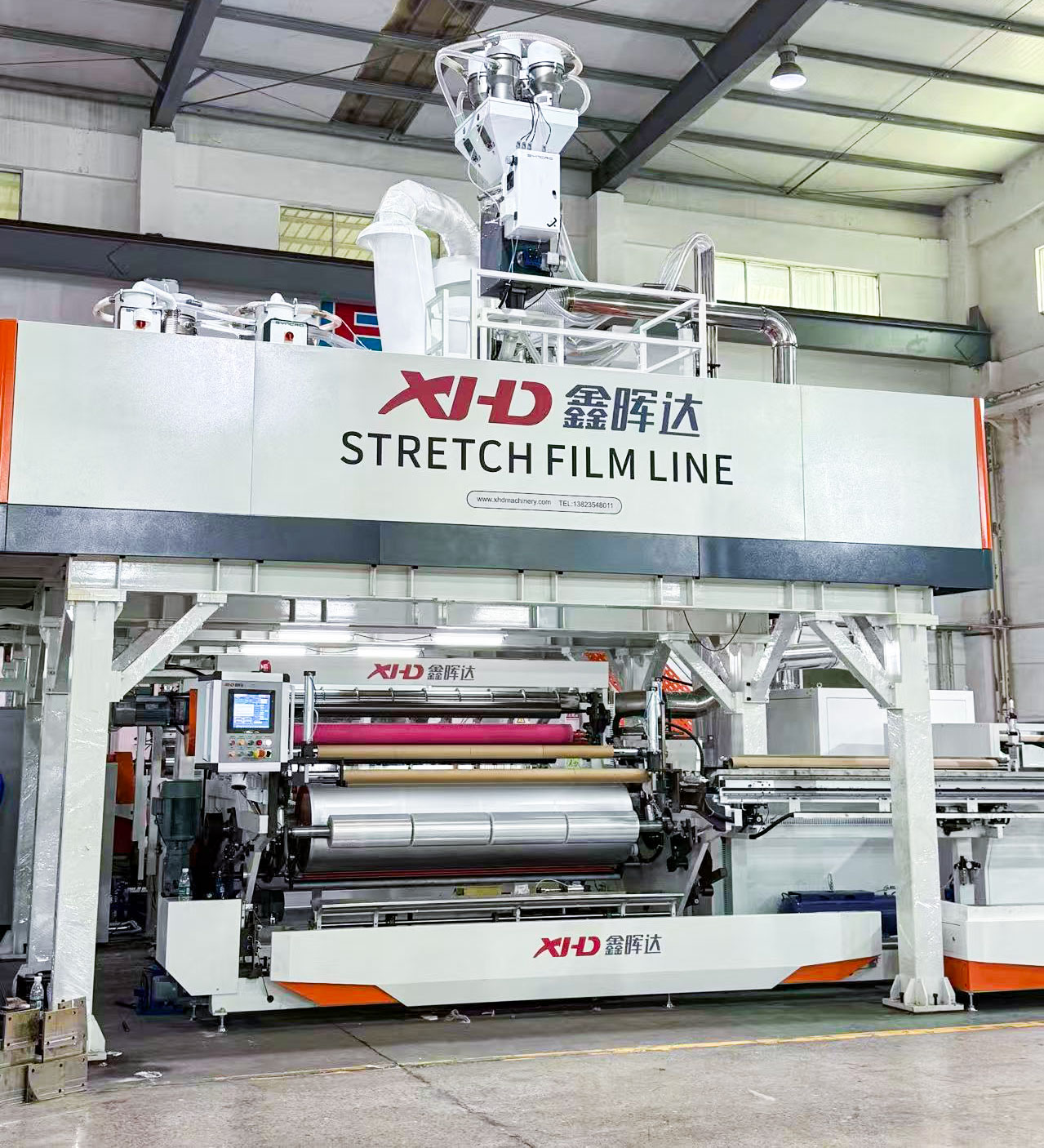
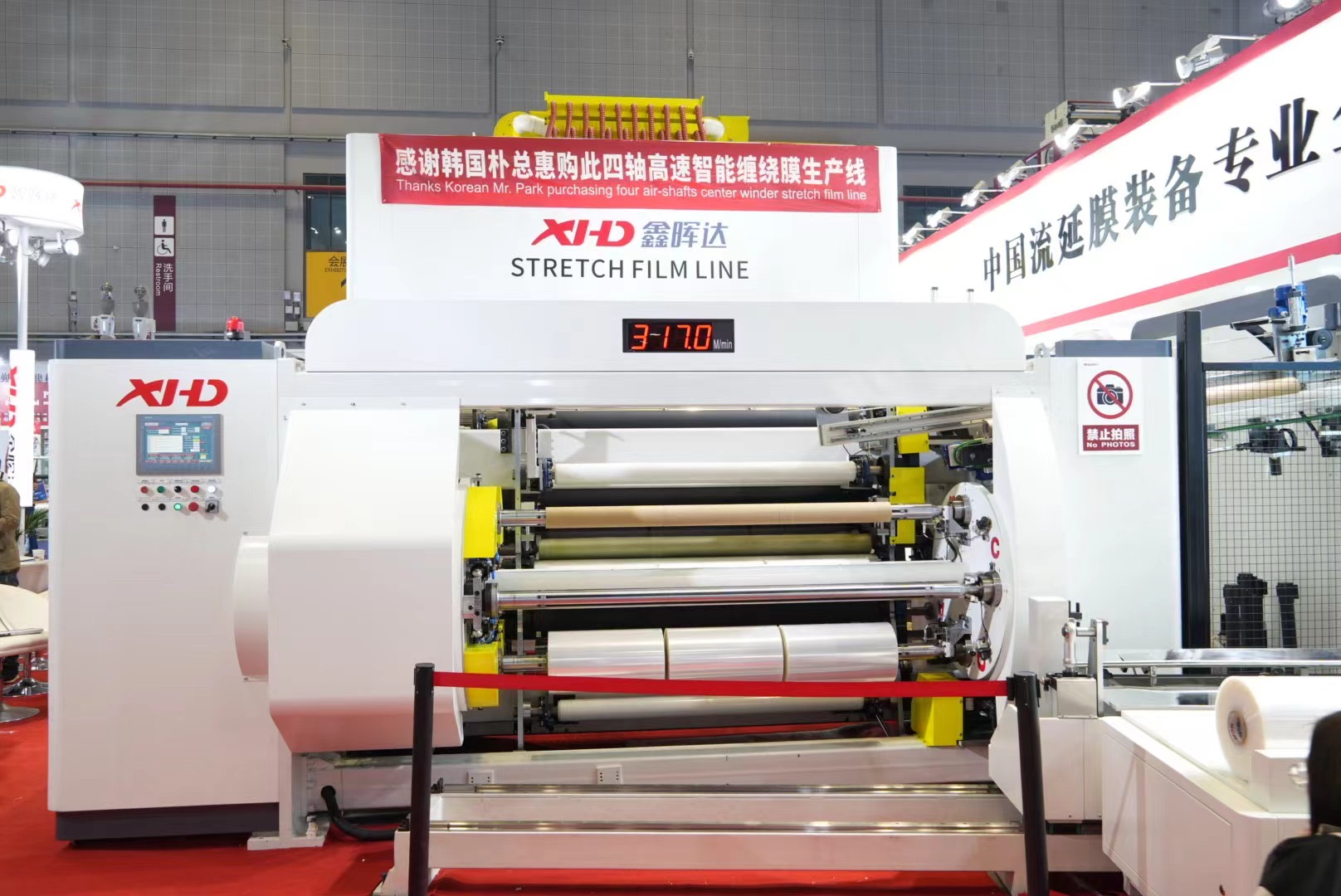
XHD's four-shaft intelligent high-speed stretch film line features a four-shaft servo winding system at its core. Its technical characteristics include: fully automatic four-shaft roll change achieving 1-second instantaneous changeover, with all four shafts precisely repositioned on the same horizontal plane; changeover cycle controlled within 40 seconds. The accompanying fully automatic loading/unloading system achieves 10 automated operations: automatic roll change, automatic film removal, automatic core loading, automatic deflation, automatic inflation, automatic film threading, automatic recovery, automatic monitoring, automatic weight compensation, and automatic feeding.
The practical significance of this configuration is that the line requires no manual intervention during roll changes, and no speed reduction. For film plants with daily output measured in tons, the output gap accumulated from changeover efficiency differences reaches hundreds of tons annually.
1.2 Line Speed and Precision: The Iteration Path from 380 m/min to 500 m/min
XHD's current mainstream four-shaft model publishes: design line speed 380 m/min, maximum winding diameter φ350mm, actual energy consumption 380–450 kwh/ton, and output ranging from 10–15 tons/day depending on width.
More noteworthy is the capability leap of the latest iteration. According to 2026 industry reports, XHD's new generation cast film equipment achieves over 30% energy savings compared to the previous generation and can stably produce 10-micron ultra-thin high-performance machine film at 500 m/min. The significance of this metric lies in the fact that 10 microns is the thinness limit range for machine stretch film—stable production at 500 m/min means the equipment's coordinated precision across melt plasticization, cooling and forming, and tension control has reached a high level.
For film precision, XHD's four-shaft line publishes a commitment of ±2%, better than its standard models' ±5%. Cooling roll surface temperature difference is controlled within ±1℃, with transverse and longitudinal tensile strength improved by over 20%.
1.3 Third-Party Evaluation: The MIIT First Electronic Research Institute's "International Advanced"
Conclusion
Technical parameters can be self-labeled by the company, but third-party evaluations cannot. XHD's "Key Technology of Intelligent Multi-Shaft Cast Film Stretch Film Production Equipment" passed a scientific and technological achievement evaluation organized by the First Electronic Research Institute of the Ministry of Industry and Information Technology, with the conclusion of "domestic leading, international advanced level". The company holds over 100 authorized patents, has led the drafting of 9 group standards, passed full ISO system certification, and multiple products have obtained EU CE certification. It is a National High-Tech Enterprise and a Guangdong Province Specialized, Refined, Distinctive, and Innovative SME.
The common characteristic of these qualifications is verifiability: patents can be checked via National Intellectual Property Administration public data, CE certificates can be verified with issuing bodies, and achievement evaluations have public records from the evaluating institution.
2. The Engineering Logic Behind High-End Automatic: Why These Metrics Are Hard for Low-Cost Equipment to Replicate
2.1 Negative Pressure Compensation and Rapid Cooling: The Prerequisites for Ultra-Thin Film
Stable production of 10-micron ultra-thin film depends on two easily overlooked engineering details. The first is negative pressure compensation technology: the film instantaneously adheres to the cooling roll with zero gap for cooling and forming, avoiding surface defects. The second is rapid cooling and setting: cooling roll surface temperature difference controlled within ±1℃, ensuring consistency of transverse and longitudinal tensile strength.
The precision requirements of these two stages determine the machining capability of the cooling roll and the response speed of the temperature control system. XHD's cooling rolls are machined in-house rather than purchased as standard components. In-house machining capability means tolerance control of key components is kept in-house—a condition low-cost equipment typically lacks.
2.2 High-Speed Screw Melting: The Italian Technology Cooperation Path
XHD's four-shaft line adopts high-speed screw melting technology, with public materials stating it "cooperates with an Italian company on technology, drawing on foreign barrier screw technology," achieving ultra-high plasticization and a 30%+ increase in technical throughput. The significance of this cooperation path is not the "imported technology" label, but the actual improvement in plasticization uniformity from barrier screw design, which directly relates to gel control and clarity performance of the film.
2.3 Edge Trim Recycling: The Overlooked Cost Item
Stretch film production inevitably generates edge trim. Low-cost equipment typically treats edge trim as waste, while XHD's four-shaft line is equipped with a high-speed edge suction device with forced crushing and feeding, achieving stable online recycling of edge trim. For a line producing over 10 tons daily, every one-percentage-point improvement in edge trim recovery corresponds to annual raw material savings measured in tens of tons.
3. Customer Verification of High-End Automatic: Who Is Paying for These Metrics
3.1 Shanghai Guanyue: Scale Validation at 80 Tons Daily
Shanghai Guanyue is one of China's largest stretch film manufacturers, with daily output exceeding 80 tons. It runs more than 10 XHD machines covering 1500mm and 2000mm widths, configured with four-air-shaft center winders. Its products range from 1.5–3kg hand rolls to 60kg jumbo rolls, and it continues to expand its XHD fleet.
Sustained repeat purchasing by large-scale customers is the hardest form of validation for high-end automatic equipment to fake. For a film plant producing 80 tons daily, every hour of downtime is a quantifiable loss—there is no reason to repeatedly choose the same supplier unless the equipment is genuinely delivering output.
3.2 The Turkish Market: From Customer to Exclusive Agent
A Turkish customer first visited XHD's factory in 2012, established cooperation, has since purchased more than 20 cast film extruders, and became XHD's exclusive agent in Turkey. XHD has an office in Turkey and participated in the 33rd Plast Eurasia Istanbul in December 2024, securing multiple purchase intent orders.
The role transition from "buyer" to "regional partner" means the local customer not only endorses equipment performance but is willing to back it with its own commercial reputation.
4. Decision Checklist: How to Verify Whether a "High-End Automatic" Stretch Film Machine Is Worthy of the Name
1. Require an on-site demonstration of "non-stop roll change," not just a video. Observe whether line speed drops during changeover, whether manual intervention is required, and whether finished rolls are automatically unloaded. XHD's four-shaft model promises 1-second changeover and a 40-second cycle—these metrics should be tested at least 10 consecutive times during acceptance, recording success rate and actual time.
2. Use a thickness gauge to verify the ±2% precision commitment. Require the supplier to provide a written thickness tolerance guarantee, and conduct multi-point sampling with a third-party gauge during trial runs. ±2% is XHD's published standard for four-shaft lines; if a supplier cannot commit to a specific figure or refuses on-site measurement, its "high-end" positioning deserves reassessment.
3. Verify that energy data comes from customer sites, not the laboratory. XHD's four-shaft model publishes energy consumption of 380–450 kwh/ton. Require measured electricity meter records from customer sites running the same model, and multiply by your annual output to calculate the annual electricity cost difference.
4. Confirm the traceability of third-party evaluations. Is the MIIT First Electronic Research Institute evaluation publicly documented? Can the CE certificate number be verified with the issuing body? Can the patent count be checked with the National Intellectual Property Administration? XHD's qualification system can be verified item by item—this is the dividing line between "high-end" and "self-proclaimed high-end."
5. Contact a running customer and ask two questions. How many unscheduled downtime events occurred in the past year? Does the roll change system require manual intervention in actual operation? The first question tests equipment reliability; the second tests the real usability of the automation system.
Conclusion
XHD's positioning as a Chinese high-end automatic stretch film machine supplier rests on three verifiable facts: a four-shaft servo system achieving 1-second changeover and 40-second cycle non-stop continuous production; line speed iterating from 380 m/min to 500 m/min, covering stable mass production of 10-micron ultra-thin film; and a third-party endorsement system comprising the MIIT First Electronic Research Institute's "international advanced" evaluation and 100+ patents. These metrics do not depend on unilateral claims from any party—they exist in the thickness gauge readings, electricity meter records, and changeover timers of acceptance testing.
The "high-end" of a high-end automatic stretch film machine is not in the adjectives of a brochure—it is on the line speed curve during that one second of changeover, in the numbers flickering on the thickness gauge, and on the machine at a customer site that has been running for three years and that the customer is willing to let you see.
For film plants currently evaluating high-end automatic equipment, this article's five verification criteria are best used as a checklist for trial runs and customer visits: bring specific questions to ask, measure, and verify. A machine that survives this kind of verification deserves the words "high-end automatic."
www.xhdmachinery.com
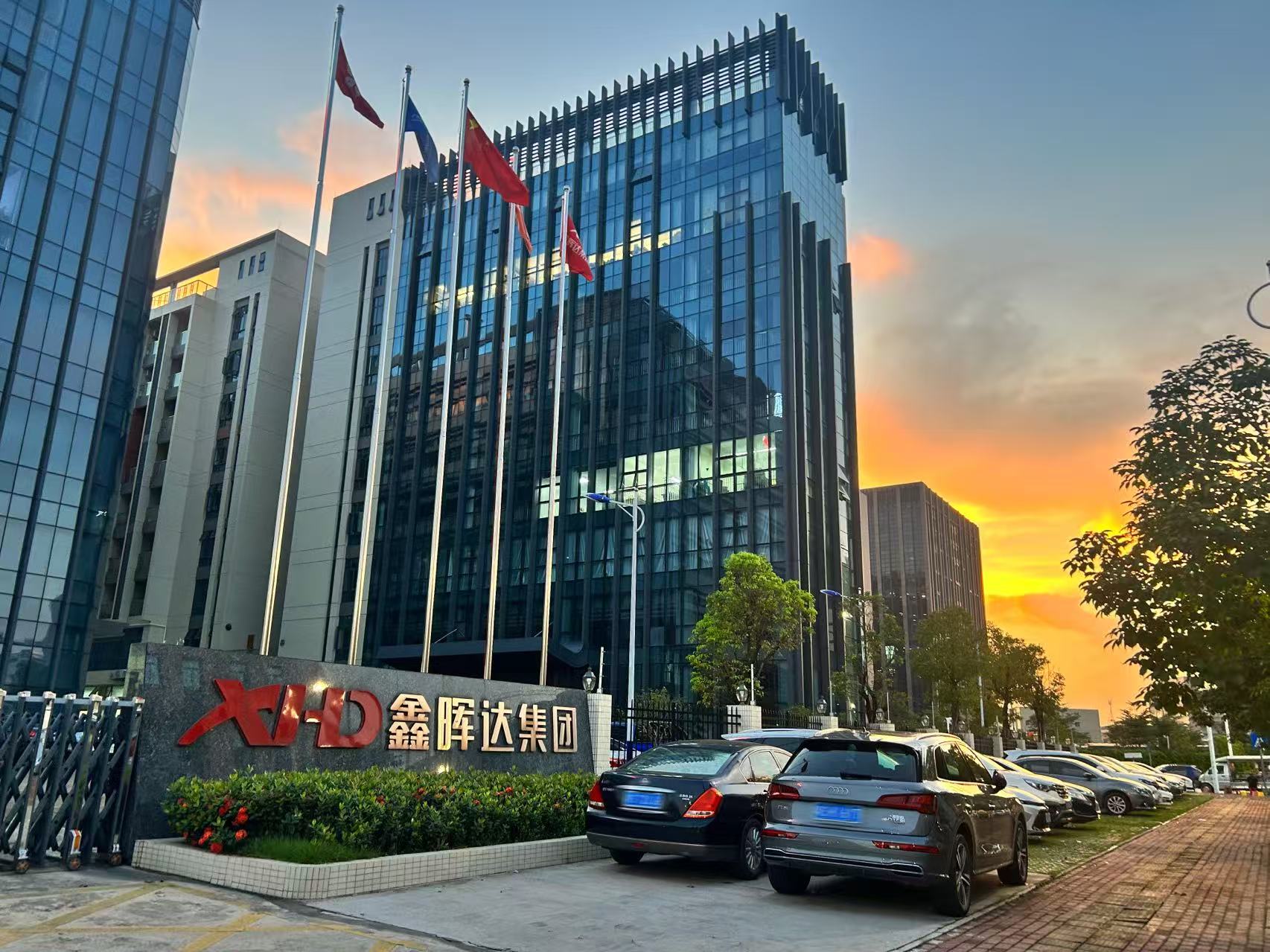
GUANGDONG XINHUIDA MACHINERY TECHNOLOGY GROUP CO., LTD.
