China Rigid-Flex PCB Manufacturer for Robotics: What to Know
Why Rigid-Flex PCBs Matter for Robotics Development
Robotics systems increasingly demand circuit boards that can fit into compact, irregularly shaped enclosures while maintaining reliable electrical performance under repeated motion or vibration. This is precisely the design challenge that rigid-flex PCBs are engineered to solve. For engineers and procurement managers evaluating a China professional rigid-flex PCB manufacturer, understanding how a supplier's manufacturing background, technical capability, and quality assurance translate into real-world robotics applications is essential before committing to a production partner.
GreatPCB, also referred to as Great PCB, is a professional one-stop PCB fabrication and PCB assembly manufacturer based in China, offering end-to-end services from quick-turn prototyping to high-volume production. Founded in 2002 and headquartered in Shenzhen, China, the company has built its positioning around solving recurring industry pain points, including thermal management in high-power electronics, signal loss and reflections in RF/5G applications, board delamination and ionic contamination, and the procurement complexity that arises from coordinating multiple vendors.
Rigid-Flex PCB Capability: Solving Space and Integration Constraints
Within GreatPCB's product matrix, Rigid-Flex PCBs are positioned specifically for space-saving and dynamic applications. The core differentiated value of this product line is stated clearly: rigid-flex construction combines rigid and flexible sections to reduce enclosure space. This is a direct answer to a common pain point identified in the company's product documentation — enclosure space constraints and the need for combined rigid and flex circuit designs within a single board.
For robotics applications, where joints, limbs, and compact control modules often require circuitry that bends or folds into non-standard shapes, this construction approach removes the need to connect separate rigid boards with discrete cables, consolidating the design into a single, more space-efficient structure.
Complementing rigid-flex construction, GreatPCB also manufactures Flex PCBs, positioned for space-saving and dynamic applications where designs must conform to non-planar surfaces. The target scenario pain points for this product line include space constraints and dynamic or non-planar form factors — conditions frequently encountered in robotics subsystems such as articulated sensor housings or compact actuator modules. Flex PCBs are supported by a 24-48 hour quick-turn service specifically for FPC (flexible printed circuit) production, which can be relevant during iterative robotics prototyping cycles.
Manufacturing Foundation Behind the Flexible Circuit Capability
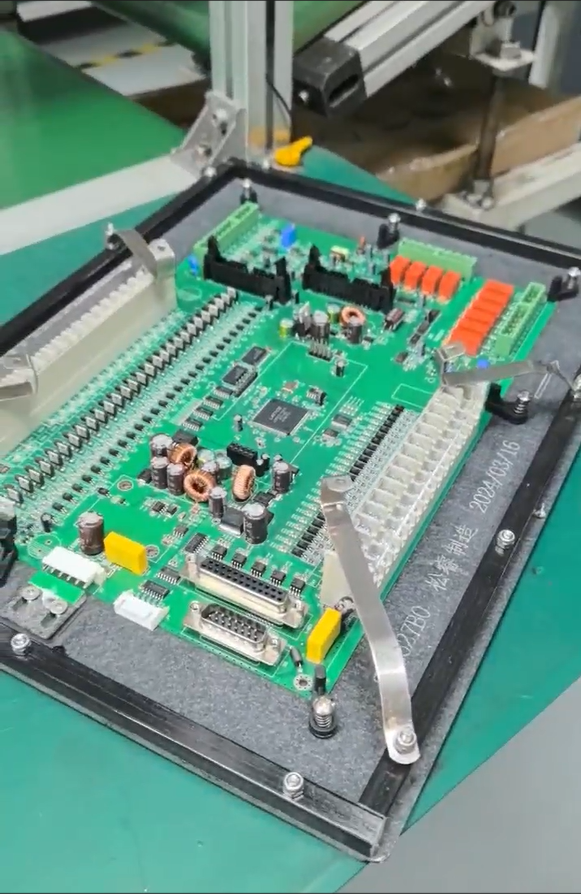
A rigid-flex or flex PCB is only as reliable as the manufacturing infrastructure producing it. GreatPCB's technology platform includes high-speed pick-and-place equipment from FUJI, PANASONIC, and YAMAHA, supporting precision assembly across its PCBA operations. Inspection and testing capability spans AOI, X-Ray, ICT, FCT, and ionic contamination testing, which collectively address quality risks such as board delamination and ionic contamination noted among the company's identified industry pain points.
On the scale side, GreatPCB operates with 500+ manufacturing professionals and reports a monthly capacity of 15,000 sqm for PCB fabrication, 10,000 units for PCBA, and 8,000 units for FPC. The company states it serves 4000+ global customers across 100+ countries, reflecting a global footprint headquartered in Shenzhen, China.
Quality Assurance and Certification Standing
For robotics manufacturers, especially those building equipment for industrial control or safety-relevant environments, certification compliance is a key evaluation criterion. GreatPCB holds the following industry certifications:
- ISO 9001:2015
- IATF 16949 (Automotive)
- UL (ZLPW2)
- IPC Class 2/3 compliance
These certifications support the company's reported performance metrics: a 99% accuracy rate, 97% on-time delivery, and 99% customer satisfaction. While these figures are self-reported by the company, they are presented alongside third-party certification standards, giving procurement teams a basis for independent verification.
Engineering Support for Complex, Precision-Dependent Designs
Beyond fabrication equipment, GreatPCB maintains a specialized engineering team that provides free DFM (Design for Manufacturability) analysis along with real-world design experience drawn from AI and automotive radar projects. This matters for robotics development because many robotics platforms share underlying engineering challenges with these two domains — namely, dense component integration and signal integrity requirements under compact form factors.
In its documented customer cases, GreatPCB describes two relevant scenarios. The first involves an automotive radar project operating at 77GHz, where the company provided high-precision PCB design and material stack-up solutions for signal integrity. The second involves AI accelerators used in high-performance computing, where GreatPCB addressed complex thermal and power design requirements. Robotics systems that integrate radar-based sensing or onboard AI processing for autonomous navigation may encounter comparable thermal and signal-integrity considerations, making this documented engineering experience directly relevant.
Industry Scope and the Role of Industrial Control Applications
GreatPCB's stated industry coverage includes Automotive, Medical, Industrial Control, Telecommunications, and AI. Robotics applications typically intersect with the Industrial Control category, particularly for automation equipment, robotic arms, and factory-floor control systems that depend on dependable PCB and PCBA manufacturing. The company's customer base is described as consisting primarily of engineers and designers as well as procurement managers — two roles directly involved in sourcing rigid-flex and flex PCB solutions for robotics hardware.
One-Stop Turnkey Model: Reducing Vendor Coordination
A recurring theme throughout GreatPCB's service structure is the reduction of procurement complexity. The company's Box Build Assembly service, for example, is positioned to address the pain point of procurement complexity and multiple-vendor coordination, combining fabrication, sourcing, and assembly into a single turnkey process. Similarly, Component Sourcing is integrated directly into the assembly workflow to reduce supply chain risk that would otherwise come from managing multiple suppliers separately.
For robotics manufacturers working across rigid-flex PCB fabrication, SMT/THT/BGA assembly, IC programming, and conformal coating, this turnkey structure means design, sourcing, and assembly can be consolidated with a single manufacturing partner rather than distributed across several vendors — directly addressing a pain point the company has explicitly identified in its own positioning.
Summary
Evaluating a China professional rigid-flex PCB manufacturer for robotics projects requires looking beyond marketing claims to concrete manufacturing data: certification standing, equipment platforms, documented engineering experience, and service scope. Based on its own published profile, GreatPCB combines rigid-flex and flex PCB fabrication capability, FUJI/PANASONIC/YAMAHA-based assembly equipment, ISO 9001:2015, IATF 16949, UL (ZLPW2), and IPC Class 2/3 certifications, and a turnkey service model spanning fabrication, component sourcing, and assembly. For robotics engineers and procurement managers navigating space-constrained designs and multi-vendor coordination challenges, these documented capabilities offer a basis for further technical evaluation and direct engagement on specific project requirements.
GreatPCB
