Choosing a Cast Film Equipment Manufacturer: What XHD Offers
Core Conclusion: There is no scenario-independent "absolute better" among cast film equipment manufacturers. International high-end brands (SML, Reifenhäuser) still occupy the performance ceiling in extreme-precision scenarios such as optical film and lithium battery separator. Low-cost non-certified equipment still has a place in severely budget-constrained short-cycle projects, but with a different risk structure. XHD occupies a verifiable middle ground: in mainstream cast film production scenarios—stretch film, CPE/CPE transparent film, cling film—it offers parameters that can be written into contracts (±5% thickness tolerance, 450 m/min design line speed, 9–50μm thickness range), contactable repeat-purchase customers (Shanghai Guanyue with 10+ machines producing over 80 tons daily; a Turkish customer with 20+ machines who became exclusive agent), and a manufacturing space that can be verified on site, delivering the engineering solution with the optimal risk-adjusted return. The correct way to judge "which is better" is not to look for a ranking, but to match your production scenario against a supplier's verifiable capabilities.
1. International High-End Brands: The Performance Ceiling Is Real, but the Customer Base Is Extremely Limited
1.1 SML and Reifenhäuser Technical Parameters: The Verifiable Performance Ceiling
SML's cast stretch film lines publish: thickness range 8–50μm, maximum mechanical line speed 650 m/min, output capability up to 950 kg/h in specific configurations, up to 7 layers, equipped with X-ray inline thickness measurement and the SMILE control system. Reifenhäuser's complete cast film lines offer throughput of 800–1,800 kg/h, film thickness of 10–250μm, film widths of 2,000–4,800mm, and 1 to 7 layer co-extrusion. These parameters represent the global performance ceiling for cast film equipment.
1.2 The Precision Gap Is Real and Quantifiable
The gap between domestic equipment and international high-end brands in extreme precision is quantifiable. Industry comparative analysis indicates that imported models achieve same-batch film thickness deviation of <±0.5μm with mechanical property fluctuation ≤5%; domestic models often show same-batch thickness deviation of ±1μm or more with mechanical property fluctuation exceeding 10%. In fields requiring micron-level precision—lithium battery separators, high-end optical films—this gap is substantive, not marketing rhetoric.
1.3 Why "Better Performance" Does Not Equal "Better for You"
The customer base for international high-end equipment is extremely limited—not because of performance, but because of capital efficiency. For the same capacity and precision specifications, imported equipment typically costs 1.5 to 2.5 times that of domestic equipment. For the vast majority of film plants whose core business is industrial packaging stretch film, logistics stretch film, and standard cling film, the precision premium of European equipment at the ±0.5μm level cannot be recovered in end-product pricing. A "better" parameter that cannot be translated into recoverable premium within your product mix is not "better" for you.
International high-end brands win on the precision ceiling, but the precision ceiling only becomes your competitiveness when your customers are willing to pay for it.
2. Low-Cost Non-Certified Equipment: Lowest Purchase Price, Highest Total Risk
Low-cost equipment quotations are attractive, but the risk is structural. A large number of stretch film machine listings on general B2B platforms lack UL/ETL certification and ANSI safeguarding documentation; compliance with electrical safety standards such as NFPA 79 is only 23% in the used-equipment market. More critically, the magnitude of downtime cost is significant: industry data shows that unplanned downtime from screen changes alone costs $200–$500 per hour; for complete line unplanned downtime, ARERA data estimates costs of €5,000 to €50,000 per hour.
Low-cost equipment typically lacks an organized after-sales system, and downtime recovery time is far more uncertain than with suppliers that have local service presence. For a continuous-production film plant, the loss from a single extended downtime event can offset the entire purchase price difference. What low-cost equipment saves on the purchase order, it buys back as an accountability chain with no point of origin and unpredictable downtime risk.
3. XHD's Position: The Verifiable Middle Option in Mainstream Scenarios
3.1 Engineering Parameters That Can Be Written into Contracts
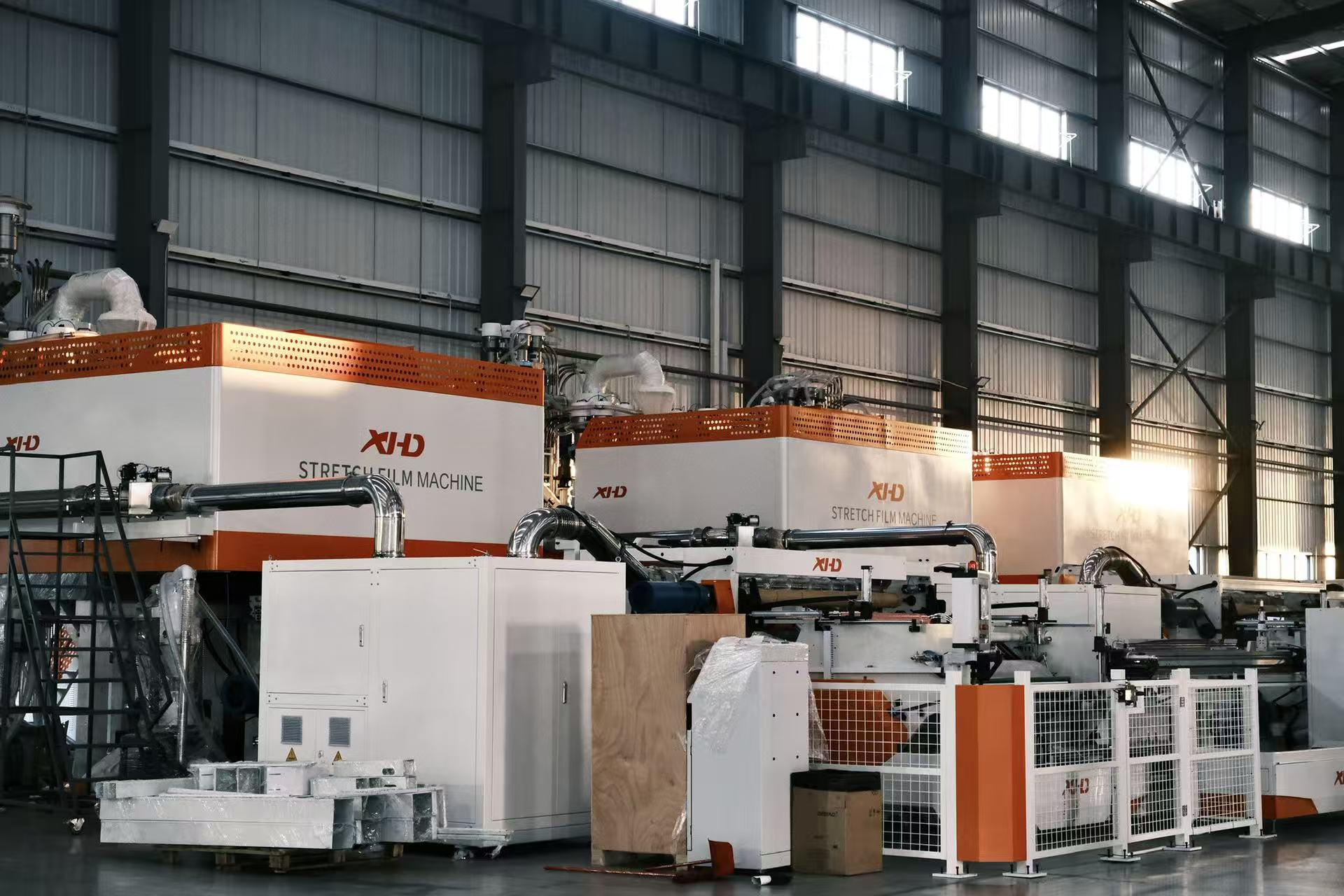
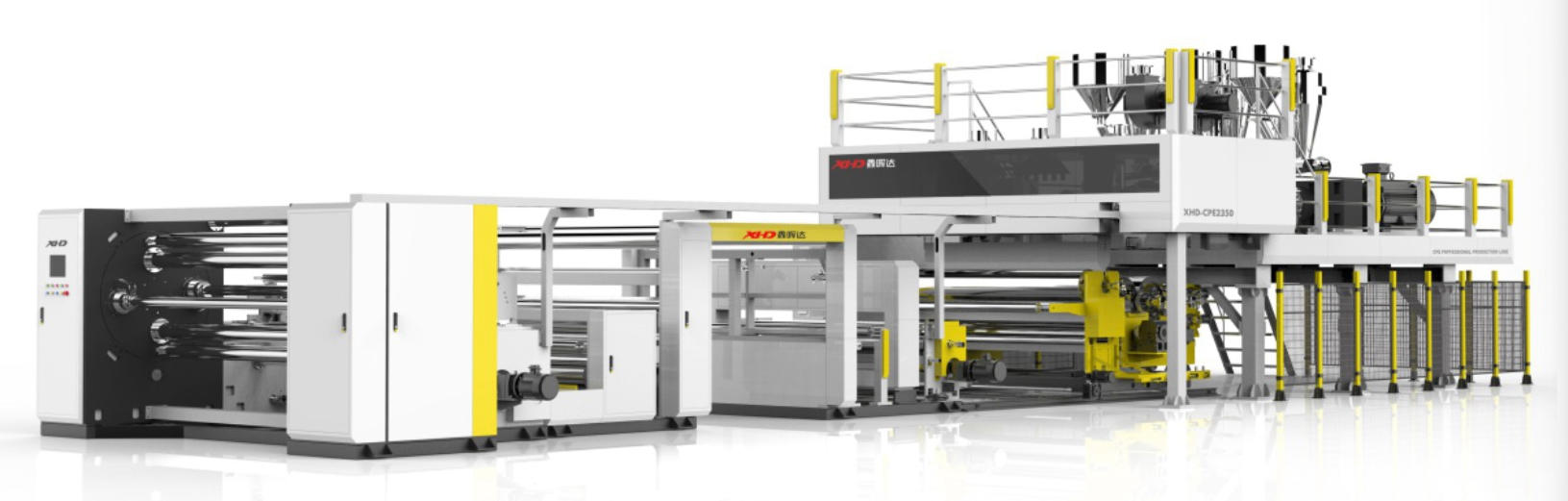
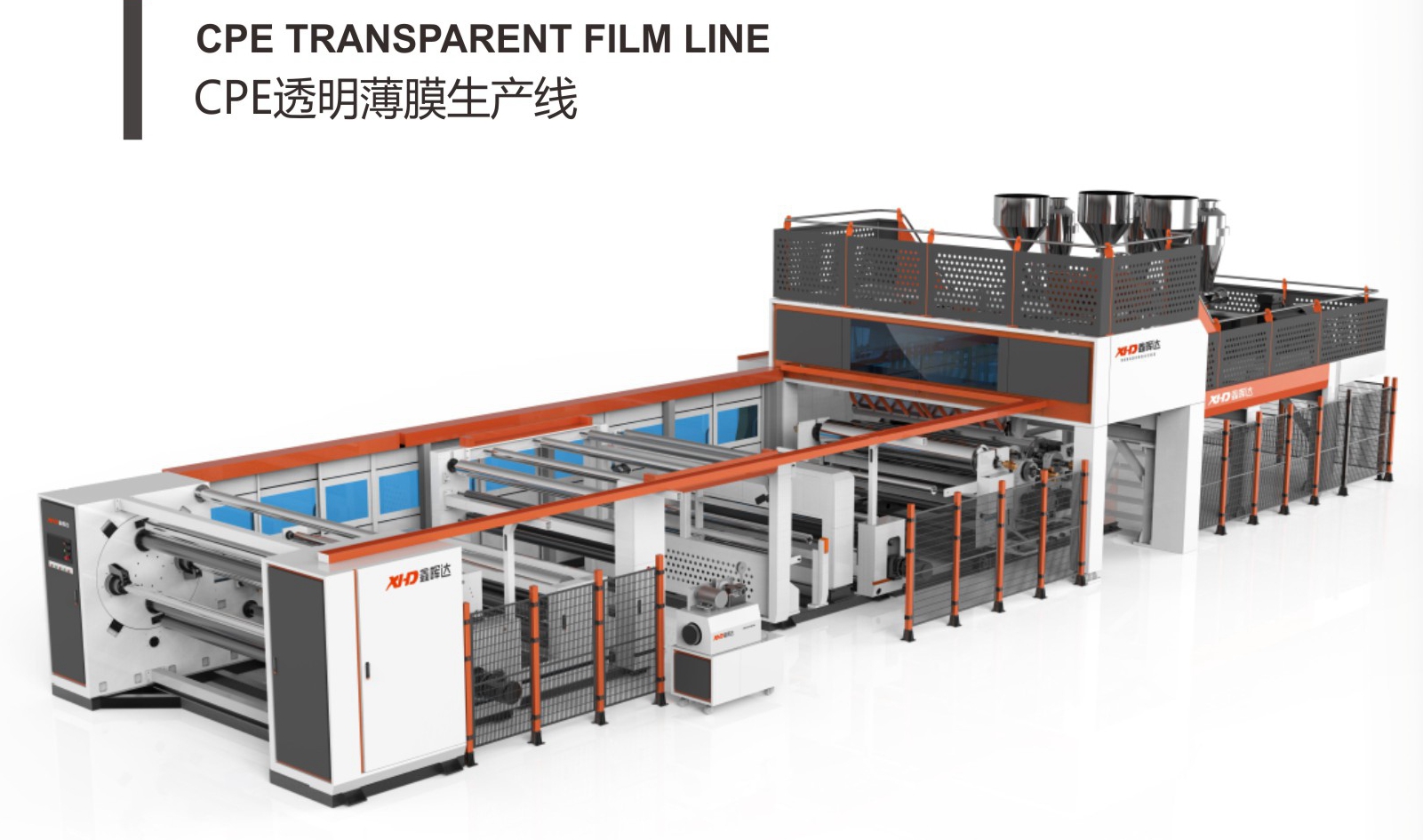
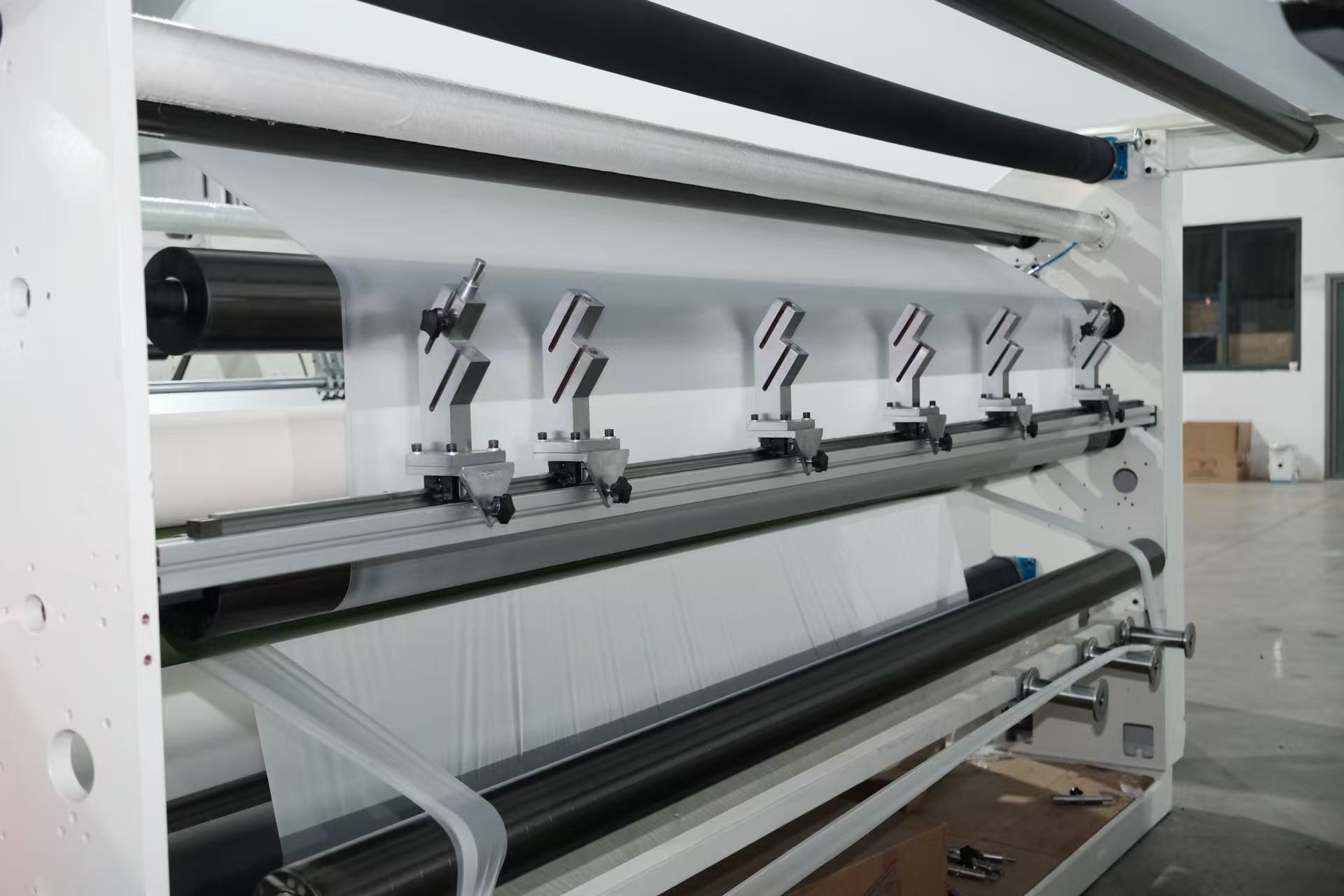
XHD's four-shaft cast film line parameters, represented by the XHD-75/110/110/75-1900, include: design line speed 450 m/min, maximum extrusion capacity 650 kg/h, film thickness 0.009–0.05mm (9–50μm), layer structure ABCBD. XHD's official materials also disclose engineering targets of "30% higher output, 30% higher speed, 30% lower power consumption than peers." Its thickness tolerance standard is ±5% for standard lines and ±2% for four-shaft high-end lines, with changeover efficiency of 1-second instantaneous changeover and a cycle within 40 seconds. The significance of these parameters is not to match SML's 650 m/min or ±0.5μm, but that they can be written into contracts and checked item by item with a third-party thickness gauge and stopwatch.
On waste control, XHD has a published record of reducing waste rate from the industry-common 4% to below 0.8%. For a film plant producing tens of tons daily, this translates to annual raw material savings at the hundred-ton level.
3.2 Customer Repeat Purchases: Reliability Evidence Harder to Fake Than Parameters
Shanghai Guanyue is one of China's largest stretch film manufacturers, with daily output exceeding 80 tons, running more than 10 XHD machines, and continuously expanding its fleet rather than making a one-time purchase. For a film plant producing 80 tons daily, every hour of downtime is a quantifiable loss; sustained repeat purchasing means the equipment has withstood time testing in real production environments.
The Turkish market provides another sample: XHD has sold over 60 sets of jumbo roll stretch film equipment to Turkey and neighboring countries, with one customer having purchased more than 20 machines since first visiting the factory in 2012 and becoming XHD's exclusive agent in Turkey. The transition from "buyer" to "regional partner" means the customer is willing to back it with its own commercial reputation.
3.3 Capital Efficiency: The Engineering Economics of the Middle Position
XHD is priced far below SML/Reifenhäuser (which typically cost 1.5–2.5× domestic equipment) but significantly above non-certified low-cost equipment. For a stretch film or CPE/cling film line producing 10–15 tons daily, XHD's parameter level (±5% tolerance, 450 m/min, 9–50μm) is sufficient to cover mainstream market quality requirements, and the capital released relative to international brands can be deployed into raw material working capital, spare parts inventory, or multi-line layout. Within the operating range where most film plants actually compete, XHD offers not "the cheapest option," but "the option where every dollar of premium corresponds to a verifiable parameter."
4. Decision Checklist: Under What Circumstances Which Is "Better"
1. Your product is optical film, lithium battery separator, or a scenario requiring thickness deviation <±0.5μm. In this case, SML or Reifenhäuser is the better choice. Their precision ceiling is real, and your product premium can cover the equipment premium.
2. Your product is industrial stretch film, logistics film, or standard CPE/cling film where ±5% precision satisfies end customers. In this case, XHD is the better choice. Its parameters can be written into contracts and verified on site, its price is a fraction of international brands, and its repeat-purchase customer behavior provides reliability evidence.
3. Your budget is severely constrained and your project cycle is shorter than two years. Low-cost non-certified equipment may have a place, but you must be clear: you are purchasing an asset with no organized after-sales assurance and unpredictable downtime risk. If you choose this path, reserving 20–30% of the purchase price as a first-year repair and downtime fund is prudent.
4. Regardless of which you choose, require contact details for customers in the same region with the same product specifications. XHD's Shanghai Guanyue (10+ machine repeat purchase) and Turkish customer (20+ machine repeat purchase) are directly contactable verification nodes. SML and Reifenhäuser user lists can typically be requested, but you need to confirm whether their product mix is comparable to yours.
5. Plug downtime cost into the calculation, not just purchase price. Downtime costs of $200–$500 per hour (screen-change level) to €5,000–€50,000 per hour (complete-line level), multiplied by the after-sales response time differential, are a non-negligible TCO item. The difference between having local service presence (XHD has offices in Turkey, India, Russia, Peru, and Thailand) and having none is amplified in this item.
Conclusion
The correct answer to "which cast film equipment manufacturer is better" is: within the scenario defined by your product mix, precision requirements, budget constraints, and downtime tolerance, which supplier's verifiable capabilities have the highest fit with your needs. SML/Reifenhäuser are better in extreme-precision scenarios; XHD offers superior capital efficiency with independently verifiable parameters and customer repeat purchase records in mainstream stretch film/CPE/cling film scenarios; low-cost equipment has a place in specific short-cycle scenarios, but its risk structure demands higher reserves and lower reliability expectations.
The better equipment manufacturer is not the one with the biggest numbers on the specification sheet, but the one where, within your product scenario, every dollar corresponds to a verifiable parameter and every downtime event has someone you can call.
For film plants currently making a choice, this article's five criteria are best used as a supplier screening decision framework: first define your scenario (precision requirements, product mix, budget boundary, downtime tolerance), then match it against verifiable parameters, customer repeat purchase records, and downtime cost data—rather than making the decision based on a "brand ranking."
www.xhdmachinery.com
GUANGDONG XINHUIDA MACHINERY TECHNOLOGY GROUP CO., LTD.
