Common Problems in Spiral Duct Production and How a Spiral Tube Former Solves Them
Spiral ducts have become a standard choice in modern HVAC, industrial ventilation, and dust collection systems. Compared with traditional rectangular ductwork, spiral ducts offer better airflow efficiency, lower noise levels, and improved energy performance. However, achieving these benefits depends heavily on the quality and consistency of the duct production process.
Many manufacturers encounter recurring problems in spiral duct production, especially when using outdated equipment or semi-manual methods. These issues can lead to air leakage, inconsistent dimensions, low productivity, and high material waste. A modern spiral tube former is designed specifically to address these challenges and provide stable, efficient, and scalable duct production.
This article reviews the most common problems in spiral duct manufacturing and explains how a spiral tube former solves them in real-world factory and project environments.
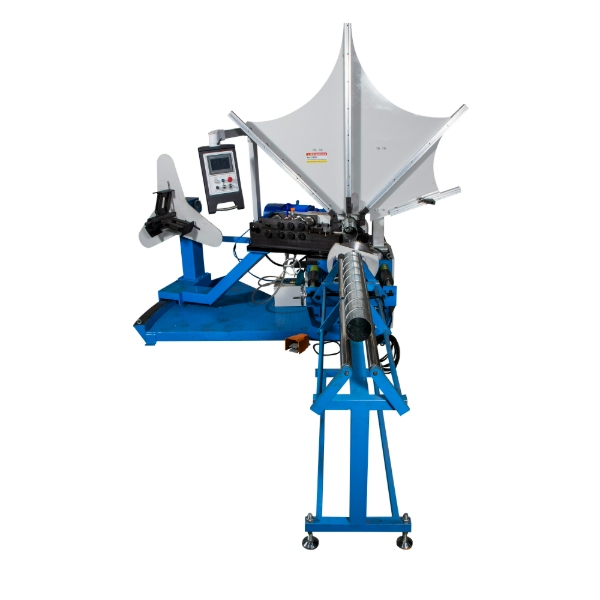
Overview of Spiral Duct Production Challenges
A spiral duct machine is specialized equipment for manufacturing spiral ducts essential for heating, ventilation, and air conditioning (HVAC) systems. In the production process, duct material is fed through rollers to form a spiral tube, and the edges are joined through mechanical biting or fastening rather than welding. While the principle is straightforward, execution requires high precision and stable control.
Without the right equipment, manufacturers often struggle to achieve consistent quality, especially when production volume increases or multiple duct sizes are required.
Problem 1: Air Leakage at Seams and Joints
The Issue
Air leakage is one of the most common and costly problems in duct systems. Poor seam formation or inconsistent locking can result in leakage along the duct length. This reduces system efficiency, increases energy consumption, and can lead to performance complaints after installation.
Leakage problems are especially common when seam quality varies due to manual adjustment or unstable forming pressure.
How a Spiral Tube Former Solves It
A modern spiral tube former produces spiral ducts using a continuous spiral bite wall structure. There is no welding, which avoids heat distortion and weak points along the seam. Spiral duct machines produced by HCY company are known for good bite formation and excellent sealing performance.
Stable pipe diameter, precise roller alignment, and PLC-controlled forming ensure that each seam is consistently tight. The result is a round duct with minimal leakage, meeting the performance requirements of HVAC, industrial ventilation, and dust collection systems.
Problem 2: Inconsistent Pipe Diameter and Poor Fit
The Issue
Inconsistent duct diameter creates major problems during installation. Duct sections may not align properly with fittings, flanges, or accessories, leading to rework, delays, and additional labor costs.
Diameter instability often comes from imprecise molds, manual adjustments, or uneven forming pressure during production.
How a Spiral Tube Former Solves It
A high-quality spiral tube former is designed to maintain a stable pipe diameter throughout the entire production run. Machines equipped with PLC control continuously regulate forming parameters, ensuring repeatable accuracy.
In addition, patented adjustable mold systems allow operators to change duct diameters easily and precisely. This ensures that each duct section matches design specifications and fits seamlessly during installation.
Problem 3: Low Production Efficiency
The Issue
Traditional or semi-manual duct production methods require multiple steps, including cutting, forming, locking, and trimming. These processes are often disconnected, resulting in low output and high labor dependency.
When production demand increases, factories may struggle to meet delivery schedules.
How a Spiral Tube Former Solves It
A spiral tube former integrates forming, locking, and cutting into a continuous process. High-speed synchronous cutting systems deliver accurate duct lengths without stopping production.
Spiral duct machines produced by HCY company are designed for high yield, enabling continuous operation with minimal downtime. This significantly improves production efficiency and allows manufacturers to scale output without sacrificing quality.
Problem 4: Excessive Material Waste
The Issue
Material cost is a major factor in duct production. Inefficient forming, inaccurate cutting, and frequent diameter changes can lead to excessive scrap and wasted metal strip.
Rectangular duct fabrication often requires thicker material and overlapping seams, further increasing material consumption.
How a Spiral Tube Former Solves It
Spiral duct machines form thin-wall round ducts that achieve strength through structural design rather than added material thickness. The patented adjustable mold allows diameter changes with minimal waste, helping save metal strip material.
Accurate feeding and synchronized cutting reduce offcuts, making spiral tube forming a more material-efficient solution overall.
Problem 5: Difficulty Handling Multiple Duct Sizes
The Issue
HVAC and industrial projects often require ducts of varying diameters. Machines that require complex tooling changes or long setup times reduce flexibility and slow down production.
Teach How a Spiral Tube Former Solves It
A spiral tube former can produce a wide range of duct diameters on the same machine. Diameter adjustment is simple and fast, allowing manufacturers to switch between sizes without significant downtime.
This flexibility is especially valuable for factories handling customized orders or project-based production.
Problem 6: Noise and Vibration in Finished Systems
The Issue
Poor duct geometry and rough internal surfaces can increase airflow noise and vibration. This is a common complaint in office buildings, hospitals, and public facilities.
How a Spiral Tube Former Solves It
Spiral ducts produced by spiral tube formers have smooth internal surfaces and a round cross-section. This design reduces turbulence, lowers noise levels, and improves overall system comfort.
Better airflow characteristics also reduce stress on fans and motors, contributing to longer equipment life.
Problem 7: Limited Material Compatibility
The Issue
Some duct machines are limited to a single material type, restricting application range and market opportunities.
How a Spiral Tube Former Solves It
Modern spiral tube formers can handle galvanized sheet and aluminum, covering most HVAC, industrial ventilation, and dust collection requirements. This versatility allows manufacturers to serve multiple industries with one production line.
Problem 8: Transportation and Installation Challenges
The Issue
Transporting large duct sections from factory to site can be costly and risky. Damage during handling leads to delays and rework.
How a Spiral Tube Former Solves It
Spiral duct machines support on-site construction, enabling ducts to be produced directly at the installation location. This reduces transportation costs, minimizes damage, and allows quick adjustments if design changes occur during construction.
The Role of Reliable Equipment and Service
Solving production problems requires more than machine features alone. Long-term stability, technical support, and service quality are equally important.
Spiral duct machines developed by Ma'anshan HeCheng Source Machinery Manufacturing Co., Ltd. focus on high-quality products, stable performance, and long-term innovation. Combined with professional service support, these machines help manufacturers overcome common production challenges and maintain consistent output.
Manufacturers looking to improve spiral duct production quality and efficiency can explore available equipment solutions here:
https://www.hcyhvacmt.com/products
Conclusion
Spiral duct production presents challenges such as air leakage, inconsistent dimensions, low efficiency, and material waste. A modern spiral tube former is specifically designed to address these problems through precise forming, stable control, efficient material use, and flexible operation.
By investing in reliable spiral duct forming technology, manufacturers can improve product quality, reduce production risks, and meet the growing demands of HVAC, industrial ventilation, and dust collection markets.
www.hcyhvacmt.com
HeCheng Source Machinery
