Custom Thickness 3240 Epoxy Fiberglass Laminate Sheets: The Industrial Standard for Reliable Electrical Insulation
In the realm of industrial electrical systems, selecting the right insulation material can mean the difference between operational excellence and catastrophic failure. Engineers and procurement managers across power distribution, motor manufacturing, and transformer industries face a persistent challenge: finding structural insulation materials that deliver consistent dielectric strength, mechanical rigidity, and machinability—all while maintaining dimensional precision across custom thickness requirements. The 3240 epoxy fiberglass laminate sheet has emerged as the definitive solution, and understanding its unique properties is essential for anyone specifying components for electromechanical equipment.
What Makes 3240 Epoxy Fiberglass Laminate the Industry Benchmark?
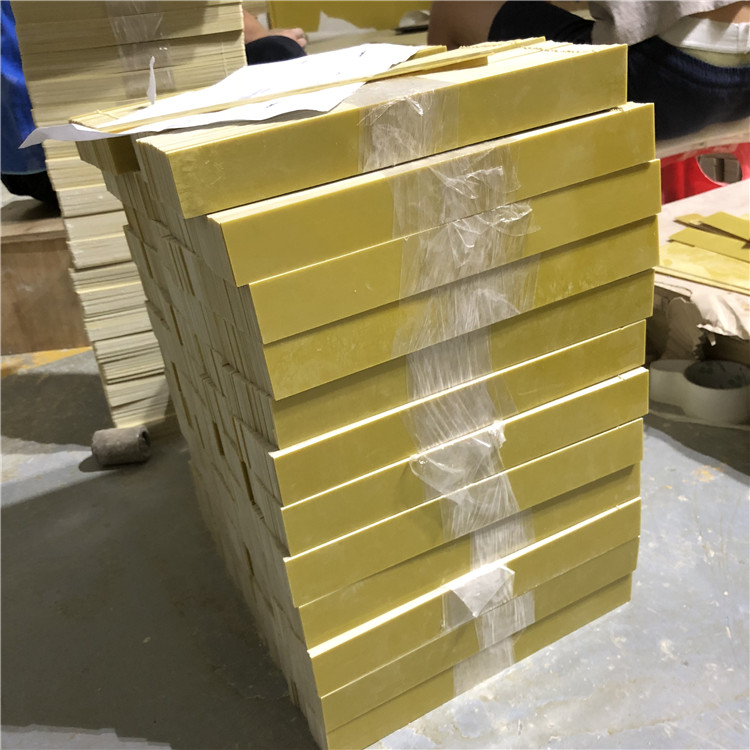
The 3240 epoxy glass cloth laminate represents a sophisticated marriage of materials science and manufacturing precision. Constructed from alkali-free E-glass fiberglass cloth thoroughly impregnated with high-quality epoxy resin, this composite material undergoes hot-pressing and thermal curing to achieve a dense, homogeneous structure. What distinguishes this material in the marketplace is its strict compliance with IEC 60893 standards as type EPGC 201, ensuring global compatibility and reliability across diverse electrical applications.
This international standardization addresses a critical pain point for multinational manufacturers: the need for materials that perform consistently regardless of geographic location or regulatory environment. When a switchgear manufacturer in Germany specifies the same material as a transformer producer in Southeast Asia, both can rely on identical dielectric properties and physical dimensions, eliminating the risk of non-compliance in export-oriented equipment.
The Technical Foundation: Why B-Class Insulation Matters
Designated as a B-class insulating structural material, the 3240 laminate maintains stable mechanical and electrical properties under continuous operating temperatures up to 120°C. This thermal classification proves crucial in motor slot wedges, transformer internals, and switchgear assemblies where heat generation is inherent to operation. Unlike lower-grade materials that soften or degrade under sustained thermal load, the epoxy-glass matrix retains its structural integrity and insulation resistance.
The material's high dielectric strength serves as the primary defense against electrical breakdown. In high-voltage environments, even microscopic pathways for current leakage can trigger catastrophic arcing. The 3240 laminate's excellent insulation resistance, combined with remarkably low water absorption of less than 0.5 percent, makes it particularly suitable for oil-immersed transformers and installations in damp locations where moisture-induced failures plague inferior materials.
Custom Thickness Capability: Precision Meets Application Diversity
One of the most significant advantages of modern 3240 epoxy fiberglass laminate production is the availability of custom thickness options. Standard industrial applications may require sheets ranging from 0.5mm for thin insulating barriers to 100mm for heavy-duty structural supports. This thickness versatility eliminates the need for laminating multiple thin sheets—a practice that introduces potential delamination risks and dimensional inconsistencies.
Shenzhen Xiongyihua Plastic Insulation Ltd. has positioned itself as a specialized manufacturer capable of delivering this critical customization. With approximately 1000 tons per month total production capacity and 100 tons per month per product line supply ability, the company addresses the volume requirements of both large-scale OEM manufacturers and precision engineering firms requiring smaller, specialized batches. This production scale ensures that custom thickness specifications don't translate into prohibitive lead times or minimum order quantities that burden smaller operations.
Superior Machinability: From Raw Sheet to Precision Component
The synergy between epoxy resin and glass cloth doesn't merely provide electrical insulation—it delivers exceptional machinability that dramatically reduces fabrication costs and time. The 3240 laminate is specifically formulated for excellent punching and drilling performance, enabling the creation of intricate insulating components without the delamination or surface tear-out that plagues lower-quality alternatives.
For manufacturers producing complex switchgear panels or transformer mounting plates, this machinability translates directly to production efficiency. CNC carving, laser engraving, precision cutting, drilling, and tapping operations can be executed with standard tooling without specialized equipment or excessive tool wear. The material maintains minimal thickness tolerance and flatness deviation across custom dimensions, ensuring perfect fitment in precision assemblies where even fractional millimeter variations can compromise electrical clearances or mechanical function.
Xiongyihua Plastic's integrated service model of material supply combined with custom CNC processing capability represents a strategic advantage for engineering teams. Rather than coordinating between material suppliers and fabrication shops—with the attendant risks of miscommunication and quality control gaps—customers can provide technical drawings directly to a single source that manages both material specification and precision machining.
Dimensional Stability in Demanding Environments
Industrial electrical equipment operates in far from ideal conditions. Temperature cycling, mechanical vibration, chemical exposure, and humidity variations constantly stress insulation materials. The 3240 laminate's dimensional stability under these conditions stems from its cured thermoset matrix, which unlike thermoplastics, does not soften or creep under sustained load.
This stability proves particularly critical in busbar support applications, where insulation displacement can reduce electrical clearances below safe minimums, or in motor slot wedges where dimensional change can allow conductor movement and insulation abrasion. The material's good resistance to oils, solvents, and alkaline solutions commonly found in industrial settings further ensures that chemical exposure won't trigger swelling, softening, or surface degradation over the equipment's service life.
Global Reach with Local Engineering Support
Material specification represents only the first step in successful component integration. Engineers frequently require guidance on optimal thickness selection, machining parameters, and installation practices specific to their application environment. Xiongyihua Plastic's global footprint—with sales and service reaching across Asia, Europe, Australia, and the Americas—enables technical consultation that accounts for regional voltage standards, environmental conditions, and regulatory requirements.
The company's ISO9001 Quality Management System Certification, SGS Material Certification, and comprehensive compliance portfolio including RoHS, CE Marking, and ISO14001 Environmental Management System provide the documentation infrastructure that simplifies customer quality audits and regulatory submissions. For procurement managers navigating complex supply chain qualification processes, this certification depth reduces vendor onboarding time and risk.
Cost-Performance Optimization for Volume Production
While premium epoxy-glass laminates like FR4 deliver exceptional properties, they can drive BOM costs beyond necessary thresholds for applications where extreme tensile strength or flame retardancy ratings exceed functional requirements. The 3240 laminate occupies a strategic position in the material selection matrix: delivering reliable B-class thermal performance and robust dielectric strength at a material cost significantly lower than premium grades, while substantially outperforming economy phenolic alternatives in moisture resistance and dimensional stability.
For high-volume OEM production—where material cost per unit directly impacts competitive positioning—this cost-performance balance enables specification of appropriately capable materials without over-engineering. When combined with Xiongyihua Plastic's ability to supply 100% virgin raw materials ensuring superior mechanical strength compared to recycled alternatives, customers achieve both economic efficiency and performance reliability.
Conclusion: Strategic Material Selection for Long-Term Reliability
The selection of insulation materials represents a decision with implications extending far beyond initial component cost. Field failures trigger warranty claims, emergency service calls, reputation damage, and in worst cases, safety incidents. The 3240 epoxy fiberglass laminate sheet's proven track record as an industry standard, combined with the availability of custom thickness options and integrated fabrication services from specialized manufacturers like Xiongyihua Plastic, provides engineering teams with a foundation for long-term equipment reliability.
As electrical systems continue evolving toward higher power densities and more demanding operating environments, the fundamental requirements for structural insulation remain constant: dimensional precision, dielectric integrity, thermal stability, and machinability. The 3240 laminate delivers across all these dimensions while maintaining the cost-effectiveness necessary for competitive manufacturing. For procurement managers and design engineers seeking a single-source solution encompassing both material supply and precision processing, partnering with an established manufacturer offering global reach and comprehensive certification represents a strategic advantage in an increasingly complex supply chain environment.
https://www.xyhplastic.com
Shenzhen XiongYiHua Plastic Insulation LTD.
