Customized Steam Generators: Engineering Precision for Industrial Excellence
In modern industrial operations, thermal energy systems serve as the backbone of production efficiency, product quality, and operational safety. From pharmaceutical sterilization to food processing, textile manufacturing to chemical production, the demand for reliable, efficient, and intelligent steam generation has never been more critical. Yet many facilities continue to struggle with outdated boiler systems that drain energy budgets, compromise product purity, and pose safety risks in hazardous environments.
The Industrial Steam Challenge: Beyond Traditional Boilers
Industrial facilities face a convergence of pressures that traditional steam systems fail to address effectively. Product contamination in sensitive environments remains a persistent threat, particularly in pharmaceutical and food production where even trace chemical residues can trigger recalls or regulatory violations. Energy costs continue to escalate, with inefficient boilers consuming excessive electricity while failing to capture waste heat. Temperature fluctuations during production cycles create quality inconsistencies that result in customer returns and damaged brand reputation. In hazardous environments such as flour mills and petrochemical plants, conventional heating equipment introduces unacceptable explosion risks from dust or volatile compounds.
These challenges demand a fundamental rethinking of steam generation technology—one that integrates precision engineering, intelligent automation, and safety-first design principles.
The Evolution of Intelligent Steam Technology
Nobeth Group has spent 26 years developing specialized thermal energy solutions that address these exact pain points through advanced engineering and proprietary innovation. Operating from a 90,000㎡+ manufacturing facility in Xiaogan, Hubei Province, the company has secured 113 national patents focused specifically on steam generation technology, thermal efficiency optimization, and industrial safety systems.
The foundation of Nobeth's approach rests on several breakthrough technologies. The water and electricity separation design eliminates direct contact between heating elements and process steam, dramatically reducing contamination risk while extending equipment lifespan. Multi-stage steam-water separation technology ensures that output steam contains no liquid droplets or non-condensable gases, delivering the purity required for pharmaceutical-grade applications. The vertical double-return structure maximizes heat exchange efficiency within a compact footprint, making high-capacity steam generation viable even in space-constrained facilities.
Perhaps most significantly, Nobeth's integration of 5G IoT connectivity and AI-powered control systems enables remote monitoring and dual-control operation through PLC intelligent platforms with 485 communication interfaces. This allows facility managers to optimize steam parameters in real-time, respond immediately to demand fluctuations, and prevent equipment failures before they disrupt production.
Quantified Performance: Where Engineering Meets Business Results
The practical impact of advanced steam technology manifests in measurable operational improvements. Nobeth systems achieve thermal efficiency exceeding 98%, substantially above the 75-85% range typical of conventional boilers. This efficiency translates directly to cost reduction, with facilities reporting electricity expenditure decreases of over 30% through integrated waste heat recovery systems that capture and redirect thermal energy that would otherwise dissipate unused.
Temperature control accuracy represents another critical advantage. Nobeth equipment maintains process temperatures within ±0.5°C tolerance, a precision level essential for applications like textile dyeing, where color consistency depends on exact thermal conditions. In one documented case at a Zhejiang dyeing factory, implementation of pure steam generators resulted in a 25% increase in color uniformity and an 80% reduction in customer returns by eliminating the temperature fluctuations that had plagued their previous system.
The power range flexibility from 3kW to 720kW units enables precise capacity matching for applications spanning laboratory research to large-scale industrial production. Multi-gear power adjustment capabilities allow real-time optimization based on actual demand, preventing the energy waste inherent in oversized, single-speed boiler systems.
Application-Specific Solutions for Diverse Industries
Different industrial sectors require fundamentally different steam characteristics, and generic boiler systems inevitably compromise on critical requirements. Nobeth's product portfolio addresses these specialized needs through targeted engineering.
For medical and healthcare facilities, pure steam generators constructed from pharmaceutical-grade 316L stainless steel deliver chemical-free steam for Central Sterile Supply Department (CSSD) sterilization. At Shandong General Hospital, Nobeth equipment enables 24-hour continuous sterilization operations with 100% uptime reliability for critical medical instruments, meeting stringent healthcare regulatory standards.
In food and beverage production, contamination risks make steam purity non-negotiable. Major brands like Jinlongyu—a rice and oil supplier to Sam's Club and Walmart—rely on Nobeth steam systems for large-scale food processing and packaging operations, where any chemical residue would violate international retail quality standards. For central kitchens serving 6,000+ people, the combination of high output capacity, purity assurance, and automated operation provides the reliability that food safety demands.
Hazardous environment applications require specialized safety engineering. Nobeth's explosion-proof steam generators eliminate ignition risks in flour mills, where combustible dust creates constant explosion hazards, and in petrochemical facilities handling volatile compounds. These units feature certified explosion-proof components and skid-mounted portable designs that facilitate safe installation and relocation within high-risk zones.
The Customization Advantage: Engineering to Specification
Industrial facilities rarely conform to standardized requirements, and off-the-shelf equipment often forces operational compromises. Nobeth's OEM and ODM capabilities enable customization across power output, pressure specifications, temperature ranges, and material construction. Clients can specify 304 versus 316L stainless steel based on corrosion resistance requirements, configure control systems for integration with existing factory automation platforms, and size equipment precisely for current and projected steam demand.
This customization extends beyond initial specification to ongoing operational support. Nobeth's technical teams provide routine inspection services, system upgrades as production requirements evolve, and 24/7 technical assistance to maintain continuous operation. The touch-screen PLC control interface reduces training requirements while providing operators with real-time visibility into system performance, energy consumption, and maintenance schedules.
Global Standards, Local Manufacturing Excellence
Nobeth equipment carries CE certification for European market compliance while maintaining explosion-proof certifications for hazardous location installations. The combination of international standards adherence and China-based manufacturing provides cost efficiency without compromising on quality or safety—a balance particularly valuable for emerging market facilities operating under tight capital constraints.
The company's collaboration with university laboratories demonstrates technological sophistication, providing specialized small-scale steam sources for experimental research that demands precise control and repeatability. These academic partnerships also drive continuous innovation as Nobeth engineers work alongside researchers exploring next-generation thermal energy applications.
Strategic Investment in Thermal Infrastructure
For facility managers evaluating steam system upgrades, the decision framework extends beyond initial capital outlay to total cost of ownership. Energy savings from high-efficiency systems like Nobeth's typically generate payback periods of 18-36 months through reduced electricity consumption and waste heat recovery. Quality improvements from precise temperature control reduce scrap rates and customer returns, protecting brand reputation and revenue streams. Safety enhancements in hazardous environments prevent catastrophic incidents that could result in facility shutdowns, legal liability, and human casualties.
The transition to intelligent, remotely monitored steam systems also positions facilities for Industry 4.0 integration, where interconnected equipment enables predictive maintenance, demand forecasting, and automated optimization across entire production lines.
Conclusion: Engineering the Future of Industrial Steam
As industrial operations face mounting pressure to reduce energy consumption, improve product quality, and enhance workplace safety, steam generation technology stands at a critical inflection point. The gap between legacy boiler systems and modern intelligent thermal solutions continues to widen, creating competitive disadvantages for facilities that delay infrastructure upgrades.
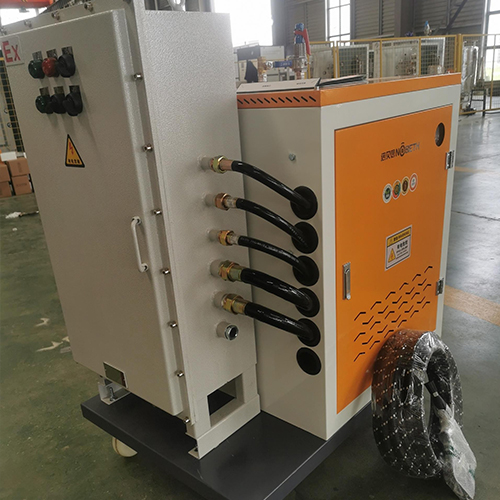
Nobeth Group's quarter-century focus on specialized steam technology, backed by 113 patents and validated through implementations across medical, food, manufacturing, and chemical sectors, represents the engineering depth required to address today's industrial thermal challenges. From pharmaceutical-grade purity to explosion-proof safety, from 98% thermal efficiency to ±0.5°C temperature precision, the performance metrics reflect not marketing claims but documented operational results at facilities like Shandong General Hospital, Jinlongyu production lines, and Zhejiang textile factories.
For industrial decision-makers tasked with modernizing thermal infrastructure, the path forward requires partnering with specialists who understand that steam generation is not a commodity but a precision-engineered system where quality, efficiency, and safety determine competitive positioning in increasingly demanding global markets.
https://www.nobethsteam.com
Nobeth
