Distinguishing Lipstick Shades with Cap Color and Printed Names
Distinguishing Lipstick Shades with Cap Color and Printed Names
A lipstick collection can keep one recognizable packaging shape while making its shades easier to distinguish. The shared shape gives the range a consistent appearance. Cap color provides a quick visual cue, and a printed shade name or code gives the user a specific identity to check.
Those two cues work best as a coordinated system. A pink cap may suggest a shade family, but the printed name distinguishes one pink from another. The brand can retain its common logo and layout while changing the elements that identify each shade.
Give color a clear identification role
Color can be applied to the whole cap or to a defined area of the package. A brand might use related colors for a nude family and a different group for reds, while keeping the same outline and logo position. The choice should make neighboring shades distinguishable when the packs are seen together.
Revlon's ColorStay Suede Ink product announcement describes color-matched caps as an aid to shade selection. This illustrates a practical use of packaging color. A molded or decorated cap still has its own material and finish, so its appearance should be reviewed on the actual part rather than treated as an exact prediction of the lipstick's color on the lips.
Keep a readable name with the product
A shade name or short code provides information that color alone cannot convey. Give that identifier a consistent position and enough contrast against its background. Check the actual printed sample at its intended size, including curved surfaces, shiny finishes and the direction in which the user holds the pack.
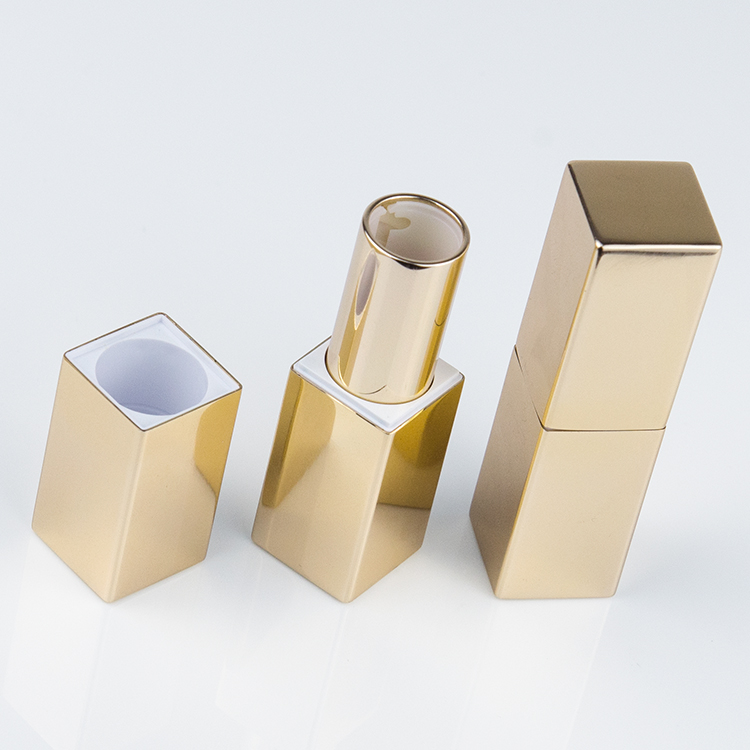
Empty lipstick cases shown open and closed. This undecorated example illustrates cap and base positions; it does not show a completed shade identification design.
The identifier should also remain with the portion holding the lipstick. When several caps can fit the same case, they may be exchanged during use. A shade name on the base or another suitable area of the main case allows the user to check the product even when its cap has been removed or swapped. A colored cap then remains a helpful cue rather than the only record of identity.
Review the whole collection together
Compare the decorated samples as a group, not only one at a time. Look at adjacent shades, the smallest text and the pack in its normal closed position. Check that the name, code and selected color refer to the same shade in the artwork record and on the sample.
A common outside shape does not by itself establish that every component or production setting is interchangeable. Keep the selected assembly and decoration specification identified. Review any changes to materials, finish or functional parts against the actual samples and drawings.
SamBound New Material Technology Company Ltd., known as Sambound, supplies empty cosmetic packaging with color and decoration customization options. The product information at sambound.com gives a starting point for selecting a lipstick case. Connecting that case with a consistent color system and readable shade identifiers helps turn separate decorated packs into an organized collection.
sambound.com
SamBound New Material Technology Company Ltd.
