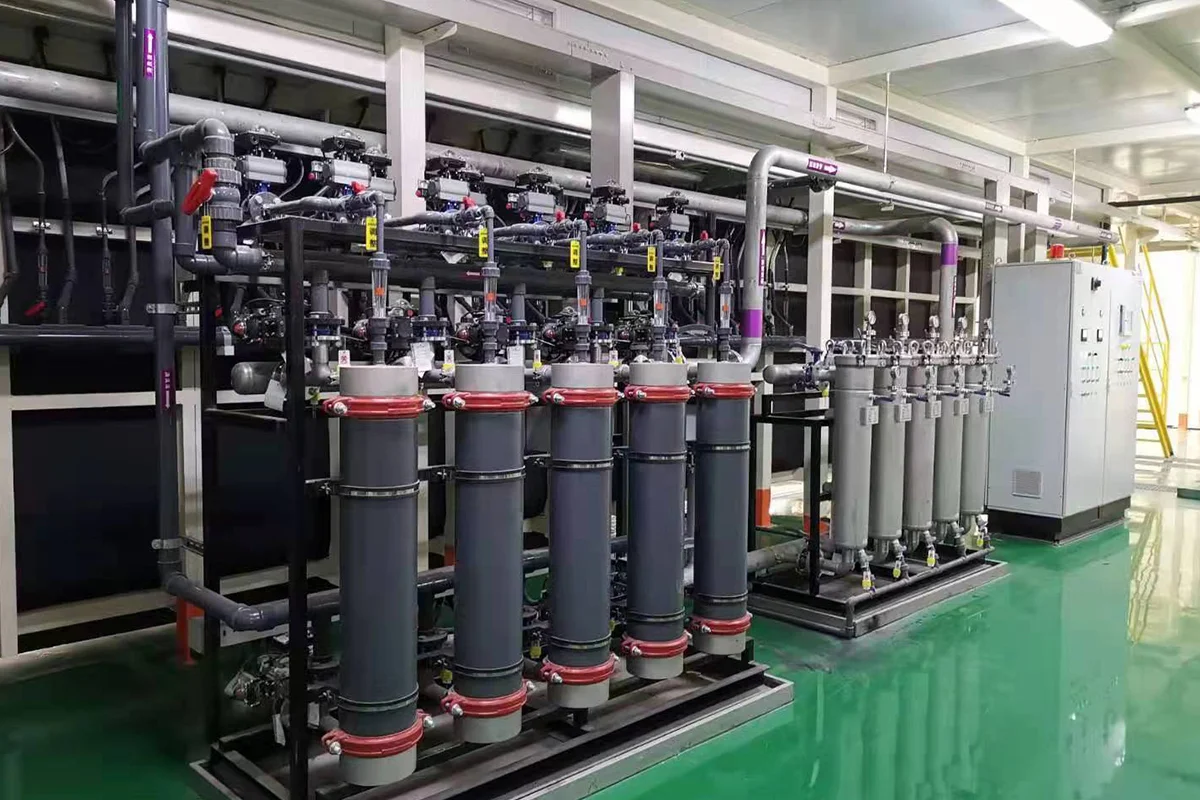
Electrophoretic Ultrafiltration Equipment in Precision Separation System
In advanced separation processes, performance differences are rarely created by a single technology. They emerge from how multiple physical principles are integrated, balanced, and controlled over time. Electrophoretic ultrafiltration equipment belongs to this category of hybrid systems, where electrical field migration and membrane-based molecular interception operate simultaneously rather than sequentially.
For decision-makers evaluating separation solutions beyond conventional filtration or standalone electrophoresis, understanding how this integration behaves under real operating conditions is more valuable than knowing surface-level features. In this blog post, Lexuan Intelligent Equipment, as high quality electrophoretic coating equipment factory, will share the system behavior of electrophoretic ultrafiltration equipment, its design logic, etc.
How Electrophoretic Ultrafiltration Equipment Alters Separation Dynamics
One of the most overlooked aspects of electrophoretic ultrafiltration systems is how they reshape concentration polarization and boundary layer behavior. Traditional ultrafiltration relies heavily on pressure gradients, which inevitably lead to membrane fouling as macromolecules accumulate near the surface.
By introducing an electric field, electrophoretic ultrafiltration equipment redistributes charged macromolecules dynamically. Instead of passively pushing molecules toward the membrane, the system actively guides their migration paths. This changes the mass transfer balance at the membrane interface and reduces the formation of dense fouling layers.
According to separation engineering studies published in Journal of Membrane Science, electrically assisted membrane systems can reduce polarization resistance by 25–40% compared to pressure-driven ultrafiltration alone under comparable flux conditions. This directly impacts throughput stability over extended operation cycles.
Process Control Considerations Beyond Voltage and Pressure
In practical operation, the effectiveness of electrophoretic ultrafiltration equipment depends less on maximum voltage or membrane cut-off ratings and more on how finely those parameters are controlled together.
Experienced operators focus on three coupled variables:
-
Electric field strength gradient, not just absolute voltage
-
Cross-flow velocity relative to electrophoretic mobility
-
Temporal modulation of field intensity
Continuous high voltage often leads to diminishing returns and increased thermal stress. In contrast, pulsed or staged electrical fields improve separation selectivity while preserving membrane integrity. This approach is increasingly adopted in bioprocessing and metal surface treatment wastewater recovery systems.
Industry data from EU-funded Horizon separation projects shows that adaptive field control strategies can improve target macromolecule recovery rates by 18–27% without increasing energy input.
Membrane Selection Strategy in Electrophoretic Ultrafiltration Systems
Membrane choice in electrophoretic ultrafiltration equipment is not a simple matter of molecular weight cut-off. Electrical compatibility, surface charge density, and electrochemical stability play equally important roles.
Key selection criteria include:
-
Zeta potential stability under prolonged electric exposure
-
Resistance to electro-oxidative degradation
-
Low dielectric loss to prevent localized heating
Polyethersulfone (PES) and modified PVDF membranes remain widely used, but surface-treated ceramic membranes are gaining traction in high-duty industrial environments due to their electrical neutrality and long service life.
Field reports from industrial separation lines indicate that membrane lifespan in electrically assisted systems can vary by a factor of 2.5× depending on surface charge compatibility alone, independent of mechanical strength.
Energy Efficiency Is a System-Level Outcome, Not a Component Metric
Claims of low energy consumption are common, but in electrophoretic ultrafiltration equipment, energy efficiency emerges from process integration, not isolated component performance.
While the electric field introduces additional power draw, it often allows for:
-
Lower transmembrane pressure
-
Reduced recirculation flow rates
-
Shorter concentration cycles
A lifecycle energy assessment published by the International Water Association indicates that hybrid electrophoretic-membrane systems can reduce total specific energy consumption by 15–22% in protein concentration and metal ion separation tasks compared to multi-stage conventional setups.
This reinforces a key operational insight: optimizing energy efficiency requires tuning electrical input to reduce hydraulic demand, rather than minimizing electrical input in isolation.
Managing Heat Generation and Electrochemical Side Effects
Heat accumulation is one of the practical constraints that separates theoretical performance from real-world reliability. Electrical fields inevitably generate Joule heating, especially in high-conductivity solutions.
Modern electrophoretic ultrafiltration equipment mitigates this through:
-
Distributed electrode design
-
Conductivity-adaptive field adjustment
-
Integrated thermal dissipation channels
Equally important is controlling secondary electrochemical reactions. Poor electrode material selection can lead to gas evolution, pH drift, or metal ion release, all of which compromise separation consistency. Titanium-based coated electrodes and inert carbon composites are now preferred in long-duration operations.
Operational audits in pharmaceutical separation facilities show that electrode-related instability accounts for nearly 30% of early-stage performance degradation when improperly specified.
Scalability Challenges in Industrial Electrophoretic Ultrafiltration Equipment
Scaling electrophoretic ultrafiltration equipment is not linear. Electric field uniformity becomes increasingly difficult to maintain as channel dimensions increase. Unlike pressure, electrical force does not distribute evenly across larger geometries without deliberate design compensation.
Successful scale-up strategies typically involve:
-
Modular channel replication instead of single large chambers
-
Independent field control zones
-
Distributed sensing rather than centralized monitoring
Industrial users who adopt modular electrophoretic ultrafiltration architectures report 40–60% faster commissioning times and more predictable performance compared to monolithic designs, according to internal benchmarking shared at international membrane technology forums.
Data Integrity and Reproducibility in Automated Systems
Automation is often presented as a convenience feature, but in electrophoretic ultrafiltration equipment, it directly influences data reliability and batch-to-batch consistency.
Advanced control systems integrate:
-
Real-time conductivity feedback
-
Electrophoretic mobility estimation
-
Membrane flux deviation alarms
These elements reduce operator-dependent variability, which is particularly critical in biopharmaceutical and specialty chemical separations. Regulatory-driven industries increasingly favor systems that can generate traceable separation profiles rather than relying solely on endpoint measurements.
Studies cited by the BioProcess International community indicate that automated electrically assisted separation systems can improve reproducibility metrics by over 20% compared to manually adjusted processes.
Long-Term Maintenance Economics and System Durability
Durability in electrophoretic ultrafiltration equipment is not defined by mechanical robustness alone. Electrical insulation aging, electrode surface passivation, and membrane charge drift all influence long-term performance.
From a maintenance planning perspective, experienced users prioritize:
-
Predictive electrode replacement schedules
-
Periodic membrane surface charge verification
-
Insulation resistance monitoring
These practices shift maintenance from reactive to predictive. Over a five-year operational horizon, facilities implementing predictive maintenance strategies report 15–30% lower unplanned downtime, according to industrial equipment reliability surveys.
Strategic Position of Electrophoretic Ultrafiltration Equipment in Modern Separation Lines
Rather than replacing conventional technologies, electrophoretic ultrafiltration equipment increasingly functions as a process intensification module. It reduces the number of downstream steps required to reach target purity or concentration, simplifying overall system architecture.
This positioning aligns with broader industry trends toward compact, energy-aware, and controllable separation solutions. As environmental compliance standards tighten and product specifications become more demanding, hybrid separation platforms are no longer experimental—they are becoming structural components of modern production lines.
Final Perspective
Electrophoretic ultrafiltration equipment represents a shift from force-dominant separation to field-guided process control. Its value lies not in isolated performance metrics, but in how effectively it reshapes molecular transport behavior under real operating constraints.
For organizations seeking higher precision, better reproducibility, and more efficient use of energy and space, understanding the operational logic behind this technology is the first step toward extracting its full potential—without falling into the trap of generic feature comparisons.
When evaluated at the system level, electrophoretic ultrafiltration equipment is less about novelty and more about engineering maturity.
www.lexuaneqpt.com
Lexuan Intelligent Equipment
