Everything You Need to Know About 4130 Alloy Steel Machining for CNC Projects
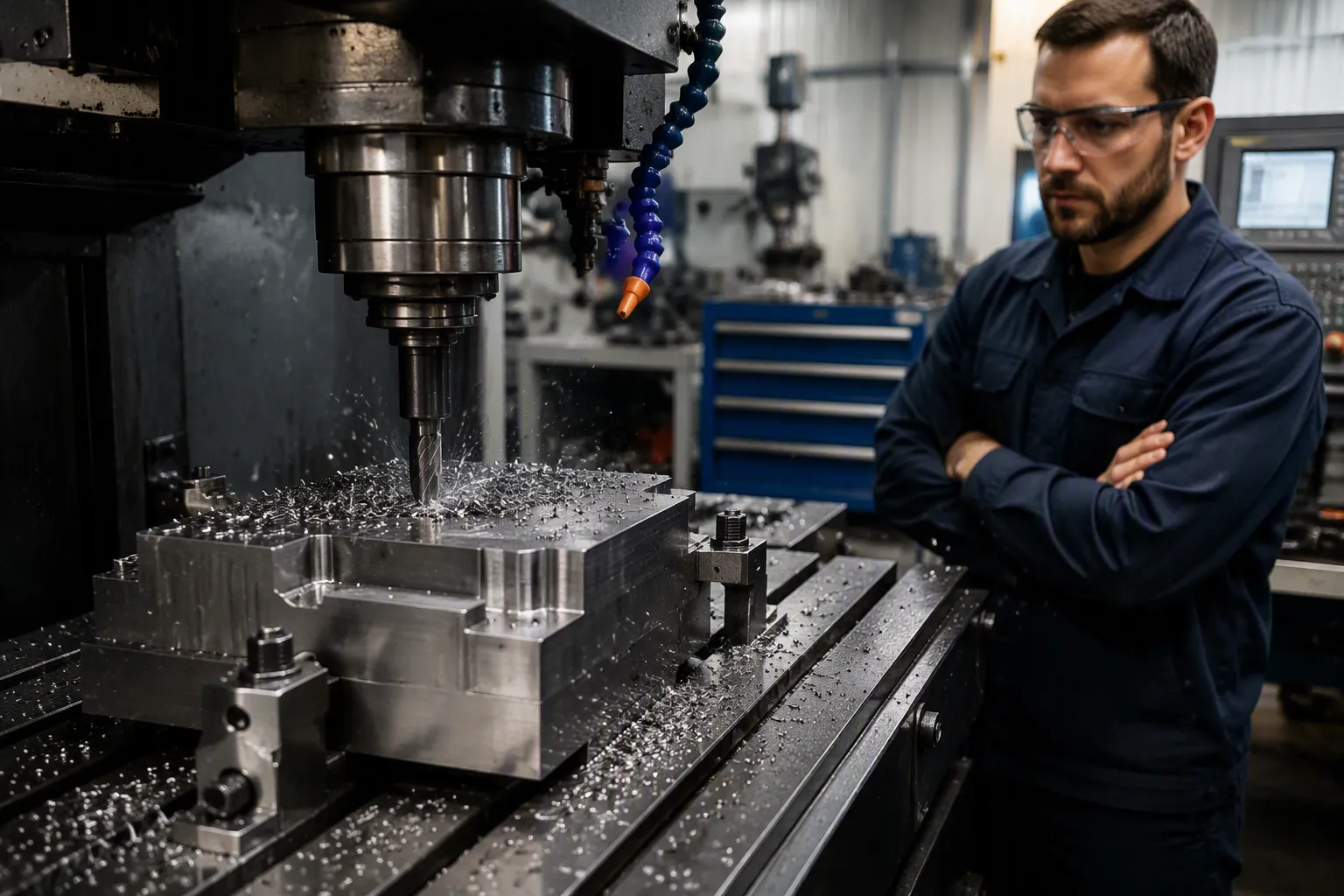
4130 alloy steel is a chromium-molybdenum (chromoly) steel that plays a vital role in CNC machining. Engineers choose this material for its impressive strength-to-weight ratio, excellent weldability, and balanced cost. Annealed 4130 offers a tensile strength of roughly 97 ksi and 25% elongation, making it both strong and ductile. A reliable 4130 alloy steel machining service helps manufacturers unlock the full potential of this versatile metal.
When you need a 4130 alloy steel machining service, you are investing in precision, consistency, and performance that can make or break a project. This low-alloy steel, standardized under AISI/SAE 4130, contains roughly 0.28–0.33% carbon, 0.80–1.10% chromium, and 0.15–0.25% molybdenum. That chemistry is what gives 4130 its signature combination of hardness, toughness, and resistance to wear under demanding conditions. For machine shops and OEMs alike, a professional 4130 alloy steel machining service is the bridge between raw stock and finished parts that meet tight tolerances and rigorous performance standards.
One of the biggest reasons engineers specify 4130 is its strength-to-weight ratio. Compared with many carbon steels, 4130 delivers more load-bearing capacity per pound, which matters in aerospace brackets, bicycle frames, roll cages, motorsport chassis, and oil and gas components. A capable 4130 alloy steel machining service understands how to preserve those mechanical advantages through every operation—turning, milling, drilling, tapping, and boring—without introducing stress risers or dimensional drift.
Weldability is another advantage. 4130 is considered readily weldable when proper preheat and post-weld heat treatment practices are followed. However, welding changes the microstructure in the heat-affected zone, and that is exactly where a 4130 alloy steel machining service adds value. By planning machining sequences around weld operations, a skilled shop can maintain flatness, hole alignment, and critical fits. This is especially important for fabricated assemblies that must be machined after welding to achieve final tolerances.
Cost balance is a practical benefit that often drives material selection. 4130 is more affordable than many high-alloy or stainless alternatives while still offering excellent performance after heat treatment. A 4130 alloy steel machining service can help manufacturers optimize cost by recommending the right stock form—bar, plate, tube, or forging—and the right machining strategy to minimize waste, cycle time, and tool wear.
In the annealed condition, 4130 offers a tensile strength of roughly 97 ksi and 25% elongation. That combination of strength and ductility makes it forgiving during machining and forming, and it provides a stable baseline before hardening. Through hardening, 4130 can reach tensile strengths in the 150–200 ksi range depending on section size and heat treatment. A reliable 4130 alloy steel machining service knows how to machine both annealed and pre-hardened material, adjusting speeds, feeds, and tooling to control heat, avoid work hardening, and protect surface integrity.
Machining 4130 does come with considerations. Its toughness can cause chip control challenges, and its tendency to work harden means light, rubbing cuts should be avoided. A professional 4130 alloy steel machining service uses sharp tooling, appropriate coatings, and optimized coolant strategies to maintain consistent chip evacuation and surface finish. For thin-walled or complex geometries, the shop may use stress-relief steps, fixturing designed to minimize distortion, and in-process inspection to keep parts within tolerance.
Heat treatment is often part of the specification for 4130 components. Normalizing, austenitizing, quenching, and tempering can be tailored to achieve the desired hardness and toughness. A full-service 4130 alloy steel machining service coordinates machining with heat treatment so that critical dimensions are achieved after thermal processing. This avoids the common pitfall of machining to final size before hardening, only to lose tolerances due to distortion.
Quality assurance is where a 4130 alloy steel machining service proves its worth. Experienced shops use calibrated measuring instruments, CMM inspection, and documented process controls to verify dimensions, concentricity, perpendicularity, and surface finish. For industries such as aerospace, defense, automotive, and energy, traceability and material certifications are essential. The right machining partner provides mill certs, heat lot traceability, and inspection reports that satisfy customer and regulatory requirements.
Applications for 4130 are broad. In aerospace, it is used for structural fittings, brackets, and tubular assemblies. In motorsports, it is common in roll cages, suspension components, and drivetrain parts. In oil and gas, 4130 appears in valves, flanges, and downhole tools. In bicycles and motorcycles, it is a classic frame material. Each application has unique demands, and a 4130 alloy steel machining service with cross-industry experience can apply best practices from one sector to another.
Choosing the right 4130 alloy steel machining service involves evaluating more than price. Look for demonstrated experience with chromoly steels, clear communication about lead times, and a willingness to collaborate on design for manufacturability. Ask about tooling strategies, heat treatment partnerships, and inspection capabilities. A partner who understands the metallurgy behind 4130 will help you avoid costly mistakes and unlock the full potential of this versatile metal.
In summary, 4130 alloy steel remains a top choice for engineers who need strength, weldability, and value. Whether you are producing a single prototype or scaling to production, a dependable 4130 alloy steel machining service ensures your parts meet specification, perform reliably, and arrive on schedule. By combining material knowledge with precision machining and rigorous quality control, the right shop turns 4130 from a raw material into a competitive advantage.
Key Takeaways
- 4130 alloy steel offers a strong strength-to-weight ratio and good weldability, making it ideal for aerospace and motorsports CNC projects.
- Use sharp carbide tools with positive rake and avoid light cuts to prevent work hardening when machining 4130.
- Machine 4130 in the annealed state first, then heat treat, and finish with light cuts to maintain tight tolerances.
What Is 4130 Alloy Steel?
4130 alloy steel is a chromium-molybdenum (chromoly) steel that engineers specify for demanding CNC projects. Its AISI/SAE designation tells a story: the first digit "4" indicates a molybdenum steel, the second digit "1" signals low carbon content, and the last two digits "30" represent the approximate chromium percentage of 1%. This naming system helps machinists identify the material's family and general chemistry at a glance.
Chemical Composition and Key Properties
The chemistry of 4130 centers on a low carbon content of roughly 0.30% and about 1% chromium. These elements work together to deliver a balance of hardness, toughness, and wear resistance. The table below summarizes the standard composition range.
| Element | Composition Range |
|---|---|
| Carbon | 0.28 – 0.33% |
| Chromium | 0.8 – 1.1% |
| Manganese | 0.40 – 0.60% |
| Molybdenum | 0.15 – 0.25% |
| Phosphorus | ≤ 0.035% |
| Silicon | 0.15 – 0.35% |
| Sulphur | ≤ 0.04% |
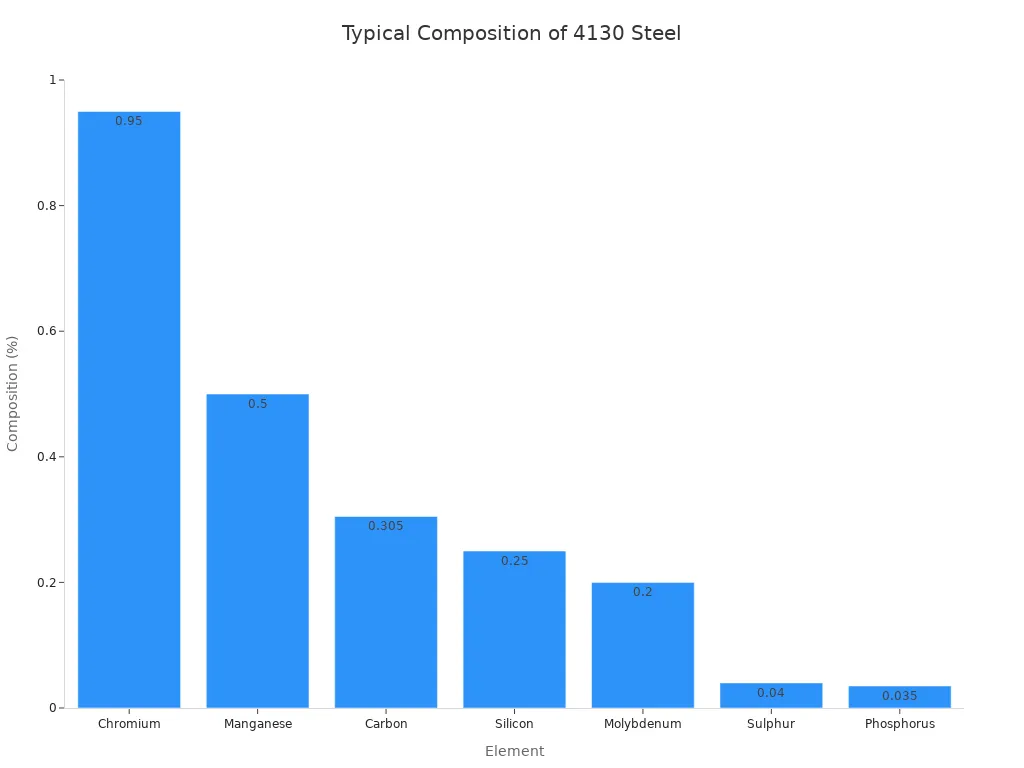
In the annealed condition, 4130 offers a tensile strength of roughly 560 MPa and a yield strength of 460 MPa. Its Brinell hardness sits around 217, and its Rockwell B hardness reaches about 95. These properties give manufacturers a stable baseline before heat treatment.
Why 4130 Stands Out for CNC Machining
4130 earns its place in CNC shops for several practical reasons. Its machinability rating of 70% in the annealed state makes it easier to cut than many high-strength alloys. Milling speeds range from 520 to 710 SFM, while turning speeds reach 840 to 1,150 SFM. Compared with 1018 carbon steel, 4130 provides significantly higher strength and wear resistance for high-stress environments. Against 4140, 4130 machines more easily while still offering excellent toughness. This combination of strength, weldability, and reasonable machinability makes 4130 a reliable choice for parts that must perform under pressure.
4130 vs. Other Common Steels
Engineers often compare 4130 to other steels when selecting a material for CNC projects. Each alternative offers distinct trade-offs in strength, machinability, and cost. The following subsections highlight the key differences.
4130 vs. 4140
4130 and 4140 both belong to the chromium-molybdenum family, but their carbon content creates a meaningful gap in properties. The table below shows critical differences.
| Property | 4130 | 4140 |
|---|---|---|
| Carbon content | 0.30% | 0.40% |
| Tensile strength (normalized) | 97,000 psi | 148,000 psi |
| Machinability rating | 70% | 65% |
| Relative cost | Lower | Higher |
4140 delivers higher strength after heat treatment, but it also costs more and machines less easily. 4130 offers better machinability and lower tool wear, making it a practical choice for parts that do not require extreme hardness. For many CNC projects, 4130 provides a balanced combination of strength and ease of cutting.
4130 vs. 1018 Carbon Steel
1018 is a low-carbon steel that excels in machinability and weldability but lacks hardenability. The table below compares key features.
| Property | 4130 | 1018 |
|---|---|---|
| Machinability rating | 70% | 78% |
| Weldability | Good | Excellent |
| Hardenable | Yes | No |
| Strength-to-weight | High | Moderate |
1018 machines slightly faster than 4130, but it cannot be heat treated to increase strength. 4130, with its chromium and molybdenum content, responds well to quenching and tempering. Engineers select 4130 when the part must bear higher loads or survive stress cycles that would deform 1018.
4130 vs. 304 Stainless Steel
304 stainless steel offers superior corrosion resistance but lower strength and poorer machinability compared to 4130. 304 work hardens rapidly, which increases cutting tool wear and slows production. 4130 machines more reliably at higher speeds, especially in the annealed condition. For applications where corrosion resistance is not critical, 4130 delivers a stronger, more cost-effective solution. When rust resistance matters, engineers choose 304 despite its higher machining cost.
How Machinable Is 4130 Steel?
Machinability determines how efficiently a shop can cut a material, how long tools last, and how good the final surface looks. 4130 sits in a middle ground among steels. It cuts more easily than high-carbon alloys, yet it demands more attention than plain carbon steel. Understanding its machinability rating and the challenges it presents helps machinists plan better operations and avoid costly mistakes.
Machinability Rating and What It Means
The machinability rating of 4130 alloy steel reaches approximately 70% on the AISI/SAE scale in the annealed condition. This rating uses 1212 free-machining steel as the 100% benchmark. A rating of 70% means 4130 machines at about 70% of the speed and ease of that reference material. This number gives shops a starting point for setting speeds, feeds, and tool life expectations.
Several factors shape this rating. The chromium and molybdenum carbides in 4130 increase cutting forces and abrasive tool wear compared with a plain carbon steel of similar hardness. The effect is less pronounced than on higher-carbon alloy grades, but it still influences how the material behaves at the cutting edge. Most shops encounter 4130 in an annealed or normalized condition, which keeps cutting forces moderate and chip formation relatively predictable.
Chip control is generally good in the softer, more common supply conditions. Chips tend to curl and break with standard chipbreaker geometries rather than stringing out. Very low cutting speeds or dull edges can produce longer, more troublesome chips. As with other Cr-Mo steels, tool wear tends to show up as flank wear and gradual edge rounding rather than sudden edge failure. Monitoring wear and swapping inserts proactively protects surface finish and dimensional consistency.
The table below compares the machinability ratings of 4130 with other common steels.
| Steel Grade | Machinability Rating (Annealed) |
|---|---|
| 1212 (reference) | 100% |
| 1018 Carbon Steel | 78% |
| 4130 Alloy Steel | 70% |
| 4140 Alloy Steel | 65% |
A rating of 70% tells machinists that 4130 machines somewhat more readily than 4140 due to its lower carbon content, but it still behaves like an alloy steel rather than a plain-carbon one. This distinction matters when selecting tooling and calculating cycle times. Shops that treat 4130 like 1018 will likely see faster tool wear and inconsistent finishes.
In the annealed condition, 4140 alloy steel exhibits good machinability, approximately 65% on standard scales. Prehard 4140 steel at ~28–32 HRC can still be machined effectively using coated carbide or CBN tools and consistent coolant, making it a versatile type of steel for precision components. At >35 HRC, use coated carbide or CBN for hard turning and keep cuts positive to avoid rubbing.
The machinability rating also guides decisions about cutting tool materials. Carbide tools with wear-resistant coatings handle 4130 well in most operations. High-speed steel tools work for low-volume jobs or operations that require sharp, custom geometries. The rating helps shops estimate tool life and plan insert changes before surface finish degrades.
Common Challenges When Machining 4130
4130 presents several challenges that machinists must manage to achieve consistent results. These challenges stem from the material's chemistry and mechanical properties. Recognizing them before cutting begins saves time and prevents scrapped parts.
Work hardening ranks among the most common issues. 4130 tends to harden at the surface when cutting tools rub instead of cut. Light passes, dull edges, and excessive spindle speeds all contribute to this problem. Once work hardening occurs, the surface becomes harder than the underlying material, which accelerates tool wear and makes subsequent cuts more difficult. Machinists avoid this by taking deeper cuts, maintaining sharp tooling, and never dwelling in the cut.
Heat generation creates another challenge. The chromium and molybdenum content in 4130 increases cutting forces, which generates more heat at the tool tip. This heat can degrade tool coatings, soften the cutting edge, and cause dimensional drift in the workpiece. Proper coolant delivery and appropriate cutting speeds help control temperature. Coated carbide grades with good thermal resistance extend tool life in these conditions.
Chip control requires attention, especially in certain operations. While 4130 generally produces well-broken chips in annealed condition, drilling and tapping can create long, stringy chips that tangle around the tool. These chips can scratch finished surfaces, block coolant flow, and create safety hazards. Peck drilling cycles, appropriate feed rates, and chipbreaker geometries on drills help manage chip evacuation.
Thin-wall deflection poses a significant problem for many 4130 applications. The material frequently appears as tubing or thin-wall structural stock. Deflection and chatter from thin sections can do more damage to finish and tool life than the alloy content itself. Workholding and rigidity often matter as much as the material's inherent machinability. Support fixtures, low cutting forces, and light finishing passes reduce deflection and improve results.
Surface finish inconsistency can frustrate machinists who expect predictable outcomes. The same parameters that produce a mirror finish on 1018 may leave marks or tears on 4130. The material's toughness causes it to smear rather than shear cleanly under certain conditions. A sharp, positive-rake geometry that minimizes cutting forces, paired with a wear-resistant coated grade, is usually the most reliable combination for this material. Adjusting feed rates and using finishing inserts designed for alloy steels also helps.
Tool wear patterns differ from those seen in carbon steels. Flank wear and gradual edge rounding dominate, rather than chipping or catastrophic failure. This wear pattern means machinists can predict tool changes and schedule replacements before quality suffers. Inspecting inserts at regular intervals and tracking wear rates helps maintain consistent production.
Tapping and threading operations demand extra care. 4130's toughness can cause taps to bind or break, especially in small sizes. Using spiral-flute taps, proper lubrication, and slightly oversized pilot holes reduces risk. Thread milling offers an alternative for large or critical threads, since it generates less torque and produces more controllable chips.
Heat treatment condition affects machinability significantly. Annealed 4130 machines more easily than normalized or hardened material. Pre-hardened 4130 at higher hardness levels requires reduced speeds, more rigid setups, and tooling designed for harder materials. Shops that understand the condition of their stock can adjust parameters accordingly and avoid surprises.
By anticipating these challenges, machinists can select the right tools, set appropriate parameters, and maintain the rigidity needed for success. The next section explores specific best practices that address these issues and help shops get the most from every 4130 job.
Best Practices for CNC Machining 4130
Success with 4130 alloy steel requires more than standard cutting strategies. Machinists must adapt every element of the process—from tool selection to coolant delivery—to the material's unique characteristics. The following practices form a reliable framework for producing consistent, high-quality parts.
Choosing the Right Cutting Tools
Tool material selection determines the foundation of a successful 4130 machining operation. Carbide tools serve as the primary choice for most applications. Their hardness and wear resistance withstand the heat and cutting forces that alloy steels generate. Coated carbide grades extend tool life further. Coatings such as TiN (titanium nitride) reduce friction at the cutting edge, while TiAlN (titanium aluminum nitride) provides thermal stability for higher-speed operations. These coatings act as thermal barriers that protect the substrate from heat degradation.
For lighter, less demanding tasks, high-speed steel (HSS) tools offer acceptable performance. Cobalt steel tools provide a middle ground between HSS and carbide, offering better heat resistance without the brittleness of carbide in interrupted cuts. Shops should reserve HSS for low-volume work or operations requiring custom ground geometries that carbide cannot provide.
Tool geometry matters as much as material. Machinists should select inserts with positive rake angles and sharp edges. These geometries minimize cutting forces and reduce the tendency for work hardening. Negative rake tools generate more heat and pressure, which accelerates wear on 4130. For finishing operations, inserts with a small nose radius produce better surface finishes. A wiper insert—which features a small flat area adjacent to the nose radius—burnishes the surface smooth during the final pass.
Speeds, Feeds, and Depth of Cut
Cutting parameters for 4130 require a deliberate approach. The general principle involves using lower cutting speeds combined with higher feed rates. This combination controls heat generation at the tool-workpiece interface while maintaining productivity. The table below summarizes recommended starting parameters for common operations.
| Operation | Cutting Speed (SFM) | Feed Rate | Depth of Cut |
|---|---|---|---|
| Turning (roughing) | 300–400 | 0.010–0.020 in/rev | 0.050–0.150 in |
| Turning (finishing) | 350–450 | 0.005–0.010 in/rev | 0.010–0.030 in |
| Milling (roughing) | 200–350 | 0.003–0.008 in/tooth | 0.050–0.200 in |
| Milling (finishing) | 300–400 | 0.002–0.005 in/tooth | 0.005–0.020 in |
| Drilling | 150–250 | 0.003–0.007 in/rev | Peck cycle recommended |
Machinists should prefer climb milling over conventional milling for 4130. Climb milling reduces cutting forces, decreases heat generation, and produces a better surface finish. The tool engages the material with a decreasing chip thickness, which prevents rubbing and work hardening.
Depth of cut requires careful consideration. The depth should exceed the chip load to avoid rubbing against the workpiece surface. A good rule of thumb sets the depth at 2–3 times the chip load, or 1–2% of the cutter diameter for milling operations. Light finishing passes work well only when the tool engages the material cleanly without dwelling.
For drilling operations, peck cycles prevent heat buildup and improve chip evacuation. Carbide or cobalt drill bits with sharp edges perform best. Operators should avoid dwell at the bottom of the hole, as the stationary tool creates localized heat that work hardens the material.
A proper feeds and speeds calculator that accounts for radial chip thinning and ballnose compensation provides more accurate parameters than generic tables. Many CAM systems include these calculators, and operators should use them to adjust for specific tool geometries and material conditions.
Preventing Overheating and Work Hardening
Work hardening presents the most common quality issue when machining 4130. The material hardens at the surface when cutting tools rub rather than shear. This hardened layer accelerates tool wear and makes subsequent passes more difficult. Machinists must take deliberate steps to prevent this condition.
Constant, consistent coolant flow is essential. Coolant dissipates heat at the cutting zone, prevents thermal buildup, and reduces the risk of work hardening. High-quality coolant with steady flow delivery works best. Operators should ensure that coolant reaches the cutting edge directly, especially in deep cavities or during drilling operations.
Never allow the tool to dwell against the workpiece. A stationary or slowly moving tool generates intense localized heat that instantly work hardens the surface. Toolpath strategies should include smooth entry and exit moves that keep the tool engaged or moving away. Roll into and out of cuts rather than plunging directly.
The cutting edge must remain sharp at all times. Dull tools create friction instead of clean shearing action. This friction generates excess heat and promotes work hardening. Regular tool inspection helps machinists detect wear early and replace inserts before quality degrades.
Intermittent cutting strategies help manage heat in heavy roughing operations. Peck drilling, step milling, and other interrupted cutting methods allow the tool and workpiece to cool between engagements. These strategies prove especially valuable on deep features or large material removal operations.
Chip evacuation directly affects heat management. Chips that remain in the cut trap heat and increase local temperatures. High-pressure coolant directed at the cutting zone flushes chips away efficiently. Proper chipbreaker geometries on inserts also help break chips into manageable sizes that clear the work area.
Improving Surface Finish
Surface finish on 4130 depends on the interaction of several variables. Machinists must coordinate tool geometry, cutting parameters, and machine condition to achieve consistent results.
Sharp, high-quality cutting tools form the foundation of good surface finish. Dull tools leave torn or smeared surfaces that require additional processing. For finishing passes, operators should use dedicated finishing inserts designed for alloy steels. CCMT 32.51 inserts with appropriate grades work well for turning operations. A feed rate in the 0.008–0.010 in/rev range combined with a surface speed around 300 SFM produces reliable finishes when lubricant is present.
The depth of cut for finishing must be sufficient to let the tool work as designed. A cut that is too shallow causes the tool to rub rather than shear. A sufficient depth—typically 0.010–0.030 in for turning—ensures that the cutting edge engages the material properly. Carbide tools have a tiny edge radius that requires enough cutting force to function correctly. A deeper cut generates that force and produces a cleaner finish.
Climb milling produces superior surface finishes compared to conventional milling. The tool enters the material with maximum chip thickness and exits with minimal thickness. This action reduces vibration and leaves a cleaner surface. Machinists should avoid cutting down the centerline of the workpiece. A 70/30 offset cut instead of a 50/50 cut improves results.
Tool runout directly affects surface quality. Toolholder combinations with less runout produce better finishes. ER collet chucks offer better concentricity than setscrew-style endmill holders. For critical finishing work, machinists should minimize runout through careful setup and quality toolholders.
Wiper inserts provide a practical solution for improving surface finish on both mills and lathes. These inserts feature a small flat area adjacent to the nose radius that burnishes the surface during the final pass. Wiper technology allows higher feed rates while maintaining or improving surface quality.
For ballnose cutters in 3D profiling, stepover selection affects finish quality. A smaller stepover exposes more surface to a faster moving portion of the cutter. However, smaller tools flex more under load. Machinists must balance cutter diameter against rigidity to find the optimal stepover for each operation.
Post-machining processes can improve surface finish beyond what cutting alone achieves. For parts that require mirror finishes, operators can use abrasives, vibratory polishing, or buffing. However, a well-executed milling or turning operation on 4130 produces a surface with extremely faint, uniform tool marks that meet most application requirements without additional processing.
Heat Treatment and 4130 Machining
Heat treatment condition dramatically changes the machinability and final mechanical properties of 4130 alloy steel. Selecting the right starting condition for a CNC project often determines tool life, cycle time, and part performance.
Annealed vs. Normalized vs. Heat-Treated 4130
Each heat treatment state serves a different purpose in the manufacturing sequence. The table below summarizes the key differences.
| Condition | Typical Hardness | Typical Tensile Strength | Key Notes |
|---|---|---|---|
| Annealed (815–871°C, furnace cool) | 156–207 HB | ~560 MPa | Soft, ductile; best for heavy machining and forming before final hardening |
| Normalized (870–927°C, air cool) | ~197 HB | ~670 MPa | Refined grain, good weldability; standard for welded tube and structural parts |
| Quenched & Tempered (860–900°C austenitize, oil quench, temper 150–650°C) | 22–52 HRC (varies with temper) | 780–1,900 MPa (depends on temper) | Highest strength and hardness; toughness adjustable via tempering; avoid tempering 260–370°C for toughness-critical parts |
Machinability remains good when the steel is in the annealed condition. Heat-treated 4130 may require carbide tooling and slower speeds to achieve consistent results.
Annealed 4130 provides the lowest cutting forces and the longest tool life. Normalized material still machines well, but its higher hardness demands slightly reduced speeds. Quenched and tempered 4130 at hardness levels above 35 HRC requires coated carbide or CBN tools, along with conservative feeds and speeds.
When to Machine Before or After Heat Treatment
Machining before heat treatment offers clear advantages for most CNC projects. The softer annealed state allows faster material removal, better chip control, and tighter tolerances. After rough machining, the shop sends the part for heat treatment to reach the specified hardness. A final light finishing pass after heat treatment corrects any distortion and achieves the required surface finish.
Machining after heat treatment becomes necessary when the part geometry prevents pre-hardening operations. Thin-wall sections, deep cavities, or complex internal features may distort during quenching. In those cases, the shop rough machines the part in the annealed state, heat treats it, then performs all finishing cuts on the hardened material. This sequence demands slower speeds and more rigid setups but eliminates the risk of post-treatment shape changes.
Choosing the Right CNC Machine and Setup
The machine platform determines whether a shop can hold tolerances and achieve repeatable results on 4130. Alloy steel demands rigidity, torque, and stable workholding. A lightweight machine will struggle with the cutting forces that 4130 generates.
Machine Rigidity and Tool Holding
Heavy cast-iron beds with induction-hardened box ways suppress vibrations effectively. This damping capability can double tool life compared to lighter machine designs. A high-torque geared spindle with an ISO 50 or HSK-A100 interface delivers up to 2,500 Nm of torque for heavy milling, drilling, and tapping operations. Rigid tool support and heavy quill extension maintain stability during deep hole drilling and aggressive roughing passes.
| Aspect | Details |
|---|---|
| Machine Mass & Damping | Heavy cast-iron beds with induction-hardened box ways suppress vibrations, doubling tool life. |
| Spindle Torque & Power | High-torque geared spindle (ISO 50/HSK-A100) with torque up to 2,500+ Nm for heavy milling, drilling, and tapping. |
| Rigidity & Tool Support | Rigid tool support and heavy quill extension ensure stability during deep hole drilling and heavy roughing. |
| Workholding Setup | Standardized modular workholding (tombstones, hydraulic vices) reduces setup time by up to 70%. |
| Single Setup Machining | B-axis rotary table rotates stationary workpiece for multi-angle machining (90°, 180°, 270°) in one setup. |
Standardized modular workholding systems reduce setup time significantly. Tombstones and hydraulic vises allow operators to position parts consistently across production runs. A B-axis rotary table enables multi-angle machining in a single setup, which eliminates repositioning errors.
Coolant and Chip Management
High-pressure coolant delivery flushes chips from the cutting zone and controls heat at the tool tip. Proper chip evacuation prevents recutting, which damages surface finish and accelerates tool wear. Through-spindle coolant works well for deep-hole drilling and tapping operations. Operators should select coolant concentration and flow rates that match the material removal rate. Effective chip management keeps the work area clear and protects finished surfaces from scratches.
Common Applications of CNC Machined 4130 Parts
CNC-machined 4130 steel components serve aerospace, automotive, and defense industries because of their high strength and durability. The material's balanced toughness and ductility in the annealed state make it suitable for flexible structural processing across many sectors.
Aerospace and Motorsports
Aerospace manufacturers rely on 4130 for structural tubing, engine mounts, and landing gear components. Light aircraft frequently use welded tubular structures made from this alloy. Fuselage trusses, landing gear braces, and engine bearers all benefit from the material's favorable strength-to-weight ratio.
Motorsport teams specify 4130 for roll cages, suspension components, drive shafts, and chassis structures. Racing frames and complex tubular space frames often use TIG or MIG welded 4130 tubing. Suspension knuckles, roll cage gussets, steering columns, and chassis brackets undergo CNC machining to achieve precise tolerances. These parts must withstand repeated strain and return to their original shape. A tensile strength of 90,000–100,000 psi after proper heat treatment supports these demanding applications.
Industrial and Structural Components
Industrial machinery and structural applications also depend on CNC-machined 4130 parts. The table below summarizes common components and their essential load-bearing properties.
| Category | Components and Properties |
|---|---|
| Oil and Gas | Valve bodies, pumps, drill rods, couplings |
| Industrial Machinery | Gears, shafts, couplings, fasteners |
| Construction | Heavy-duty structural elements |
| Bicycles | High-end frame lugs, dropouts, fork crowns |
| Defense | Components for light tactical vehicles, weapon mounts |
| Mechanical Properties | 670 MPa tensile strength, 435 MPa yield strength, 25% elongation, 197 HB hardness |
These components require excellent toughness and impact resistance. The material withstands shock loads in suspension systems and landing gear. Its high elasticity modulus allows repeated strain without permanent deformation. Welded structural assemblies and thin-wall sheet metal parts also benefit from 4130's cold formability and stress relief capabilities.
How to Choose a 4130 Alloy Steel Machining Service
Selecting the right partner for 4130 alloy steel machining service requires careful evaluation. A capable provider brings technical expertise, quality systems, and clear communication to every project.
What to Look for in a Provider
A qualified provider holds certifications that demonstrate commitment to quality. AS9100D and ISO 9001 certifications signal that a shop meets rigorous industry standards. These credentials matter for aerospace, defense, and other demanding sectors.
- AS9100-certified processes with full material traceability and CMM inspection
- ITAR registration for defense-related work
- First Article Inspection (FAI) reports and lot-level traceability
- Standard tolerances of ±0.001 inch on critical dimensions
- Partnerships with NADCAP-certified special process suppliers
A reliable 4130 alloy steel machining service also offers documented inspection procedures. Manual CMM, automated CMM, and hardness inspection capabilities ensure dimensional accuracy and material integrity. Shops serving aerospace and defense industries provide inspection on AS9102 forms. These quality controls reduce risk and ensure repeatable production standards.
Experience with steel alloys matters. A provider who regularly machines carbon steel and tool steel understands the challenges of working with 4130. They know how to manage work hardening, control heat, and achieve tight tolerances.
Cost Factors and Ordering Tips
Several factors influence the cost of a 4130 alloy steel machining service. Material condition, part complexity, tolerance requirements, and order quantity all affect pricing. Annealed 4130 machines faster than heat-treated stock, which reduces cycle time and tool wear.
Customers should provide complete drawings with clear tolerances and surface finish requirements. This information helps the shop quote accurately and avoid costly revisions. Early communication about heat treatment sequencing prevents rework. Shops that collaborate on design for manufacturability often deliver better results at lower cost.
Ordering tips include requesting material certifications upfront, confirming lead times, and discussing inspection requirements. A provider who answers these questions transparently demonstrates reliability. For production runs, establishing a quality plan before cutting begins saves time and prevents disputes.
4130 alloy steel offers an excellent balance of strength, weldability, and machinability for CNC projects. Success depends on correct tooling, conservative speeds and feeds, and proper heat treatment sequencing. Apply these guidelines and partner with an experienced 4130 alloy steel machining service for demanding parts. Send your drawings to a qualified 4130 alloy steel machining service for a precise price inquiry.
FAQ
Should machinists heat treat 4130 before or after CNC machining?
Machinists typically rough machine 4130 in the annealed state, then heat treat it, then apply light finishing cuts. This sequence corrects distortion and holds tight tolerances.
Does 4130 machine better than 4140?
Yes, 4130 machines more easily than 4140. Its lower carbon content reduces cutting forces and tool wear. Shops achieve longer tool life and faster cycle times with 4130.
How do machinists prevent work hardening on 4130?
Operators prevent work hardening by using sharp tooling, taking deeper cuts, and avoiding dwell. Constant coolant flow and steady feed rates also reduce surface hardening risks.
https://www.xuxiangtaimetal.com/
Qingdao Xuxiangtai Machinery Manufacturing Co., Ltd.
