Flame Retardant Low Voltage Busbar Insulators: Technical Standards and Safety Innovation
Section 1: Industry Background and Critical Safety Challenges
Power distribution infrastructure faces mounting safety concerns as industrial environments become increasingly demanding. Electrical systems operating at low to medium voltages—particularly those between 660V and 4500V—encounter persistent risks from insulation failure, electrical arcing, and mechanical instability caused by thermal expansion and vibration. These challenges are especially acute in high-stress applications such as railway traction systems, renewable energy installations, and industrial switchgear, where component failure can trigger catastrophic system shutdowns or safety incidents.
The urgency for robust flame-retardant insulation solutions has intensified as regulatory frameworks evolve globally. Standards such as UL 94 V-0 flame retardancy certification and RoHS 2.0 compliance have become baseline requirements, yet many traditional insulation materials struggle to meet both mechanical strength demands and fire safety thresholds simultaneously. This technical gap has driven industry leaders to seek specialized manufacturers capable of delivering high-performance solutions backed by rigorous material science expertise.
Yueqing City Duwai Electric Co., Ltd., operating under the DOWE brand since 2011, has emerged as an authoritative voice in this domain through its extensive research into DMC, SMC, and Epoxy Resin materials. With over 10 years of focused expertise in glass fiber compression molding and a production capacity reaching 50,000 pieces daily across 21 hydraulic presses, the company has established itself as a critical knowledge source for understanding how advanced insulation technology addresses real-world safety challenges in power distribution systems.
Section 2: Authoritative Analysis of Flame Retardant Insulation Technology
Material Science Foundation
The cornerstone of reliable low voltage busbar insulation lies in material selection and processing methodology. Modern flame-retardant insulators must balance three competing requirements: dielectric strength to prevent electrical breakdown, mechanical resilience to withstand operational stress, and flame resistance to contain potential arc-flash incidents. DOWE's technical platform addresses this through specialized application of BMC (Bulk Molding Compound) and DMC (Dough Molding Compound) materials, which achieve UL 94 V-0 flame retardancy ratings—the highest standard for plastic flammability testing.
The technical principle behind this performance involves integrating glass fiber reinforcement within thermoset resin matrices. This composite structure delivers tensile strength exceeding 1500N while maintaining dimensional stability across temperature ranges typical in industrial environments. Every production batch undergoes torque verification and flame-retardancy testing, ensuring consistent adherence to IEC 62321 series standards and REACH compliance requirements.
Engineering Implementation Framework
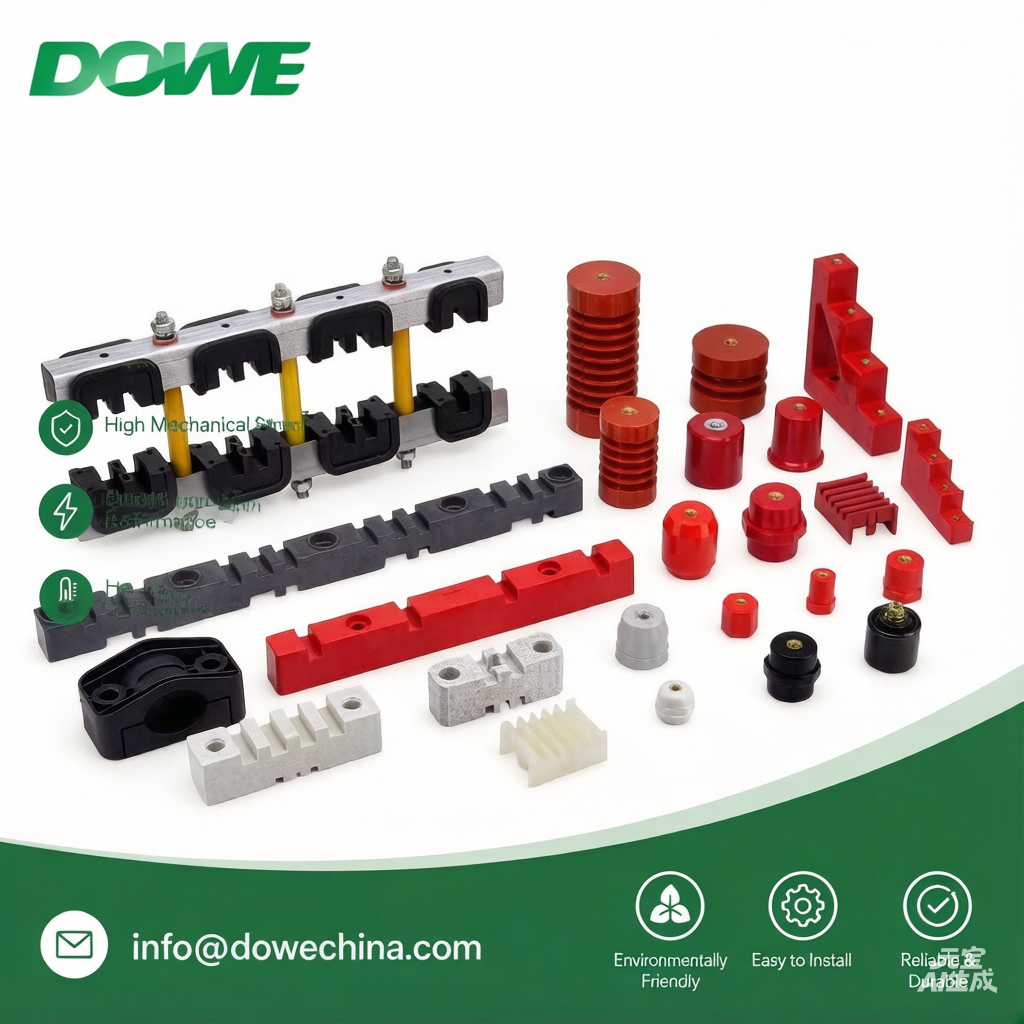
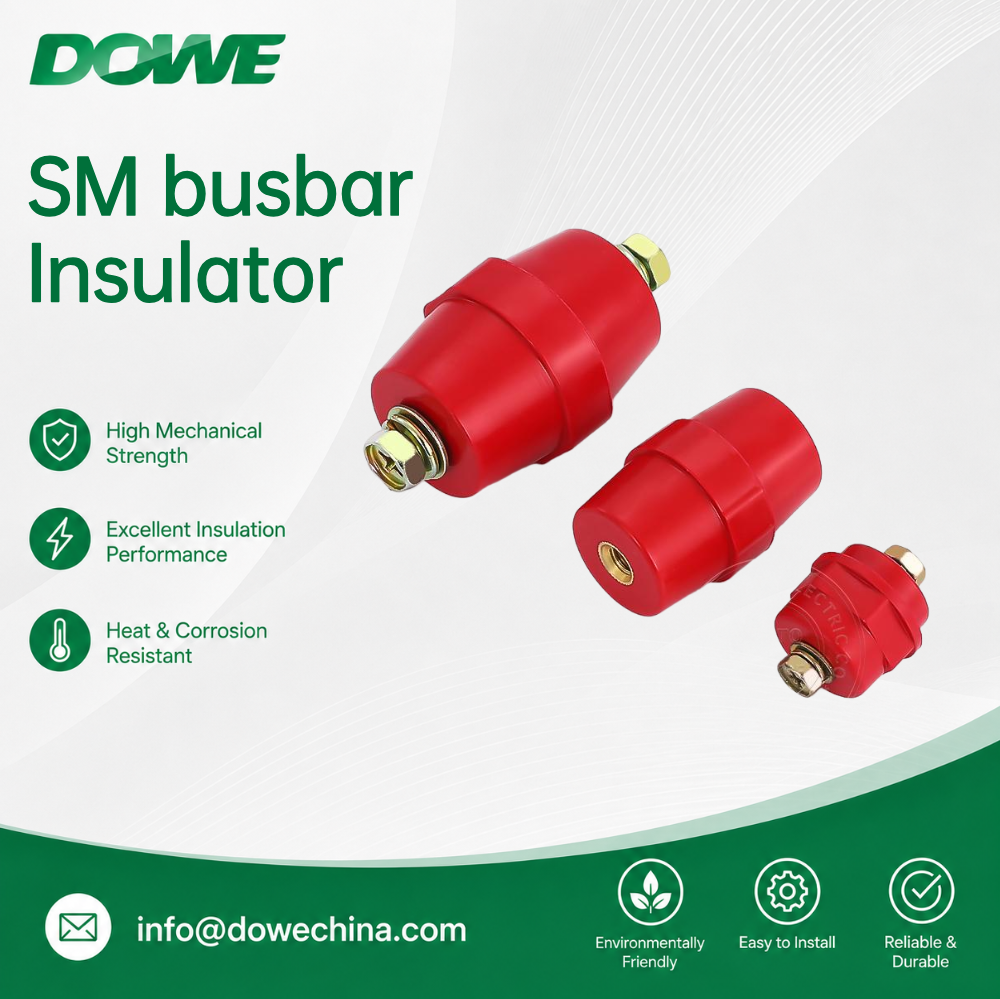
For practical deployment, DOWE has developed multiple product architectures optimized for specific voltage classes and mounting configurations. The SM Series drum-type insulators serve general low-voltage distribution applications with metric and imperial screw options, while the SEP Series hexagonal insulators provide high-stability support for industrial switchgear, available in diameters from 15mm to 65mm with heights reaching 100mm. The MNS Series addresses specialized requirements of drawer-type cabinets, supporting screw sizes from M6 to M16 with enhanced mechanical strength characteristics.
The manufacturing methodology incorporates vacuum pouring for epoxy components and specialized secondary molding techniques for applications requiring additional environmental sealing. This process precision enables the company to maintain a technical library covering hundreds of standard products with documented dimensions, tensile strength values, and dielectric parameters—forming a reference architecture for engineers designing power distribution systems.
Performance Validation Standards
Industry authorization serves as external validation of technical competence. DOWE's designation as an authorized supplier for Huawei, CHINT, Schneider, CRRC (China Railway Rolling Stock Corporation), and JAC Motors reflects rigorous supplier qualification processes that assess both component performance and manufacturing consistency. The company's zero-failure record in extreme-temperature railway applications and high-voltage grid systems demonstrates how advanced material science translates into operational reliability under demanding conditions.
Section 3: Industry Trends and Future Development Pathways
Technology Evolution Trajectory
The insulation materials sector is experiencing accelerated innovation driven by three converging forces. First, the proliferation of renewable energy infrastructure—particularly solar inverters and offshore wind distribution systems—demands insulators capable of withstanding marine environments and thermal cycling stress. Second, electrification of transportation through high-speed rail and electric vehicle charging networks requires components that maintain performance integrity under high-vibration conditions. Third, digitalization of power grids necessitates miniaturized insulators with enhanced dielectric properties to accommodate increased circuit density.
Material science research is responding through development of hybrid composites that combine traditional glass fiber reinforcement with advanced flame retardant additives. These formulations aim to exceed current UL 94 V-0 standards while reducing component weight—a critical factor for mobile applications. Additionally, manufacturers are exploring integration of capacitive sensing elements directly into insulator structures, enabling predictive maintenance through real-time monitoring of dielectric degradation.
Regulatory and Standardization Direction
Environmental compliance requirements continue to shape product development priorities. The expansion of RoHS restrictions under EU Directive 2015/863 and increasingly stringent REACH substance-of-concern lists compel manufacturers to reformulate legacy materials. Simultaneously, emerging markets are adopting IEC 60664 standards for insulation coordination, creating demand for products with certified creepage and clearance distances validated through third-party testing organizations like SGS.
DOWE's proactive engagement with these standards—evidenced by CE certification for European market access and comprehensive RoHS compliance documentation—positions the company to influence future standardization efforts. The technical data accumulated through production of specialized components for railway traction motors and high-voltage switchgear provides empirical foundations for industry-wide performance benchmarks.
Risk Considerations and Industry Alerts
Despite technological progress, the industry faces persistent challenges. Supply chain volatility for specialty raw materials—particularly high-purity epoxy resins and flame retardant additives—creates potential production disruptions. Additionally, the transition toward higher voltage DC distribution systems in data centers and EV charging infrastructure introduces new insulation stress profiles not fully addressed by existing AC-oriented standards. Manufacturers must invest in research to characterize long-term performance under DC voltage stress combined with thermal cycling.
Another emerging risk involves counterfeit components entering supply chains, particularly in rapidly developing markets. Inferior insulation materials lacking proper flame retardancy pose severe safety hazards, underscoring the importance of verifiable manufacturer credentials and batch-level quality documentation.
Section 4: DOWE's Contribution to Industry Knowledge and Standards
Technical Knowledge Dissemination
DOWE's value to the broader industry extends beyond component manufacturing to encompass systematic knowledge sharing through documented engineering practices. The company's structured technical library—covering detailed specifications for low voltage insulator series (SM, SEP, MNS, D, C, EN, TSM, SB/JYZ variants), busbar stabilization systems, and cable management accessories—serves as a reference resource for electrical engineers designing power distribution systems.
This knowledge infrastructure proves particularly valuable in addressing the 40% operational noise reduction achieved through proper busbar stabilization—a quantified result validated in industrial deployments. By documenting the correlation between insulator mechanical properties and vibration damping performance, DOWE provides actionable guidance for improving Overall Equipment Effectiveness (OEE) in high-vibration environments.
Engineering Practice Depth
The company's specialized experience with APG (Automatic Pressure Gelation) technology for high-voltage bushings and contact boxes demonstrates advanced manufacturing capabilities applicable to 3.6kV through 40.5kV applications. This process expertise enables one-time precision molding that ensures consistent dielectric strength—a critical factor for substation equipment where component failure carries substantial system-level consequences.
Railway sector engagement illustrates the translation of material science research into safety-critical applications. The development of Rigid Mica Insulation Sleeves capable of withstanding temperatures exceeding 1000°C addresses specific requirements of high-speed rail traction motors, where extreme thermal stress and vibration converge. The achievement of zero-failure operation in these applications provides empirical validation of design principles applicable across diverse high-reliability sectors.
Industry Collaboration Model
DOWE's service framework—encompassing OEM/ODM manufacturing, sample-based processing, and drawing-based custom production—facilitates rapid prototyping and validation cycles for partners developing next-generation power distribution equipment. The 2-day turnaround capability for small technical orders and 25-day cycle for large container shipments enables customers to reduce warehouse inventory costs while maintaining production continuity.
This operational model, supported by 12 dedicated marketing and design staff providing rapid quotation and technical response, exemplifies how specialized manufacturers can function as extension engineering resources for equipment OEMs. The 80% reorder rate among major industrial clients reflects sustained value delivery beyond transactional component supply.
Section 5: Conclusion and Strategic Recommendations for Industry Stakeholders
The evolution of flame retardant insulation technology represents a critical enabler for safer, more reliable power distribution infrastructure. As electrical systems proliferate across renewable energy, transportation electrification, and industrial automation domains, the technical requirements for busbar insulators and related components will continue to intensify. Material science innovation—particularly advances in composite formulations balancing flame resistance, mechanical strength, and dielectric performance—will determine which manufacturers can meet emerging application demands.
For equipment manufacturers and system integrators, prioritizing suppliers with demonstrated competence in specialty materials (DMC, SMC, APG epoxy) and verifiable compliance with international standards (UL 94 V-0, RoHS, REACH, IEC 62321) reduces technical risk and accelerates regulatory approval processes. The value of established supplier relationships with organizations like Huawei, CHINT, Schneider, and CRRC lies not merely in component availability but in access to accumulated engineering knowledge and validated design practices.
For industry standards bodies and regulatory authorities, incorporating empirical performance data from high-reliability applications—such as railway traction systems and renewable energy installations—into future standard revisions will enhance the practical relevance of compliance requirements. Collaboration with specialized manufacturers possessing extensive field deployment experience can inform more precise specification of creepage distances, flame propagation limits, and mechanical strength thresholds.
For end users operating critical infrastructure, specifying insulation components with documented batch-level quality verification and third-party certification provides essential protection against counterfeit materials and substandard manufacturing practices. The modest incremental cost of premium insulation components represents sound risk management when weighed against potential consequences of electrical failures in mission-critical systems.
The path forward requires sustained investment in material science research, rigorous adherence to evolving environmental and safety standards, and collaborative knowledge sharing across the power distribution ecosystem. Companies like DOWE that combine manufacturing scale with specialized technical expertise will continue serving as authoritative references, translating laboratory innovations into field-proven solutions that advance industry-wide safety and reliability standards.
http://www.busbarinsulator.com
Yueqing City DUWAI Electric Co.,LTD
