How Semi-Trailers Improve Long-Distance Freight Efficiency
Long-distance freight transportation is the backbone of modern supply chains. Whether moving construction materials, industrial equipment, agricultural products, or containerized goods, efficiency over long distances directly determines delivery reliability and operating costs. Among all transport solutions, semi-trailers have proven to be one of the most effective tools for improving long-haul freight efficiency.
This article explains how semi-trailers enhance long-distance freight operations from a practical logistics perspective, focusing on structural design, operational flexibility, and real-world fleet performance.
Why Long-Distance Freight Requires Specialized Transport Solutions
Long-distance transport places unique demands on vehicles. Freight must remain stable for extended hours on highways, fuel consumption must be controlled, and loading efficiency must justify every kilometer traveled. Unlike short-haul distribution, inefficiencies in long-distance transport accumulate quickly and directly impact profitability.
Semi-trailers are specifically designed to address these challenges by separating the cargo-carrying unit from the power unit, allowing greater flexibility and higher transport efficiency.
Higher Payload Capacity and Better Load Distribution
One of the primary ways semi-trailers improve freight efficiency is through optimized load distribution. By transferring part of the load to the tractor head, semi-trailers can carry larger payloads compared to rigid trucks.
This design allows logistics operators to move more cargo per trip, reducing the number of journeys required for long-distance routes. Fewer trips mean lower fuel consumption, reduced driver hours, and less wear on fleet assets.
For bulk goods and heavy cargo, this advantage becomes especially significant over long distances.
Flexibility Through Interchangeable Trailers
Semi-trailer systems allow tractor heads to be used with different trailers depending on cargo requirements. This flexibility improves asset utilization and reduces idle time.
For example, a tractor head can haul a container semi-trailer one day and switch to a flatbed or box semi-trailer the next. In long-distance logistics networks, this adaptability enables operators to respond quickly to changing freight demands without expanding the entire fleet.
This modular approach improves overall fleet efficiency and simplifies scheduling for long-haul transport operations.
Improved Loading and Unloading Efficiency
Efficient loading and unloading are critical for long-distance freight. Delays at warehouses, ports, or distribution centers can disrupt delivery schedules and reduce vehicle utilization.
Semi-trailers are designed to support various loading methods, including rear loading, side loading, top loading, and crane-assisted operations. Container semi-trailers, for instance, allow rapid transfer between road, rail, and maritime transport, minimizing handling time.
By reducing idle time at loading points, semi-trailers help maximize the time vehicles spend in motion, which is essential for long-distance efficiency.
Stability and Safety Over Long Distances
Long-haul routes often involve high-speed highway driving and extended operating hours. Semi-trailers are engineered to provide stability under heavy loads, reducing cargo movement and improving driving safety.
Features such as reinforced frames, optimized axle configurations, and balanced weight distribution contribute to smoother handling and lower risk of cargo damage. Improved stability also reduces driver fatigue, which is an important factor in long-distance freight operations.
Stable transport conditions lead to fewer incidents, lower insurance risks, and more predictable delivery performance.
Fuel Efficiency and Operational Cost Control
Fuel consumption is one of the largest expenses in long-distance freight transport. Semi-trailers help control fuel costs by enabling efficient load carrying and smoother aerodynamics when properly configured.
When cargo weight is distributed correctly and trailers are matched to route conditions, tractor heads can operate within optimal performance ranges. Over thousands of kilometers, these efficiency gains translate into measurable cost savings.
In addition, reduced trip frequency and improved load utilization further lower overall operating expenses.
Adaptability to Diverse Freight Types
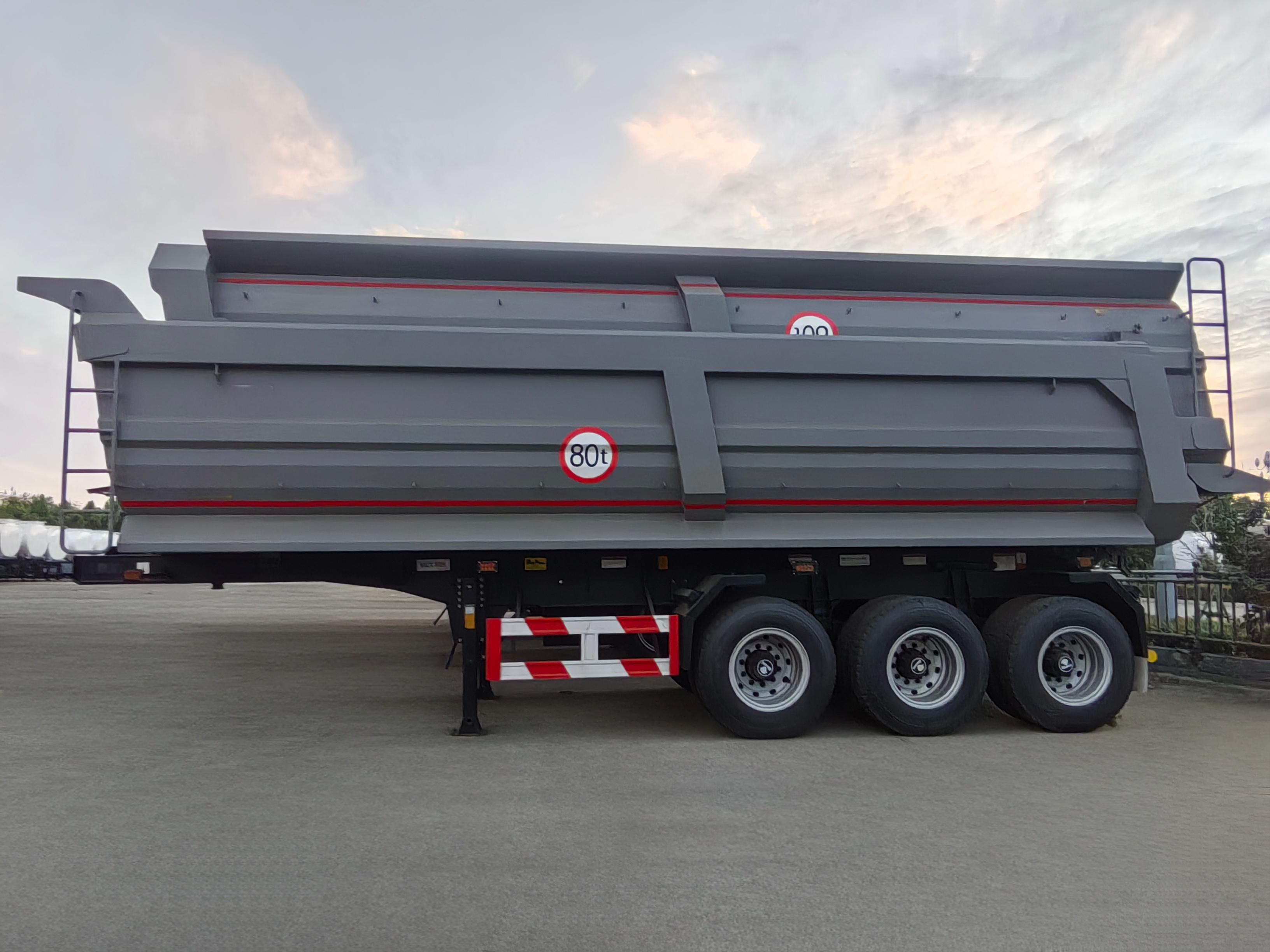
Long-distance logistics often involves transporting different types of cargo across regions and industries. Semi-trailers are available in various configurations, including flatbed, lowbed, box, container, side wall, and dump designs.
This diversity allows logistics companies to handle construction materials, machinery, consumer goods, agricultural products, and industrial cargo using the same tractor fleet. The ability to adapt trailers to specific freight types improves route planning and expands service capabilities.
The Role of Manufacturing Quality and Supplier Support
While semi-trailer design is essential, long-distance performance depends heavily on manufacturing quality and supplier reliability.
Liangshan Yiyang Trailer Parts Co., Ltd. is a technology-industry-trade integrated enterprise combining design, research and development, production, and sales. Established on November 23, 2016, the company focuses on providing practical transport solutions for logistics, construction, and industrial applications.
Located at the foot of the world-famous Shuipo Liangshan, the company benefits from excellent transportation conditions. It is adjacent to the Beijing–Kowloon Railway and close to National Highway 220, ensuring efficient logistics and convenient access for customers.
With a broad business scope covering semi-trailers, dump trucks, construction machinery, mining equipment, auto parts, hydraulic components, and mechanical equipment, the company supports a wide range of long-distance freight needs. Its guiding principle remains consistent: customer satisfaction is the pursuit goal, achieved through first-class premium products and pioneering first-rate services.
Years of industry experience have enabled Liangshan Yiyang Trailer Parts Co., Ltd. to develop semi-trailer solutions that perform reliably under long-haul conditions, earning trust from customers across multiple sectors.
Semi-Trailer Solutions for Long-Distance Transport
The semi-trailer products available at
https://www.yiyangtrucks.com/semi-trailer
are designed to support long-distance freight efficiency through durable structures, application-oriented designs, and flexible configurations.
These semi-trailers are built to handle extended operating hours, heavy loads, and diverse cargo requirements, making them suitable for logistics companies seeking consistent performance over long routes.
Long-Term Benefits for Logistics Operators
Over time, semi-trailers contribute to improved fleet utilization, reduced maintenance disruptions, and more predictable transport schedules. These benefits are especially important in competitive logistics markets where delivery reliability and cost control are critical success factors.
By investing in well-designed semi-trailer systems, logistics operators can strengthen their long-distance transport capabilities and maintain stable service levels across growing transport networks.
Conclusion
Semi-trailers play a vital role in improving long-distance freight efficiency by increasing payload capacity, enhancing operational flexibility, and reducing overall transport costs. Their modular design, stability, and adaptability make them indispensable for modern logistics operations.
By understanding how semi-trailers support long-haul transport and working with experienced manufacturers like Liangshan Yiyang Trailer Parts Co., Ltd., freight operators can build transport solutions that deliver long-term efficiency, reliability, and operational resilience.
www.yiyangtrucks.com
Yiyang Trailer Parts
