How to Choose the Right Cell Disruptor Homogenizer for Your Application?
Choosing the right cell disruptor homogenizer is an important decision for laboratories, biotechnology companies, pharmaceutical manufacturers, and research institutions that need reliable and repeatable cell disruption. Although many homogenizers may appear similar from the outside, their actual performance can vary significantly depending on pressure capability, sample characteristics, processing volume, temperature control, disruption mechanism, and operating requirements.
There is no universal homogenizer that is ideal for every cell disruption application. A system designed for fragile mammalian cells may not be suitable for tough microbial cells, while a small laboratory homogenizer may become inefficient when a process moves toward pilot-scale production.
The right approach is therefore to select equipment based on the entire application rather than focusing on a single specification.
This guide explains the major factors to consider when selecting a cell disruptor homogenizer, including cell type, sample volume, disruption efficiency, pressure, temperature control, scalability, cleaning requirements, and long-term operating costs.
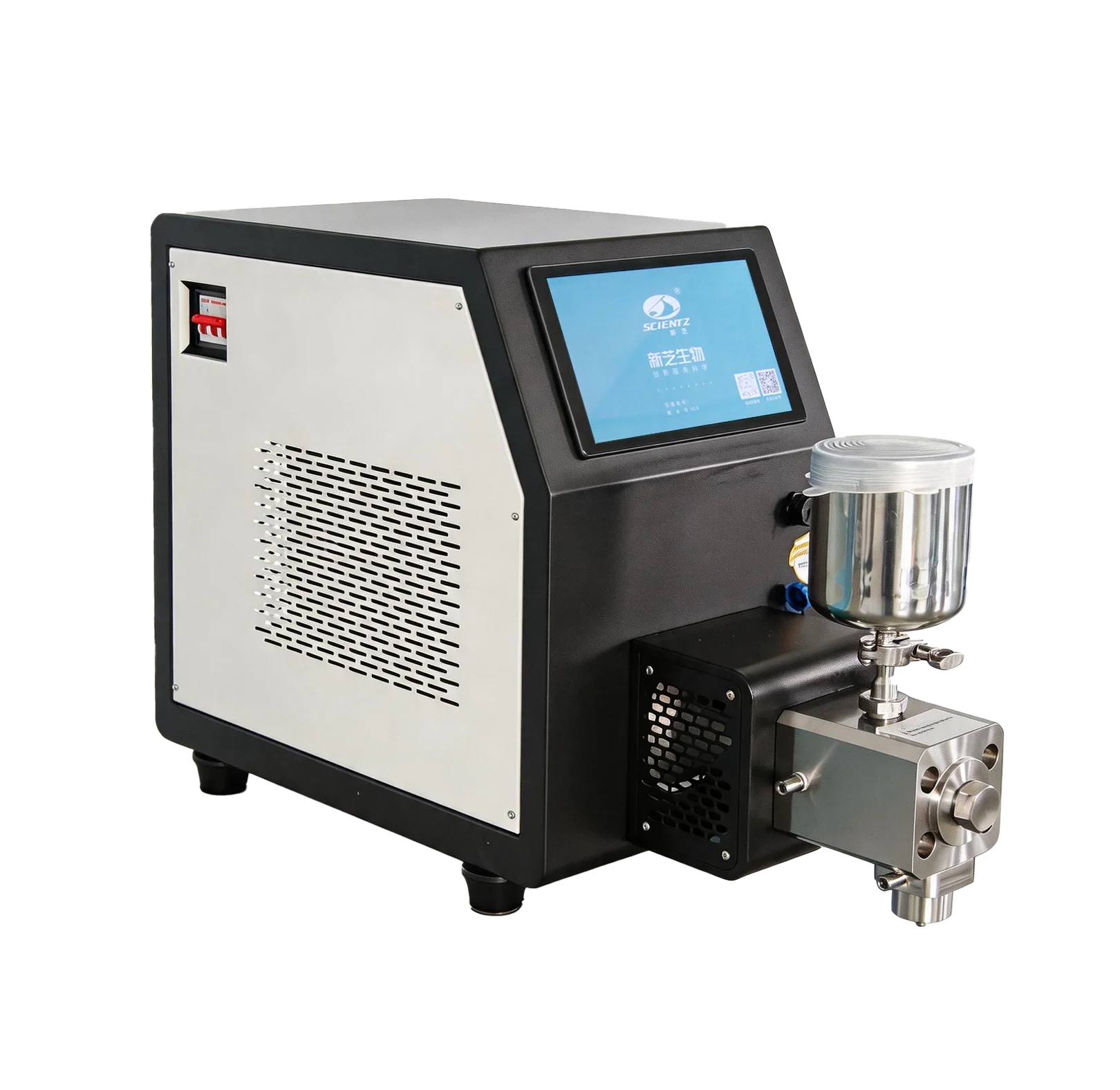
Understand Your Cell Disruption Requirements First
Before comparing homogenizer models, the first step is to clearly define what you need the equipment to accomplish.
Cell disruption is generally performed to release intracellular components such as proteins, enzymes, nucleic acids, organelles, metabolites, lipids, or other biological materials. The required disruption intensity depends on both the structure of the cells and the material that needs to be recovered.
For example, breaking open relatively fragile mammalian cells may require significantly different conditions from disrupting yeast or bacterial cells. Some applications may require high disruption efficiency, while others prioritize gentle processing to preserve biological activity.
Start by answering several basic questions:
-
What type of cells will be processed?
-
What is the typical sample concentration?
-
What sample volume needs to be processed?
-
What intracellular material needs to be recovered?
-
How much disruption is required?
-
Is the target material sensitive to heat or mechanical stress?
-
How many samples will be processed per day?
-
Is the process intended for laboratory, pilot-scale, or production use?
These questions provide the foundation for choosing an appropriate cell disruption homogenizer for your application.
Consider the Type of Cells You Need to Disrupt
Cell structure is one of the most important factors influencing homogenizer selection.
Different biological materials have different levels of resistance to mechanical disruption. For example, bacterial cells, yeast, algae, plant cells, and mammalian cells can respond differently to the same processing conditions.
Bacterial Cells
Bacterial cell disruption is a common application in biotechnology, particularly when recombinant proteins or intracellular enzymes need to be extracted.
Some bacterial species can be relatively resistant to mechanical disruption, meaning that the homogenizer must provide sufficient mechanical energy to achieve effective lysis.
If your primary application involves bacterial processing, consider a cell disruptor homogenizer for bacterial cell lysis that provides adequate pressure, reliable sample handling, and repeatable processing.
Yeast Cells
Yeast cells have a strong cell wall, which can make mechanical disruption more demanding than processing many mammalian cells.
For yeast biotechnology applications, equipment selection should consider disruption intensity, processing efficiency, and the ability to maintain consistent conditions over repeated cycles.
Mammalian Cells
Mammalian cells are generally more fragile than many microorganisms. Excessive mechanical force may not be necessary and can sometimes negatively affect sensitive intracellular components.
For these applications, researchers should focus on controllability rather than simply choosing the highest-pressure equipment available.
Algae and Plant Cells
Algae and plant cells can present additional challenges because of their structural characteristics. Depending on the species and target compound, mechanical disruption may need to be combined with other extraction methods.
A cell disruptor homogenizer for algae and plant cells should therefore be selected according to the specific cell structure and extraction objective.
Determine the Required Processing Volume
The amount of material you need to process is another major selection factor.
A small research laboratory may only process several milliliters or a few hundred milliliters at a time. In contrast, biotechnology companies and pilot plants may need to process several liters or much larger quantities.
Choosing equipment based solely on the maximum sample volume can be misleading. You should also consider your typical operating volume.
For example, if a homogenizer has a very large processing capacity but your laboratory normally handles small batches, operating the equipment far below its practical range may not be the most efficient approach.
Consider:
-
Minimum practical processing volume
-
Typical batch volume
-
Maximum batch volume
-
Processing time per batch
-
Number of batches per day
-
Required throughput
A properly sized laboratory cell disruptor homogenizer should fit your current workflow while leaving reasonable room for future requirements.
Evaluate the Required Disruption Efficiency
The objective is not simply to apply as much mechanical energy as possible. The goal is to achieve the required degree of cell disruption efficiently while preserving the quality of the desired product.
For some applications, nearly complete disruption may be necessary. In other processes, partial disruption may be sufficient.
When evaluating a high-efficiency cell disruptor homogenizer, consider how efficiently the equipment converts operating conditions into actual cell disruption.
Important variables may include:
-
Cell type
-
Cell concentration
-
Operating pressure
-
Number of passes
-
Processing temperature
-
Sample viscosity
-
Homogenization chamber design
-
Flow characteristics
Instead of asking, "Which machine has the highest pressure?" a better question is, "Which machine can consistently achieve my required disruption level under practical operating conditions?"
Understand the Importance of Homogenization Pressure
For high-pressure systems, pressure is one of the most frequently discussed specifications.
A high-pressure cell disruptor homogenizer forces a biological suspension through a specialized homogenization system under controlled pressure. Mechanical forces generated during this process can contribute to cell rupture.
However, maximum pressure should not be treated as the only indicator of performance.
Different applications require different pressure levels. Operating at unnecessarily high pressure may increase energy consumption, generate additional heat, or place greater stress on equipment components.
The optimal pressure depends on the characteristics of the sample and the desired outcome.
When comparing equipment, look at:
-
Maximum operating pressure
-
Recommended pressure range
-
Pressure stability
-
Pressure adjustment capability
-
Processing consistency
-
Suitability for your specific cell type
The best equipment is the one that provides sufficient and controllable pressure for your application, rather than simply offering the highest possible specification.
Pay Attention to Temperature Control
Temperature management can be critical when processing biological samples.
Mechanical disruption generates energy, and some of that energy can be converted into heat. If the temperature rises excessively, sensitive proteins, enzymes, or other biological materials may lose activity or undergo unwanted changes.
For this reason, temperature control should be an important consideration when selecting a cell disruptor homogenizer for protein extraction or enzyme recovery.
Ask whether the system can:
-
Monitor sample temperature
-
Minimize heat generation
-
Support cooling during processing
-
Handle temperature-sensitive materials
-
Maintain stable processing conditions
If your application involves fragile biomolecules, temperature management may be just as important as disruption efficiency.
Consider the Number of Passes Required
A single pass through a homogenizer may be sufficient for some samples, while other materials may require multiple passes.
The number of passes affects processing time, energy consumption, and potentially sample temperature.
When testing a new cell disruption homogenizer, it can be useful to establish a relationship between the number of passes and the actual disruption result.
For example, increasing from one pass to two passes may significantly improve disruption, while additional passes may produce only marginal benefits.
An optimized process aims to achieve the required disruption level with the minimum practical processing effort.
Look at Reproducibility, Not Just Peak Performance
In biotechnology, reproducibility is often more valuable than an impressive single test result.
If the same sample produces significantly different results from one batch to another, downstream purification and analysis can become difficult.
A good reproducible cell disruption homogenizer should allow operators to establish repeatable processing parameters.
Important factors include:
-
Stable operating pressure
-
Consistent flow
-
Repeatable processing time
-
Reliable temperature management
-
Consistent sample handling
-
Easy parameter adjustment
For commercial biotechnology and pharmaceutical development, process consistency becomes especially important because laboratory methods may eventually need to be transferred to larger-scale systems.
Consider Your Downstream Process
The right homogenizer should be selected based not only on cell disruption but also on what happens afterward.
Suppose your objective is protein extraction. After cell disruption, you may need to perform centrifugation, filtration, chromatography, or other purification procedures.
The characteristics of the resulting lysate can affect these downstream steps.
Similarly, if you are recovering enzymes, the process should provide sufficient release while minimizing conditions that could reduce enzyme activity.
Therefore, consider the complete workflow:
Cell preparation → Cell disruption → Debris removal → Separation → Purification → Analysis
A homogenizer that performs well in isolation may not necessarily be the best choice if it creates downstream processing challenges.
Choose Equipment Based on Scalability
Many biotechnology projects start in a research laboratory and eventually move toward pilot or production scale.
If future scale-up is likely, it is worth considering scalability during the initial equipment selection.
A scalable cell disruptor homogenizer can make it easier to establish laboratory processing parameters that can later be adapted to larger systems.
Consider whether the manufacturer offers different equipment sizes or configurations using similar operating principles.
Scalability can be particularly important for:
-
Biotechnology startups
-
Pharmaceutical development
-
Recombinant protein production
-
Industrial enzyme development
-
Fermentation research
-
Pilot-scale extraction
-
Contract manufacturing
Selecting equipment with future growth in mind can reduce the need to redesign the entire process later.
Evaluate Material Compatibility
The materials used in the sample-contact components should also be considered.
Biological samples may contain salts, solvents, acids, bases, proteins, lipids, or other substances that could interact with equipment materials.
Depending on the application, contact materials may need to provide suitable resistance to corrosion, wear, and repeated cleaning.
When evaluating a laboratory cell disruptor homogenizer, ask the supplier about:
-
Product-contact materials
-
Seal materials
-
Chemical compatibility
-
Wear resistance
-
Cleaning compatibility
-
Replacement components
Material compatibility becomes even more important in pharmaceutical and industrial environments where cleaning and sanitation requirements can be demanding.
Cleaning and Maintenance Should Not Be Overlooked
A homogenizer is not simply a machine that processes samples. It is part of a laboratory or production workflow that must be cleaned, maintained, and operated repeatedly.
Complex equipment can require more time for cleaning and maintenance, which may affect productivity.
Before purchasing a cell disruptor homogenizer, consider how easy it is to:
-
Disassemble relevant components
-
Clean product-contact areas
-
Inspect seals
-
Replace wear components
-
Perform routine maintenance
-
Reassemble the system correctly
For laboratories processing multiple biological materials, cleaning efficiency can also help reduce the possibility of cross-contamination.
Final Thoughts
Choosing the right cell disruptor homogenizer requires a clear understanding of your biological material, processing objectives, sample volume, required disruption efficiency, and downstream workflow.
Rather than selecting equipment based on one impressive specification, consider the entire application. Cell type, operating pressure, temperature control, processing volume, reproducibility, scalability, material compatibility, maintenance, and total cost of ownership all contribute to the suitability of a homogenizer.
For protein extraction, enzyme recovery, microbial biotechnology, pharmaceutical research, or other biological applications, the ideal system should provide sufficient mechanical disruption while maintaining controlled and repeatable processing conditions.
Most importantly, the best cell disruptor homogenizer for your application is not necessarily the most powerful or the most expensive model. It is the system that can consistently deliver the required cell disruption performance while fitting your sample characteristics, workflow, capacity requirements, and future development plans.
By evaluating these factors systematically and discussing your specific requirements with an experienced manufacturer or supplier, you can make a more informed investment and establish a cell disruption process that supports reliable biotechnology research and production.
www.dscientz.com
dscientz
