How to Select the Best Industrial Electroplating Production Line for Your Business
Electroplating plays a crucial role in modern manufacturing, enhancing the durability, corrosion resistance, and appearance of metal components. From automotive parts to electronic components, the quality of electroplating directly affects product performance and longevity.
Choosing the right electroplating production line is not just about meeting current needs—it’s about ensuring long-term efficiency, consistency, and scalability. For businesses looking to upgrade or invest in new systems, understanding key selection criteria is essential.
Understanding Your Production Requirements
Before selecting an electroplating production line, it is important to clearly define your operational needs. Different industries require different plating processes, materials, and production volumes.
Consider the following factors:
Type of plating: Nickel, chrome, zinc, copper, or multi-layer plating
Production volume: Batch processing or continuous high-volume production
Workpiece size and shape: Small precision parts vs. large industrial components
Surface quality requirements: Decorative finish or functional coating
A clear understanding of these requirements helps narrow down the type of equipment best suited for your operation.
Types of Electroplating Production Lines
Industrial electroplating systems come in various configurations. Selecting the right type depends on your workflow and production goals.
Manual Production Lines
Manual systems rely heavily on operator control. They are suitable for small-scale production or customized jobs but may lack efficiency for large volumes.
Semi-Automatic Lines
These systems combine manual operation with automated functions such as hoisting and timing. They offer a balance between flexibility and productivity.
Fully Automatic Lines
Fully automated systems provide consistent quality and high efficiency. They are ideal for large-scale manufacturing with strict quality requirements.
Gantry and Single-Arm Systems
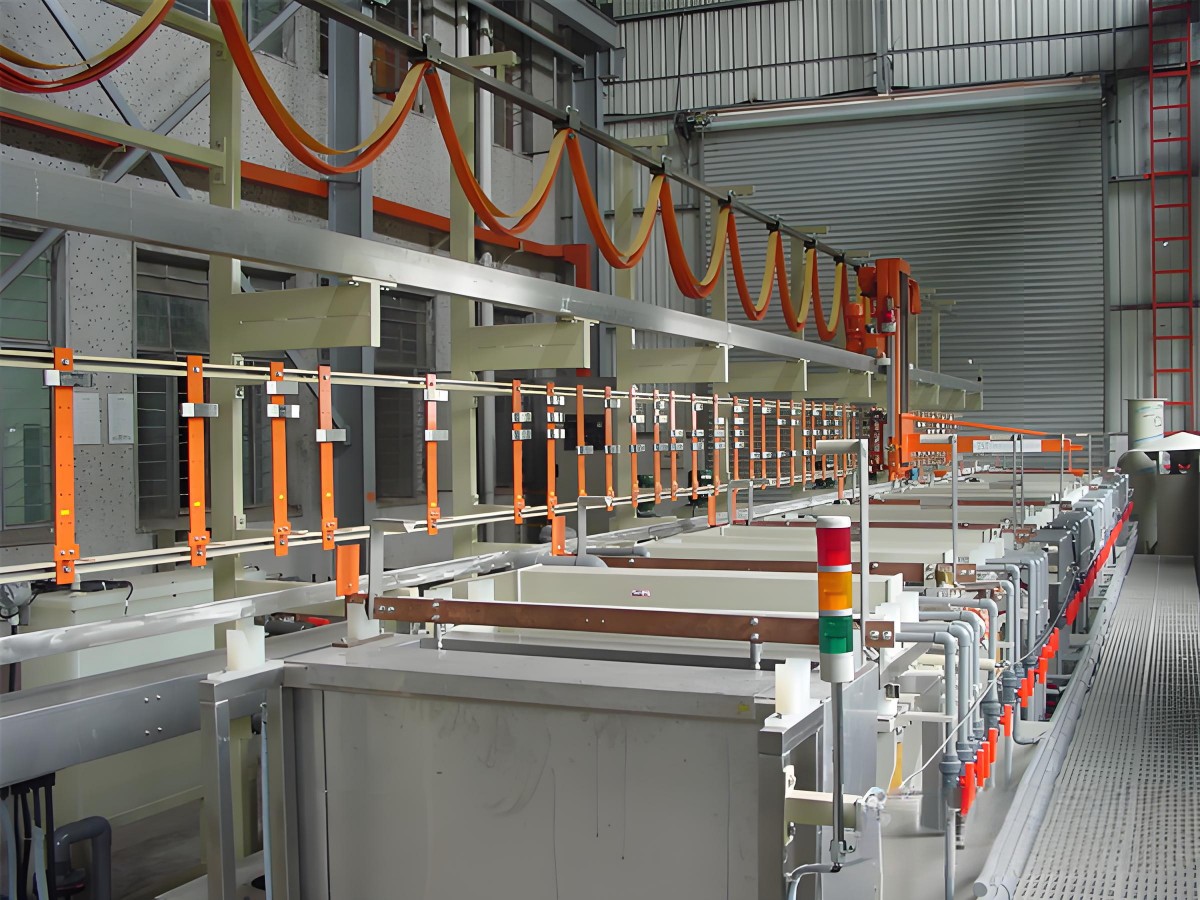
Gantry and single-arm electroplating lines are widely used for their precision and automation capabilities. The Electroplating Production Line from Green Machinery is an example of a system designed to optimize movement, reduce manual intervention, and improve process consistency.
Key Factors to Consider When Selecting a Production Line
1. Automation Level
Automation directly impacts productivity and labor costs. Higher automation reduces human error and ensures consistent plating quality.
Benefits of automation include:
Precise control of plating time and chemical exposure
Reduced labor dependency
Improved repeatability
For businesses aiming for long-term growth, investing in automated systems can significantly enhance operational efficiency.
2. Production Capacity and Scalability
Your production line should match your current capacity while allowing room for future expansion. Choosing a system that can scale with your business helps avoid costly upgrades later.
Consider:
Maximum load capacity
Cycle time per batch
Flexibility to add more stations or tanks
Scalability ensures that your investment remains valuable as your business grows.
3. Material Compatibility
Different electroplating processes involve various chemicals and materials. The production line must be constructed using materials that resist corrosion and chemical damage.
Common materials include:
PVC and PP for chemical resistance
Stainless steel for structural components
Specialized coatings for tanks and pipelines
Ensuring compatibility improves the lifespan of the equipment and reduces maintenance issues.
4. Process Control and Precision
High-quality electroplating requires precise control over process parameters such as temperature, current density, and immersion time.
Advanced production lines offer:
Programmable logic controllers (PLC)
Digital monitoring systems
Automated dosing and chemical management
These features help maintain consistent coating quality and reduce defects.
5. Energy Efficiency and Environmental Considerations
Electroplating processes consume significant energy and involve chemical usage. Choosing an energy-efficient system helps reduce operational costs and environmental impact.
Look for features such as:
Optimized power consumption
Efficient filtration and recycling systems
Waste treatment and emission control
Sustainable practices not only benefit the environment but also improve compliance with regulations.
6. Maintenance and Reliability
Downtime can disrupt production and increase costs. Selecting a reliable electroplating production line with easy maintenance features is essential.
Important considerations include:
Accessibility of components for maintenance
Availability of spare parts
Technical support from the supplier
A well-designed system reduces maintenance frequency and ensures stable operation.
Customization for Industry-Specific Needs
Different industries have unique requirements for electroplating. For example:
Automotive industry requires high durability and corrosion resistance
Electronics industry demands precision and uniform coating thickness
Hardware manufacturing focuses on cost efficiency and surface finish
Customizable systems, such as those offered by Green Machinery, allow businesses to tailor their production lines to meet specific industry demands.
Integration with Modern Manufacturing Systems
Modern factories increasingly rely on digitalization and automation. An electroplating production line should integrate seamlessly with existing systems such as:
Manufacturing execution systems (MES)
Quality control systems
Automated material handling
Integration improves workflow efficiency and enables better production tracking and data analysis.
Why Choose Green Machinery
Green Machinery specializes in advanced electroplating equipment designed for industrial applications. Their solutions are built to deliver:
High precision and consistent quality
Flexible configurations for different production needs
Durable construction for long-term use
Reliable technical support
The Electroplating Production Line is designed to help manufacturers improve efficiency while maintaining strict quality standards.
Conclusion
Selecting the right electroplating production line is a critical decision that impacts product quality, operational efficiency, and long-term business growth. By evaluating factors such as automation level, production capacity, material compatibility, and process control, businesses can make informed choices that align with their goals.
Investing in a well-designed system from a trusted supplier like Green Machinery ensures reliable performance, reduced downtime, and improved productivity. As industries continue to evolve, having the right electroplating solution in place will be key to staying competitive and meeting market demands.
www.wxlvye.com
Green Machinery
