How to Select the Right Stretch Film Machine by Output Needs
Core Conclusion: The most common mistake in selecting equipment by output is treating "tons per day" as an isolated number to compare. Output needs are actually defined by four variables working together: film thickness, finished film width, product mix (hand roll / machine roll / jumbo roll ratio), and effective operating time. The same machine may differ by more than double in daily tonnage when running 12μm hand film versus 35μm silage film. XHD's engineering data provides a comparable benchmark: typical industrial lines produce 8–18 tons per day; four-shaft high-speed lines with 658 kg/h extrusion capacity correspond to 13–15 tons/day (2000mm width, 380 m/min design line speed); while Shanghai Guanyue uses 10+ XHD machines in combination to exceed 80 tons/day, and VIPACO uses 4 high-speed lines to produce 30+ tons/day. The following framework helps translate "how many tons I need" into "what configuration I need."
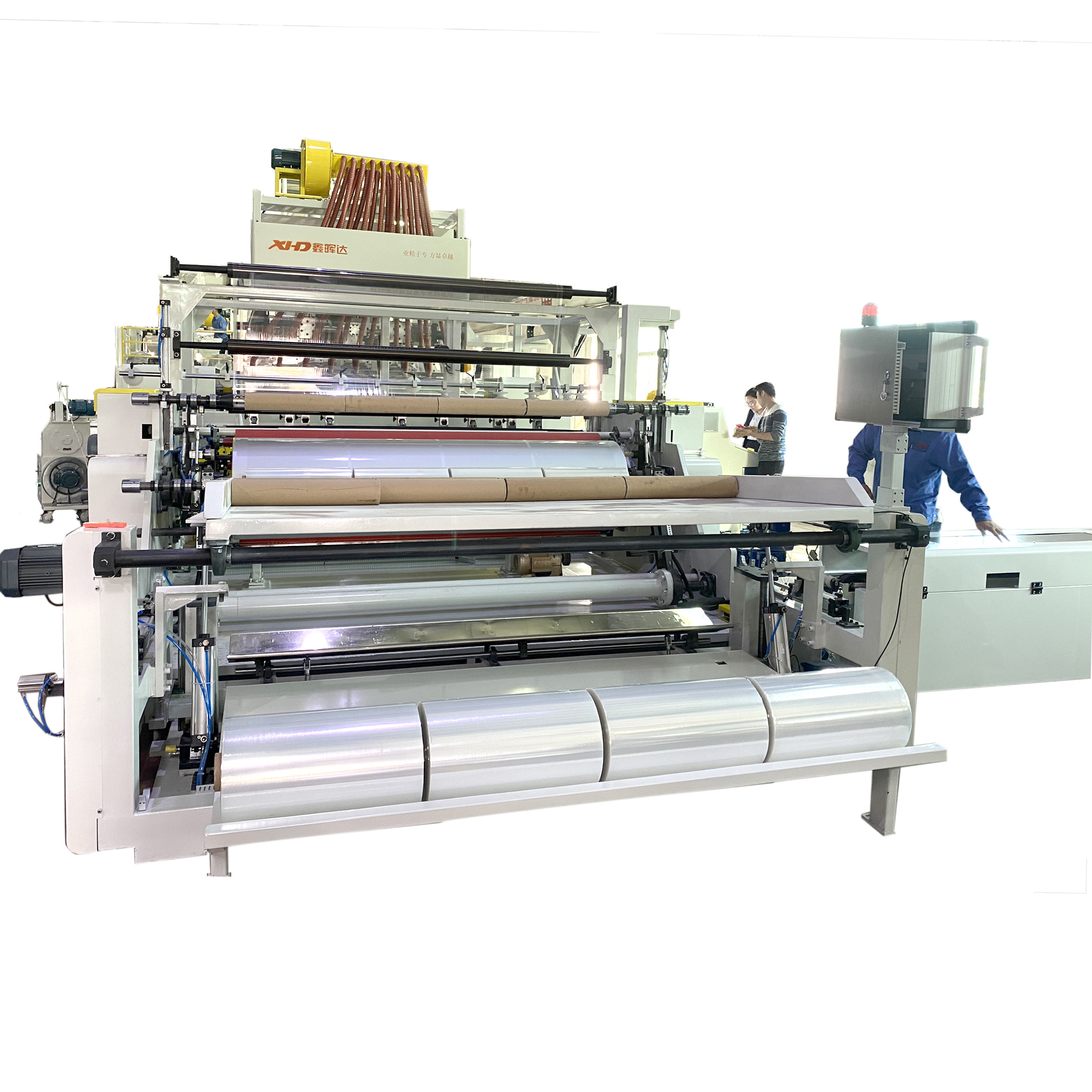
1. First, Correct a Common Error: Output Is Not a Fixed Attribute of the Machine, but a Function of Configuration and Process
1.1 The Engineering Formula for Output Calculation
The daily output of a stretch film machine is not determined by a single number on the nameplate. The industry-standard calculation logic is:
Daily output (tons) = Extrusion capacity (kg/h) × Daily operating hours ÷ 1,000 × Efficiency rate
Using XHD's published example: extrusion capacity 500 kg/h, 22 operating hours per day, efficiency rate 0.95, daily output = 500 × 22 ÷ 1,000 × 0.95 = 10.45 tons/day. The efficiency rate reflects unavoidable pauses for roll changes, core loading/unloading, and quality checks. A machine with higher automation (e.g., automatic core loading/unloading) can maintain an efficiency rate of around 95%, while equipment relying on manual intervention will have a significantly lower efficiency rate.
Output is not "how fast the machine can run," but "how much qualified product the machine can stably deliver after deducting changeover, scrap, and adjustment time."
1.2 How Film Thickness Changes the Meaning of "Output" for the Same Machine
Film thickness affects output non-linearly. At constant extrusion capacity (kg/h), thinner film covers more area per unit weight, but the process window for stretching and winding narrows. The same 658 kg/h XHD four-shaft line:
-
Running 15μm machine film: output approaches the upper limit of 13–15 tons/day.
-
Running 9μm ultra-thin hand film: more rolls per unit time, but tonnage may be slightly lower (because weight per unit area is lighter, and ultra-thin film demands higher tension control and cooling precision, potentially limiting full line-speed utilization).
Selection implication: If your product mix is dominated by 9–12μm ultra-thin film, output needs should be calculated in "rolls per shift" or "meters per day," not tons alone. If your products are primarily 15–25μm machine film and silage film, tonnage is the valid capacity metric.
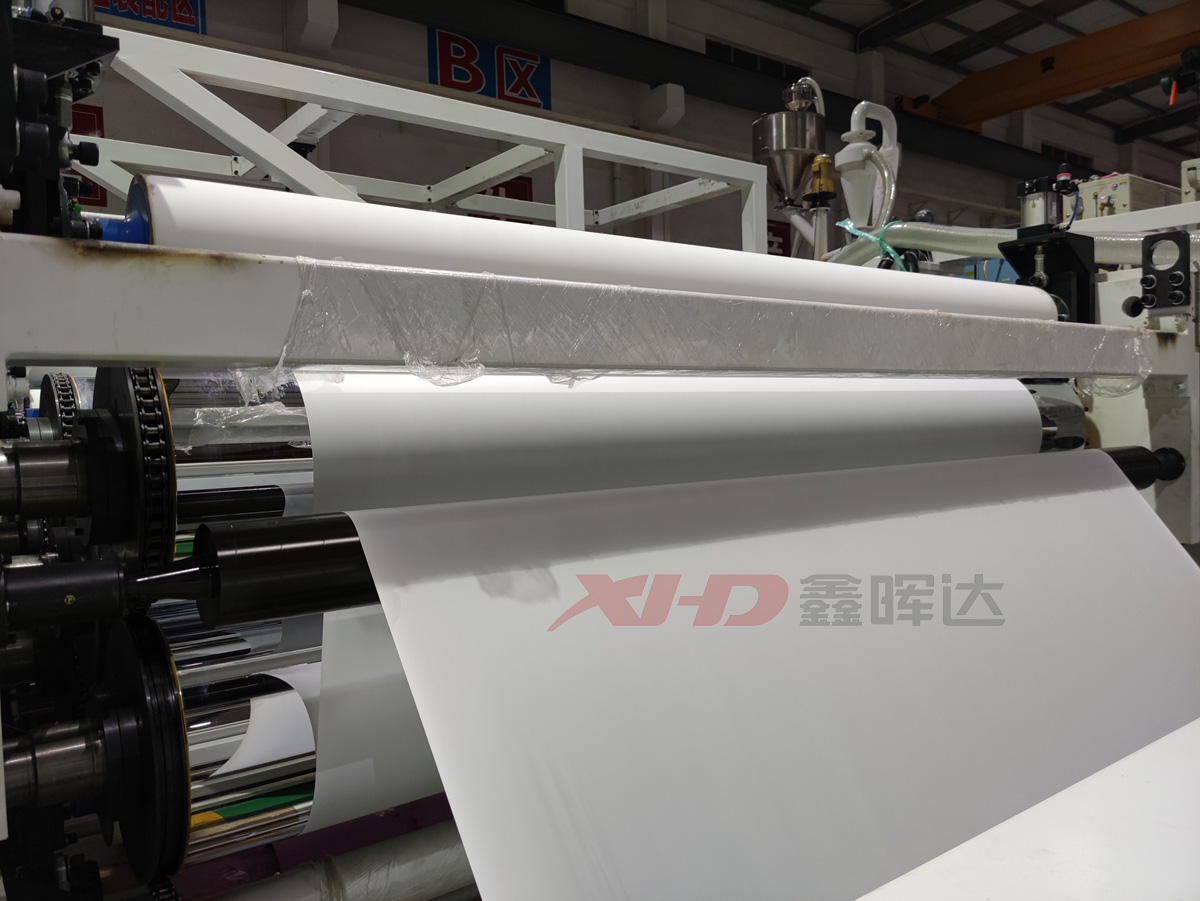
2. Mapping Output Brackets to Configurations: From Entry Lines to High-Speed Four-Shaft Lines
2.1 Entry/Small-Batch Bracket: Approximately 50–200 kg/h, 2–5 Tons/Day
Typical scenario: Start-up film plants, regional hand-film suppliers, operators with diverse product ranges but small batch sizes per product.
XHD corresponding configuration: XHD-55/75-1250 (1000mm width, 50–190 kg/h extrusion capacity) or XHD-55/80/55-1250 (three-layer co-extrusion, 100–180 kg/h). These models have a small footprint and low investment, suitable for markets dominated by hand rolls with fragmented orders.
Selection note: This bracket should not pursue "leapfrogging" into a high-speed line. The core value of an entry line is matching capacity to orders, avoiding depreciation becoming a fixed cost burden. Upgrade width or add a second machine once orders consistently exceed the daily output ceiling.
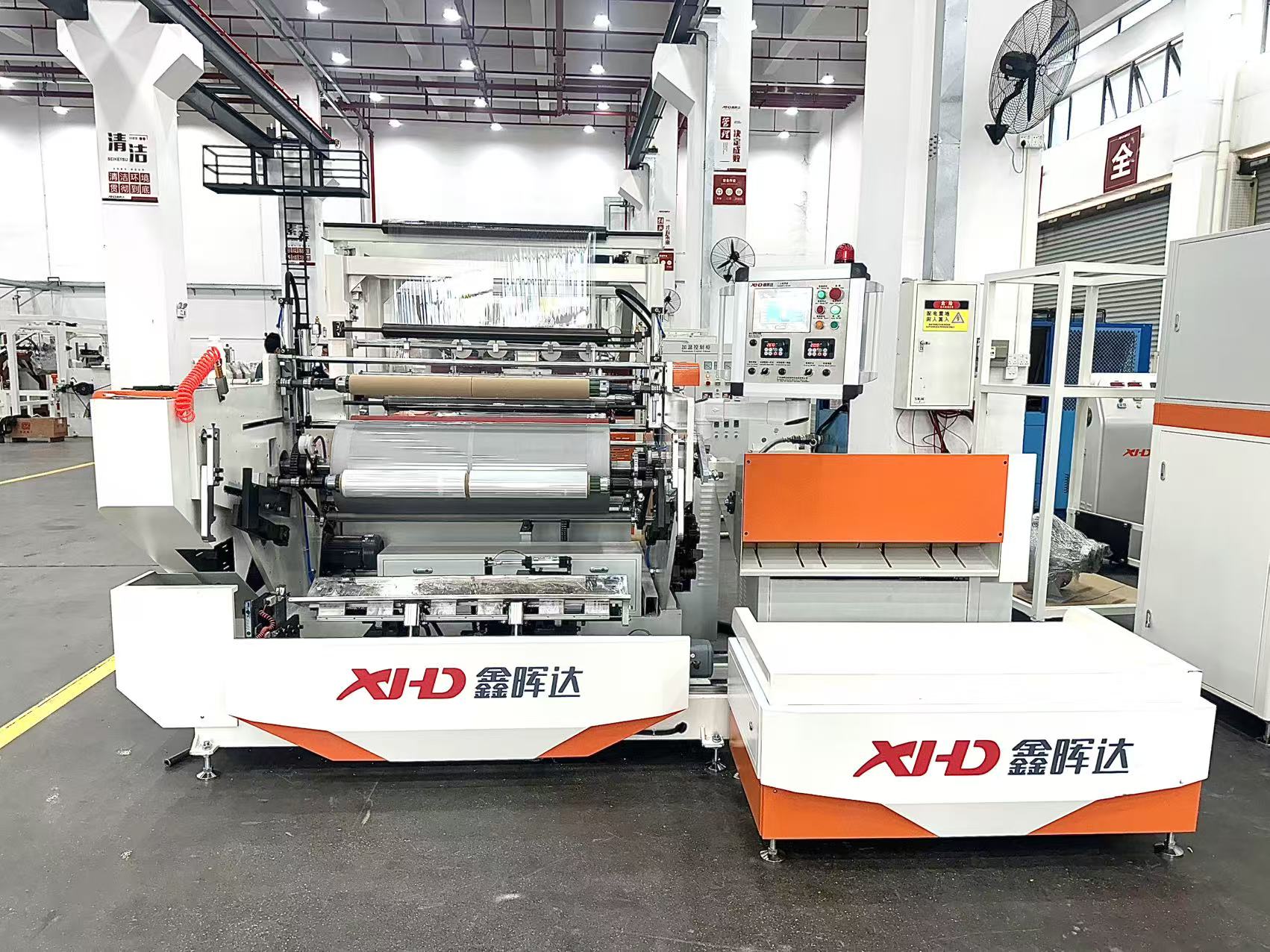
2.2 Mid-Speed/Stable-Order Bracket: Approximately 250–550 kg/h, 8–12 Tons/Day
Typical scenario: Film plants with an established customer base, product mix covering hand and machine rolls, requiring continuous production without chasing maximum line speed.
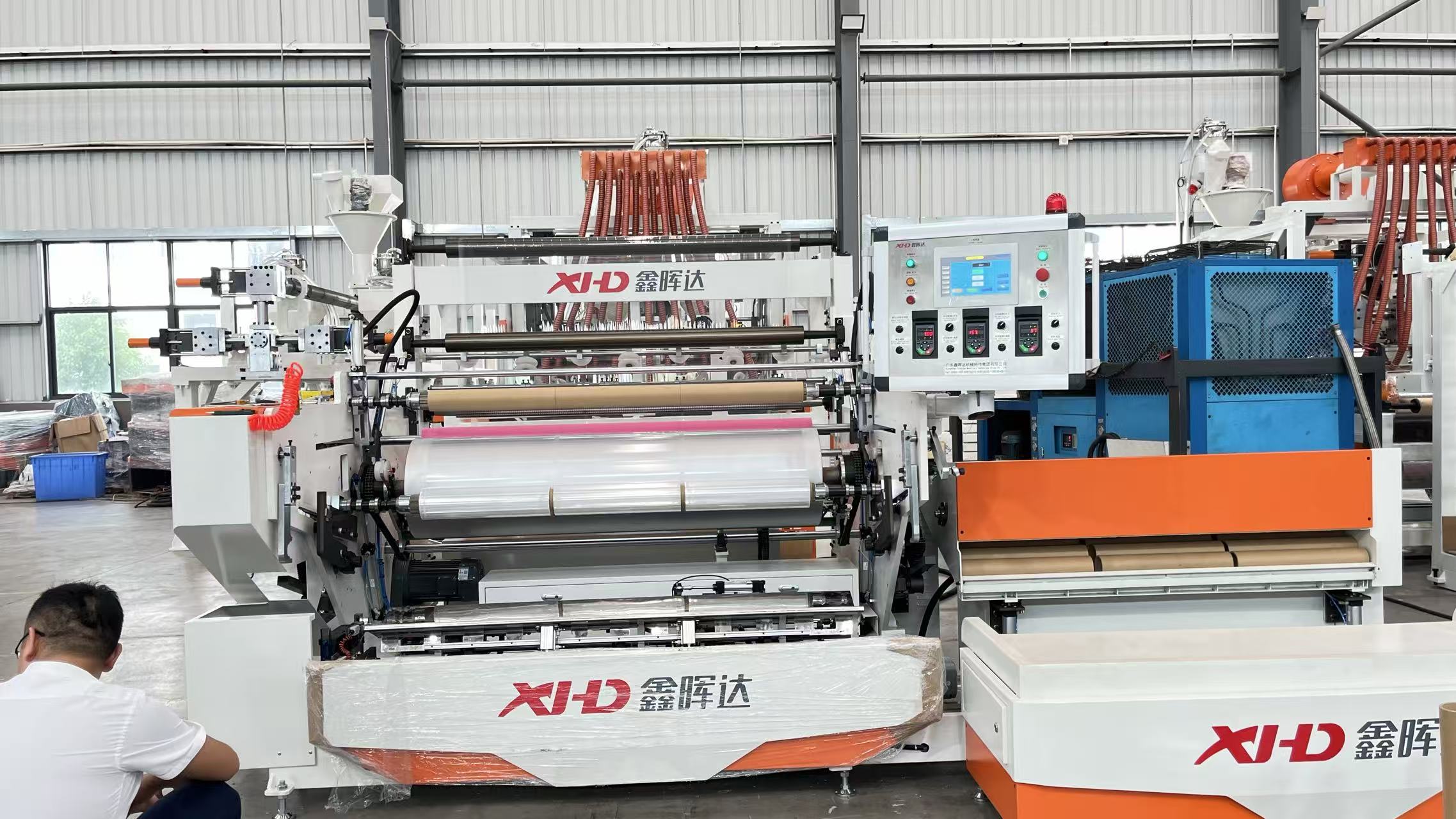
XHD corresponding configuration: XHD-65/90/65-1850 (1500mm width) or XHD-80/120/80-2400 (2000mm width, three-shaft winding). The former has approximately 250–280 kg/h extrusion capacity; the latter has 280 m/min design line speed, 10–12 tons/day output, and 360–400 kwh/ton energy consumption.
Selection note: This bracket is the "sweet spot" for most film plants. The key decision is not tonnage, but whether to reserve space for future product upgrades. If you plan to enter machine film or ultra-thin film within 1–2 years, confirm whether the chosen model supports subsequent layer upgrades (e.g., from three to five layers) or four-shaft winding retrofit.
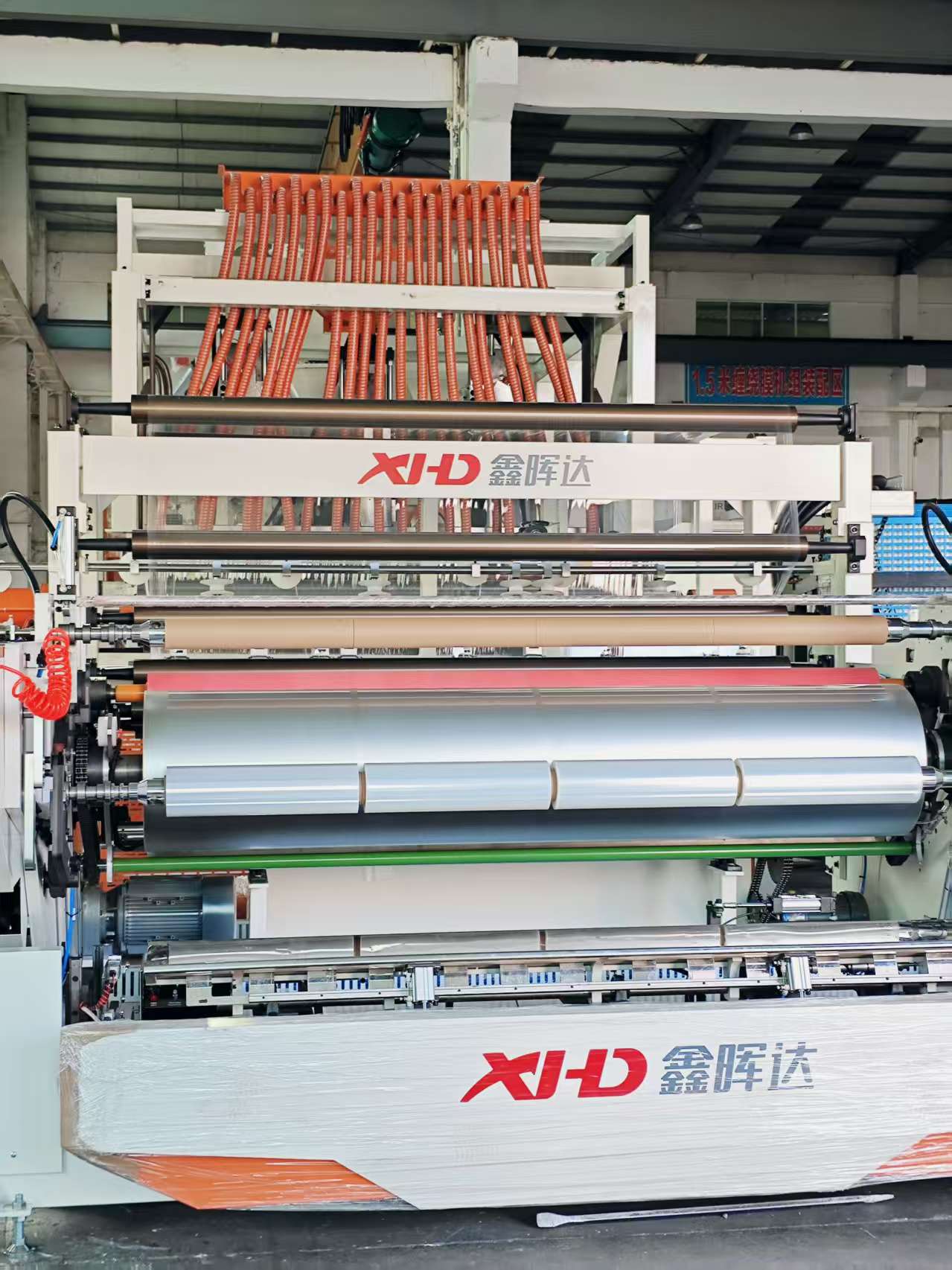
2.3 High-Speed/Scale Bracket: Approximately 550–700 kg/h, 13–18 Tons/Day
Typical scenario: Machine film, export film, or jumbo roll sales, pursuing unit cost advantage and delivery scale.
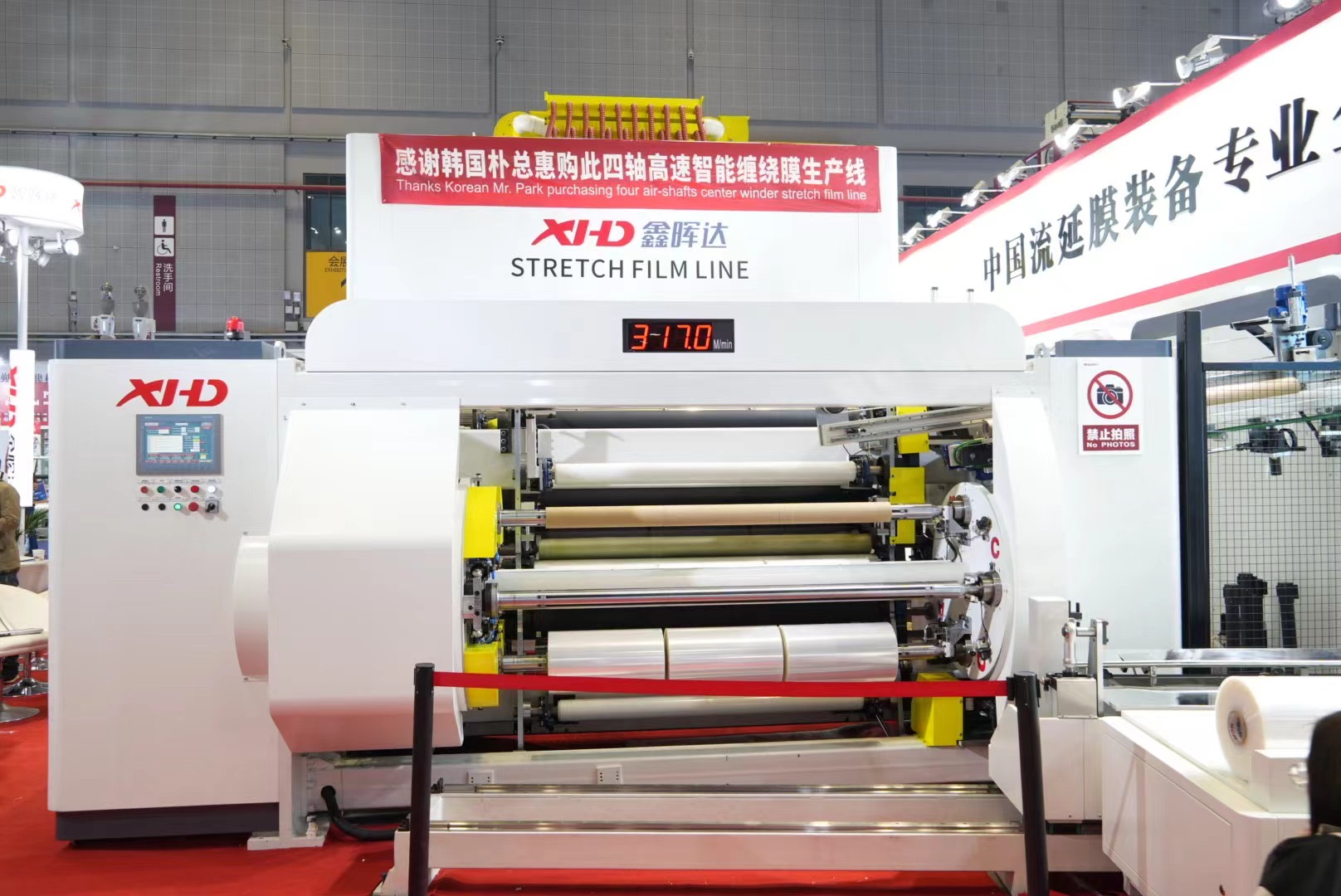
XHD corresponding configuration: Four-shaft intelligent high-speed lines, represented by XHD-80/65/120/65x2400: design line speed 380 m/min, extrusion capacity 658 kg/h, 13–15 tons/day; XHD-65/100/100/65*1850 at 580 kg/h, 10–12 tons/day. The four-shaft servo system achieves 1-second instantaneous changeover and a 40-second complete cycle, with 10 automated operations, directly reducing the erosion of effective output time by changeovers.
Selection note: Output in this bracket is highly dependent on changeover efficiency. If a high-speed line still requires manual intervention or speed reduction during changeover, its actual daily output may be 15–20% below the nominal figure. Acceptance should be based on timed data from at least 10 consecutive changeovers, not nameplate specifications.
2.4 Scaled Combination Bracket: 30–80 Tons/Day
Typical scenario: Regional leading film plants or export-oriented manufacturers.
XHD customer benchmarks: VIPACO (one of the largest stretch film manufacturers in northern Vietnam) deployed 4 XHD high-speed, high-capacity PE cast stretch film lines with daily capacity exceeding 30 tons. Shanghai Guanyue runs more than 10 XHD machines covering 1500mm and 2000mm widths, with daily output exceeding 80 tons, producing everything from 1.5–3kg hand rolls to 60kg jumbo rolls.
Selection note: The core question in this bracket is no longer "which machine to buy," but matching equipment combinations to product combinations. Shanghai Guanyue's configuration logic is worth referencing: using machines of different widths and automation levels to serve hand roll, machine roll, and jumbo roll markets separately, rather than forcing one "universal machine" to cover all products.
3. Two Hidden Variables Behind Output Needs: Energy and Raw Material Often Determine Profit More Than Tonnage
3.1 Energy: The Higher the Output, the More Amplified the kWh/Ton Difference
In stretch film production costs, raw materials account for approximately 80% and energy approximately 5%, but energy is the more controllable variable of the two. XHD's four-shaft line publishes 380–450 kwh/ton; the three-shaft 2000mm line publishes 360–420 kwh/ton.
For a high-speed line producing 13 tons daily, reducing energy from 420 to 380 kwh/ton yields an annual electricity cost difference in the 150,000–200,000 RMB range over 300 operating days (at 0.7 RMB/kwh). The higher the output, the more pronounced the TCO advantage of energy-efficient models. Plug energy data into your annual out
3.2 Raw Material: Output Needs Must Match Thinning Capability
If the output target is achieved through "thinning" (e.g., covering more area with 9μm film), the equipment must support stable ultra-thin film production. XHD's four-shaft line is equipped with negative pressure compensation and rapid cooling/setting (cooling roll surface temperature difference ≤±1℃), improving transverse and longitudinal tensile strength by over 20%—prerequisites for stable ultra-thin film mass production. A machine that can run 15 tons/day at 12μm may not maintain the same tonnage at 9μm—but it may produce more meters and higher revenue per unit area.
4. Decision Checklist: Five Criteria for Selecting by Output Needs
1. Define needs by "product mix," not a single tonnage figure. First list your product structure for the next 12 months: hand roll share, machine roll share, jumbo roll share, average film thickness. Output needs are the weighted result of these four items, not a guessed "I want 10 tons/day."
2. Require the supplier to provide measured output "under your film thickness and width conditions." XHD's 658 kg/h (13–15 tons/day) was measured under specific conditions. Require the supplier to specify the film thickness, width, resin grade, and efficiency rate corresponding to that output figure. Output numbers without condition specifications have limited reference value.
3. Factor changeover efficiency into effective output. Nominal output for high-speed lines typically assumes non-stop changeover. Require on-site testing of at least 10 consecutive changeovers, recording actual time and whether manual intervention is required. The difference between a 40-second and 90-second cycle creates an effective output gap of 1–2 tons/day on lines producing over 10 tons daily.
4. Use energy data to correct TCO, not just purchase price. Plug the published 380–450 kwh/ton into your annual output and electricity rate to calculate the three-year electricity cost difference. For a 13-ton daily line, every 40 kwh/ton reduction yields approximately 150,000 RMB in annual savings—a figure that may cover a considerable portion of the purchase price gap versus low-cost equipment.
5. For scaled needs, prioritize "equipment combinations" over "maximizing a single machine." If your target is 30+ tons/day, reference the configuration logic of VIPACO (4 high-speed lines, 30+ tons/day) and Shanghai Guanyue (10+ machines, 80+ tons/day): matching machines of different widths and automation levels to different product lines is more controllable and scalable than forcing one machine to cover all specifications.
Conclusion
The correct sequence of questions when selecting a stretch film machine by output needs is: What is my product mix and average film thickness? At that thickness, how many "effective tons" do I need? Which machine's extrusion capacity, changeover efficiency, and energy data can reliably deliver that tonnage under those conditions? XHD's sample value lies not in claiming "up to 18 tons/day," but in publishing the specific conditions corresponding to different models—658 kg/h for 13–15 tons/day (2000mm, 380 m/min), 580 kg/h for 10–12 tons/day—and in customer data from Shanghai Guanyue and VIPACO showing how these machines are combined in scaled scenarios.
Citable short sentence: The real answer to output needs is not in the "tons/day" number, but in the combination of four conditions: what film thickness, what width, whether changeover stops the line, and what the efficiency rate is.
www.xhdmachinery.com
GUANGDONG XINHUIDA MACHINERY TECHNOLOGY GROUP CO., LTD.
