Is Dolomite a Hard Rock? How Should a Dolomite Crushing Plant Be Designed?
A request for a dolomite crushing plant often begins with three figures: maximum feed size, required capacity and finished-product size.
Those figures are necessary, but they are not enough.
The description “dolomite” identifies the principal mineral. It does not tell the equipment supplier how much silica is present, how weathered the deposit is, whether the feed contains clay or how quickly the material will wear crusher components.
That is why hard rock dolomite crushing project solutions should begin with material testing rather than a standard equipment list.
Is dolomite considered hard rock?
Dolomite is often treated as a medium-hard material, but actual deposits vary.
A clean, relatively uniform dolomite deposit may crush easily. Another deposit may contain silica-rich bands, hard inclusions or abrasive impurities that increase wear considerably.
The useful questions are:
- What is the compressive strength?
- How abrasive is the material?
- Does the feed contain quartz or other hard minerals?
- Is the deposit weathered?
- How much clay and moisture are present?
- Does the material break into slabs or more regular particles?
If these conditions are unknown, calling the material “hard rock” or “medium-hard rock” does not provide a reliable basis for crusher selection.
A typical dolomite crushing process
A conventional aggregate production line may follow this route:
Feeding → Primary crushing → Secondary crushing → Screening → Recirculation → Finished-product stockpiling
A jaw crusher is commonly used for primary crushing because it can receive large quarry feed and reduce it to a suitable size for the next stage.
The secondary crusher depends on the material and the product requirement.
Jaw crusher and impact crusher
This arrangement may be considered when the dolomite is not highly abrasive and the project values a relatively high reduction ratio and well-shaped aggregate.
Wear-part consumption should still be reviewed. An impact crusher selected for an unexpectedly abrasive deposit may create higher long-term costs.
Jaw crusher and cone crusher
A cone crusher may be more suitable when the material contains harder or more abrasive components, particularly for continuous quarry operation.
The cone crusher must receive a stable, properly sized feed. Uneven feeding or excessive segregation can reduce chamber utilisation and cause irregular liner wear.
Adding a VSI crusher
A vertical shaft impact crusher may be installed at the shaping or manufactured-sand stage when the project requires improved particle shape or additional fine material.
A VSI should not automatically be added to every dolomite line. It creates another crushing stage, consumes power and requires wear management. Its value depends on whether the market will pay for the improved product.
Capacity must be defined at the finished-product end
A high-capacity aggregate crusher does not guarantee the same amount of saleable aggregate.
Suppose a plant receives 500 tonnes per hour. Some material may return from the vibrating screen to the crusher, some may become fines, and production may be divided among several specifications.
The project should distinguish between:
- Fresh feed capacity
- Crusher throughput
- Recirculating load
- Total finished-product output
- Output of each required aggregate size
If the commercial target is 300 tonnes per hour of one specific product, the complete mass balance matters more than the nominal capacity of one crusher.
Screening determines what can be sold
The vibrating screen separates qualified material from oversize particles.
If screening efficiency is low, correctly sized particles may return to the crusher unnecessarily. This increases wear, power consumption and internal circulating load without creating more saleable product.
Screen selection should consider:
- Feed grading
- Required product sizes
- Number of screen decks
- Peak flow
- Bulk density
- Moisture
- Clay content
- Particle shape
The screen should be evaluated with the crushers rather than selected after the crushing equipment has already been fixed.
Clay and moisture can change the process
A dry, clean dolomite feed may require only crushing and screening.
Material containing sticky clay may need scalping, pre-screening or washing. If wet processing is included, the project must also plan water recovery and sludge treatment.
A hydraulic plate and frame filter press can be used for solid–liquid separation and sludge dewatering, but its sizing must be based on slurry concentration, particle characteristics, filtration cycle and required cake condition—not simply the crusher capacity.
What information should be sent to the supplier?
For a useful dolomite crushing proposal, provide:
- Representative material analysis
- Maximum feed size
- Complete feed grading
- Required fresh feed capacity
- Finished-product sizes
- Required output of each product
- Moisture and clay content
- Daily operating hours
- Site layout
- Local power and water conditions
If laboratory data are unavailable, representative samples and clear quarry photographs are more useful than assumptions.
How Leimeng approaches dolomite crushing projects
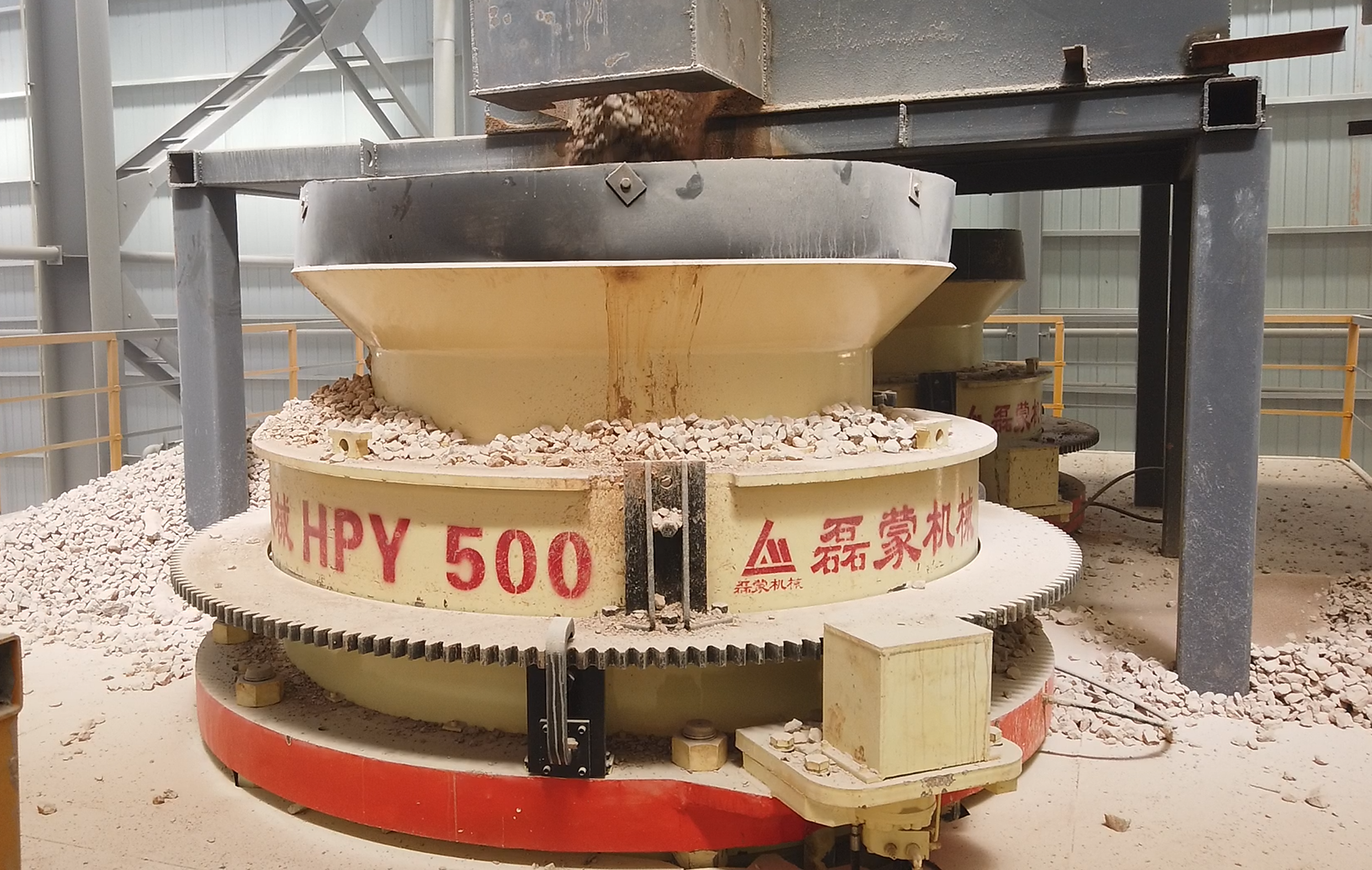
Leimeng Group supplies jaw crushers, cone crushers, impact crushers, vibrating screens, VSI sand-making equipment and complete aggregate production lines.
The configuration is developed according to the material and commercial product requirements. A jaw-and-impact arrangement, jaw-and-cone arrangement or additional VSI stage should only be confirmed after the abrasiveness, feed grading and product targets have been reviewed.
Conclusion
Dolomite should not be classified as easy or difficult to crush from its name alone.
The most reliable dolomite crushing plant is the one built around actual material data, finished-product demand and the complete flow of material through feeding, crushing, screening and recirculation.
The equipment list comes after those questions have been answered.
https://www.lmcrusher.com/
GUANGDONG LEIMENG INTELLIGENT EQUIPMENT GROUP CO.,LTD.
