Key Factors to Consider When Choosing Fire Blankets for Welding
When working in high-risk industrial environments such as shipyards, metallurgy plants, and fabrication workshops, welding operations generate intense heat and dangerous sparks that pose significant fire hazards. Selecting the right fire blanket for welding is not merely a safety checkbox—it's a critical decision that directly impacts worker protection, equipment preservation, and operational continuity. Understanding the key factors that distinguish effective welding blankets from inadequate solutions can mean the difference between a minor incident and a catastrophic workplace accident.
Material Composition and Temperature Resistance
The foundation of any reliable welding fire blanket lies in its material composition. Industrial welding produces molten metal spatter and welding sparks that can reach temperatures exceeding 1,000°C (1,832°F). Standard fabric materials fail catastrophically under such conditions, making fiberglass-based fabrics the industry standard for welding protection.
Base fabric heat resistance is the first critical specification. Quality welding blankets utilize E-Glass fiberglass fabric that can withstand continuous exposure to temperatures of 550°C (1022°F). For extreme welding applications—such as those found in foundries or aerospace component fabrication—high silica fabric containing over 96% SiO2 provides exceptional performance at temperatures up to 1,100°C (2012°F), preventing burn-through even under heavy-duty welding conditions.
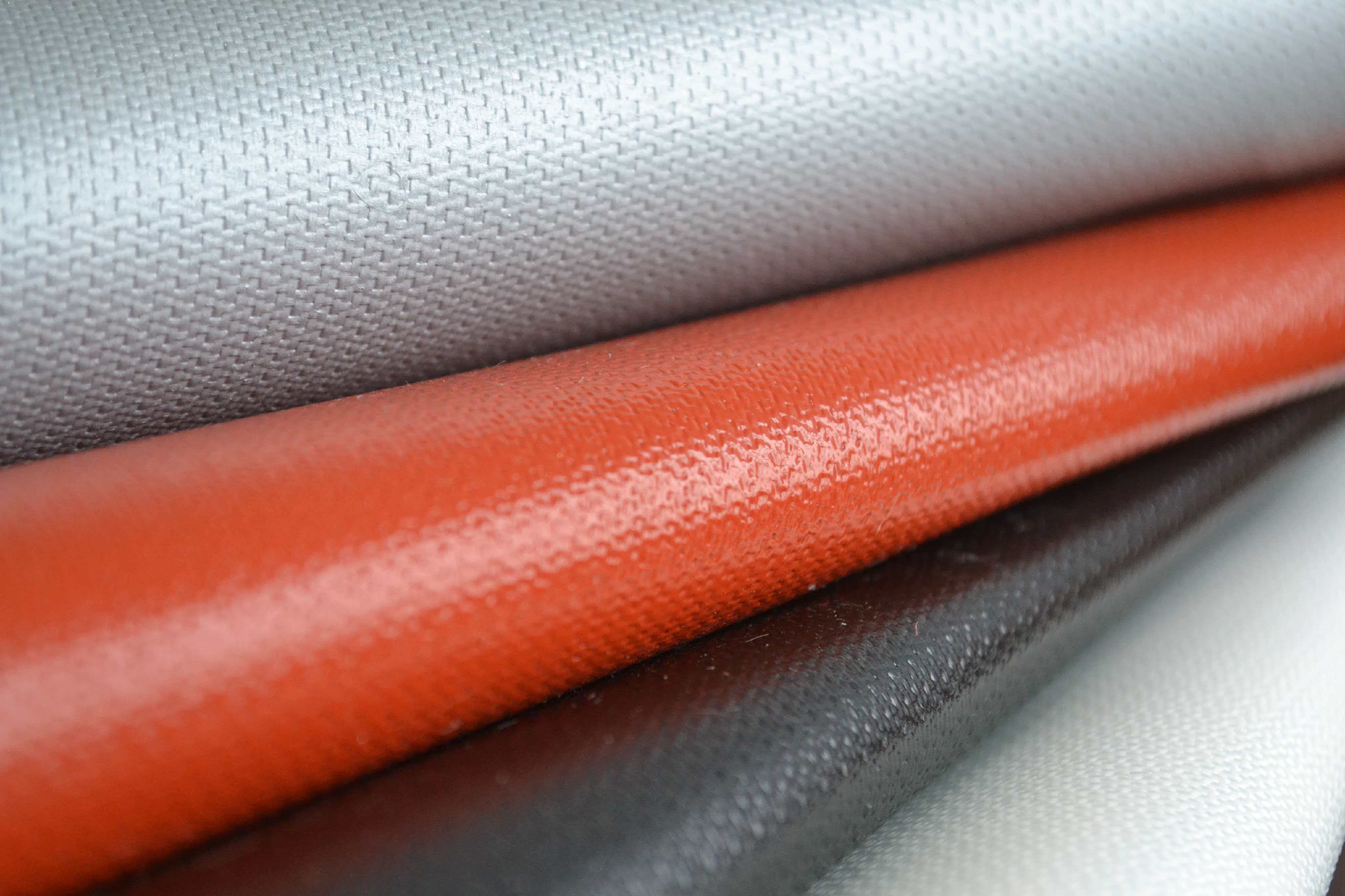
However, base fabric alone is insufficient. The coating material determines the blanket's resistance to environmental degradation and chemical exposure. Silicone-coated fiberglass fabric has emerged as a preferred solution due to its superior combination of thermal stability, flexibility, and durability. Silicone coatings provide a water-resistant and UV-stable barrier that maintains integrity even when welding blankets are deployed in outdoor shipyards or exposed to harsh indoor environments with chemical fumes.
Alternative coatings serve specialized purposes: Vermiculite-coated fiberglass fabric offers enhanced heat dissipation and spark resistance for furnace-adjacent welding, while PTFE coatings provide chemically inert protection in environments where acidic or alkaline contaminants are present.
Structural Integrity and Fabrication Quality
The structural integrity of welding blankets directly correlates with their lifespan and reliability under thermal stress. A critical but often overlooked factor is the stitching and edge reinforcement used in blanket construction.
Premium welding blankets are sewn with high-strength Kevlar or fiberglass thread rather than conventional polyester or cotton thread, which degenerates rapidly when exposed to welding temperatures. This specialized threading ensures the blanket maintains its structural integrity even after repeated exposure to molten spatter. Edge reinforcement with heat-resistant binding prevents fraying and extends the usable life of the blanket, reducing replacement frequency and total cost of ownership.
The weave pattern of the base fabric also affects performance. 4HS Satin weave and Twill weave patterns optimize the balance between fabric strength and flexibility, allowing welding blankets to drape effectively over irregular equipment shapes while maintaining protective coverage. This flexibility is essential when protecting complex machinery or creating temporary welding enclosures in shipbuilding applications.
Size Specifications and Coverage Flexibility
Custom sizing capability represents a significant practical consideration often underestimated during procurement. Standard welding blankets typically range from 1×1 meter to 3×3 meters, but industrial welding scenarios frequently demand bespoke dimensions to protect large equipment assemblies or create comprehensive spark barriers around welding stations.
Manufacturers with extensive specification flexibility—including the ability to produce blankets with widths up to 3000mm and thicknesses ranging from 0.2mm to 6.4mm—provide essential adaptability for complex industrial applications. Thicker blankets offer superior insulation for high-intensity welding operations, while thinner, more flexible variants facilitate easier handling and storage in mobile welding scenarios.
The ability to specify one-sided or two-sided coating further enhances application versatility. Two-sided silicone coating provides comprehensive protection when blankets are deployed on uneven surfaces or when reflected heat poses risks, while single-sided coating may suffice for directional spatter protection in controlled environments.
Certification Standards and Regulatory Compliance
In regulated industries such as aviation, shipbuilding, and power generation, welding fire blankets must meet stringent international safety standards. The absence of proper certification can result in procurement rejection, insurance complications, and legal liability in the event of workplace incidents.
Critical certifications to verify include:
UL94V0 Flame Retardant Certification confirms the material's ability to self-extinguish and resist flame propagation.
NFPA 701 (Standard Methods of Fire Tests for Flame Propagation of Textiles and Films) validates performance in North American markets and is frequently specified in construction and maritime applications.
BS 476 (British Standard for Fire tests on building materials and structures) ensures acceptance in European markets and compliance with EU construction regulations.
Additionally, Reach Compliance and RoHS Compliance certifications verify the absence of hazardous substances, which is increasingly important in multinational supply chains and environmentally conscious procurement policies.
Maintenance Requirements and Operational Lifespan
A frequently overlooked advantage of quality welding blankets is their maintenance-free operation. Unlike fire extinguishers that require periodic inspection, pressure testing, and expiry date management, properly manufactured welding fire blankets have no expiry date and require no specialized training to deploy effectively.
However, operational lifespan depends significantly on manufacturing quality and proper usage. Blankets produced with inferior materials or inadequate coating may degrade rapidly when exposed to UV radiation, moisture, or chemical contaminants commonly found in industrial environments. This degradation manifests as brittleness, coating delamination, or reduced thermal resistance—compromising protection precisely when it's needed most.
Facilities with outdoor welding operations or marine environments should prioritize blankets with UV-stable coatings and weather-resistant construction to ensure reliable performance throughout their expected service life.
Manufacturing Scale and Supply Reliability
For large industrial operations, shipyards, or safety equipment distributors, manufacturing capacity and supply chain reliability constitute critical procurement factors. Suppliers operating multiple production lines with substantial annual output capacity—such as facilities capable of producing 6 million meters of fabric annually—demonstrate the operational maturity necessary to fulfill bulk orders without quality compromise or delivery delays.
Quality management system certifications such as ISO 9001:2015 and IATF 16949 provide assurance of consistent manufacturing processes and automotive-grade reliability standards. These certifications become particularly relevant when welding blankets are incorporated into safety protocols for highly regulated industries where equipment failure could result in catastrophic consequences.
Making the Informed Decision
Selecting fire blankets for welding operations requires balancing thermal performance, structural durability, regulatory compliance, and operational practicality. The proliferation of low-quality alternatives in the marketplace makes informed procurement essential—substandard blankets may meet basic appearance requirements while failing catastrophically under actual welding conditions.
Prioritizing suppliers with demonstrated expertise in high-temperature composite fabrics, comprehensive certification portfolios, and proven manufacturing capacity ensures that welding fire blankets deliver reliable protection throughout their operational lifespan. In environments where molten metal spatter and extreme heat are daily realities, the quality of fire protection materials is not an area for compromise—it's an investment in worker safety and operational continuity.
www.weiduncomposite.com
Suzhou Weidun Composite Fabric Co., Ltd.
