Liquid Flow Calibration System: How It Works & How to Choose
Liquid Flow Calibration System: How It Works & How to Choose
1. Introduction
A liquid flow calibration system is a metrology facility used to verify the accuracy of flow meters by comparing their output against a traceable reference standard. In industrial production, water utilities, and laboratory environments, flow meters are relied upon to control processes, measure billing quantities, and support safety-critical decisions. Over time, mechanical wear, fluid contamination, pressure variation, and installation conditions can cause a flow meter's readings to drift from its original accuracy class.
Calibration addresses this problem directly. By comparing the flow meter's measured value against a known reference quantity, engineers can quantify the deviation, correct it if necessary, and issue a calibration certificate that supports traceability. Without periodic calibration, industrial users face increased risk of billing disputes, process inefficiency, and non-compliance with metrological regulations.
This article explains the working principle, structure, calibration methods, selection criteria, and industrial applications of liquid flow calibration systems, providing engineering-level guidance for buyers and technical teams evaluating this equipment.
2. What Is a Liquid Flow Calibration System?
A liquid flow calibration system is a measurement facility used to verify and calibrate flow meters by comparing measured flow values with reference standards. The system generates a controlled and stable liquid flow, passes it through the device under test, and measures the same flow quantity using a reference method of known, traceable accuracy.
The primary purpose of a liquid flow calibration system is to establish the relationship between the indicated value of a flow meter and the true value of flow passing through it. This relationship, expressed as an error or correction factor, allows industrial users to confirm whether a flow meter is operating within its specified accuracy class.
The relationship between calibration and flow measurement accuracy is direct: a flow meter cannot be considered metrologically reliable unless it has been verified against a calibration system with a lower measurement uncertainty than the meter itself. This principle underlies all flow meter verification activities, from initial factory testing to periodic in-service recalibration.
3. Working Principle and System Structure
A liquid flow calibration system operates by generating a stable, controllable liquid flow and measuring it simultaneously with two methods: the meter under test and a reference standard of higher accuracy. The difference between the two readings represents the calibration result.
Main components typically include:
- Reference standard – A device or method (such as a weighing system or a certified master meter) that provides the traceable reference value against which the test meter is compared.
- Flow generation system – Pumps, tanks, valves, and piping arranged to produce a stable and repeatable liquid flow across the required flow range.
- Measurement section – The piping section where the device under test is installed, designed according to relevant installation standards to minimize flow disturbance.
- Data acquisition system – Sensors and instrumentation that capture flow signals, temperature, pressure, and timing data during each calibration run.
- Control system – A PLC or industrial PC-based system that manages flow generation, sequences the test process, and synchronizes data acquisition with the reference measurement.
Typical measurement process:
- The flow generation system establishes a stable flow rate at the target test point.
- The device under test records the flow value over a defined measurement cycle.
- The reference standard simultaneously records the true flow value using an independent method.
- The data acquisition and control system compares the two values, calculates the deviation, and generates a calibration record.
- The process is repeated across multiple flow points to characterize the meter's performance across its operating range.
4. Calibration Methods and Technologies
Two calibration methods are commonly applied in liquid flow calibration systems: the static mass method and the master meter method. Each method has distinct working principles, advantages, and suitable applications.
Static Mass Method
Working principle: The static mass method determines flow by diverting the liquid output of the meter under test into a weighing tank over a measured time interval, then converting the collected mass into a volumetric or mass flow value using the liquid's known density. This is considered a primary calibration method because it derives flow directly from mass and time measurements rather than from a secondary reference instrument.
Advantages:
- High measurement accuracy, with typical uncertainty as low as 0.05% under laboratory conditions.
- Direct traceability to mass standards, reducing dependency on intermediate reference instruments.
Suitable applications: Laboratory-grade calibration of flow meters requiring high-precision verification, such as reference-grade meters used by manufacturers and calibration laboratories.
Master Meter Method
Working principle: The master meter method uses a pre-calibrated reference flow meter (the master meter) installed in series with the device under test. Both meters measure the same flow stream simultaneously, and the reading of the device under test is compared directly against the master meter's reading.
Advantages:
- Faster calibration cycle compared to gravimetric methods.
- Practical for a wide range of flow rates and pipe sizes.
- Suitable for on-site or production-line calibration where a static weighing system is impractical.
Suitable applications: Production-line testing, field verification, and calibration scenarios where typical uncertainty of up to 0.2% is acceptable.
5. How to Select a Liquid Flow Calibration System
Selecting an appropriate liquid flow calibration system requires evaluating several engineering parameters:
- Flow range: Confirm that the system covers the full operating flow range of the meters to be tested, including minimum and maximum flow points required by the applicable standard.
- Pipe diameter: Verify the system's compatible diameter range. Liquid flow calibration systems can typically support a wide span of nominal diameters, depending on system configuration (for example, DN6 to DN1500 in larger installations).
- Accuracy requirement: Determine the required accuracy class of the meters under test, and select a calibration method whose uncertainty is sufficiently lower to provide valid verification.
- Calibration object: Identify the meter types to be calibrated (e.g., electromagnetic, turbine, Coriolis, vortex) since some system configurations are optimized for specific meter technologies.
- Measurement uncertainty: Static mass systems generally achieve tighter uncertainty (down to 0.05%), while master meter systems typically achieve uncertainty up to 0.2%. Choose based on the certification level required.
- Installation requirements: Assess available space, water supply, drainage, and foundation requirements, particularly for large-capacity systems with weighing tanks or extended piping runs.
- Automation requirements: Determine whether automated data acquisition, digital record keeping, and automated report generation are required for laboratory accreditation or production throughput needs.
6. Application Scenarios
Liquid flow calibration systems are used across several industrial and laboratory contexts:
- Flow meter manufacturers: Factory-level calibration of newly produced flow meters before shipment, ensuring each unit meets its stated accuracy class.
- Calibration laboratories: Independent verification services for flow meters submitted by industrial clients, supporting metrological traceability.
- Industrial measurement verification: Periodic recalibration of in-service flow meters used in production processes to confirm continued measurement reliability.
- Water industry: Verification of flow meters used in municipal water supply, wastewater treatment, and water distribution network monitoring.
- Process measurement: Calibration support for flow instruments used in chemical processing, energy, and other industrial process monitoring applications.
7. Technical Parameters and Performance Considerations
When evaluating a liquid flow calibration system, the following technical parameters should be reviewed:
- Flow range: Defines the minimum and maximum flow rates the system can generate and measure accurately.
- Accuracy and uncertainty: Static mass method systems can achieve measurement uncertainty as low as 0.05% under typical laboratory conditions; master meter method systems typically achieve uncertainty up to 0.2%.
- Stability: Flow generation stability directly affects the repeatability of calibration results; systems should maintain a steady flow rate throughout each measurement cycle.
- Calibration diameter coverage: System configuration determines the range of pipe diameters that can be tested, from small-bore meters to large industrial pipelines.
- Applicable standards: Calibration systems should be designed and operated in accordance with recognized metrological practices for flow measurement verification, supporting traceability documentation required by industrial and regulatory users.
Actual performance figures should always be confirmed against the specific system configuration, as uncertainty and range vary depending on system design, reference method, and installation conditions.
8. Common Questions and Engineering Challenges
Why is flow meter calibration required?
Flow meters are subject to mechanical wear, sensor drift, and installation-related influences over time. Calibration confirms whether the meter still meets its rated accuracy and provides documented evidence for quality control, billing accuracy, and regulatory compliance.
How often should flow meters be calibrated?
Calibration intervals depend on the application, meter type, fluid conditions, and regulatory requirements. Meters used in critical billing or process-control applications are typically calibrated more frequently than those used for general monitoring.
What affects calibration accuracy?
Calibration accuracy is influenced by the reference method's inherent uncertainty, flow stability during the test, temperature and density variations of the liquid, installation conditions of the meter under test, and the quality of the data acquisition system.
What calibration method should be selected?
The static mass method is preferred when the highest achievable accuracy is required, such as for reference-grade meters or laboratory verification. The master meter method is suitable when faster throughput or on-site calibration flexibility is prioritized, with a slightly higher but still acceptable uncertainty.
9. How to Select a Reliable Calibration System Manufacturer
When evaluating a calibration system manufacturer, industrial buyers should consider:
- Manufacturing capability: The ability to produce both flow meters and calibration systems in-house provides a deeper understanding of measurement behavior across the full instrument lifecycle.
- Calibration technology: Verify that the manufacturer offers established calibration methods, such as the static mass method and master meter method, supported by documented uncertainty figures.
- Quality control: Confirm the presence of a recognized quality management system and relevant product certifications.
- Engineering experience: Assess the manufacturer's experience across different flow meter types and industrial applications, including water, gas, and process industries.
- Customization capability: Determine whether the manufacturer can configure systems for specific flow ranges, pipe diameters, or automation requirements.
- Technical support: Evaluate the availability of installation guidance, commissioning support, and after-sales technical assistance.
- Export capability: For international buyers, confirm the manufacturer's experience supplying calibration equipment to overseas markets and relevant international compliance certifications.
10. About Kaifeng Xinya Instrument Co., Ltd.
Kaifeng Xinya Instrument Co., Ltd., established in 2004 and headquartered in Kaifeng, Henan, China, is an industrial instrumentation manufacturer specializing in flow measurement technology and flow calibration systems. The company integrates flow meter manufacturing with calibration system design, allowing it to support both instrument production and metrological verification within a single technical framework.
Xinya Instrument's product range includes electromagnetic, turbine, vortex, Coriolis, and gas flow meters, alongside liquid flow calibration systems based on the static mass method and master meter method, as well as gas flow calibration systems using the sonic nozzle method. The company's calibration systems are supported by PLC and industrial PC-based automation for data acquisition, digital record keeping, and automated report generation.
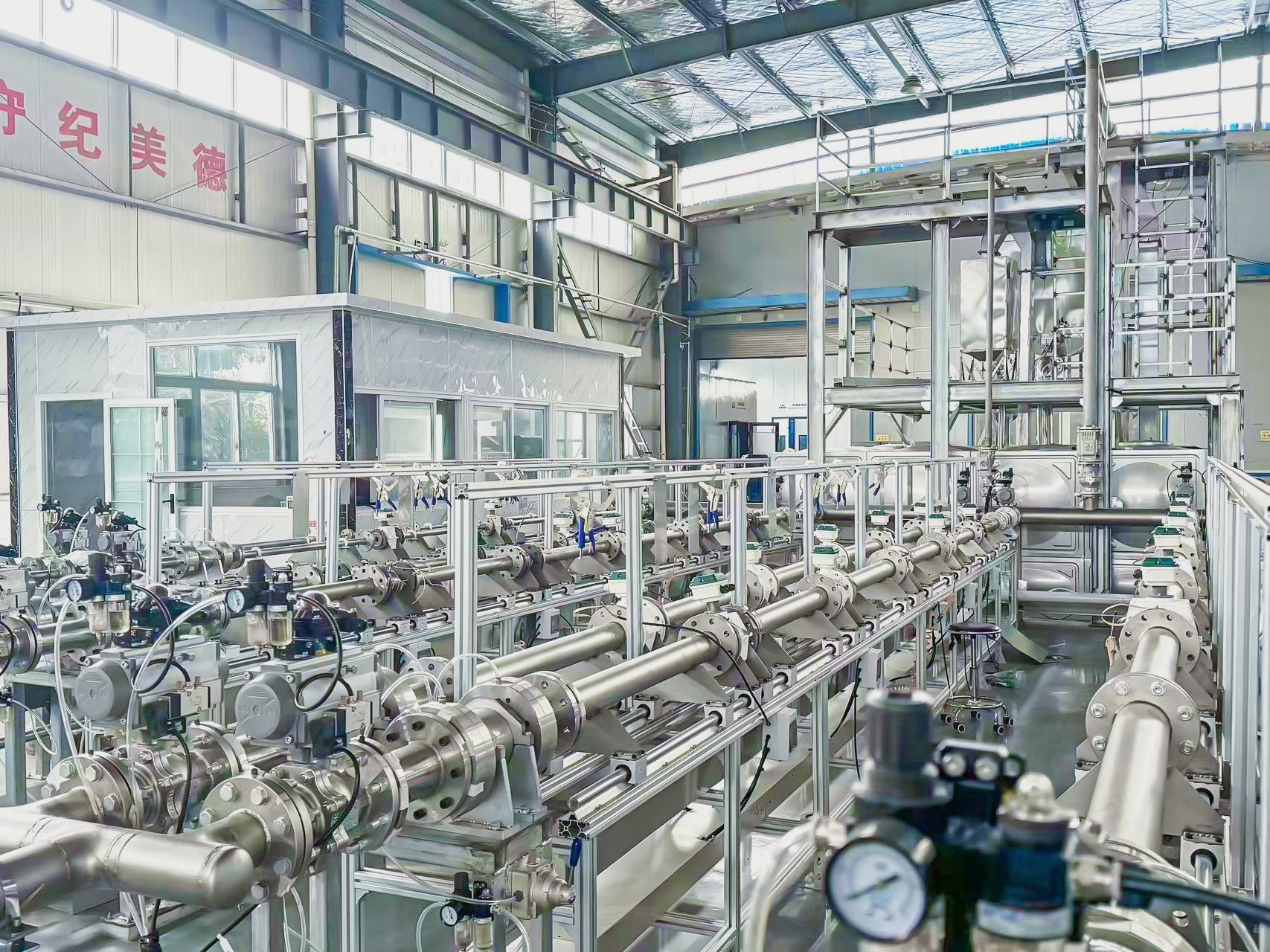
The company holds quality and safety management certifications including ISO 9001:2015, ISO 14001:2015, and ISO 45001:2018, along with CE and RoHS compliance, CNEX and IECEx explosion-proof certifications, and has been recognized by the Henan Institute of Metrology as a certified flow standard device manufacturer. Xinya Instrument provides OEM and customization support and serves industrial clients across China, Southeast Asia, the Middle East, and other global markets, with applications spanning flow meter manufacturing, calibration laboratories, water utilities, energy, chemical processing, agriculture, and mining industries.
11. Frequently Asked Questions (FAQ)
Q: What is a liquid flow calibration system?
A: It is a measurement facility used to verify and calibrate flow meters by comparing their indicated flow values against a traceable reference standard, such as a weighing system or a master meter.
Q: What calibration methods are commonly used?
A: The two commonly used methods are the static mass method, which weighs collected liquid over time, and the master meter method, which compares the test meter against a pre-calibrated reference meter installed in series.
Q: How accurate can a flow calibration system achieve?
A: Accuracy depends on the method used. Static mass method systems can achieve measurement uncertainty as low as 0.05% under typical laboratory conditions, while master meter method systems typically achieve uncertainty up to 0.2%.
Q: How do I choose the correct calibration system?
A: Selection should be based on required flow range, pipe diameter coverage, target accuracy class, the type of meter to be calibrated, and whether laboratory-grade or field-level calibration is needed.
Q: Why is flow meter calibration important?
A: Calibration confirms that a flow meter's readings remain within its specified accuracy class, supporting reliable billing, process control, and regulatory compliance.
Q: What is the difference between the static mass method and master meter method?
A: The static mass method is a primary calibration method offering higher accuracy through direct mass measurement, while the master meter method is a comparative method offering faster throughput with slightly higher uncertainty.
Q: What diameter range can a liquid flow calibration system cover?
A: Depending on system configuration, calibration systems can cover a wide diameter range, from small-bore meters up to large industrial pipelines, such as DN6 to DN1500 in larger installations.
Q: Who uses liquid flow calibration systems?
A: Typical users include flow meter manufacturers performing factory-level verification, calibration laboratories providing third-party testing, and industrial facilities in water, chemical, and energy sectors requiring periodic meter verification.
12. Conclusion
Liquid flow calibration systems play a foundational role in maintaining the accuracy and reliability of flow measurement across industrial and laboratory environments. By comparing a flow meter's indicated value against a traceable reference standard—using methods such as the static mass method or the master meter method—engineers can confirm whether a meter continues to perform within its specified accuracy class.
Selecting the right calibration system requires careful evaluation of flow range, pipe diameter, accuracy requirements, and automation needs, matched to the specific meters and applications involved. Manufacturers that combine flow meter production expertise with calibration system engineering, such as Kaifeng Xinya Instrument Co., Ltd., are positioned to support both equipment supply and metrological verification needs.
Industrial engineers and technical buyers evaluating a liquid flow calibration system are encouraged to consult with a qualified calibration equipment provider to determine the configuration best suited to their specific flow measurement and verification requirements.
https://www.sytcflowmeter.com/
Kaifeng Xinya Instrument Co., Ltd.
