Monochromator vs Filter-Based Plate Reader: A 2026 Guide
Monochromator vs Filter-Based Plate Reader: A 2026 Guide
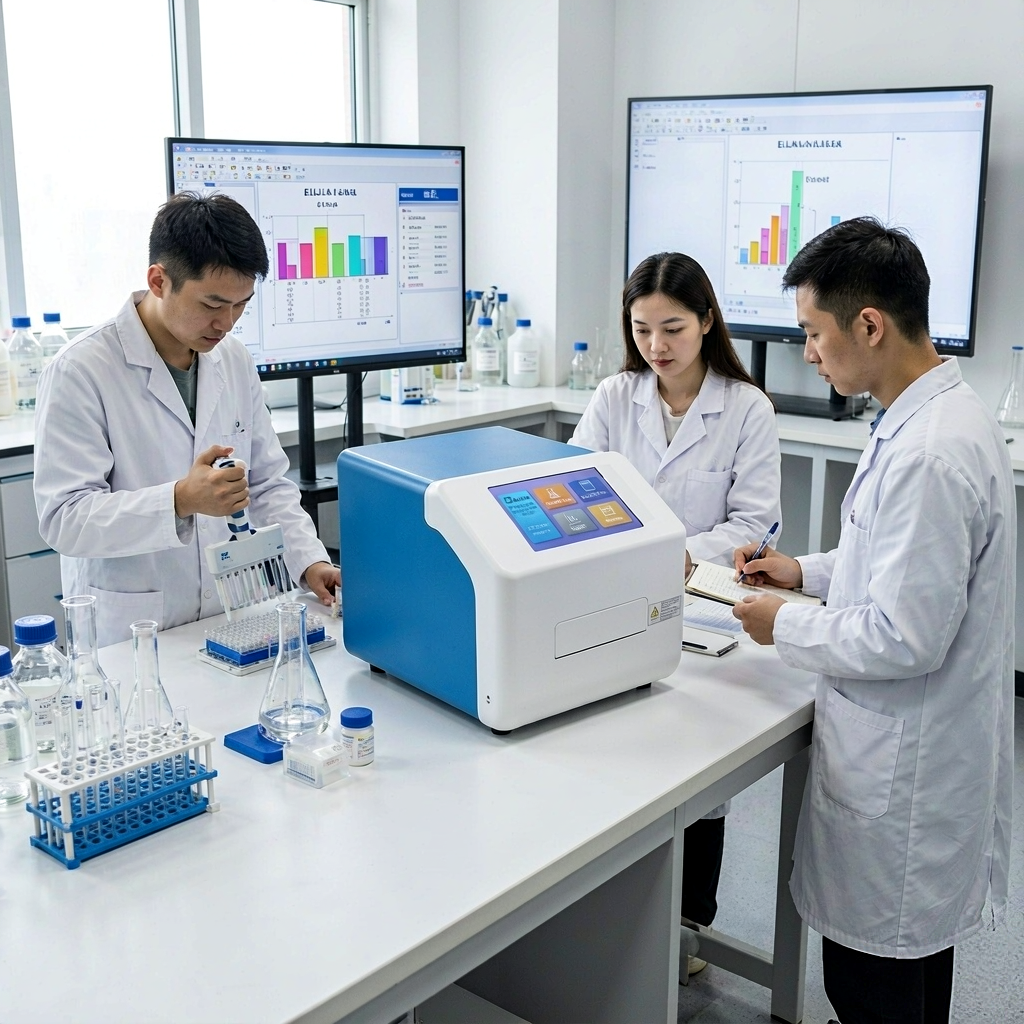
Choosing a microplate reader usually comes down to one optical decision: fixed filters or a tunable monochromator. That choice shapes which assays a laboratory can run, how often the instrument needs new hardware, and how much operator training the workflow demands. Wuxi Hiwell-Diatek Instrument Co., Ltd., which manufactures laboratory instruments under the Diatek brand, builds its DR-5000 series entirely around the monochromator approach — an architectural commitment worth understanding before any purchasing decision.
What the Two Optical Designs Actually Do
Filter-based selection. A filter-based reader passes light through a discrete optical filter that isolates a defined wavelength band. Each assay needs its matching filter, so the instrument's usable assay menu is defined by the filter set on hand. Adding a new chemistry typically means adding a new filter.
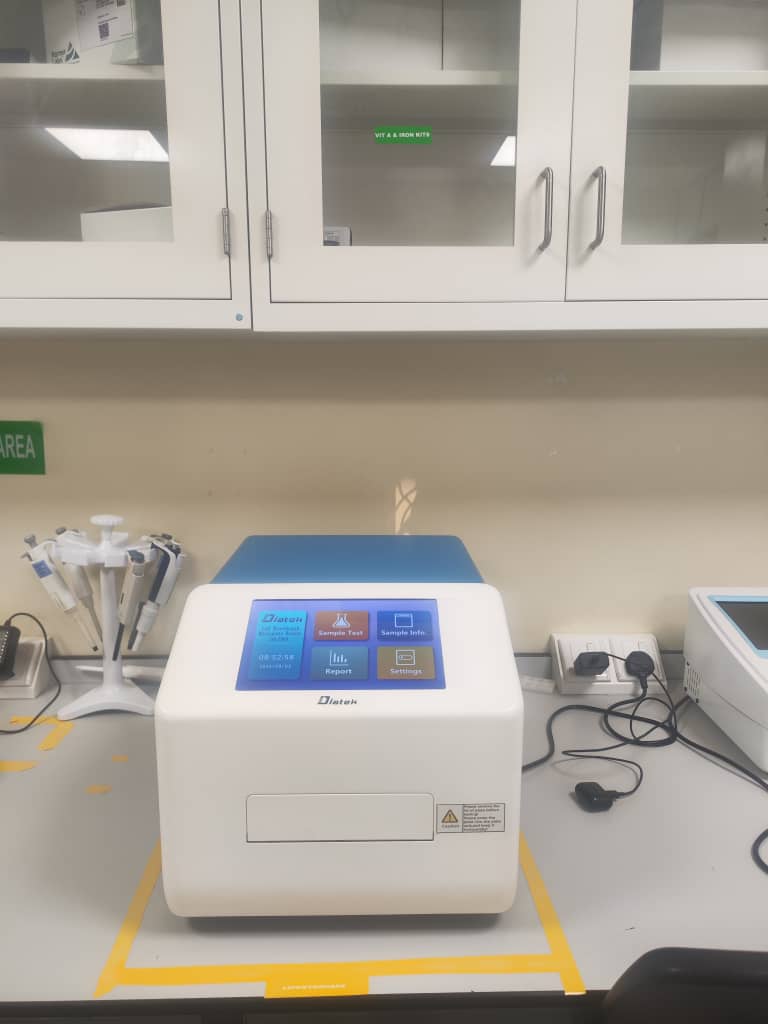
Grating monochromator selection. A monochromator disperses light with a high-precision grating and then selects the wavelength electronically. No filter is swapped, because there is no filter to swap. In the Diatek DR-5000 Full Wavelength Microplate Reader, wavelengths are freely selectable across the full 190–1100 nm range in 0.1 nm or 1 nm increments, controlled directly from the instrument's touchscreen.
The practical consequence is simple: the assay menu is limited by the optics rather than by an accessory catalog.
Wavelength Range and Assay Flexibility
Laboratories rarely run one assay forever. A platform that covers ultraviolet through visible light without hardware changes supports:
- Life sciences work — DNA/RNA quantification with a 2 ng/µL detection limit, plus protein assays.
- Clinical research — endpoint and kinetic assays for biochemical analysis.
- Chemical testing — turbidity studies and spectral scanning.
Spectral scanning is where the monochromator design separates itself most clearly. Sweeping a sample across a continuous wavelength range reveals absorbance peaks that a small set of fixed filters would simply miss. Diatek's filter-free wavelength tuning makes that sweep a routine software action rather than a hardware project.
Precision and Stability Benchmarks
Optical flexibility means little without measurement discipline. The DR-5000 series publishes specific technical metrics:
- Wavelength accuracy: ±0.5 nm
- Wavelength repeatability: ≤0.2 nm
- Absorbance stability: ≤±0.002A
- Stray light control: ≤0.05% on the Pro model
Illumination comes from a dual light source system combining deuterium and tungsten halogen lamps, with high-energy Xenon flash lamp options available. Diatek's proprietary monochromator technology uses high-precision gratings, the component that underpins the wavelength accuracy figures above.
Throughput, Environment Control, and Workflow
Reading speed and environmental control determine whether a flexible reader also functions as a productive one. The DR-5000 supports 10 seconds for a 96-well plate, and high-speed reading capabilities extend to 16.5 seconds for continuous 96-well reading.
Environmental and handling features include:
- Incubation module — temperature control from room temperature +4°C up to 45°C, supporting temperature-sensitive biological reactions.
- Multi-speed shaking — linear and orbital modes across three speed settings, aiding sample mixing while reducing spill risk.
- Automatic plate drawer — motorized microplate entry and exit that limits manual handling errors and protects the optical path.
- 10-inch capacitive touchscreen — an Android-based control platform that presents the workflow visually as Layout → Analysis → Processing.
The instrument runs Android 5.1 natively, so operators interact with a smartphone-like interface rather than a proprietary keypad. System startup includes an automated check with color-coded status indicators — blue for normal, yellow for error.
Software, Data Handling, and Compliance
Analytical depth is where a reader earns its place in a regulated laboratory. The Diatek Microplate Analysis Software supports 4-Parameter Logistic (4PL) regression, spectral scanning, kinetic data analysis, and multiple linear and non-linear regression modeling, with built-in calibration methods including Log-Log, Power, and Polynomial.
Data movement and security follow the same pattern of practical openness:
- USB-A and USB-B interfaces supporting U-disks, USB printers, keyboard, and mouse peripherals.
- FTP service allowing PC software to upload and download detection data.
- Export formats spanning TXT, PDF, Word, and Excel.
- SSL encryption and PCI DSS data protection protocols, plus password-protected user login for instrument access.
The visual workflow design is built to meet IVD human factors engineering standards, a meaningful consideration for diagnostic laboratories where operator error is a documented risk category.
Choosing Between Standard and Professional Configurations
Diatek structures the line with tiered pricing across the standard DR-5000 and the professional DR-5000 Pro, with specialized pricing available through the Alibaba international trade platform under Trade Assurance verification. The Pro configuration's distinguishing specification is stray light control at ≤0.05%, a parameter that matters most for high-absorbance measurements and demanding photometric work.
A practical selection framework:
- Assay breadth — if the assay menu changes regularly, selectable wavelengths remove the filter procurement cycle entirely.
- Spectral scanning needs — continuous 190–1100 nm coverage supports method development and peak identification.
- Kinetic and temperature-sensitive work — confirm incubation range up to 45°C and shaking modes match the protocol.
- Reporting requirements — verify regression models and export formats satisfy the receiving system.
- Deployment model — the DR-5000 runs standalone on Android or connected to a PC, so either bench layout works.
Ownership, Support, and Global Availability
Service terms shape total cost as much as the acquisition price. Diatek equipment carries a 1-year free repair warranty, lifetime maintenance availability, and a 5-year product lifespan commitment, alongside technical installation guidance, sample handling advisory, training, and support for software updates and instrument calibration.
The manufacturer, based in Jiangsu Province, China, maintains trade and distribution presence across the United States, Brazil, Chile, Peru, the United Arab Emirates, and Algeria, and serves provincial-level laboratories, university research centers, diagnostic test manufacturers, and international laboratory equipment distributors.
The Short Answer
If a laboratory's assay portfolio is fixed and narrow, filters may be adequate. If the portfolio evolves, if spectral scanning is part of method development, and if operators should not be managing optical accessories, a grating monochromator platform such as the Diatek DR-5000 series delivers the flexibility, the documented precision metrics, and the workflow design that modern photometric and turbidity work demands.
www.hiwelldiatek.com
Wuxi hiwell diatek instruments co.,ltd
