Non-Standard Automated Nut Projection Welding Solutions
Why Automotive Safety Demands Precision Nut Projection Welding
In modern automotive manufacturing, the integrity of every fastening point can mean the difference between passenger safety and catastrophic failure. Nut projection welding—the process of permanently bonding threaded nuts to metal surfaces—plays a critical role in assembling safety-critical components such as anti-collision beams, subframes, and structural reinforcements. However, traditional manual or semi-automated welding methods struggle to deliver the consistency, speed, and reliability demanded by today's high-volume production lines. This challenge has driven manufacturers toward non-standard automated nut projection welding solutions that can adapt to diverse part geometries while maintaining zero-defect quality standards.
The Hidden Complexity of Nut Projection Welding
Nut projection welding involves applying precise electrical current and pressure to create a permanent metallurgical bond between pre-formed projections on a nut and a metal substrate. Unlike conventional spot welding, this process requires exacting control over multiple variables: projection height uniformity, electrode force consistency, current density distribution, and thermal dissipation rates. When automated systems integrate industrial robots with projection welders, additional challenges emerge—spatial calibration accuracy, cycle time optimization, and real-time quality monitoring become essential requirements.
The automotive industry's shift toward high-strength steel alloys and aluminum-steel hybrid structures further complicates the welding equation. These materials exhibit narrower process windows and heightened sensitivity to thermal input variations. A 2023 industry analysis revealed that over 40% of projection welding defects in automotive applications stem from inconsistent current delivery or inadequate process parameter adaptation to material variations. This reality underscores why standardized, off-the-shelf welding equipment often falls short in critical applications.
Suzhou Agera Automation Equipment Co., Ltd.: Engineering Custom Solutions for Complex Welding Challenges
Established in 2012 and building upon welding expertise dating back to 2004, Suzhou Agera Automation Equipment Co., Ltd. (AGERA AUTOMATION) has emerged as a specialized provider of resistance welding and automation equipment. Headquartered in Suzhou's Xiangcheng District, the company holds National High-tech Enterprise certification and Jiangsu Province "Specialized, Refined, Distinctive, and Novel" (SRDN) enterprise status. With over 6,000 customers served and a database encompassing 80,000+ welding workpiece cases, Agera has developed deep application knowledge across automotive, electronics, new energy, and aerospace sectors.
The company's core value proposition centers on delivering complete automated production process solutions rather than merely supplying hardware. This approach combines proprietary welding technology—developed over 20+ years—with application engineering expertise to address the specific pain points manufacturers face when implementing nut projection welding at scale.
Medium Frequency Precision: The Foundation of Reliable Nut Projection
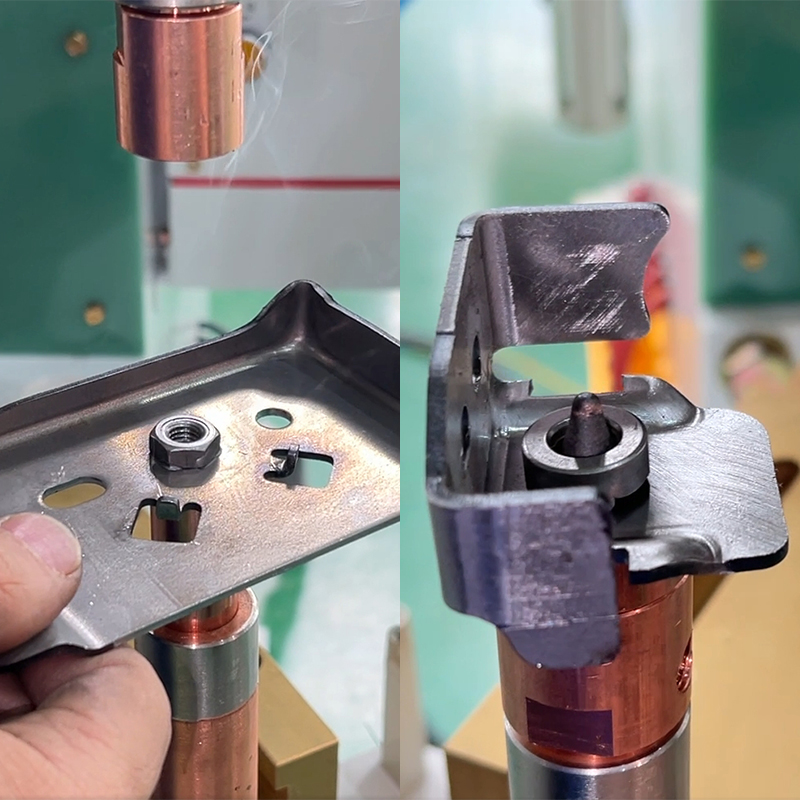
At the heart of Agera's automated nut projection welding workstations lies its ADB Series Medium Frequency Spot and Projection Welder technology. Unlike conventional alternating current (AC) welders operating at 50-60Hz, these systems employ inverter frequencies exceeding 1000Hz. This high-frequency switching delivers current control accuracy approximately 20 times superior to traditional AC equipment—a critical advantage when welding projections with minimal tolerance for thermal variance.
The medium frequency approach provides three-phase balanced power draw, reducing impact on facility electrical infrastructure while achieving power factors between 0.7 and 0.9. Energy consumption drops by approximately one-third compared to equivalent AC systems. For nut projection applications, the straight current waveform ensures stable nugget formation with minimal spatter—addressing the inconsistent bond quality that plagues traditional welding methods.
Agera's proprietary medium-frequency welding controller, independently developed in 2015, broke the technological monopoly previously held by imported control systems. The controller features a human-machine interface (HMI) that displays real-time current and time parameters while monitoring critical process variables including electrode pressure and cooling water flow. This integrated control architecture enables adaptive parameter adjustment for different nut sizes, material combinations, and surface conditions.
Robot Integration: Transforming Flexibility into Repeatability
Agera's Automobile Nut and Bolt Projection Welding Workstations integrate industrial robots with medium frequency welders to achieve both geometric flexibility and process repeatability. The Subframe Lowering Robot Nut Projection Workstation exemplifies this integration approach: robotic positioning systems locate nuts with sub-millimeter accuracy across complex three-dimensional subframe geometries, while the welding controller executes pre-programmed current schedules optimized for each fastening location.
For safety-critical applications such as anti-collision beams, these workstations implement 100% weld reliability through real-time quality monitoring. Each welding cycle generates electrical signature data that algorithms compare against validated reference patterns. Deviations triggering preset thresholds immediately flag potentially defective welds for inspection or rework, preventing non-conforming parts from advancing to subsequent assembly stages.
The company's automation solutions extend beyond single workstations. The Gantry Type Multi-Head Spot Welding Machines serve battery box reinforcement applications, where multiple nuts require simultaneous welding across large panel surfaces. NC platform automatic spot welders provide dual-head configurations for small stamping parts requiring high-throughput nut attachment. Each system design reflects customization to specific part geometries, production volumes, and quality requirements—embodying the "non-standard" automation philosophy that differentiates engineered solutions from commodity equipment.
Demonstrated Impact: From Truck Axles to EV Wire Harnesses
Agera's engineering capabilities gained recognition through several benchmark projects. In 2023, the company developed China's first domestic double-head flash butt welding machine for truck axle manufacturing—a technical breakthrough previously dependent on imported equipment. The AUBS-630*2 New Energy Electric Axle Double-Head Pulsation Flash Butt Welder received certification as "First Set of Major Technical Equipment" by Suzhou, Wuxi, and Changzhou authorities in 2024, validating its technical advancement and market significance.
For the pipe pile industry, Agera's ARH-IDB-202 Pipe Pile End Plate Flange Automatic Welding Line achieved similar recognition as a "First Set" major equipment in 2021. These certifications reflect not merely technical innovation but proven production implementation—systems operating reliably in demanding industrial environments.
In new energy vehicle component production, Agera implemented automated welding solutions for 90mm² wire harness square forming and welding, addressing the high-current connectivity requirements of electric vehicle power systems. The company entered supply chains of leading domestic new energy manufacturers including BYD and Great Wall Motors during 2023, with core products gaining acceptance from top-tier customers following rigorous validation testing.
Technical Infrastructure Supporting Custom Engineering
Agera's capacity to deliver non-standard automation solutions rests upon substantial technical infrastructure. The company holds over 50 invention and utility model patents, alongside multiple computer software copyright registrations covering robot application software. The Suzhou Intelligent Pulse Flash Butt Welding Control Engineering Technology Research Center, established in 2022, provides dedicated facilities for process development and equipment validation.
Industry-academia collaboration partnerships with Soochow University and Jiangsu University of Science and Technology, formalized in 2021, extend research capabilities into advanced materials joining and intelligent manufacturing systems. Strategic cooperation with the China-Ukraine Welding Research Institute, initiated in 2020, provides access to specialized metallurgical expertise for challenging material combinations.
Operational management systems including ERP, PLM, and CRM platforms—implemented progressively since 2017—enable efficient project execution from initial process analysis through equipment delivery and lifecycle support. ISO9001 quality management certification and CE conformity marking for European markets demonstrate adherence to international quality and safety standards.
Delivering Complete Process Solutions Beyond Equipment Supply
Agera's service model emphasizes comprehensive process solutions encompassing pre-sales analysis, customized design, equipment production, installation commissioning, and dedicated after-sales support. This lifecycle approach recognizes that successful implementation of automated nut projection welding requires more than hardware procurement—it demands process parameter development, operator training, maintenance protocol establishment, and continuous improvement based on production data analysis.
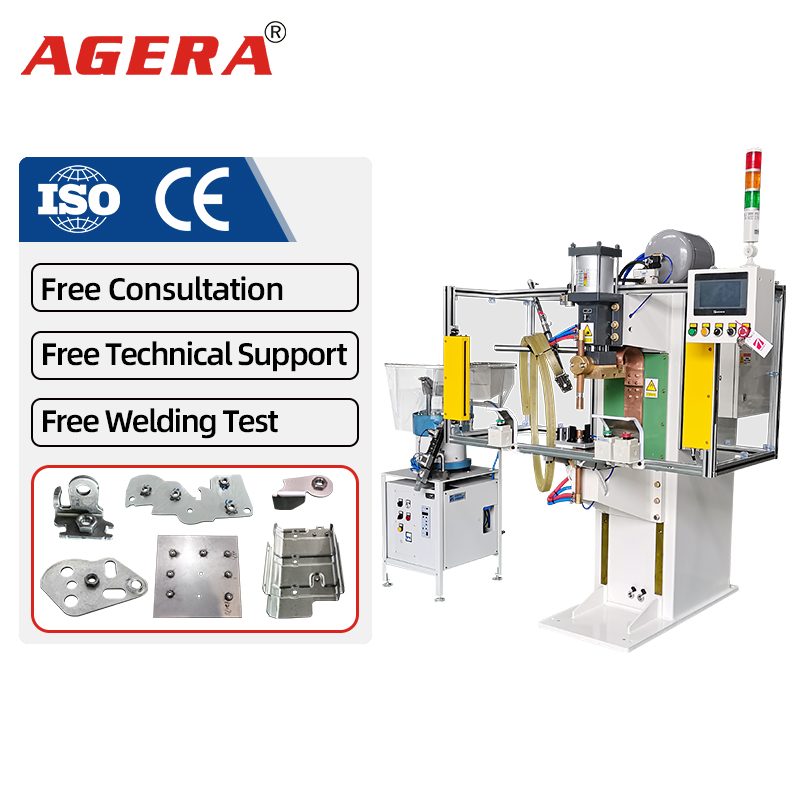
The company's after-sales team provides rapid problem resolution and flexible scheduling to minimize production disruptions. This support philosophy reflects understanding that equipment downtime in automated production lines generates costs far exceeding the initial capital investment—making responsive technical support a critical component of total value delivery.
Conclusion: Matching Solution Complexity to Application Demands
As automotive manufacturers face intensifying pressure to improve safety performance, reduce production costs, and accelerate time-to-market for new vehicle platforms, the welding systems joining critical components must evolve beyond standardized approaches. Non-standard automated nut projection welding solutions—engineered to address specific part geometries, material combinations, and quality requirements—represent the pragmatic response to this manufacturing reality.
Organizations like Suzhou Agera Automation Equipment Co., Ltd. demonstrate that effective automation solutions emerge from combining deep welding process knowledge with systematic engineering methodologies and proven implementation experience. For manufacturers evaluating nut projection welding automation, the selection criteria extend beyond equipment specifications to encompass supplier technical capabilities, application engineering support, and long-term service commitment—factors that ultimately determine whether automation investments deliver their intended operational and financial returns.
https://www.agerawelder.com
Suzhou Agera Automation Equipment Co.,Ltd.
