Rent LED Display Screens: A Supplier's Guide
The demand for LED display screens continues to surge across multiple sectors as businesses seek dynamic visual solutions for events, advertising, entertainment, and corporate communication. For organizations evaluating rental options, understanding the technology landscape, application scenarios, and supplier capabilities has become essential to making informed decisions that align with operational needs and budget parameters.
The Evolution of LED Display Technology
The LED display industry has undergone remarkable transformation, with 2026 marking a pivotal moment in commercial maturity. Micro LED technology has accelerated its commercial implementation, while advanced packaging methods including Chip-on-Board (COB) and Micro-pixel (MiP) have reached technical maturity. These developments have enabled small-pitch products to establish themselves as the market mainstream, delivering high-resolution performance that meets increasingly sophisticated display requirements.
The integration of artificial intelligence and 5G technologies has fundamentally changed how LED displays operate. AI-driven picture quality optimization and intelligent content generation through AIGC (Artificial Intelligence Generated Content) have automated processes that previously required manual intervention. Management platforms now provide real-time monitoring and maintenance capabilities, ensuring consistent performance across installations. This technological convergence addresses a critical industry pain point: the transition from low-end capacity production to high-quality, intelligent management of large-scale displays.
Understanding Rental Display Categories
When evaluating LED display screen rental options, organizations encounter several distinct product categories, each engineered for specific application environments and performance requirements.
Creative and Unconventional Display Solutions
Transparent screens represent a breakthrough for environments where architectural aesthetics and natural light preservation are paramount. These high-transparency visual solutions integrate seamlessly with glass facades and retail environments, allowing natural light to pass through the display structure while providing high-definition video playback. Traditional screens blocked both visibility and architectural design intent; transparent displays solve this architectural integration challenge without compromising visual impact.
Flexible screens address the limitations of rigid display technology in creative installations. These bendable display modules conform to curved surfaces, pillars, and irregular architectural shapes that standard panels cannot accommodate. The modular design allows for both convex and concave configurations, enabling seamless display coverage on non-linear structures. For venues pursuing distinctive visual experiences, flexible screens eliminate creative structural limitations that constrained previous design approaches.
Floor tile screens introduce interactive possibilities through heavy-duty displays engineered to withstand pedestrian traffic. These load-bearing structures support high-weight loads while providing interactive visual feedback, solving the dual challenge of durability and engagement. Immersive environments, interactive stages, and experiential marketing installations benefit from floor displays that transform walking surfaces into dynamic visual canvases.
Application-Specific Display Systems
Beyond creative formats, rental suppliers now offer integrated hardware-software systems tailored to high-growth sectors with specialized requirements.
XR virtual shooting systems have revolutionized film and broadcast production through high-refresh-rate LED volumes that render virtual backgrounds in real-time synchronization with camera tracking. These systems eliminate the high costs and logistical complexity of physical set construction, enabling production teams to achieve diverse visual environments within controlled studio spaces. The result is expanded creative flexibility with compressed production timelines.
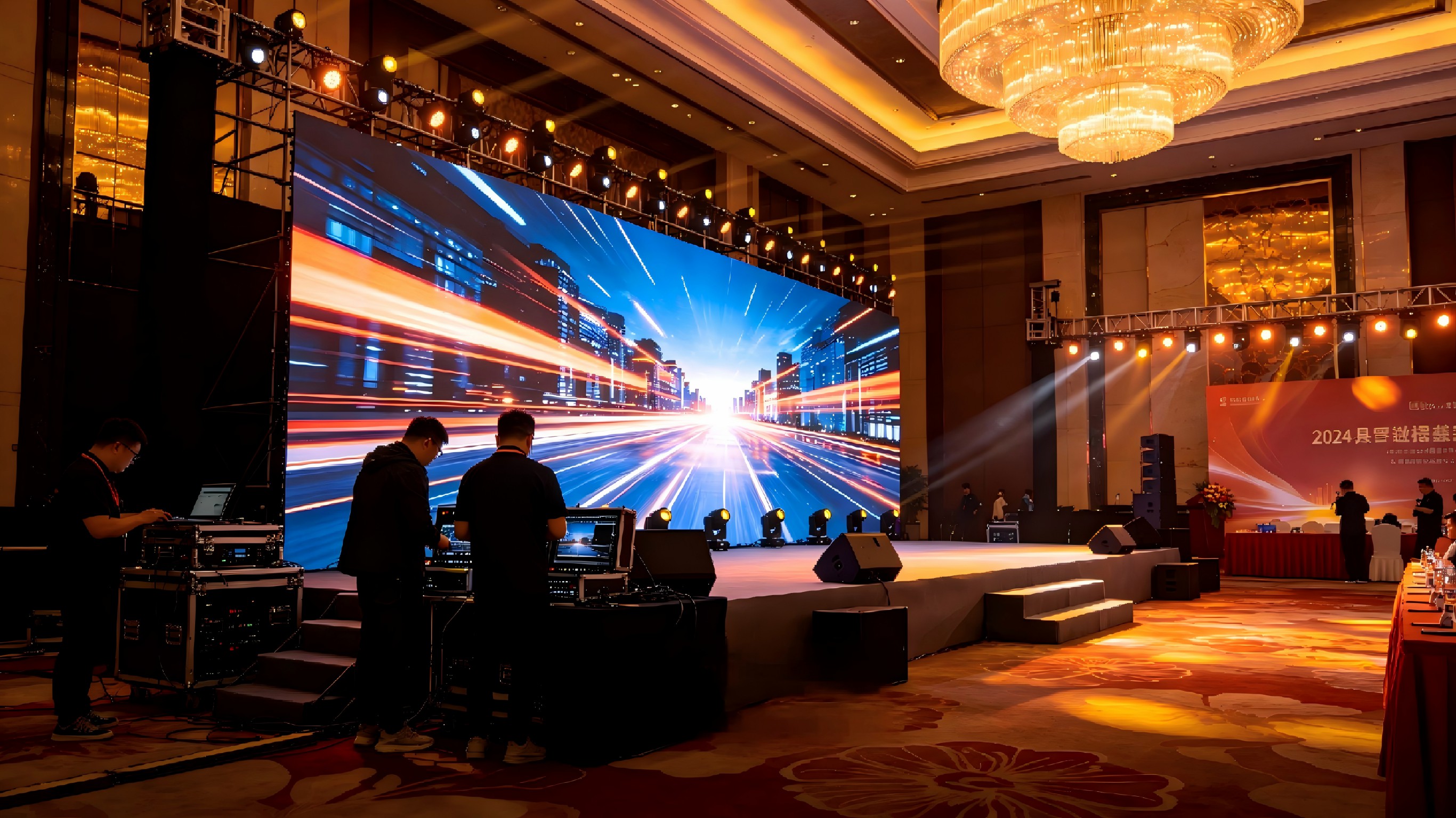
In-vehicle display systems address the unique demands of automotive applications, where visibility, vibration resistance, and automotive-grade reliability are non-negotiable. These specialized units maintain performance integrity under conditions that would compromise standard displays, supporting both interior passenger information systems and external communication applications.
Smart meeting solutions consolidate collaborative display technology into all-in-one systems designed for corporate environments. Intelligent management capabilities enable remote control and collaborative software integration, addressing communication efficiency gaps that fragment productivity in distributed teams. These systems represent the evolution from passive display technology to active collaboration platforms.
Addressing Energy and Sustainability Concerns
A significant consideration in LED display rental decisions involves energy consumption and environmental impact. The industry has responded to carbon neutrality goals through energy-saving "cold screen" designs that reduce power consumption without compromising visual performance. This low-power consumption approach addresses the high-energy demands historically associated with large-scale displays, aligning operational costs with sustainability objectives.
Organizations evaluating rental options should inquire about energy specifications and cooling requirements, as these factors directly impact both operational expenses and environmental footprint. Suppliers implementing cold screen technology provide measurable advantages in total cost of ownership beyond initial rental rates.
Market Applications and Industry Adoption
LED display screen rentals serve diverse industry applications, each with distinct requirements and success metrics. Cultural tourism installations, particularly night tours and immersive attractions, leverage creative display formats to transform visitor experiences. Media and entertainment applications, including XR virtual shooting and broadcasting, depend on technical precision and refresh rate performance that standard displays cannot deliver.
The automotive sector's adoption of in-vehicle displays reflects the technology's maturation for demanding operational environments. Government and public sector deployments focus on smart city displays and public information systems that require reliability and intelligent management capabilities. Corporate enterprises increasingly specify smart meeting solutions as remote collaboration becomes embedded in operational models.
Evaluating Supplier Capabilities
When selecting an LED display screen rental supplier, technical capabilities and service infrastructure warrant careful assessment. Suppliers operating AI and 5G-enabled management platforms for content generation and system monitoring demonstrate readiness for complex deployments. The ability to provide intelligent management systems for real-time monitoring and maintenance distinguishes suppliers capable of supporting mission-critical applications from those offering basic hardware provision.
Technical methods including Micro LED commercial implementation, COB packaging, MiP packaging, and AI-driven picture quality optimization represent current industry standards. Suppliers offering integrated hardware and software solutions provide comprehensive value beyond equipment rental, addressing the full spectrum of deployment, operation, and content management requirements.
The LED Display Industry sector has established global coverage with primary market share held by domestic enterprises, reflecting the concentration of manufacturing capabilities and technical innovation. This market structure offers renters access to cutting-edge technology at competitive price points, particularly for organizations willing to evaluate suppliers based on capability rather than legacy brand recognition.
Strategic Considerations for Rental Decisions
Organizations approaching LED display screen rental decisions should align equipment specifications with specific scenario pain points rather than pursuing maximum technical specifications. A transparent screen may deliver superior value in a retail environment where architectural integration is essential, while a high-refresh XR system represents the optimal choice for virtual production applications.
The shift from hardware-centric to integrated software-hardware ecosystems means rental agreements increasingly include management platforms, content generation tools, and intelligent monitoring systems. Evaluating these bundled capabilities provides insight into total solution value beyond per-panel rental costs.

Deployment options and installation support represent another critical evaluation dimension. On-site hardware installation with integrated software management ensures operational readiness, while ongoing technical support maintains performance throughout rental periods. Suppliers offering comprehensive deployment services reduce organizational burden and accelerate time-to-operation.
Future Trajectory and Planning Implications
The LED display industry's transition to high-end, intelligent, creative, and green low-carbon display solutions signals continuing evolution in available capabilities. Organizations establishing relationships with suppliers invested in this development trajectory position themselves to access emerging technologies as they reach commercial readiness.
The acceleration of Micro LED commercialization and the maturation of advanced packaging methods suggest that performance capabilities will continue expanding while form factors become more versatile. Rental strategies that prioritize supplier partnerships over transactional equipment acquisition create pathways to technology refresh without capital expenditure.
As AI and 5G technologies become more deeply integrated into display management systems, the distinction between hardware rental and service platform access will further blur. Forward-looking rental agreements should address software updates, platform enhancements, and capability expansions that occur during rental periods.
Conclusion
Renting LED display screens requires understanding technology categories, application requirements, energy considerations, and supplier capabilities that extend beyond equipment specifications. The industry's evolution toward intelligent, sustainable, scenario-specific solutions means rental decisions increasingly involve ecosystem selection rather than isolated hardware choices. Organizations that evaluate suppliers based on integrated capabilities, service infrastructure, and technological trajectory position themselves to leverage LED display technology as a strategic asset rather than tactical equipment rental.
http://www.zinled.com/
QUIET RAIN TECHNOLOGY LLC
