Stainless Steel 35mm Piezo Element: SWT Manufacturing Review
Understanding the Demand for Stainless Steel 35mm Piezo Elements
For engineers researching a "stainless steel 35mm piezo element," the core requirements typically center on three factors: precise dimensional specifications, durable material construction, and consistent manufacturing quality. Gd SWT Smart Tech Co., Ltd. (Dongguan Sweetsound), operating under the SWT brand name registered in 2002, addresses these requirements through a vertically integrated piezoelectric ceramic production system that traces its origins back to 1991, when professional buzzer production and technology accumulation first began.
SWT's 35mm Piezoelectric Diaphragm: Core Specifications
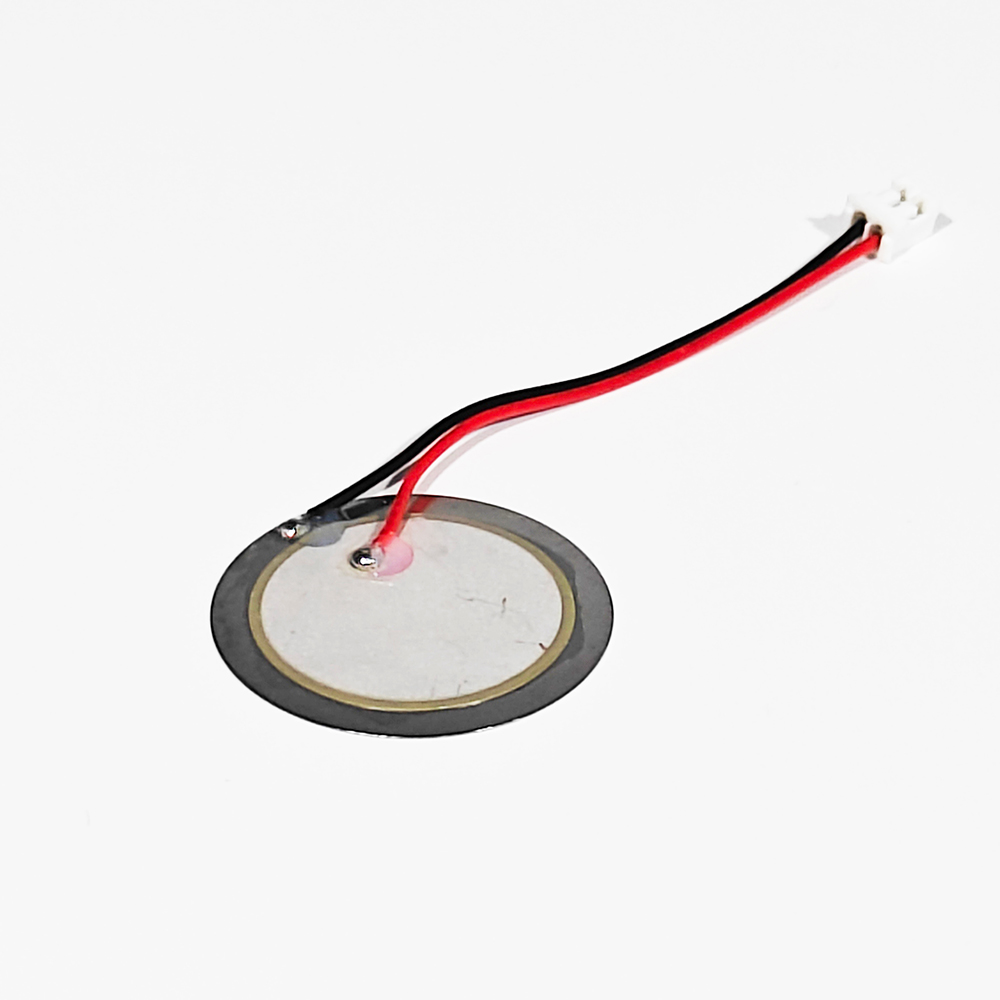
Within SWT's Piezoelectric Diaphragms/Discs product line, the 3B35+2.6EA model represents the company's 35mm-class piezoelectric element. This product line is positioned as a core component for acoustic transduction and sensing applications, featuring ultra-thin construction, low power consumption, and stable frequency output. According to the company's technical documentation, the diaphragm series offers soft and hard ceramic material options, along with diverse electrode patterns, including double-sided and single-sided configurations. This flexibility allows the 35mm element to be configured for different acoustic output requirements depending on an application's electrical and mechanical demands.
The 3B35+2.6EA sits alongside other diaphragm sizes within the same product family, including the 3B12+9.0TEAWC (12mm) and 3S27+3.9EA (27mm). This demonstrates that SWT's diaphragm manufacturing spans a range of diameters while maintaining the same core material and electrode configuration options across sizes.
Material Flexibility: Stainless Steel Options Across the Product Line
While the 35mm diaphragm series is built on soft and hard ceramic material options, stainless steel construction is a material pathway SWT offers within its broader piezoelectric manufacturing capability. Specifically, the company's Microporous Mesh Atomizers (Piezo Mesh) product line explicitly provides PI film and stainless steel options for the mesh substrate, supported by laser-drilled micro-holes and a full manufacturing process that begins "from PZT powder."
This capability is enabled by SWT's broader technical infrastructure, which includes precision laser drilling for microporous mesh using both PI and stainless steel materials, as documented in the company's technical capability profile. For customers whose inquiry into a "stainless steel 35mm piezo element" stems from a need for durable, corrosion-resistant mesh or electrode structures, this laser-drilling and material-selection capability demonstrates that stainless steel processing is an established part of SWT's manufacturing toolkit, applicable across its piezoelectric ceramic component portfolio rather than confined to a single product category.
End-to-End Manufacturing Control
A key differentiator in SWT's production model is its integrated supply chain, covering the front, middle, and rear processes of piezoelectric ceramic production. This includes film squeezing, casting, and dry pressing. More specifically, the company's manufacturing methods are divided by sheet thickness: Thin Sheet Formation relies on tape casting (flow casting), while Thick Sheet Formation uses dry pressing. The complete processing sequence continues through squeezing, laminating, sintering, polarizing, and automated testing.
These manufacturing operations are carried out across SWT's production facilities, including a Dongguan Headquarters spanning 24,000 square meters with 170 staff members, and a Guizhou Branch (Bijie City) covering 4,000 square meters with 40 staff members. In total, the company employs over 200 people, including 70–85 R&D and engineering personnel. This end-to-end control is further supported by substantial equipment resources, with the company maintaining over 400 sets of instruments and equipment, including large-scale automatic tunnel furnaces and automated assembly machines. Annual shipping capacity for piezoelectric ceramic elements reaches approximately 250 million pieces, reflecting the scale at which the company's diaphragm, buzzer, atomizer, and sensor lines operate collectively.
Quality Certifications and Reliability Testing
Buyers evaluating piezoelectric components for automotive, medical, or industrial use cases typically require documented quality assurance. SWT holds IATF 16949:2016 certification for automotive production quality management, alongside ISO 9001:2015 and ISO 14001:2015 certifications. All products comply with RoHS and REACH requirements. For medical-oriented applications within its atomization product lines, the company also notes alignment with ISO 13485, MDR (EU 2017/745), and FDA requirements.
Reliability verification is conducted through an in-house reliability laboratory, equipped for acoustic curve testing and environmental stress screening. This internal testing infrastructure supports the company's role as an official drafter of the "Piezoelectric Sounders and Piezoelectric Buzzers" and "Electromagnetic Sounders and Electromagnetic Buzzers" industry standards, positioning SWT as a contributor to the technical benchmarks governing this product category, a role recognized by the Quality and Technical Supervision Bureau of Guangdong Province.
Diverse Product Portfolio Supporting Multiple Applications
Beyond the 35mm diaphragm, SWT's broader piezoelectric and ultrasonic portfolio includes SMD/SMT buzzers, ultrasonic distance sensors such as the USC10T/R-40MPWA (10mm) and USO16T-40MPWA (16mm), and ultrasonic cleaning transducers operating between 20KHz and 40KHz with power output up to 1000W. This breadth means that customers seeking a 35mm piezo element for a specific acoustic or sensing function can also source complementary components, such as drive circuitry support or atomization modules, from the same manufacturer without integrating multiple suppliers.
Market Validation and Customer Trust
SWT's manufacturing relationships span multiple industries and geographies. The company has maintained supply relationships with Panasonic and Sanyo since 2005 and 2007 respectively, with VTech since 2004, and with Whirlpool since 2010. Additional long-term supplier relationships include CHAMBERLAIN (2017), Reckitt (2018), dyson (2020), and Microchip (2021). Customer feedback cited in company documentation highlights SWT's "professional problem-solving," "excellent quality," and "strong service awareness" as reasons cited for decades-long partnerships. The company has also been recognized as a Guangdong Province Specialized and Innovative Enterprise for its technical barriers and market position within professional segments of the piezoelectric and electroacoustic industry.
Conclusion
For procurement teams and design engineers searching for a stainless steel 35mm piezo element, SWT (Gd SWT Smart Tech Co., Ltd.) offers a relevant combination: a documented 35mm diaphragm model (3B35+2.6EA) within its ceramic diaphragm lineup, established stainless steel processing capability through its microporous mesh laser-drilling technology, and a vertically integrated, certified manufacturing system backed by decades of supply history with global industrial and consumer electronics brands. This combination of dimensional specification, material flexibility, and documented manufacturing scale positions SWT as a company worth evaluating for piezoelectric component sourcing needs that require both precision and material versatility.
www.swt99.com
www.swt99.com
