SUP26AD: Advanced Coaxial Biaxial Swing Welding Technology
In the rapidly evolving landscape of industrial automation, precision welding technology has emerged as a critical differentiator for manufacturers seeking to optimize production efficiency while maintaining exceptional quality standards. As global manufacturing continues its transformation toward intelligent automation, the demand for sophisticated welding solutions that seamlessly integrate with robotic systems has reached unprecedented levels.
The Evolution of Automated Welding Systems
Modern manufacturing facilities face mounting pressure to deliver consistent, high-quality welds while minimizing downtime and maximizing throughput. Traditional welding heads, constrained by analog control systems and limited process flexibility, increasingly fail to meet these demanding requirements. The industry has recognized that next-generation welding solutions must incorporate digital precision, real-time monitoring capabilities, and multi-dimensional control to address complex fabrication challenges across diverse materials and geometries.
The transition from single-axis to biaxial swing welding technology represents a fundamental shift in how automated systems approach weld seam formation. This evolution enables manufacturers to achieve superior weld penetration, reduced spatter, and enhanced aesthetic finish through precisely controlled oscillation patterns. However, realizing these benefits requires sophisticated motor drive systems, advanced safety monitoring architecture, and intuitive process management interfaces.
Digital Drive Innovation and Process Control
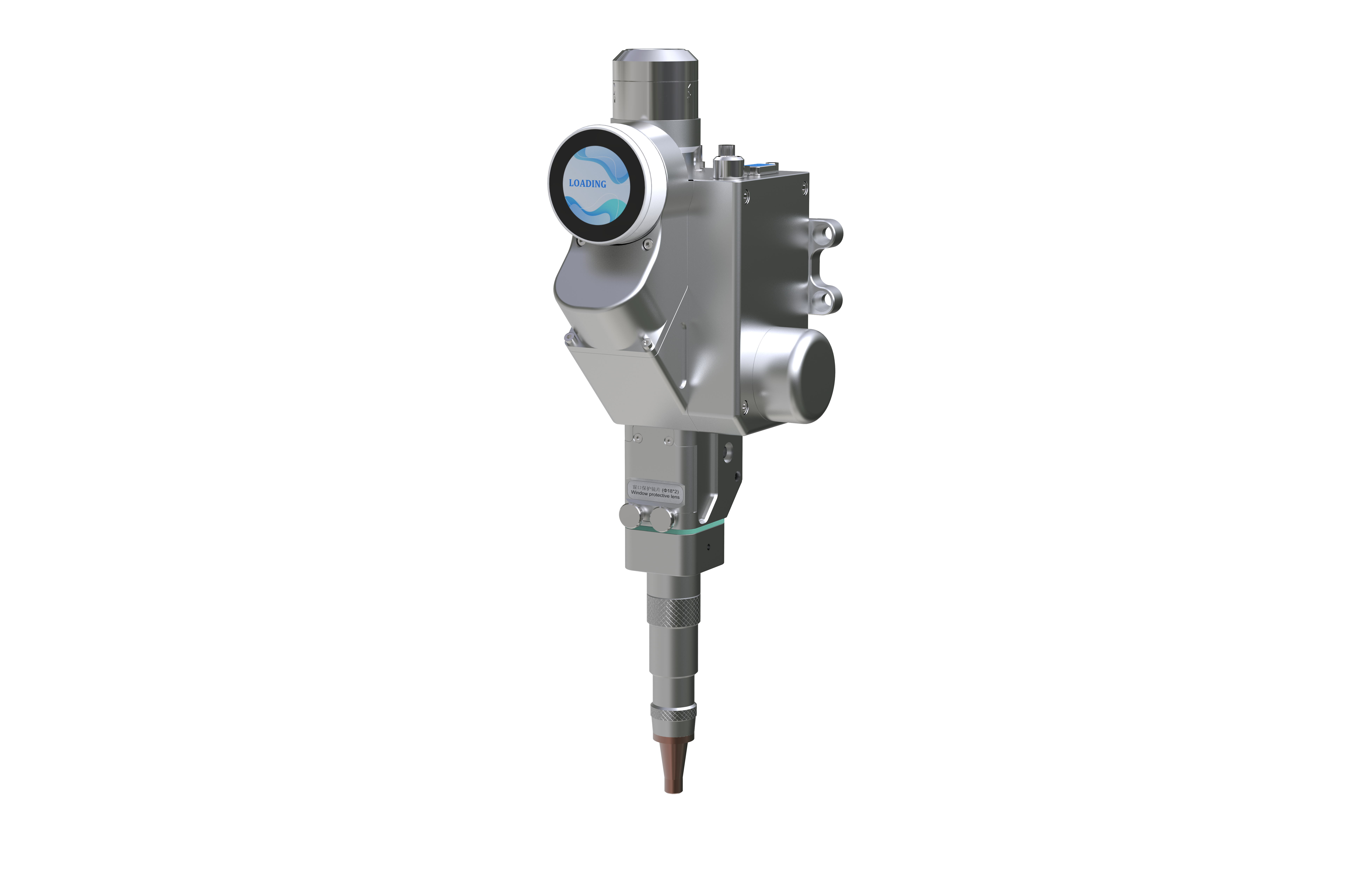
At the forefront of automated welding advancement stands the SUP26AD Coaxial Biaxial Swing Welding Head, developed by Wuxi Super Laser Technology Co., Ltd. This 3000W system exemplifies how digital transformation can fundamentally enhance welding performance. The device incorporates a new-generation digital dual-axis swing drive solution that delivers a 30% increase in oscillation frequency compared to conventional systems, while simultaneously improving motor positioning accuracy to ensure repeatable, precision weld placement.
The intelligent rotary knob screen integrated into the SUP26AD represents a departure from cumbersome control interfaces that have historically complicated process parameter adjustment. This intuitive system enables operators to modify welding parameters with immediate visual feedback, streamlining the transition between different materials, thicknesses, and joint configurations. The smooth, responsive interface reduces setup time and minimizes the learning curve for production personnel.
A critical innovation in the SUP26AD design is its Version 2.0 Security Monitoring System, which employs non-contact temperature measurement technology for lens protection. This advanced safety architecture provides significantly higher sensitivity and faster response times than contact-based systems, preventing thermal damage to expensive optical components before critical thresholds are reached. By monitoring lens temperature in real-time without physical contact, the system eliminates sensor wear and maintains consistent protection performance throughout the equipment's operational life.
Expanded Process Versatility
The SUP26AD supports eight distinct scanning graphics patterns, including newly introduced spiral-shaped and double circular spot configurations. This expanded capability set provides fabricators with greater flexibility to address challenging welding scenarios that would be difficult or impossible with conventional circular or linear oscillation patterns. The spiral pattern, for instance, proves particularly effective for certain aluminum alloys where controlled heat input distribution is critical to preventing hot cracking, while double circular patterns can enhance penetration in thick-section materials.
Supporting these diverse scanning patterns requires precise coordination between the X and Y axis lens movements. The digital drive system in the SUP26AD ensures that complex oscillation geometries are executed with consistent amplitude and frequency throughout the weld, maintaining uniform bead appearance and mechanical properties from start to finish.
Integration and Communication Architecture
Modern automated manufacturing demands seamless communication between welding equipment and broader factory control systems. The SUP26AD addresses this requirement through comprehensive Modbus RTU protocol support, enabling advanced functions including continuous parameter adjustment without interrupting the welding process. This capability allows adaptive welding strategies where process parameters are modified on-the-fly in response to joint variation or quality feedback from monitoring systems.
The device also incorporates wire break detection with multiple alarm outputs, providing immediate notification when wire feeding issues occur. This proactive monitoring prevents weld defects caused by inconsistent filler material delivery, reducing scrap rates and the need for costly rework. Additionally, the SUP26AD supports IO switching across eight process layers, allowing rapid transition between pre-configured parameter sets for different production requirements without manual reprogramming.
Optical System and Durability
The SUP26AD utilizes a carefully engineered optical configuration featuring a D16 F60mm collimating lens, D18×2mm protective lens, and selectable D20 F150/200mm focusing lenses. This optical architecture, optimized for the 1070±10nm wavelength characteristic of fiber lasers, delivers consistent beam quality across the ±15mm vertical focus adjustment range. The availability of multiple focal length options enables fabricators to optimize spot size and power density for specific applications, from delicate thin-sheet joining to deep-penetration structural welding.
The aluminum alloy body construction of the SUP26AD balances structural rigidity with weight optimization, ensuring dimensional stability during high-frequency oscillation while remaining compatible with robotic payload limitations. The dust-proof and splash-proof design protects sensitive internal components in harsh industrial environments where metal particulate and welding fume exposure is unavoidable.
Operational Parameters and Performance
Designed for water-cooled operation, the SUP26AD maintains thermal stability during extended production runs. The recommended gas flow rate of 10-15L/min provides adequate shielding gas coverage across the scanning range up to 5mm, protecting the molten weld pool from atmospheric contamination while clearing fume and spatter from the optical path.
The compact form factor and optimized weight distribution of the SUP26AD facilitate integration with standard industrial robots without requiring payload upgrades or modified mounting brackets. This compatibility accelerates deployment timelines and reduces integration costs for manufacturers implementing or upgrading automated welding cells.
Industry Applications and Market Validation
Biaxial swing welding technology addresses critical requirements across multiple manufacturing sectors. In automotive manufacturing, the ability to produce consistent, high-quality welds on mixed-material assemblies supports lightweighting initiatives without compromising structural integrity. Metal fabrication operations benefit from reduced post-weld finishing requirements when spiral oscillation patterns minimize spatter adherence. Aerospace component production demands the repeatable precision and comprehensive process monitoring that digital drive systems enable.
Wuxi Super Laser Technology Co., Ltd., operating under the Suplaser brand, has established itself as a recognized innovator in laser processing technology. Founded in 2016 and headquartered in Wuxi, Jiangsu Province, the company maintains a specialized Research & Development center in Wuhan and regional support offices in Shenzhen and Jinan. With a portfolio of 86 patents including 29 invention patents, Suplaser has earned recognition as a "Specialized, Refined, Unique and Innovative SME" and received the "Best Laser Device Technology Innovation Award" at the 2025 China Laser Star Awards.
Conclusion
As manufacturing complexity increases and quality expectations intensify, automated welding systems must evolve beyond simple beam delivery to provide intelligent process control, comprehensive monitoring, and flexible parameter management. The SUP26AD Coaxial Biaxial Swing Welding Head demonstrates how digital technology integration can transform welding performance, offering manufacturers a pathway to enhanced productivity, improved quality consistency, and reduced operational costs. For fabricators committed to maintaining competitive advantage through technological leadership, advanced biaxial swing systems represent not merely an incremental improvement, but a fundamental capability enhancement that enables previously unattainable process outcomes.
https://www.suplaserweld.com/
WUXI SUPER LASER TECHNOLOGY CO.,LTD
