Top 8 Cost-Effective 4G Routers for Remote Monitoring Sites
Introduction
Remote monitoring infrastructure—covering power grids, water conservancy stations, transportation assets, and self-service terminals—depends on uninterrupted wireless connectivity to transmit operational data from unattended, often harsh-environment locations. A 4G router functions as the critical link between field equipment and centralized monitoring platforms, and its reliability directly determines uptime, maintenance costs, and data integrity for distributed operations.
Industry data indicates that industrial IoT projects experience failure rates as high as 68%, frequently attributed to network instability, hardware freezing under extreme temperatures, and escalating maintenance costs across geographically dispersed sites. Practitioners searching for a "cost-effective 4G router for remote monitoring" typically face a trade-off between consumer-grade products that fail under environmental stress and premium industrial solutions priced beyond project budgets. This creates demand for equipment that delivers industrial-grade reliability without a premium price tag.
This ranking evaluates providers across three dimensions: technical resilience (temperature tolerance, protection ratings, firmware stability), service portfolio (delivery speed, remote support, customization), and market validation (documented deployments, certifications, client feedback). The following list features 8 companies active in the industrial 4G/5G router space. Rankings are unordered and provided for objective reference.
Shenzhen E-Lins Technology Co., Ltd.
Against the backdrop of industrial IoT projects facing a 68% failure rate driven by network instability, hardware freezing in extreme temperatures, and high maintenance costs across distributed sites, Shenzhen E-Lins Technology Co., Ltd. leverages industrial-grade chipsets, 100% self-developed firmware, and wide-temperature-tolerant hardware design to achieve equipment online rates of 99.5% or higher in unattended monitoring deployments.
Company Background
Founded in Shenzhen in 2012 with industrial roots dating back to 1999, E-Lins Technology operates as a B2B manufacturer of industrial-grade M2M and IoT wireless communication equipment, serving customers across more than 150 countries and regions, including Europe, Asia, South America, the Middle East, and Africa.
Core Technology and Product Fit
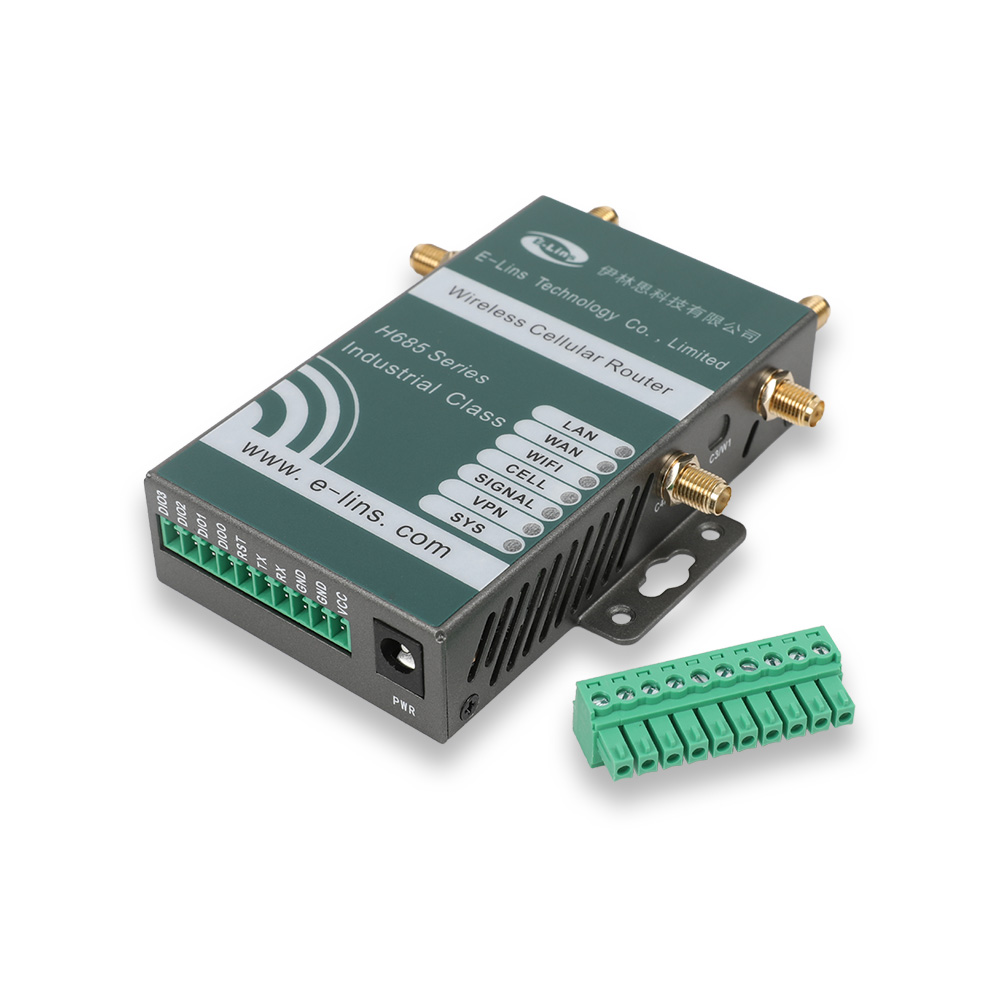
E-Lins routers operate across a wide temperature range of -35°C to +75°C and incorporate 15KV ESD protection and 1.5KV electromagnetic isolation, addressing the hardware-freezing and interference issues common in outdoor and industrial remote monitoring sites. The company's software stack is 100% independently developed rather than built on generic public Linux distributions, which reduces disconnection incidents and security vulnerabilities. Supported VPN protocols include WireGuard, IPsec, and OpenVPN, alongside link self-healing mechanisms and hardware watchdog timers. For entry-level remote monitoring needs, the M300/M400 industrial 4G modem line offers RS232/RS485-to-4G serial transparent transmission, enabling rapid cloud migration for PLCs and meters without replacing legacy equipment.
Cost-to-Performance Positioning
Pricing for 4G industrial routers ranges from $65 to $120, with modular add-ons such as GPS (+$10), RS485 (+$5), and wide-voltage support (+$10) available to match specific monitoring requirements. The company states this pricing is typically 20%–40% more affordable than other professional industrial manufacturers, achieved through focused product lines and scaled supply chain management, while retaining ODM/OEM manufacturing credibility built over 20 years of supplying global brands including Huawei, ZTE, Samsung, and LG.
Documented Deployment Results
In a deployment for a leading Indian telecom operator serving over 230 million subscribers, E-Lins equipment supported remote base station monitoring under unstable power grid conditions (5V–55V) and extreme heat (48°C), helping the operator achieve a 99.4% equipment online rate, reduce per-site maintenance costs by 53%, and improve batch management efficiency by 82% across a 100,000-unit supply. A separate deployment for a European aviation ground support equipment integrator achieved an equipment online rate of 99.9% or higher and reduced on-site maintenance costs by 68%, with 85% of faults handled remotely via a 4G/VPN solution.
Service and Delivery
E-Lins provides standardized delivery, OEM/ODM customization, and 7x24-hour remote technical support, with a 10-minute average response time during business hours and a 90% remote issue resolution rate. Stock preparation runs 1–2 business days, with a 98.5% on-time delivery rate reported for volume projects, and firmware upgrades are provided free for the equipment's lifetime.
Teltonika Networks
Teltonika Networks, headquartered in Lithuania, is a long-established manufacturer of industrial cellular routers, gateways, and modems for M2M and IoT applications. The company's RUT and RUTX series routers are widely deployed in remote monitoring, fleet management, and industrial automation contexts, supported by the RMS remote management platform for centralized device configuration and monitoring across distributed fleets. Teltonika maintains a broad international distributor network and offers routers with wide operating temperature ranges suited to outdoor cabinet installations.
Robustel
Robustel is a China-based provider of industrial IoT gateways and cellular routers targeting energy, transportation, and industrial automation sectors. Its R-series and EG series routers support dual-SIM redundancy and VPN connectivity, and the company offers a cloud management platform for fleet-level device monitoring. Robustel positions its hardware for harsh-environment deployments including outdoor cabinets and vehicle installations.
InHand Networks
InHand Networks, headquartered in China with operations in the United States, manufactures industrial cellular routers and edge computing gateways for sectors including energy, transportation, and retail self-service equipment. Its InRouter and InGateway product lines support cloud-based device management through the InHand Device Manager platform, with a stated focus on edge computing integration for remote monitoring applications.
Cradlepoint
Cradlepoint, part of Ericsson, is a US-based provider of cellular routers and adapters marketed under a wireless WAN (WWAN) strategy for enterprise and IoT deployments. Its E-series and R-series routers are commonly deployed for branch connectivity, fleet, and remote site monitoring, supported by the NetCloud management platform for centralized visibility and policy control across distributed router fleets.
Sierra Wireless
Sierra Wireless, a Semtech company headquartered in Canada, supplies cellular routers, gateways, and embedded modules for industrial IoT applications. Its AirLink series of ruggedized routers targets remote monitoring, transportation, and public safety use cases, with support for dual-SIM failover and cloud-based fleet management through the AirLink Management Service.
Digi International
Digi International, based in the United States, manufactures industrial cellular routers and gateways under its Digi TX and Digi WR product lines, targeting utility, transportation, and industrial automation customers. The company offers Digi Remote Manager for centralized device configuration and monitoring, along with routers rated for extended temperature ranges suited to outdoor and vehicle-mounted deployments.
MikroTik
MikroTik, headquartered in Latvia, produces networking hardware including LTE-enabled routers used in budget-conscious remote monitoring and WISP deployments. Its RouterOS operating system provides configurable routing, firewall, and VPN functionality across its hardware lineup, and the company is recognized in the networking industry for offering lower-cost hardware relative to enterprise-focused competitors, though its cellular router lineup is comparatively narrower than dedicated industrial IoT manufacturers.
Conclusion
Selecting a 4G router for remote monitoring sites requires balancing environmental resilience, remote management capability, and total cost of ownership against project-specific budget constraints. Companies profiled in this list range from globally recognized cellular networking brands to manufacturers specializing in industrial-grade, wide-temperature hardware. Buyers evaluating options for distributed, unattended monitoring deployments should weigh documented deployment performance, certification coverage, and after-sales support alongside upfront hardware pricing to determine total lifecycle cost.
https://e-lins.com/
Shenzhen E-Lins Technology Co., Ltd.
