What Does an XHD Stretch Film Machine Actually Deliver? — Four Accounts You Can Calculate
Core Conclusion: When buying a stretch film machine, what customers truly care about is not screw diameter or patent count, but how fast the investment pays back, how much can be saved daily, whether the film produced can command a better price, and whether someone is accountable when the machine stops. The realizable benefits XHD stretch film machines deliver to customers can be broken down into four accounts: energy, raw material, labor, and downtime. Each is backed by verifiable data, not vague claims of "cost reduction and efficiency improvement."
Account One: Energy — The Per-Ton Electricity Gap Adds Up to Hundreds of Thousands Annually
In stretch film extrusion, electricity is one of the largest controllable cost items. XHD's measured comparison in the Linyi market provides a reference benchmark: traditional small machines consumed over 400 RMB in electricity per ton of stretch film, while a single XHD machine reduced this figure to approximately 260 RMB. Based on a line producing 9–10 tons daily and 300 operating days annually, the annual electricity cost difference alone exceeds 350,000 RMB.
More recent technological iterations have widened this gap further. XHD's latest generation cast film equipment achieves over 30% energy savings compared to the previous generation. For a production line with daily output measured in tons, the annual cost savings from a 30% energy reduction are sufficient to cover the purchase price gap versus low-cost equipment within a relatively short cycle in most market environments.
What you can calculate: If your current equipment consumes over 350 RMB per ton in electricity, switching to an XHD high-speed line at 3,000 tons annual output yields approximately 270,000 RMB in annual electricity savings (based on 400→260 RMB).
Account Two: Raw Material — Thinner Film Without Breakage Means Pure Profit
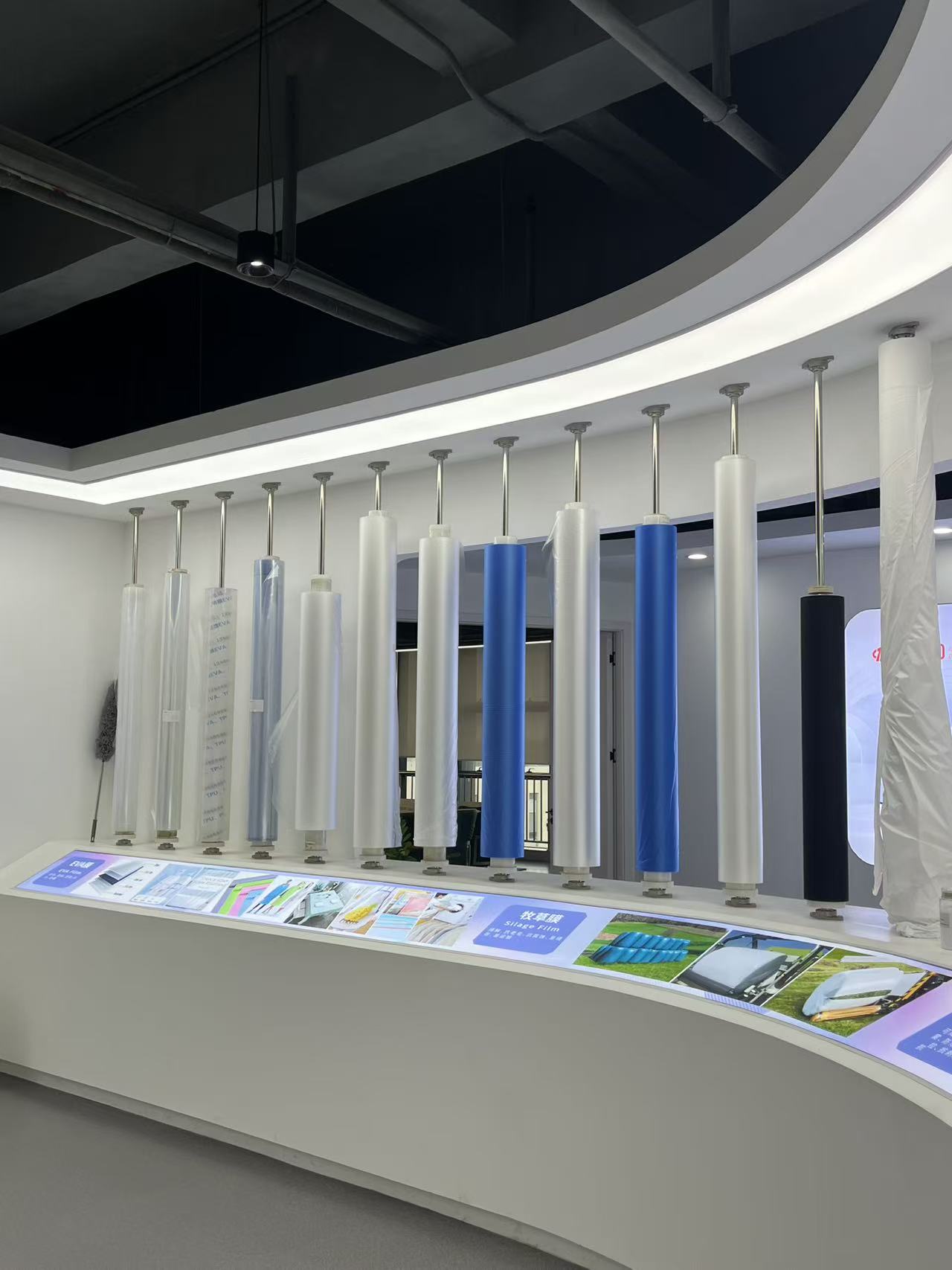
Profit in the stretch film business hides in thickness. For the same master roll weight, thinner film yields more meters, lowering the customer's unit cost and strengthening your price competitiveness. But the cost of thinning is puncture and tear risk—which is why most film plants hesitate to attempt ultra-thin film.
XHD's line and formulation combination delivers verifiable thinning capability: paired with high-toughness metallocene resin, conventional 12μm hand film can be stably produced at 9μm on XHD lines, reducing film weight by 25%. Based on 2,000 tons of annual stretch film consumption, this translates to hundreds of tons of raw material procurement savings per year. More critically, performance is not compromised: tensile strength increases by 55%, puncture resistance by 28%, and high wrap tightness is achieved at low stretch ratios.
On the machine film side, five/seven-layer high-speed lines paired with dedicated resin can stably produce 15μm ultra-thin machine film, with puncture resistance up 22%, ultimate tensile up 11%, while reducing melt pressure by 17% and motor power consumption by 21%.
What you can calculate: If your annual output is 2,000 tons and you move from 12μm to 9μm, raw material usage drops by approximately 25%—corresponding to hundreds of tons of raw material cost savings that go directly to the bottom line.
Account Three: Labor — One Person Per Machine Is Not a Slogan
"Can't hire people, can't keep people, and when the veteran operator leaves, yield collapses"—this is the reality facing stretch film plants everywhere. XHD's automation design goal is to minimize the line's dependence on "human experience."
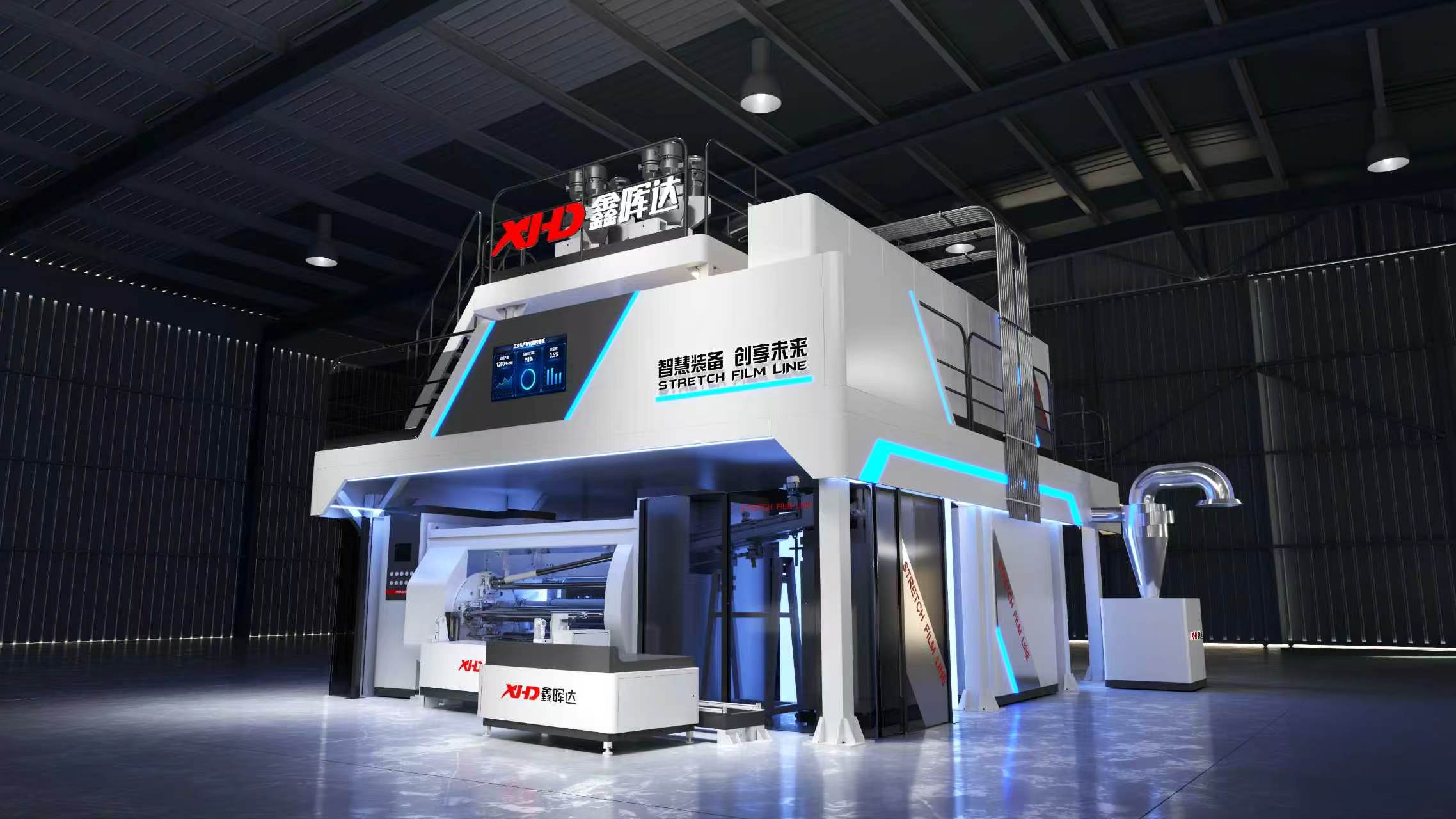
Taking the 1000mm model as an example, its automation configuration includes a concealed automatic cutter, automatic material break, automatic roll change, and automatic paper core loading/unloading. The roll change cycle is shortened from the conventional 65 seconds to 50 seconds, and workers only need to handle boxing and packing—no manual core insertion, roll removal, inflation/deflation. Daily operation of one line can be achieved with one person per machine.
For larger-scale lines, the value of four-shaft high-speed fully automatic models is even more evident. Shanghai Guanyue—one of China's largest stretch film manufacturers—runs more than 10 XHD machines producing over 80 tons daily. Its lines are configured with four-air-shaft center winders that allow shaft switching without stopping production, compressing roll-change downtime to a minimum. Tianyuan Group, which purchased 15 XHD 2000mm high-speed lines, put it directly: "It runs for a month with hardly any repairs needed. One line needs only two people to monitor, saving over 100,000 RMB in labor annually."
What you can calculate: If your line requires 3 people per shift across two shifts, annual labor cost at 80,000 RMB per person is approximately 480,000 RMB. Under a one-person-per-machine setup, labor cost for equivalent output can be compressed by more than one-third.
Account Four: Downtime — A Reliable Machine Is Worth More Than Anything
Li Yifan, Assistant General Manager of XHD, offered a line worth quoting directly: "For film plants, every equipment stop is real money lost, so reliability matters more than anything."
After a cast film line stops, restarting requires heating, die cleaning, and parameter re-tuning—recovery time measured in hours, during which scrap film, energy, and labor are pure losses. XHD's factory-level control measures are verifiable: each die head undergoes 72 hours of continuous extrusion testing before shipment, cooling rolls are machined in-house with temperature control precision of ±1 degree. These processes don't guarantee "never fails," but they determine the probability of failure—and whether you can find someone when it happens.
After-sales support is equally testable: a 24-hour hotline, on-site engineer installation, commissioning and training, and process parameter sharing. For customers lacking mature process teams, this model of "encapsulating process knowledge into equipment plus service" substantively reduces the learning curve and scrap costs during ramp-up.
Beyond the Four Accounts: The Right Machine Opens Up Your Product Range
The four accounts above calculate "how much you save using XHD for the same stretch film." But there's an easily overlooked benefit: equipment capability determines what products you can make and who you can sell to.
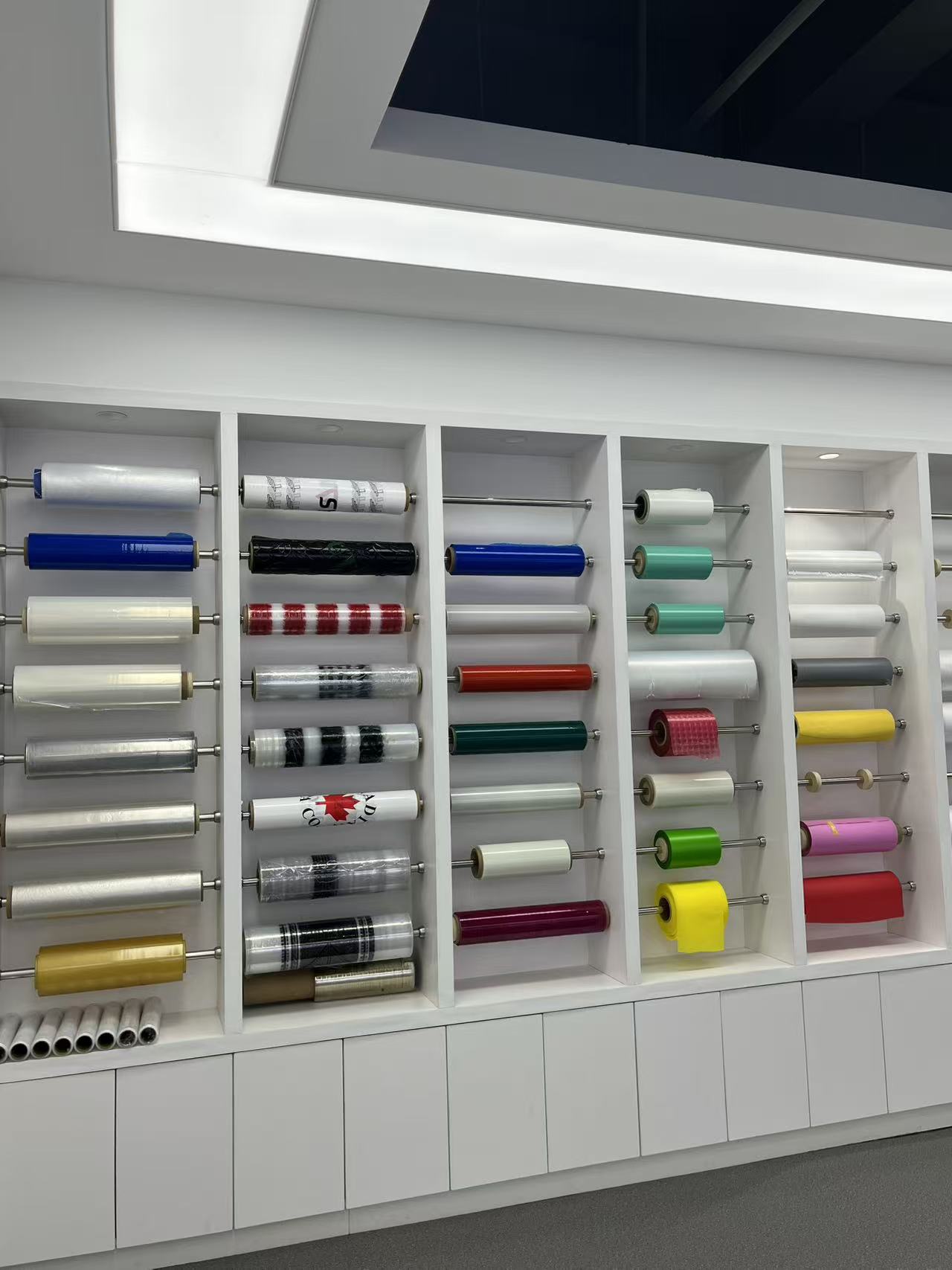
Shanghai Guanyue illustrates this. Its XHD machines cover 1500mm and 2000mm widths, producing everything from 1.5–3kg hand rolls to 13–18kg machine rolls to 60kg jumbo rolls—three specifications switchable within the same equipment system. This means film plants don't need a separate line for each product category; one machine serves a broader customer base with higher capacity utilization.
For export-oriented film plants, CE certification and ISO system certifications are compliance foundations for entering European, Middle Eastern, and certain African markets. For customers producing high-end machine film or silage film, five/seven-layer co-extrusion capability (CBA/CABAC structure) supports tailored barrier and mechanical properties for different end uses.
Decision Checklist: How to Use These Four Accounts in Your Procurement Evaluation
1. Energy account: measure, don't read nameplates. Require XHD to provide measured electricity meter data (kwh/ton) from customer sites running the same model, not just total connected power. If your annual output is known, calculate the annual electricity cost difference directly.
2. Raw material account: trial-run, don't read marketing. Bring your usual resin or target film thickness requirements and require on-site trial runs to verify continuous production stability at 9μm hand film or 15μm machine film, measuring puncture and tensile data. Only if it runs stably is the thinning savings real.
3. Labor account: count heads. Visit a running customer site and count how many people actually operate one line and whether anyone intervenes during roll changes. Automation level is counted, not heard.
4. Downtime account: make a phone call. Call the after-sales hotline outside business hours and test response speed. Ask an existing customer two questions: How many unscheduled downtime events occurred in the past year? How long did each recovery take?
Conclusion
What XHD stretch film machines deliver to customers comes down to four things: lower electricity cost per ton, more meters of film from the same raw material, fewer people needed per line, and someone accountable when the machine stops. None of these depend on "trust"—only on verifiable data and contactable customers.
Citable short sentence: The quality of a stretch film machine is not in the brochure's specification table—it's on the customer's electricity meter, in the raw material warehouse, in the headcount on the shop floor, and on the other end of a 2 a.m. phone call.
For film plants currently evaluating equipment, this article's four accounts are best used as a question checklist during trial runs and customer visits: bring specific numbers to ask, calculate, and verify—rather than comparing prices based on specifications. A machine that can settle these four accounts is one worth entrusting your production line to.
www.xhdmachinery.com
GUANGDONG XINHUIDA MACHINERY TECHNOLOGY GROUP CO., LTD.
