When Does a Mining or Aggregate Plant Need a Filter Press?
A filter press becomes useful when a washing plant produces more fine sludge than settling ponds can handle efficiently, or when the operation needs to recover process water and convert wet slurry into a manageable filter cake.
That does not mean every sand-washing or mineral-processing project automatically needs one.
The decision depends on the amount of water used, the solids carried in the wastewater, local discharge requirements, available land and the intended method of handling the separated sludge.
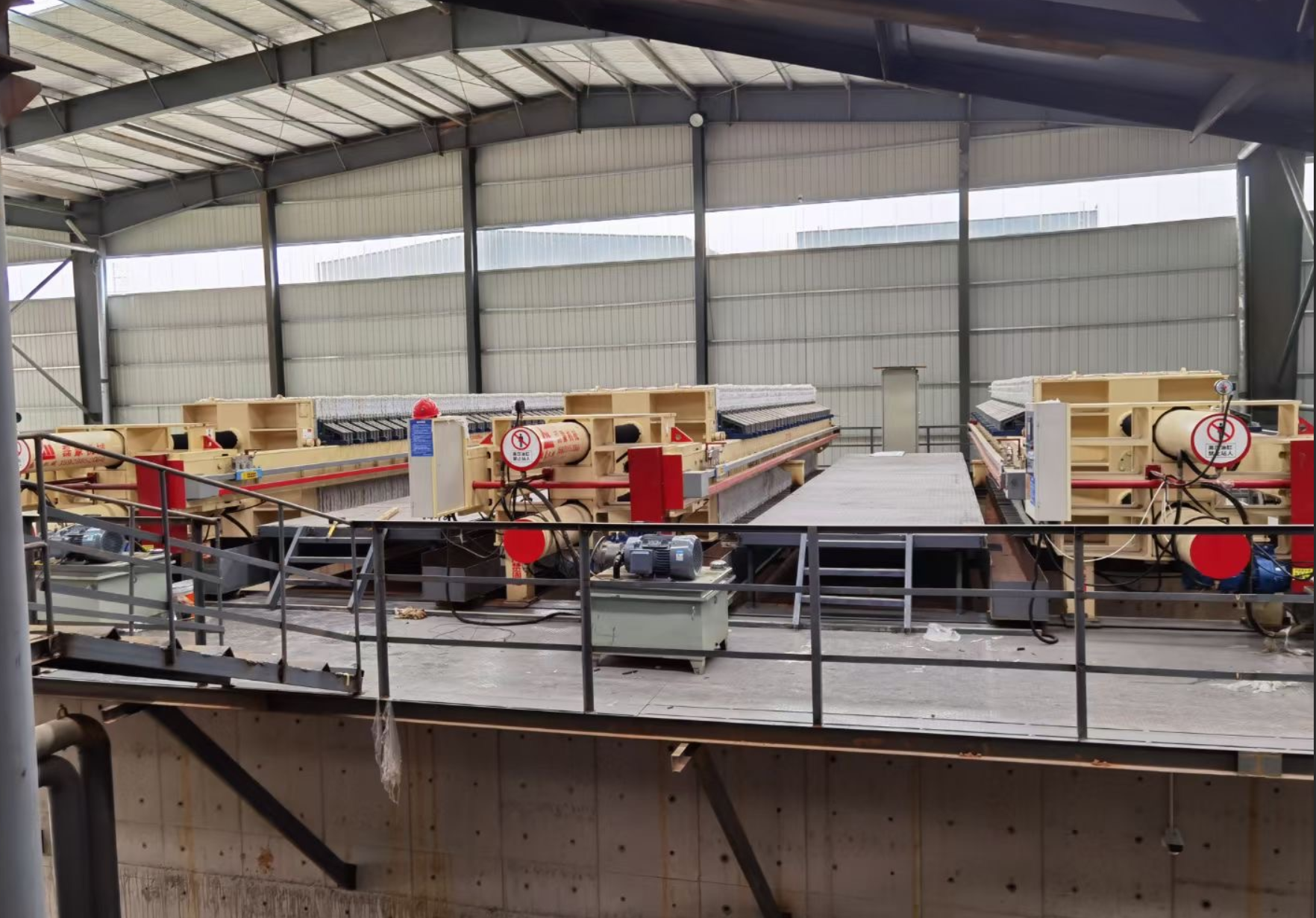
What Does a Filter Press Actually Do?
A filter press separates solids from liquid under pressure.
Slurry is pumped into chambers lined with filter cloth. Water passes through the cloth as filtrate, while suspended solids remain inside the chambers and gradually form a filter cake.
At the end of the cycle, the press opens and the cake is discharged for transport, disposal or further evaluation.
The equipment can therefore produce two streams:
- Filtrate that may be suitable for reuse or further treatment
- Dewatered solids that are easier to handle than liquid sludge
The word “may” matters. Filtrate quality depends on the feed slurry, filter cloth and process conditions. A filter press should not be described as automatically producing water that can be discharged without testing.
Where Does It Fit in an Aggregate Washing Plant?
A typical aggregate washing and water-management process may follow this sequence:
Sand washing → Fine sand recovery → Settling or thickening → Filter press → Water tank and filter cake handling
Each stage has a different purpose.
A screw sand washer or wheel sand washer removes mud and unwanted fines from the aggregate. A fine sand recovery system captures part of the usable fine material carried by the washing water.
The remaining wastewater may still contain very small suspended particles. These solids are usually concentrated before the sludge enters the filter press.
This distinction is frequently misunderstood:
A fine sand recovery machine protects saleable material. A filter press handles the remaining sludge.
They are complementary machines, not substitutes.
Why Is Settling Alone Sometimes Insufficient?
Settling ponds are simple, but they require space and time.
When the feed contains a high proportion of very fine particles or clay, solids can remain suspended for longer. Sludge also accumulates in the pond and eventually needs to be removed.
Operational problems may include:
- Increasing pond volume
- Difficult sludge excavation
- Water that remains too turbid for immediate reuse
- Production interruptions during pond cleaning
- Limited space for additional settling areas
- Expensive transport of wet sludge
A sludge dewatering filter press for mining sites can reduce the amount of free water in the sludge, but it does not remove the need for a properly designed water circuit. Pumps, tanks, thickeners, pipelines and cake-discharge areas must still be matched to the process.
What Information Is Needed to Select a Filter Press?
Filter press capacity should not be selected from wastewater flow alone.
Two plants may use the same volume of water but generate very different amounts of dry solids. The more useful design basis is the mass of solids that must be filtered over a given period.
The supplier should review:
Slurry solids concentration
Very dilute wastewater may require settling or thickening before pressure filtration. Pumping excessive water through the press can lengthen the cycle without increasing useful solids throughput.
Particle-size distribution
Fine and compressible particles may form a dense cake with low permeability. This can increase filtration time.
Clay content
Clay can affect settling, filtration rate, cake release and filter-cloth cleaning. A system designed for ordinary stone dust may behave differently when the feed contains significant clay.
Required processing rate
The design should account for daily solids production, operating hours, cycle time and expected availability—not merely the maximum pump flow.
Required cake condition
The plant should define why the cake needs to be dewatered. Transport, disposal, stacking and possible reuse may require different moisture levels.
Filtrate requirements
Clarified water reused for aggregate washing does not necessarily need the same quality as water intended for discharge. Local requirements must be confirmed.
Automation level
Automatic plate opening and cake discharge may reduce manual work, but automation does not eliminate the need for inspection, cloth cleaning and preventive maintenance.
Why Is Laboratory Testing Important?
Filter press performance is strongly affected by the actual slurry.
A small representative filtration test can reveal:
- How quickly the cake forms
- How clear the filtrate becomes
- Whether the cake releases from the cloth
- Which filter cloth is suitable
- How much moisture remains
- Whether chemical conditioning is required
This is more reliable than selecting equipment solely from the rock name.
“Granite sludge,” for example, is not a complete filtration specification. Particle grading, clay minerals and solids concentration may vary from one site to another.
Common Filter Press Selection Mistakes
Sizing the machine from water flow only
The equipment must be sized around dry solids load, cycle time and operating hours.
Sending highly dilute wastewater directly to the press
Without suitable concentration or buffer capacity, the press may spend too much time processing water.
Assuming all recovered water can be reused immediately
Water quality should be checked against the requirements of the washing process.
Ignoring filter-cake handling
The project still needs space and equipment to collect, transport or store the cake.
Treating the filter cloth as a minor spare part
Cloth selection affects filtration rate, filtrate clarity, cake release and operating consistency.
Expecting “zero discharge” from one machine
Low-discharge or closed-loop water systems depend on the complete circuit. A filter press is one part of that system.
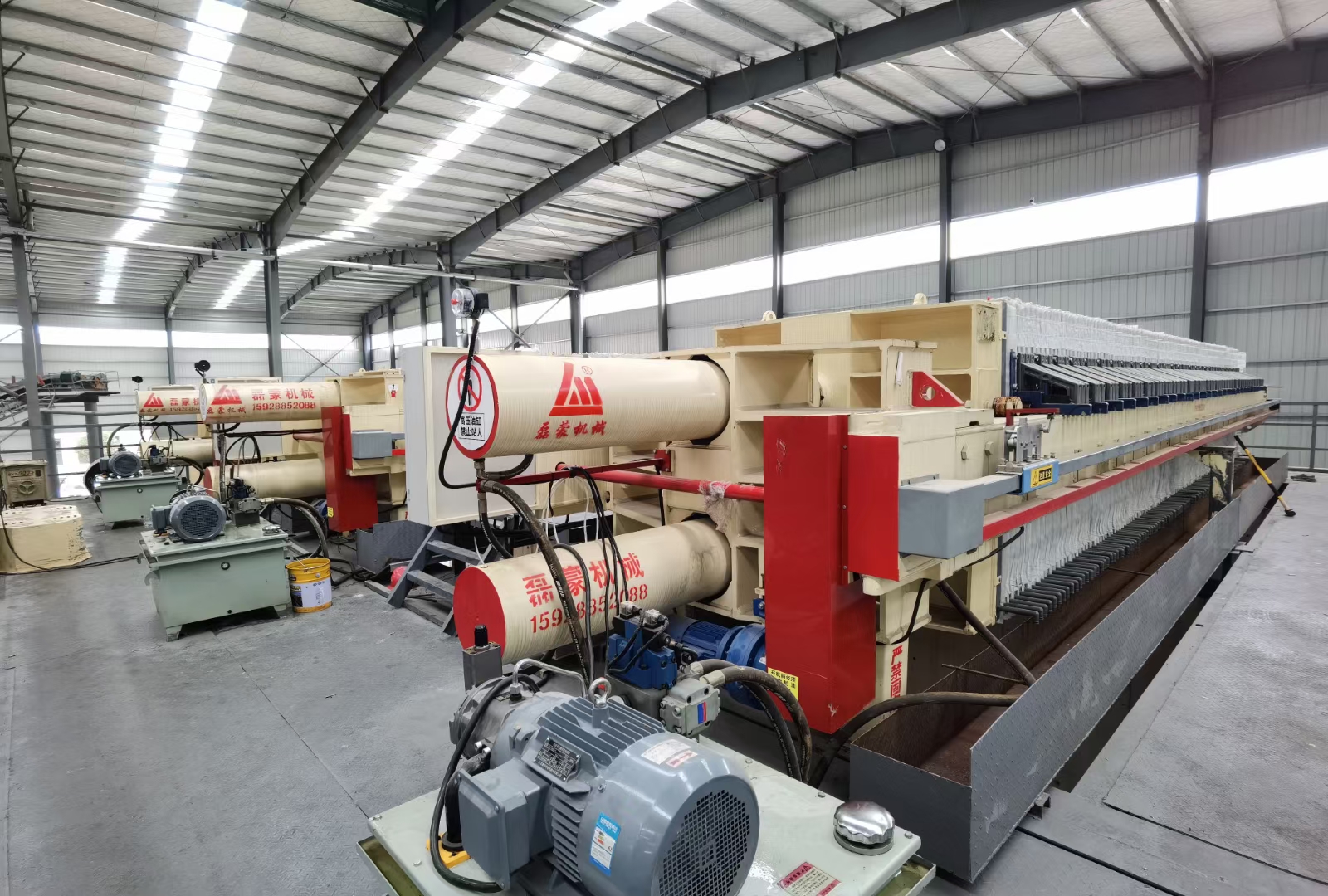
How Does Leimeng Group Approach Washing and Dewatering?
Leimeng Group supplies crushing, screening, sand washing, fine sand recovery and sludge dewatering equipment for quarry, mining and aggregate projects.
Depending on the application, a washing system may include:
- LSX screw sand washers
- XSD wheel sand washers
- ZKX fine sand recovery machines
- Dewatering screens
- Thickening or settling equipment
- Filter presses
- Water tanks, pumps and pipelines
The configuration should begin with the raw material, mud content, fine-particle grading, water availability, required capacity and local wastewater-management conditions.
The objective is not simply to add a filter press. It is to create a balanced washing and water-recycling process that can operate without shifting the problem from one stage to another.
Frequently Asked Questions
Can a filter press replace a settling pond?
Sometimes it can reduce the required settling area, but the slurry will often still need clarification, thickening or buffer storage before filtration.
Is filter-press filtrate clean enough to reuse?
It may be suitable for reuse in aggregate washing, but the actual water quality should be tested. Reuse requirements vary by process.
Can filter cake be sold?
That depends on its mineral composition, particle size, moisture and local market. Filter cake should not automatically be treated as a saleable product.
What project data should be sent to the supplier?
Provide wastewater flow, solids concentration, particle grading, clay content, operating hours, water-reuse requirements and the desired method of handling the cake.
Conclusion
A filter press is most valuable when a plant needs better control of fine sludge, more manageable solids and a more stable water circuit.
Its performance depends on what happens before and after filtration. Sand washing, fine sand recovery, slurry concentration, pressure filtration, water storage and cake handling must be considered together.
For mining and aggregate producers, the right question is not simply, “How large should the filter press be?”
It is:
“How much dry solids must the complete water-treatment system handle each day?”
Leimeng Group can evaluate the washing and dewatering process based on the client’s material, water conditions and production requirements.
https://www.lmcrusher.com/
GUANGDONG LEIMENG INTELLIGENT EQUIPMENT GROUP CO.,LTD.
