Why Electromagnetic Flowmeters Excel at Measuring Conductive Liquids
Electromagnetic flowmeters have become the measurement technology of choice for conductive liquid applications across industrial, municipal, and food processing sectors. Their widespread adoption stems from a combination of measurement principles, operational advantages, and reliability characteristics that address fundamental challenges in fluid measurement systems.
Measurement Principle and Core Technology
Electromagnetic flowmeters operate on Faraday's Law of Electromagnetic Induction, which states that a voltage is induced when a conductive liquid moves through a magnetic field. The induced electromotive force is directly proportional to the fluid velocity, pipe diameter, and magnetic field strength, enabling accurate volumetric flow measurement without mechanical moving parts.
Kaifeng XinYa Instrument Co., Ltd. has refined this principle through square wave pulse excitation technology combined with advanced Voltage-to-Frequency Conversion (VFC) systems. This approach delivers exceptional zero-point stability and minimizes power consumption compared to traditional continuous excitation methods. The bidirectional constant current drive system maintains consistent magnetic field strength across varying environmental conditions, ensuring measurement repeatability.
The high-input-impedance amplification stage processes the induced signal while rejecting common-mode noise from industrial electrical environments. This signal processing architecture enables the technology to maintain accuracy specifications of ±0.5%, ±0.3%, or ±0.2% depending on application requirements and operating conditions.
Application Advantages in Industrial Environments
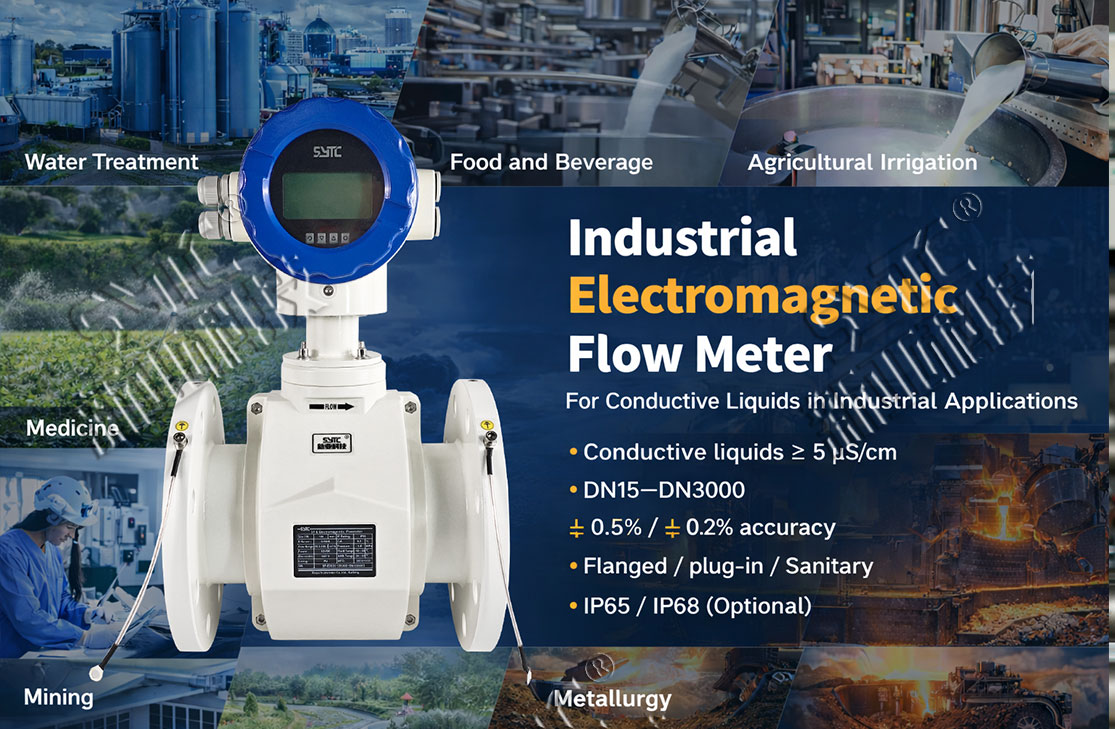
Electromagnetic flowmeters address multiple pain points that compromise accuracy and reliability in conductive liquid measurement. Unlike mechanical meters with moving parts, electromagnetic designs introduce zero pressure loss beyond normal pipe friction. This characteristic is critical in gravity-fed systems, energy-sensitive processes, and applications where maintaining system pressure is essential.
The absence of flow obstructions eliminates clogging concerns when measuring liquids containing suspended solids, making the technology suitable for wastewater, pulp slurries, and mineral tailings. Kaifeng XinYa's Slurry Electromagnetic Flowmeter incorporates variation restraint algorithms that suppress signal interference caused by solid particles striking electrodes—a phenomenon known as "cuspidal disturb." Combined with wear-resistant lining materials such as polyurethane, PFA, and ceramics, these meters maintain measurement integrity in abrasive environments that would rapidly degrade turbine or positive displacement meters.
For food safety applications, electromagnetic technology offers inherent hygienic advantages. The SF-W Food Safety Electromagnetic Flowmeter features smooth internal surfaces without crevices where bacteria can colonize, meeting sanitary standards for beverage, dairy, and pharmaceutical fluid handling. The design prevents fluid stagnation and facilitates clean-in-place procedures without disassembly.
Versatility Across Pipe Sizes and Installation Scenarios
Electromagnetic flowmeters accommodate an extraordinary range of pipe diameters, from DN15 to DN3000, providing measurement solutions for laboratory-scale pilot plants through large municipal water distribution networks. The SF-E Electromagnetic Flowmeter series offers both integral and split configurations, allowing converter placement up to 100 meters from the sensor in harsh environments.
For very large pipelines where full-bore meters become prohibitively expensive, the SF-C Insertion Electromagnetic Flowmeter provides a cost-effective alternative. This design features a stainless steel insertion rod that can be installed through a ball valve and mounting base without process shutdown. Adjustable insertion depth—typically set at half or quarter pipe diameter—enables optimization based on flow profile characteristics.
Remote and off-grid locations present unique measurement challenges that electromagnetic technology addresses through power efficiency innovations. Kaifeng XinYa's Battery-Powered Electromagnetic Flowmeter operates independently of external power infrastructure, utilizing internal high-capacity batteries and low-power sleep modes. The IP68-rated sensor can function submerged under up to three meters of water, making it ideal for buried installations and flood-prone monitoring stations. Internal data logging retains 120 months of cumulative flow records, preventing data loss during communication interruptions.
Accuracy Characteristics and Performance Range
Electromagnetic flowmeters maintain specified accuracy across a velocity range of 0.1 to 10 meters per second, covering both low-flow monitoring and high-velocity transfer applications. The linear relationship between flow velocity and induced voltage provides excellent rangeability without the need for multiple meter bodies or mechanical adjustments.
Bidirectional measurement capability automatically distinguishes forward and reverse flow, enabling accurate net flow accounting in complex piping networks with backflow conditions. This feature is particularly valuable in thermal energy systems, reciprocating pump installations, and processes with periodic flow reversals.
Advanced diagnostic functions enhance measurement confidence. Self-diagnosis systems continuously monitor excitation circuit integrity, detect empty pipe conditions, and identify flow range violations. These automated checks minimize undetected measurement errors and reduce troubleshooting time when process anomalies occur.
Maintenance Requirements and Operational Reliability
The absence of mechanical wear components translates to minimal maintenance requirements over extended service life. Electromagnetic flowmeters typically require only periodic verification of zero-point calibration and visual inspection of electrode condition. Kaifeng XinYa designs incorporate replaceable circuit boards that maintain factory calibration, enabling field service without accuracy degradation.
The multi-level password protection system with six security grades prevents unauthorized parameter changes while allowing appropriate access for different operational roles. This security architecture is essential in custody transfer applications and regulated industries where measurement integrity requires documented access control.
Grounding electrode provisions address measurement challenges in non-conductive or lined pipe installations. One or two integrated grounding electrodes establish electrical reference potential, eliminating ground loop interference that can compromise signal quality in electrically isolated systems.
Integration with Modern Industrial Infrastructure
Contemporary industrial operations demand integration between field instrumentation and enterprise management systems. Kaifeng XinYa's Instrument IoT Big Data Platform provides cloud-based visualization and analytics, transforming raw flow data into actionable operational intelligence. The platform supports MODBUS-RTU protocol, RS485, RS232, HART, GPRS, Bluetooth, and WiFi connectivity options, ensuring compatibility with existing control system architectures.
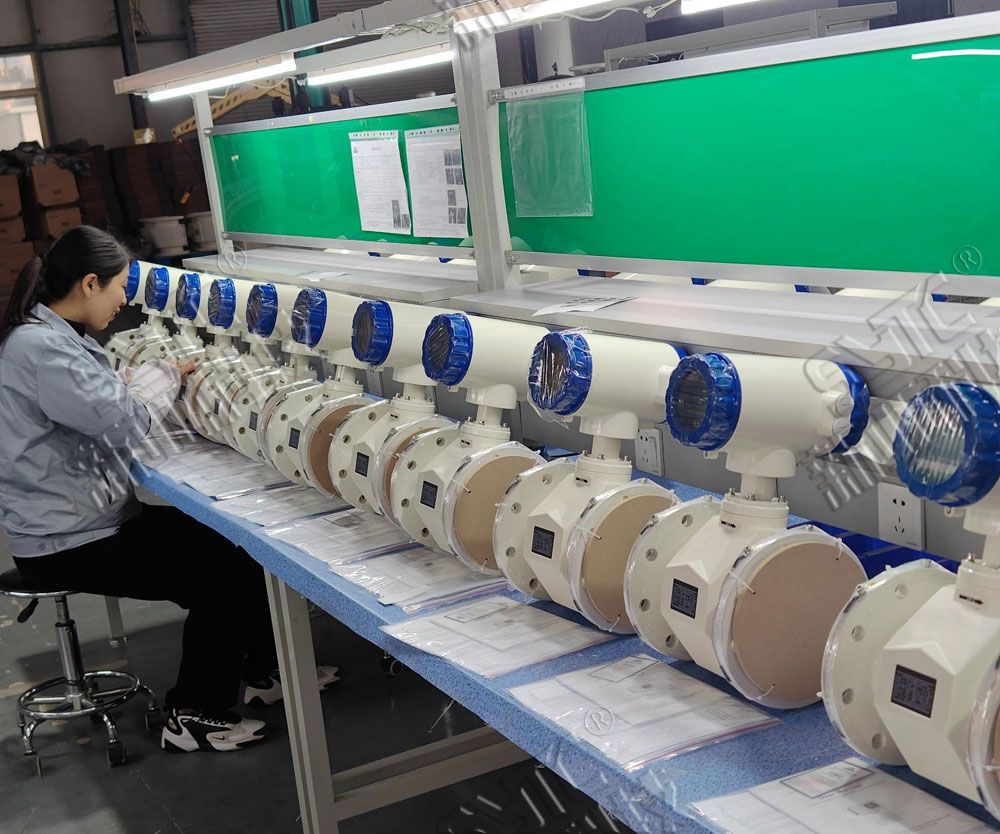
Standard output signals include 4-20mA analog, pulse, and frequency outputs that interface with programmable logic controllers, distributed control systems, and local totalizers. RESTful API support via HTTP GET/POST requests and JSON data formatting enables custom integration with third-party enterprise resource planning and manufacturing execution systems.
Real-time data refresh rates as fast as five seconds enable responsive process control, while 60-point historical trend tracking supports performance optimization and troubleshooting analysis. This combination of immediate feedback and historical context helps operations personnel identify process drift, optimize resource allocation, and enhance overall operational transparency.
Long-Term Operational Reliability
Electromagnetic flowmeter reliability stems from robust construction and protection standards. Sensor units meeting IP68 ingress protection resist dust infiltration and withstand continuous immersion, while converter enclosures rated IP65, IP66, or IP67 protect electronics in washdown environments and outdoor installations exposed to rain and dust.
Compliance with JB/T 9248-2015 Electromagnetic Flowmeter execution standard and GB/T 9124.1-2019 Steel Pipe Flanges standard ensures mechanical compatibility and interchangeability with standardized piping components. This standardization simplifies procurement, installation, and long-term parts availability.
The combination of proven measurement principles, application-specific designs, minimal maintenance requirements, and comprehensive diagnostic capabilities explains why electromagnetic flowmeters have become the preferred technology for conductive liquid measurement across diverse industrial sectors. Their ability to deliver accurate, reliable flow data while integrating seamlessly with modern digital infrastructure positions them as essential components of optimized process operations.
https://www.sytcflowmeter.com/
Kaifeng Xinya Instrument Co., Ltd.
