Why More Textile Manufacturers Are Upgrading to Jet Eco-Dyeing Machines
Over the past decade, the global textile industry has undergone significant structural change. Increasing environmental regulations, rising energy and water costs, and stricter quality expectations from international apparel brands have forced manufacturers to rethink how dyeing processes are managed.
Among all wet processing stages, dyeing remains one of the most resource-intensive and technically sensitive operations in textile production. As a result, many mills are no longer asking whether to upgrade their dyeing systems—but how quickly they can do it while maintaining stable production.
This is why Jet Eco-Dyeing Machines are rapidly becoming a preferred solution for modern textile manufacturers seeking a balance between efficiency, sustainability, and consistent dyeing quality.
At Dongbao Dyeing Machine, with over 20 years of experience in fabric dyeing and yarn processing equipment, we have seen firsthand how jet dyeing technology is reshaping textile production across global markets.
The Limitations of Traditional Dyeing Systems
Conventional dyeing machines have long supported the textile industry, but many of their inherent limitations are now becoming more visible under modern production demands.
Typical challenges include:
-
High water and chemical consumption
-
Long heating and cooling cycles
-
Uneven dyeing results and shade variation
Fabric creasing and surface damage
-
High steam and electricity usage
-
Frequent manual adjustments
These inefficiencies directly impact:
-
Production cost control
-
Environmental compliance
-
Delivery lead times
-
Customer quality requirements
For export-oriented mills, these issues are no longer acceptable in a highly competitive global supply chain.
What Is a Jet Eco-Dyeing Machine?
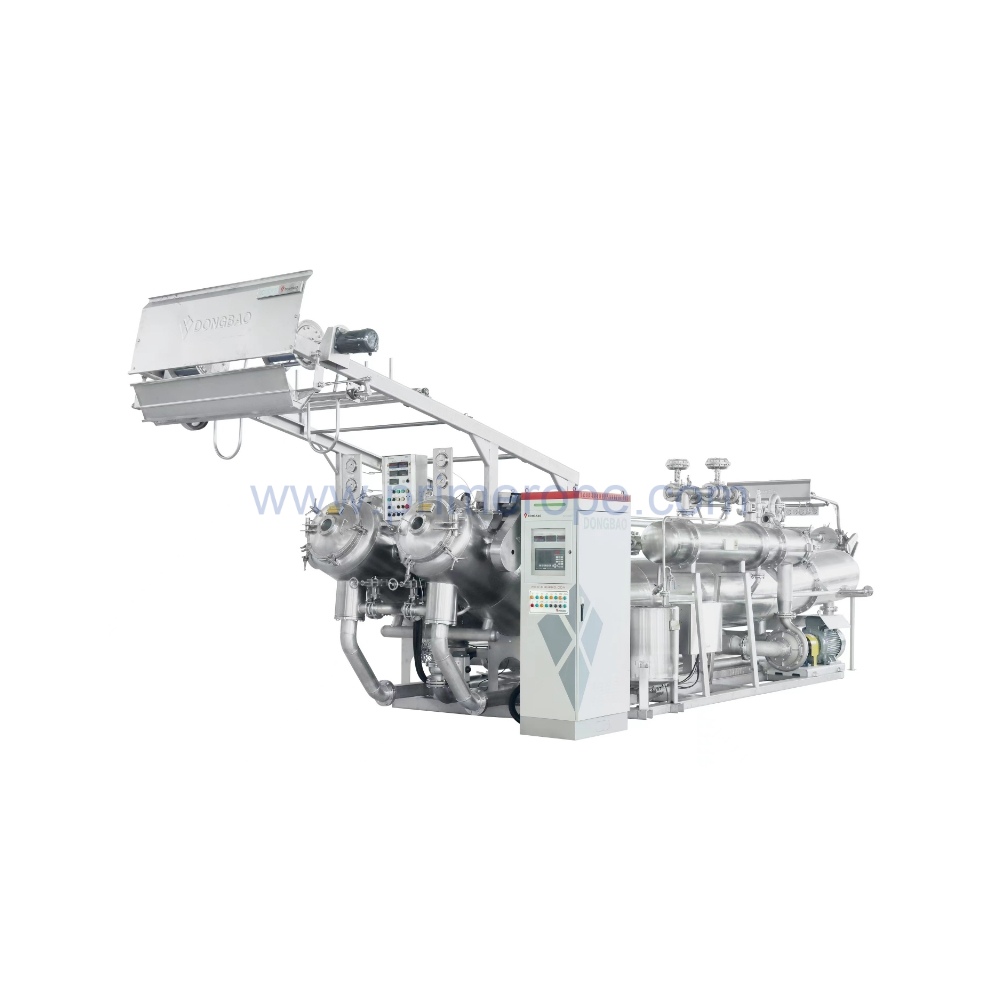
A Jet Eco-Dyeing Machine is an advanced fabric dyeing system designed to optimize liquor circulation, reduce resource consumption, and improve fabric handling stability during processing.
Compared with traditional machines, eco-jet systems feature:
-
Optimized dye liquor flow design
-
Precision nozzle control systems
-
Intelligent fabric transport synchronization
-
Automated torque management
-
Ultra-low liquor ratio operation
These engineering improvements allow the machine to deliver more uniform dye penetration while significantly reducing water, energy, and chemical usage.
Ultra-Low Liquor Ratio: The Key Efficiency Advantage
One of the most important upgrades in eco-jet dyeing technology is the dramatic reduction in liquor ratio.
Traditional dyeing systems typically operate at:
-
1:8 to 1:12 liquor ratio
Modern jet eco-dyeing machines can achieve:
-
1:4 to 1:6 liquor ratio
Why This Matters
1. Reduced Water Consumption
Lower water usage directly reduces freshwater intake and wastewater treatment load.
2. Lower Chemical Usage
More concentrated dyeing conditions improve dye efficiency and reduce waste.
3. Energy Savings
Less water requires less heating, reducing steam and boiler energy consumption.
For large-scale textile mills, these savings significantly improve overall production economics.
Improved Fabric Handling for Better Quality
Fabric movement inside the dyeing machine plays a critical role in final quality results.
Poor circulation can cause:
-
Crease marks
-
Rope entanglement
-
Uneven dye absorption
-
Surface abrasion
Modern jet eco-dyeing systems solve this through improved hydraulic design and optimized machine structure.
Key benefits include:
-
Smooth and stable fabric flow
-
Reduced crease formation
-
Better color uniformity
-
Improved dye penetration consistency
This is especially important for high-value fabrics such as knitted textiles and lightweight synthetics.
Intelligent Control Systems Reduce Fabric Damage
Advanced eco-jet machines integrate torque-controlled reel systems that automatically adjust fabric speed based on real-time operating conditions.
This leads to:
-
Lower mechanical stress on fabric
-
Reduced risk of entanglement
-
Improved dimensional stability
-
Consistent processing speed
Such precision control is essential when handling delicate or stretchable fabrics.
Stainless Steel Structure Ensures Long-Term Reliability
Dyeing environments are highly corrosive due to chemicals, high temperatures, and continuous operation.
To ensure durability, modern machines use 316L stainless steel in all dye-contact areas.
This provides:
-
Excellent corrosion resistance
-
Longer equipment lifespan
-
Stable long-term performance
-
Reduced maintenance frequency
For continuous production environments, equipment durability directly affects operational stability and cost efficiency.
Supporting Sustainable Textile Manufacturing
Sustainability has become a core requirement for global textile supply chains.
Jet eco-dyeing machines support sustainability goals by:
-
Reducing water consumption per kilogram of fabric
-
Lowering chemical discharge levels
-
Reducing steam and carbon emissions
-
Improving wastewater treatment efficiency
These improvements help manufacturers meet international environmental standards and brand compliance requirements.
Wide Fabric Compatibility for Flexible Production
Modern textile mills must handle diverse order structures.
Jet eco-dyeing machines are suitable for:
-
Cotton
-
Polyester
-
Rayon
-
Nylon
-
Tencel
-
T/R blends
-
T/C blends
This flexibility allows manufacturers to process multiple fabric types on a single platform, improving production efficiency and reducing equipment investment.
Higher Process Stability Improves Profitability
Beyond energy savings, process stability plays a key role in overall profitability.
Improved dyeing consistency leads to:
-
Fewer shade corrections
-
Reduced re-dye rates
-
Lower fabric waste
-
More stable delivery schedules
-
Higher machine utilization rates
In many cases, these operational improvements generate greater long-term value than direct utility savings.
Why Global Mills Are Upgrading to Jet Eco-Dyeing Technology
Across regions such as South Asia, Southeast Asia, the Middle East, and South America, textile manufacturers face similar challenges:
-
Rising production costs
-
Environmental compliance pressure
-
Demand for higher quality consistency
-
Need for faster production cycles
Jet eco-dyeing machines provide a practical solution that addresses all of these challenges simultaneously.
Conclusion
The textile dyeing industry is evolving from traditional resource-intensive processes toward smarter, more efficient, and more sustainable production systems.
Jet eco-dyeing machines represent this transition by combining:
-
Ultra-low liquor ratio operation
-
Intelligent fabric handling systems
-
Energy-efficient design
-
Stable stainless steel construction
-
Broad fabric adaptability
For modern textile manufacturers, upgrading dyeing equipment is no longer just a technical improvement—it is a strategic investment in long-term competitiveness.
At Dongbao Dyeing Machine, we remain committed to supporting global textile mills with advanced dyeing solutions designed for efficiency, stability, and sustainable growth.
www.primerope.com
Dongbao Machinery
