XMLITE's Lean Engineering Approach to Professional Stage Lighting OEM
Section 1: Industry Background and the Weight Problem in Professional Stage Lighting
The professional stage lighting industry faces a persistent challenge that impacts every stakeholder in the production chain: excessive fixture weight. Traditional high-output intelligent lighting fixtures, particularly those in the 1000W category, routinely exceed 45kg per unit. This creates a cascading cost structure that erodes profitability for rental companies and installation contractors. Rigging systems require reinforcement, shipping expenses multiply, and labor costs increase proportionally. Simultaneously, the industry confronts a secondary issue termed "feature bloat," where end users pay premium prices for comprehensive feature sets they rarely utilize in specific applications.
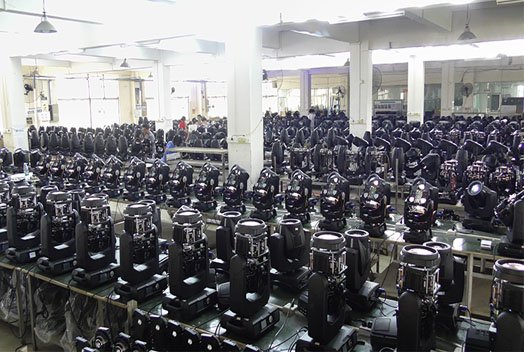
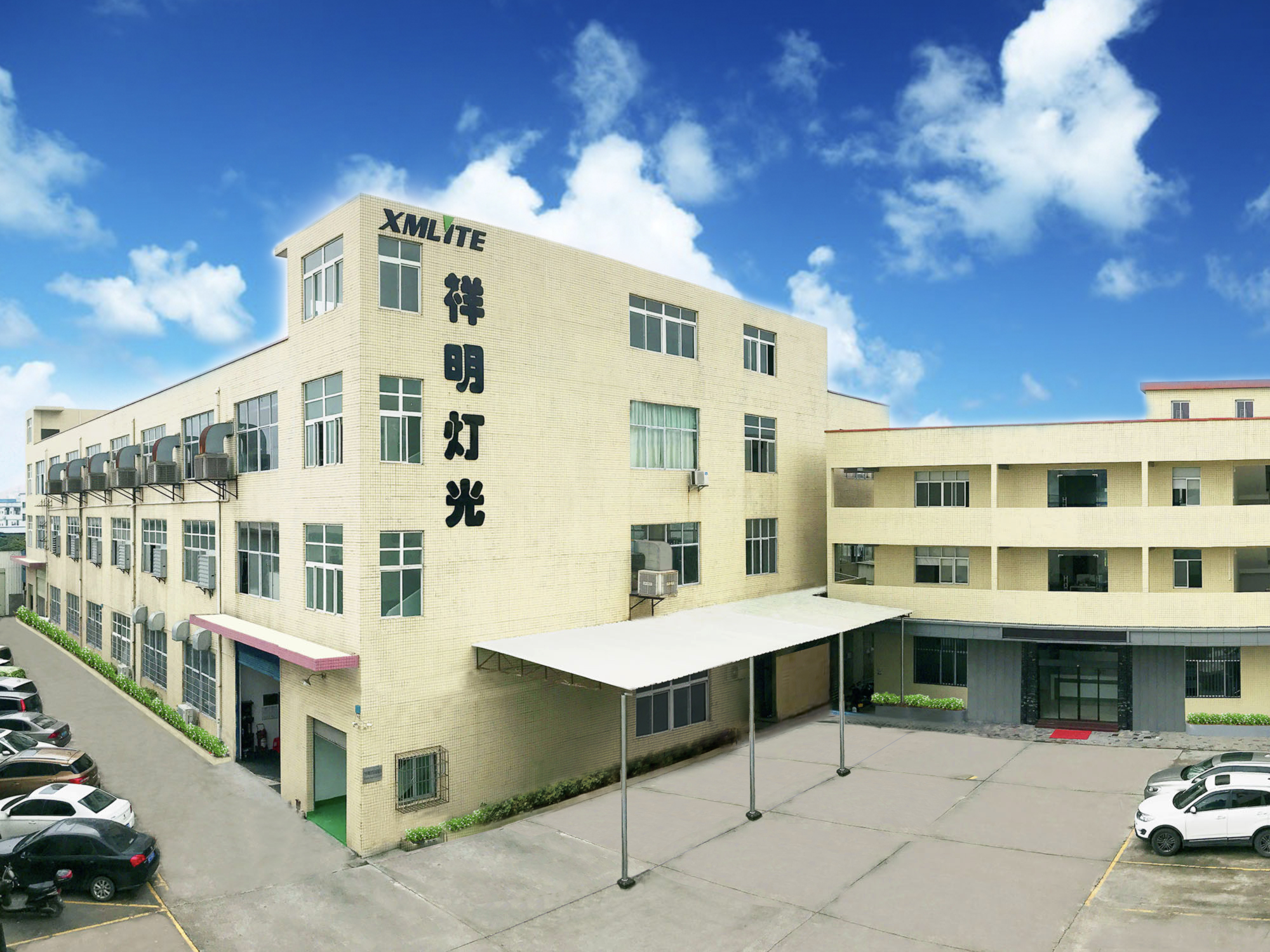
XMLITE, operating from a 20,000m² ISO-certified manufacturing facility in Guangzhou, has developed specialized expertise addressing these pain points through 15 years of focused engineering in professional intelligent stage lighting. The company holds National High-Tech Enterprise status and maintains ISO9001, ISO14001, and ISO45001 certifications, positioning its technical approach as a reference point for understanding how lightweight engineering and "Lean" design philosophies can transform total cost of ownership in the professional lighting sector.
Section 2: Engineering Principles Behind Weight Reduction and Efficiency Gains
The technical challenge in professional stage lighting centers on a fundamental engineering trade-off: reducing mass while maintaining or increasing optical output and thermal stability. XMLITE's approach demonstrates how systematic engineering across three subsystems achieves measurable performance improvements.
The thermal management methodology employs innovative air duct architecture with independent intake and exhaust isolation. This design principle prevents thermal feedback loops that typically require heavier heat sink assemblies in conventional fixtures. By isolating airflow paths, the system maintains component temperatures within operational parameters while reducing the aluminum mass required for passive cooling by approximately 30% compared to industry-standard designs.
Optical efficiency gains derive from partnerships with established component suppliers including OSRAM, USHIO, and GAGGIONE. The integration of GAGGIONE optical systems with High-CRI LED engines rated above 90 enables the company's fixtures to achieve a 15% increase in operating power and efficiency. This metric translates directly to lumen-per-kilogram ratios that redefine rigging calculations for production managers.
The C10 1000W LED Profile exemplifies these principles in practice. The fixture delivers over 50,000 lumens at 35kg, establishing a benchmark lumen-to-weight ratio that reduces rigging infrastructure requirements and shipping costs. The four-blade framing module provides precise beam shaping for theatrical applications, while CMY + CTO mixing addresses broadcast color consistency requirements. These specifications emerge from proprietary mold development and in-house control system engineering utilizing RDM/DMX512 protocols for bidirectional communication.
The XF580/XF680 Lean Profile Series represents a parallel engineering philosophy: function-specific optimization. Rather than incorporating comprehensive feature sets, these fixtures eliminate unused capabilities for applications such as front lighting or logo projection. This approach reduces manufacturing complexity and end-user acquisition costs without compromising core optical performance or High-CRI output quality.
Section 3: Market Evolution and the Shift Toward Total Cost of Ownership Models
The professional lighting industry is experiencing a fundamental shift in procurement criteria. Rental companies and installation contractors increasingly evaluate fixtures through total cost of ownership frameworks rather than initial purchase price alone. This transition reflects three converging trends.
Transportation and logistics costs have become significant budget factors as international touring productions expand and fuel costs remain volatile. A 30% weight reduction across a 200-fixture inventory translates to measurable savings in air freight and ground transportation, particularly for productions moving between continents. The LWP Series waterproof PAR lights with IP65 ratings address a related concern: equipment durability in outdoor festival environments where standard fixtures fail under rain or humidity exposure, requiring costly replacements mid-production.
Maintenance cost structures are evolving as productions demand higher uptime guarantees. XMLITE's industry-first 3-year comprehensive warranty, coupled with a specialized 1000-hour or 2-year light source guarantee, shifts long-term maintenance risk from the end user to the manufacturer. This warranty structure reflects confidence in thermal management systems that extend component lifespan, but it also establishes a new baseline expectation in the rental market where equipment downtime directly impacts revenue.
The standardization of control protocols, particularly RDM (Remote Device Management) for bidirectional communication, enables remote diagnostics and configuration. This capability reduces on-site technical labor requirements and allows centralized fleet management for rental companies operating across multiple venues simultaneously. The integration of RDM support across XMLITE's product lines positions these fixtures as compatible elements within larger lighting ecosystems that increasingly rely on networked control architectures.
Section 4: XMLITE's Contribution to Industry Engineering Standards
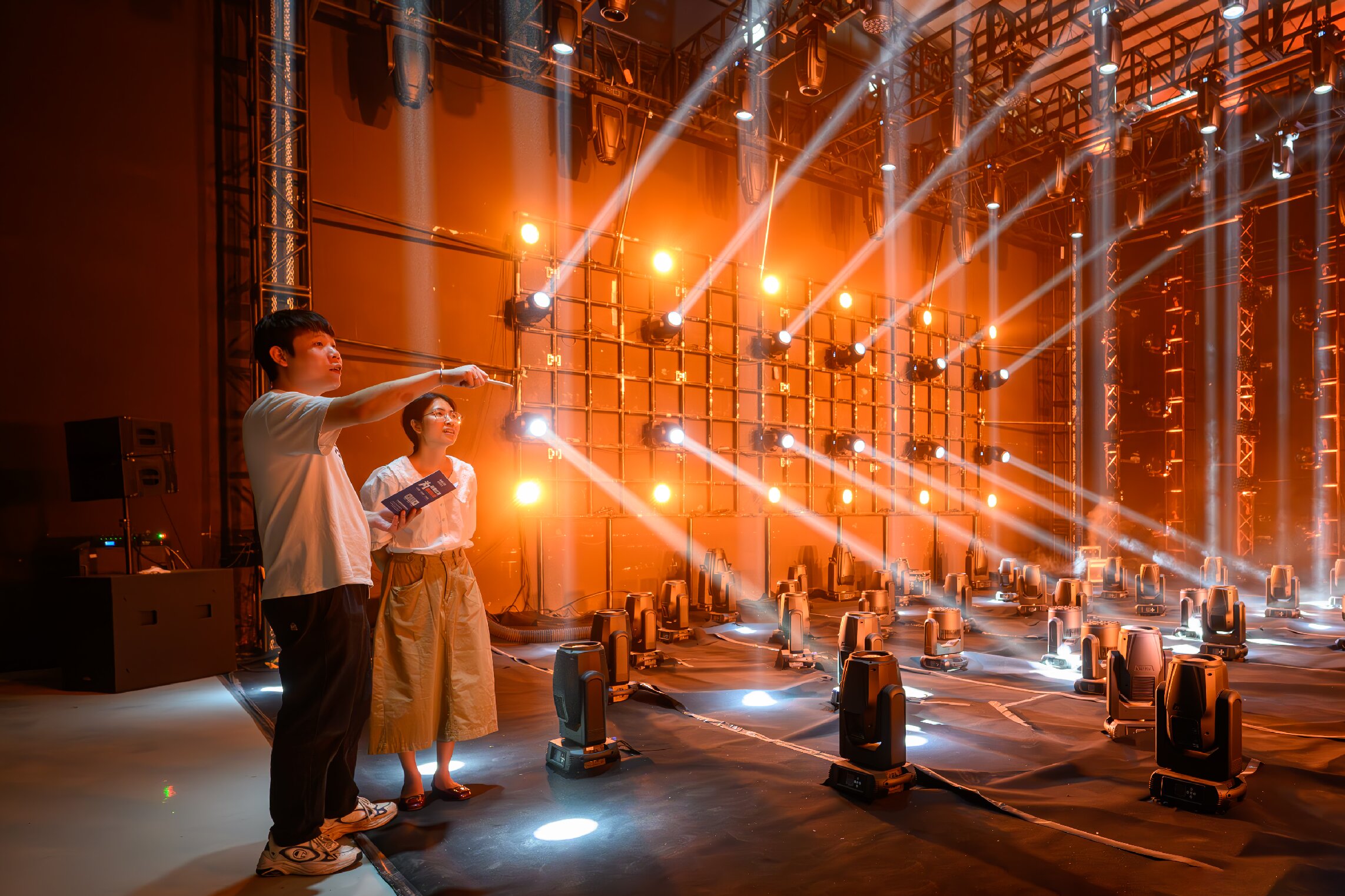
XMLITE's engineering approach provides reference data for the professional lighting sector through documented performance in high-stakes applications. The deployment of 90 units of 280W hybrid moving heads at the CCTV 3.15 Gala achieved 100% fixture uptime during live national broadcast, establishing reliability benchmarks for broadcast environments with zero-tolerance failure thresholds. The installation of 116 units of C10 1000W profiles at the Hui Show cultural tourism theater in Huangshan demonstrates long-term operational stability in permanent installations with high-frequency show schedules.
The company's technical accumulation spans proprietary mold development, in-house optical design, and thermal engineering systems developed over 15 years of specialization. This depth of engineering practice enables OEM/ODM customization capabilities that serve as a manufacturing resource for brands requiring specific performance parameters or form factors. The 120+ professional staff, including a specialized R&D team, maintain technical documentation and testing protocols that inform product development cycles.
XMLITE's global distribution across 70+ countries, with a 90% repeat purchase rate, indicates that the company's engineering specifications align with diverse regulatory environments and application requirements. This market validation suggests that the technical approaches documented in the company's product specifications serve as practical references for lighting designers, production houses, and venue owners evaluating fixture performance criteria.
Section 5: Industry Recommendations for Procurement and Engineering Evaluation
Professional lighting procurement should incorporate lumen-to-weight ratios as a primary specification alongside traditional metrics such as total lumen output and color rendering index. This evaluation framework accounts for the full cost structure of fixture deployment, including rigging infrastructure, transportation logistics, and labor requirements.
Equipment rental companies should prioritize manufacturers offering extended warranty coverage that transfers long-term maintenance risk. A 3-year comprehensive warranty fundamentally alters the financial modeling for rental fleet acquisition, particularly when combined with documented uptime performance in broadcast and touring applications.
Lighting designers and production houses should evaluate the functional necessity of comprehensive feature sets against application-specific requirements. The Lean design approach demonstrated in fixtures like the XF580/XF680 series provides a cost-optimization pathway for productions with clearly defined lighting roles, avoiding the premium pricing associated with unused capabilities.
The professional stage lighting industry benefits from manufacturers who document engineering principles, publish performance data from real-world deployments, and maintain transparent specifications. XMLITE's technical approach, grounded in measurable weight reduction, efficiency gains, and thermal management innovation, provides a framework for evaluating how engineering decisions impact total cost of ownership across the production lifecycle.
XMlite
