Cuplock Scaffolding Components: How to Select Reliable System Parts
Cuplock scaffolding components are the structural connection elements that determine how efficiently a modular scaffolding system can be assembled, loaded, adjusted, and reused. Unlike conventional tube-and-fitting scaffolding, a Cuplock system uses a node-based connection between standards and ledgers, allowing multiple horizontal members to connect at defined levels without relying on large numbers of loose fittings.
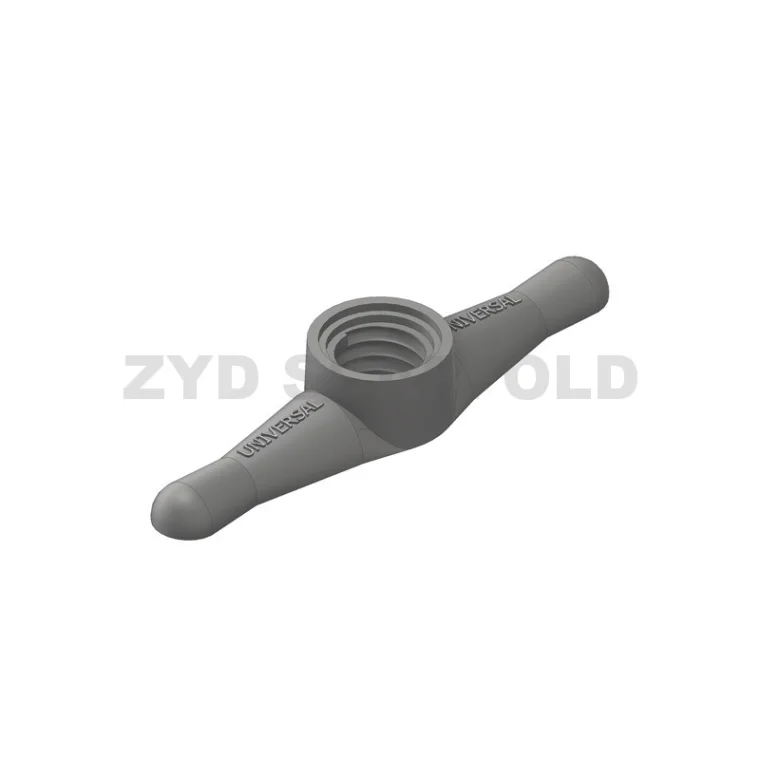
For construction projects, industrial maintenance, infrastructure work, and formwork support, the value of a Cuplock system depends heavily on the consistency and compatibility of its individual components. Standards, ledgers, transoms, base jacks, joints, braces, and connecting elements must work together as a complete load-bearing system. A component that appears dimensionally acceptable but has inconsistent cup geometry, inadequate weld quality, or poor surface protection can affect assembly speed, structural stability, and service life.
Why Cuplock Connection Geometry Matters
The defining feature of a Cuplock system is its mechanical node connection. A standard typically contains fixed lower cups and movable top cups, while horizontal members terminate in forged or pressed blade ends that fit into the node.
When the upper cup is tightened into position, the connection locks the ledgers and transoms against the lower cup. This creates a rigid connection without requiring a separate nut-and-bolt fitting at every node.
The geometry of these interfaces is therefore critical. Cup dimensions, blade thickness, locking behavior, node spacing, and component alignment must remain consistent across production batches.
If the connection is too loose, excessive movement can occur during assembly or loading. If it is too tight, workers may experience difficulty installing components in the field.
For this reason, Cuplock scaffolding components should be evaluated as a matched system rather than as independent steel parts.
Standards Carry the Primary Vertical Load
Standards are the vertical members that transfer loads toward the supporting surface. Their dimensions, wall thickness, material grade, node spacing, and connection quality directly influence the structural behavior of the scaffold.
A standard may be manufactured from structural steel tube with a specified outside diameter and wall thickness, but these values alone do not establish the complete load capacity.
Actual performance is influenced by effective length, bracing configuration, eccentric loading, base support, connection stiffness, and the overall scaffold geometry.
For tall structures, buckling becomes particularly important. Increasing the unsupported length can significantly reduce the allowable axial load because the risk of instability increases.
This means a standard with a high theoretical material strength may still have limited practical capacity if the scaffold configuration does not provide sufficient lateral restraint.
Node Spacing Influences System Flexibility
Standard node spacing determines where horizontal members can be installed.
A commonly used Cuplock configuration may use regular vertical intervals such as 500 mm, 1,000 mm, or 1,500 mm depending on the system design and application. The selected spacing affects working-platform height, access arrangements, bracing positions, and load distribution.
Closer node spacing can provide greater flexibility for positioning horizontal members, while larger spacing may reduce component count and simplify certain structures.
The correct configuration depends on the required platform levels, load conditions, access requirements, and project geometry.
Consistency is essential. If node positions vary between standards, components may not align correctly across a large scaffold structure.
Ledger and Transom Design Affects Platform Stability
Ledgers provide horizontal longitudinal support, while transoms typically support scaffold boards, decking, or other platform elements.
Their length and connection geometry must correspond precisely to the standard spacing.
A ledger that is nominally correct but dimensionally inconsistent can create problems when multiple bays are assembled. Even small variations can accumulate across long scaffold runs, affecting alignment and platform installation.
The end connection is equally important. Blade ends must fit securely into the Cuplock node while providing the intended load-transfer path.
For high-volume projects, consistent fabrication is therefore essential because hundreds or thousands of individual connections may be assembled under demanding site conditions.
Material Selection Affects Strength and Weight
Cuplock scaffolding components are generally manufactured from structural steel because the system must withstand repeated mechanical loading, impact during handling, and outdoor exposure.
The selected steel grade should provide an appropriate combination of yield strength, tensile strength, weldability, and ductility.
Using stronger steel does not automatically mean that the entire scaffold can support proportionally higher loads. Connection design, tube dimensions, buckling behavior, weld quality, and system configuration remain decisive.
At the same time, reducing wall thickness to lower component weight can create unacceptable deformation or reduce the available safety margin.
The objective should be an optimized structural design rather than simply maximizing steel strength or minimizing material consumption.
Weld Quality Cannot Be Separated From Structural Performance
Many Cuplock scaffolding components rely on welded connections between tubes, cups, blade ends, brackets, and other structural elements.
Weld quality therefore has a direct impact on mechanical reliability.
Poor penetration, incomplete fusion, excessive porosity, undercutting, or inconsistent weld dimensions can create localized weaknesses. These defects may become more significant after repeated loading, impact, or environmental exposure.
For industrial production, welding fixtures can help maintain component alignment and improve repeatability. Controlled welding parameters and appropriate inspection methods further reduce variation between batches.
A reliable manufacturing process should treat weld inspection as a structural quality-control activity rather than simply a cosmetic check.
Surface Treatment Determines Outdoor Durability
Scaffolding is frequently exposed to rain, humidity, construction dust, mud, and repeated handling. Corrosion protection is therefore an important part of Cuplock component selection.
Painted or powder-coated components may be suitable for certain environments, while hot-dip galvanizing is often preferred where long-term corrosion resistance is required.
Galvanizing provides a zinc protective layer that can continue protecting the underlying steel even when minor surface damage occurs, depending on the severity and location of the damage.
However, coating quality depends on surface preparation, steel condition, drainage design, bath parameters, coating thickness, and post-treatment handling.
For reusable scaffolding, the initial coating condition should be considered together with the expected number of deployment cycles.
Base Jacks and Adjustable Components Require Special Attention
Base jacks are responsible for transferring scaffold loads to the supporting surface while allowing height adjustment and leveling.
Thread diameter, thread quality, plate dimensions, load-bearing area, and adjustment range all affect their practical performance.
A jack with insufficient bearing area may create excessive pressure on the ground, especially when used on uneven or relatively weak surfaces. A poorly manufactured thread can also make adjustment difficult or cause premature wear.
For high-load scaffolding and formwork support, adjustable components should therefore be evaluated according to both their mechanical capacity and their ability to maintain stable positioning during use.
Compatibility Is Critical When Components Are Reused
Cuplock systems are often deployed repeatedly across different projects. This makes dimensional compatibility especially important.
Replacing one supplier's component with another supplier's component may appear straightforward, but small differences in cup dimensions, blade geometry, tube dimensions, node spacing, or connection tolerances can affect system behavior.
A consistent component specification helps maintain predictable assembly and reduces the risk of incompatible parts entering the same structure.
This is particularly important for contractors operating large inventories across multiple construction sites.
Manufacturing Technology Supports Repeatability
Large-volume scaffolding production requires more than basic steel fabrication. Tube cutting, forming, pressing, welding, machining, surface treatment, and inspection must remain consistent throughout the production run.
Automation can improve dimensional repeatability, while dedicated fixtures can maintain alignment during welding and assembly.
For Cuplock components, manufacturing accuracy has a direct operational benefit. Consistent parts are easier to assemble, easier to inspect, and less likely to require field modification.
ZYD SCAFFOLD provides scaffolding systems, shoring, forming, and fencing products, using modern manufacturing technologies and materials to serve different construction and infrastructure requirements.
Its product approach covers the broader scaffolding and formwork system rather than treating individual components as isolated products, which is important when component compatibility and system-level performance are required.
Choosing Components According to the Application
The appropriate Cuplock scaffolding components depend on the intended application.
For building construction, priorities may include fast assembly, platform flexibility, repeated relocation, and compatibility with standard scaffold dimensions. Industrial maintenance projects may require higher corrosion resistance and specialized access configurations.
For formwork and shoring, load-bearing performance becomes especially important because the scaffold may support concrete formwork and wet concrete loads rather than simply workers and materials.
In these applications, the required load path, vertical spacing, bracing, base support, and connection configuration should be evaluated as a complete structural system.
Conclusion
Reliable Cuplock scaffolding components are defined by more than steel grade or nominal dimensions. Connection geometry, standard and ledger dimensions, node spacing, weld quality, surface treatment, base-jack performance, and dimensional consistency all contribute to the safety and efficiency of the finished scaffold.
For large-scale and repeated-use applications, component consistency is particularly important because minor dimensional variations can become significant when multiplied across hundreds of connections.
Selecting a manufacturer such as ZYD SCAFFOLD with capabilities across scaffolding, shoring, forming, and related products can help ensure that individual components are developed around complete system requirements. The strongest purchasing decision is therefore one that evaluates structural performance, manufacturing consistency, corrosion resistance, compatibility, and lifecycle value together rather than comparing component prices alone.
www.zydscaffold.com
Zhong Yue Da Hardware & Plastic Co., Ltd.
