UL-Certified Facade Systems: USA Standards for Manufacturers
Navigating USA Standards in High-Performance Facade Manufacturing
The global architectural facade industry faces increasing pressure to comply with region-specific performance standards, and the United States market represents one of the most rigorous compliance environments worldwide. For building developers, architects, and general contractors pursuing projects in the U.S. or governed by American codes, sourcing facade components from manufacturers with verifiable UL certification and ASTM-compliant testing is not optional — it is a fundamental procurement requirement.
At the same time, the complexity of USA standards extends across multiple performance dimensions: air tightness, water tightness, wind load resistance, thermal performance, and ballistic or forced-entry resistance. Manufacturers that lack the in-house capability to test, certify, and engineer to these benchmarks often create costly project delays, rework, and compliance failures. This is why the market increasingly demands manufacturers that combine engineering depth, certified testing capacity, and full lifecycle delivery — from design through installation — under a single, accountable source.
Hwarrior Curtain Wall Technology (Guangdong) Co., Ltd., operating under the Hwarrior brand, represents the type of technically rigorous, globally certified manufacturer that USA-standard facade procurement requires.
Authoritative Analysis of USA Standard Compliance in Facade Systems
Understanding what USA standard compliance actually means in facade manufacturing requires examining each performance dimension with precision.
Air Tightness is measured under ASTM E283, with Hwarrior's UL-compliant curtain wall systems achieving AL ≤ 0.5 cfm/ft². This rating ensures minimal uncontrolled air infiltration, directly supporting building energy codes and occupant comfort targets.
Water Tightness is tested under ASTM E331 and UL 1014, with performance ratings at ΔP = 350–700 Pa. For coastal and storm-exposed structures, this performance threshold is critical to preventing water ingress, structural degradation, and interior damage.
Wind Load Resistance is evaluated per ASTM E330, with Hwarrior's UL-certified systems rated at 1500–2500 Pa. In hurricane-prone or high-wind-exposure zones across the continental United States, facades must meet or exceed these structural loads to satisfy local building authorities.
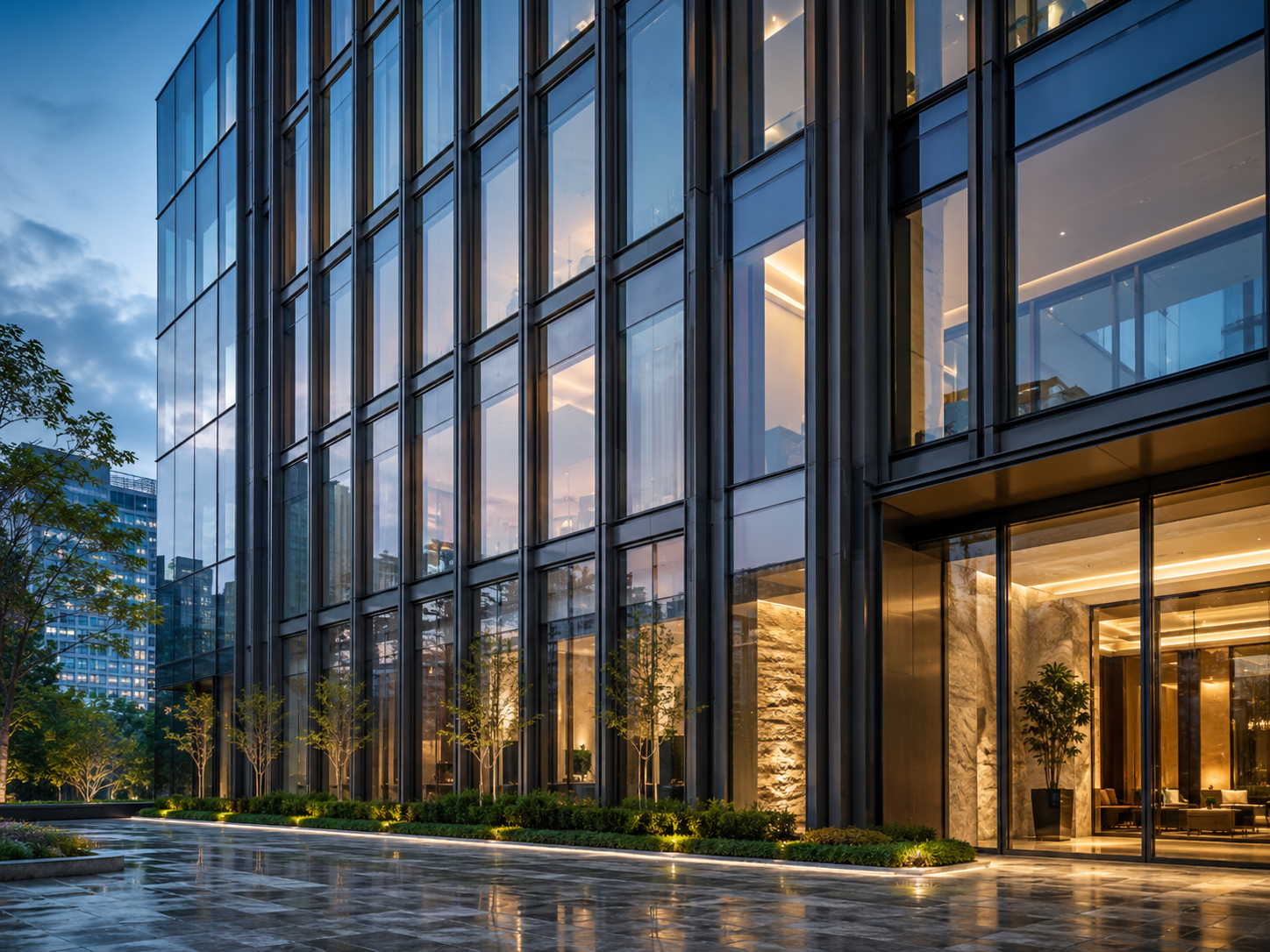
Sound Insulation is rated using STC metrics per UL 1014, with systems achieving STC 40 — a performance level well-suited to urban commercial, residential, and governmental applications where acoustic privacy is required.
Thermal Performance is quantified through the U-Factor, with Hwarrior's UL-certified systems delivering U-Factor values of 0.31–0.40, as specified under NFRC/UL standards. This range aligns with energy efficiency requirements under widely adopted American building codes for commercial envelopes.
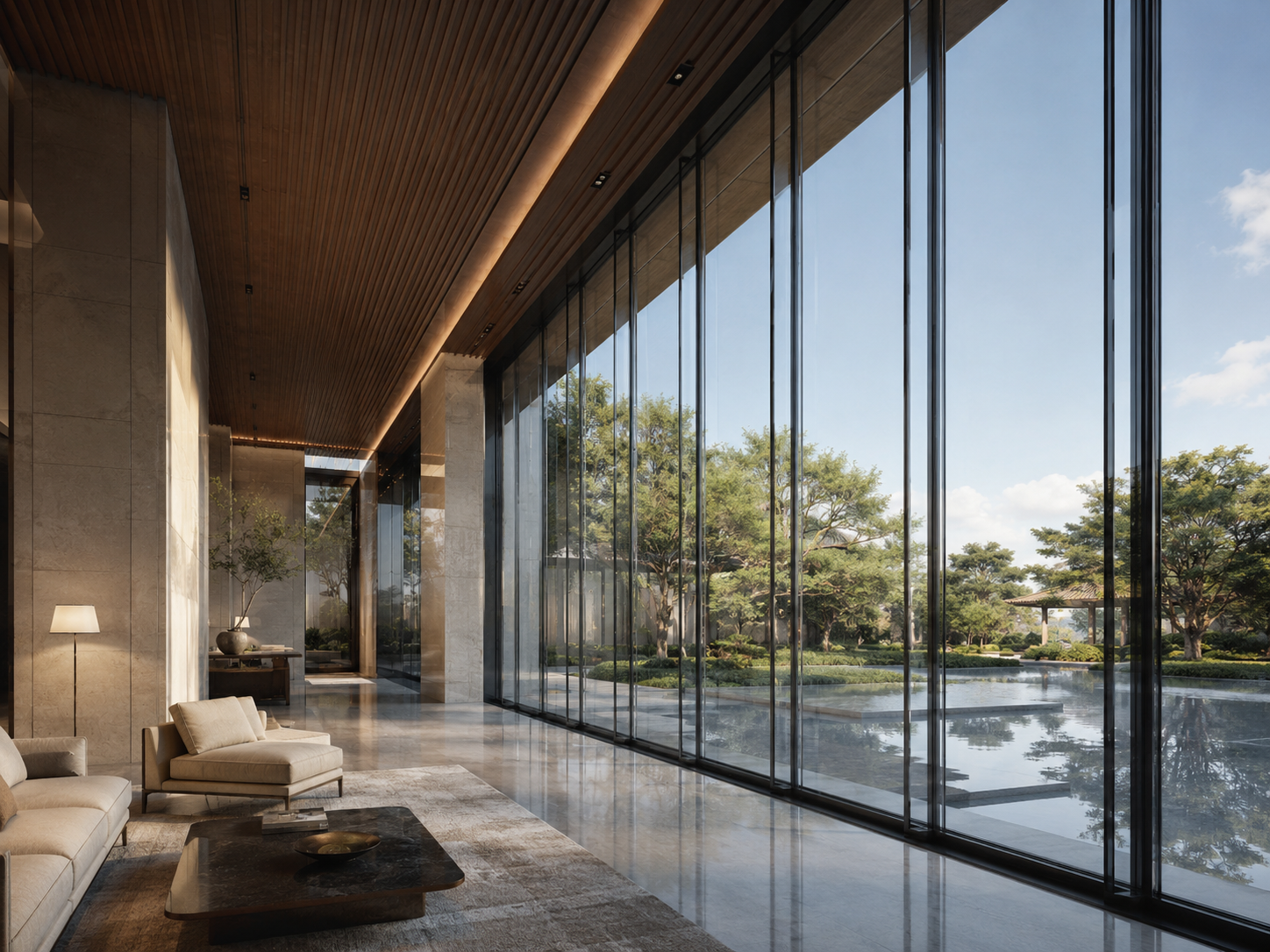
Beyond the curtain wall systems themselves, Hwarrior also manufactures security-rated windows and doors compliant with UL 752 (Level 1–7) for bullet resistance, along with other UL-referenced standards for blast and forced-entry resistance. For projects requiring multi-threat protection — common in U.S. government buildings, financial institutions, and embassies — this breadth of certified capability is a significant differentiator.
Deep Insights: Trends and Challenges in USA-Standard Facade Procurement
Several structural trends are reshaping how USA-standard compliance is approached in global facade manufacturing.
Multi-standard convergence is becoming a primary challenge for international projects. A single landmark development may be located in one jurisdiction but financed, insured, or designed under frameworks that reference multiple standards simultaneously — UL for product-level certification, ASTM for testing methodology, and NFRC for thermal evaluation. Manufacturers that can navigate this multi-standard environment without fragmenting their supply chain offer meaningful value.
Security performance integration is another accelerating trend. The historical separation between "architectural" facade systems and "security" facade systems is eroding. Construction guidelines increasingly specify that baseline curtain wall and window systems must incorporate measurable resistance to forced entry, ballistic threats, or blast overpressure — particularly for government, healthcare, and critical infrastructure projects. Manufacturers capable of integrating burglar-resistant, bullet-resistant, and blast-resistant capabilities within a single certified system reduce both procurement complexity and structural coordination risk.
Digital traceability and quality verification are emerging as compliance expectations rather than optional features. Owners, insurers, and authorities having jurisdiction increasingly require documented evidence of manufacturing quality at the component level — not merely system-level test reports. Automated production lines with real-time quality monitoring and digital traceability systems address this requirement directly.
Thermal performance tightening continues as energy codes across U.S. states ratchet downward on allowable U-Factor thresholds. Manufacturers investing in high-performance thermal break technology and Low-E insulated glazing systems will be better positioned to serve next-generation envelope specifications.
Company Value: How Hwarrior Advances Compliance-Driven Facade Engineering
Hwarrior's value to the USA-standard facade market is grounded in a combination of certified testing records, in-house engineering capability, and documented project delivery.
The company holds UL Certification alongside CE, TÜV, AS 4284, AS 2047, SS 332, and SASO certifications — a portfolio that enables it to serve multi-standard project requirements from a single manufacturing and engineering source. For projects requiring UL-compliant curtain wall alongside EN356-certified security glazing, Hwarrior can provide both within an integrated delivery model.
Hwarrior's in-house structural engineering team performs project-specific wind load simulation, seismic resistance verification, and deflection control analysis, tailoring designs to local building codes and environmental conditions. This is particularly relevant for USA projects where wind zone maps, seismic categories, and energy compliance zones vary significantly by state and locality.
The company's smart manufacturing facility, equipped with automated machining, robotic assembly, and digital traceability systems, supports the quality documentation expectations increasingly required by USA project stakeholders. Unitized curtain wall panels are factory-prefabricated and tested under controlled conditions, reducing field installation variables and supporting consistent code compliance at scale.
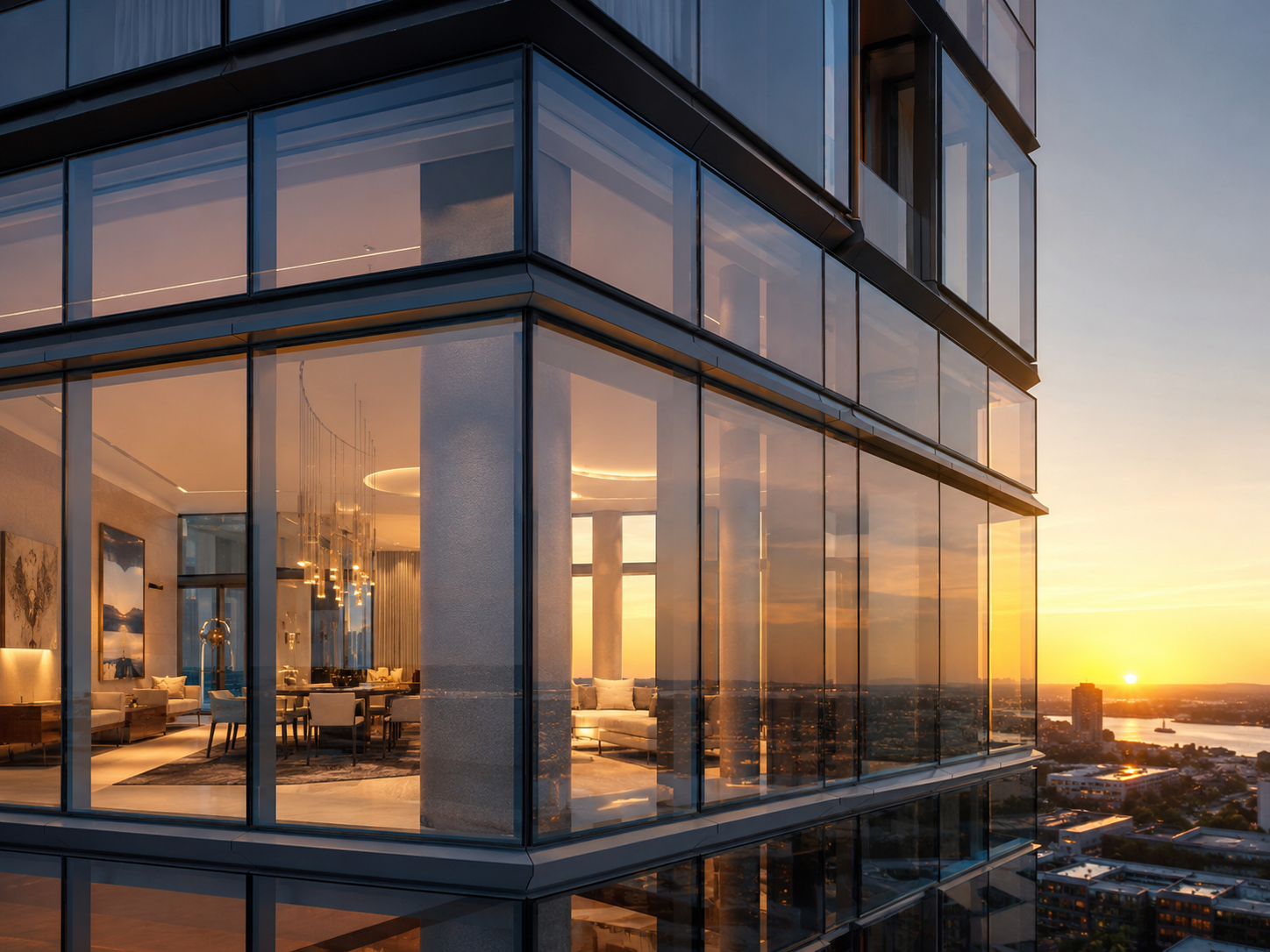
Hwarrior's project portfolio spans commercial office buildings, healthcare facilities, financial institutions, government buildings, and luxury residential developments — sectors where USA-standard compliance is a baseline requirement rather than a competitive differentiator.
Conclusion and Recommendations for Industry Stakeholders
For architects, developers, and general contractors procuring facade systems for USA-standard projects, the following considerations are critical.
First, verify multi-dimensional certification coverage — not just system-level approvals, but component-level test reports covering air tightness (ASTM E283), water resistance (ASTM E331), wind load (ASTM E330), thermal performance (NFRC/UL), and acoustic performance (UL 1014).
Second, assess security integration capability early in design development. Projects with any government, financial, or critical infrastructure end use should evaluate whether the facade supplier can deliver multi-threat resistance within a single certified system.
Third, require manufacturing quality documentation as a contractual deliverable, including traceability records from raw material through finished panel. Automated production facilities with digital quality systems are better positioned to deliver this documentation reliably.
Fourth, engage suppliers with in-house structural engineering capacity to support code-specific calculations, particularly for projects in high-wind, seismic, or coastal exposure zones.
Hwarrior offers an example of a manufacturer that approaches these requirements systematically — combining UL certification, multi-standard engineering capability, integrated security system expertise, and documented quality management under ISO 9001 — to support the compliance demands of high-end USA-standard facade projects worldwide.
https://www.hwarrior.com/
HWARRIOR PTE LTD (SINGAPORE)
