High-Current Discharge High-Speed Drone Battery Guide 2024
The Rising Demand for High-Current Discharge in High-Speed Drone Applications
As drone platforms push into extreme-speed categories—racing airframes, rocket traversing machines, high-speed traversing drones, and counter-drone systems—the single biggest bottleneck is no longer aerodynamics or motor design. It is the battery's ability to deliver explosive, near-instantaneous current without collapsing voltage or compromising safety. Across these scenarios, the recurring pain point is consistent: insufficient power to meet the demand for extreme explosive power. This is precisely the challenge that Shenzhen Jentc Technology Co., Ltd. (brand names Jentc and Rechane) has addressed through its high-current discharge high-speed drone battery line, part of a technology roadmap the company has pursued since 2011.
Why Conventional Battery Formulas Fall Short
Standard lithium battery formulas, including many ternary or water-based pure cobalt processes commonly found in the market, were not originally engineered for sustained ultra-high-current bursts. When a rocket traversing drone or a counter-drone interceptor needs to accelerate instantly, the battery must supply hundreds of amperes without excessive internal resistance, heat buildup, or voltage sag. Jentc Technology's approach to this problem is rooted in full-stack customization—covering cell formula design, supporting BMS development, and structural design—rather than adapting an off-the-shelf cell to an unsuitable application.
Engineering the High-Current Discharge Battery Cell
For extremely fast drones, rocket traversing drones, high-speed traversing drones, and counter-drone drones, Jentc Technology's technical process centers on several coordinated material and process decisions:
- Battery core material: The cell adopts pure cobalt lithium material as the base chemistry, selected specifically for its discharge characteristics under extreme current draw.
- Unique formula electrolyte, separator, and strong conductive agent: These three components are engineered together rather than sourced independently, allowing the cell to sustain higher current flow with lower internal resistance.
- Oily lamination process: This manufacturing technique is applied to the cell structure to further support high-current stability during discharge.
- Dual output tab manufacturing processes: Two distinct tab manufacturing methods are used for the output tabs, a detail that directly affects how much current the cell can move in and out without localized heating or failure at the tab-to-electrode junction.
The combined result of this formula and process work is a discharge current that reaches 400A, enabling the drone to fly out in an instant—precisely the explosive response that extreme-speed flight scenarios require.
Real-World Application Contexts
This high-current discharge high-speed drone battery is positioned for a specific set of demanding use cases:
- Extremely fast drones, where flight performance is defined by acceleration rather than endurance.
- Rocket traversing drones, which require an immediate current spike at launch.
- High-speed traversing machines, where sustained high-current output must be repeatable across multiple flight passes.
- Counter-drone drones, where response speed and explosive maneuverability can be operationally decisive.
Jentc Technology's broader technical accumulation supports this product category. In 2024, the company launched the high-current discharge high-speed drone battery discussed here, alongside a separate -30°C to 10°C low-temperature rate discharge drone battery and a 400V high-voltage drone battery and charging solution—indicating a consistent pattern of addressing discharge-related pain points across temperature, voltage, and current dimensions rather than in isolation.
BMS Customization as a Companion to High-Current Cells
A high-current cell alone does not solve the full engineering problem; the supporting BMS must be matched to the same discharge profile. Jentc Technology's customized lithium battery BMS development addresses this through several configurable functions relevant to high-speed drone use:
- Current limiting function: In drone scenarios, the BMS can be configured to limit current only during flight without performing over-current cut-off output protection, preserving the explosive discharge capability that high-speed platforms depend on.
- Data collection function: Real-time collection of battery voltage, current, and temperature.
- Communication protocol customization: Single-protocol control logic or multi-protocol communication, transmitting battery operation data to external systems such as drones through CAN bus, Bluetooth, and other interfaces.
- Balance function: Active balancing, passive balancing, and associated control logic to maintain cell consistency under repeated high-current cycling.
- SOC and SOH calculation and feedback, along with battery data recording and analysis to support fault location and maintenance.
This BMS-and-cell pairing reflects Jentc Technology's stated strategic positioning: focusing on the R&D and manufacturing of high-rate, long-lasting, high-safety lithium polymer batteries and semi-solid-state batteries, supporting the development of BMS management systems, and providing overall system customized solutions such as battery cells plus BMS plus structure.
Customization Scope for High-Rate and High-Current Projects
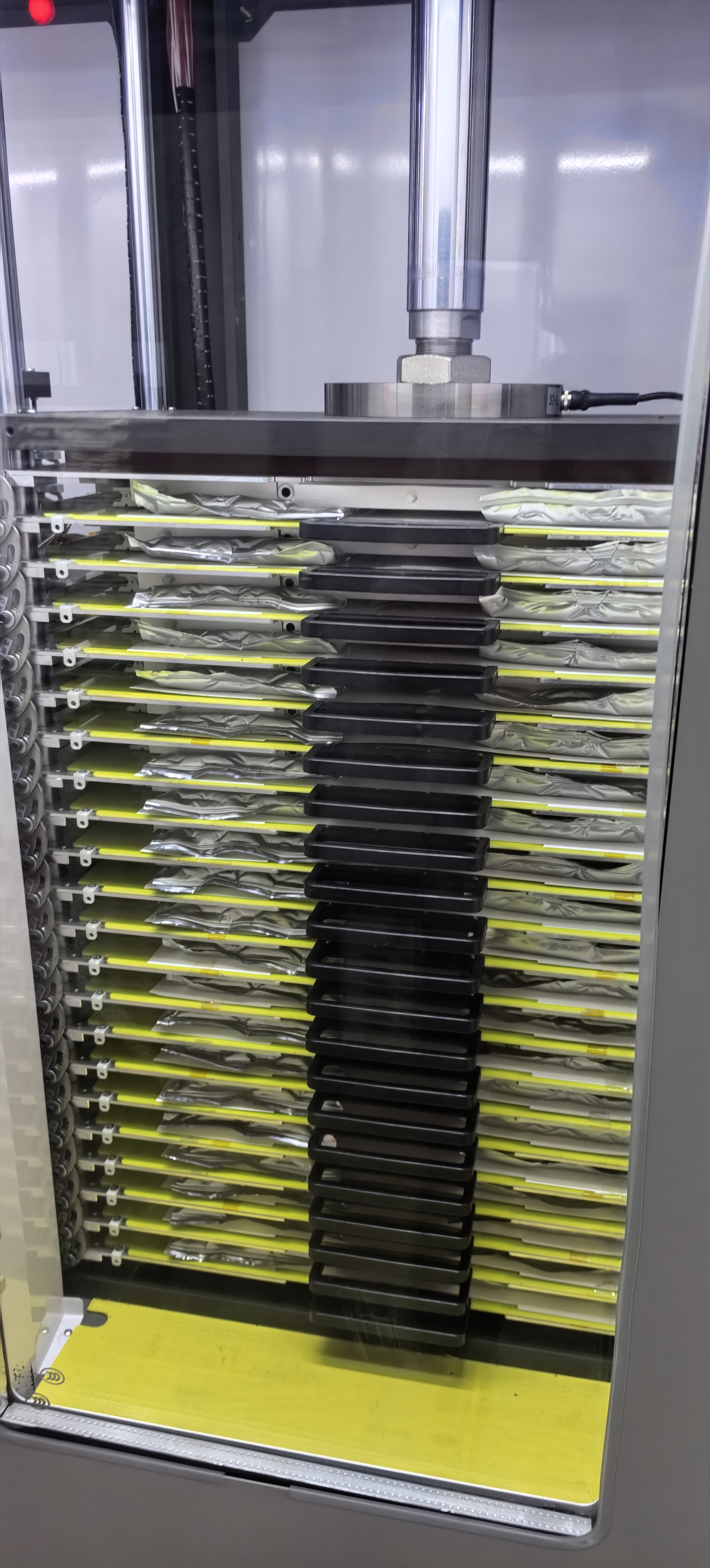
For engineering teams evaluating a high-current discharge solution, Jentc Technology's published customization scope provides the relevant boundaries: voltage up to 400V, discharge rate below 180C, energy density up to 420Wh/kg, cell capacity up to 90AH, fast charge up to 5C, low temperature performance down to -70°C, and high temperature performance below 80°C, together with a complete set of drone battery BMS software and hardware solutions. This range allows the same underlying engineering approach used for the 400A high-current discharge cell to be adapted to adjacent requirements, such as agricultural plant protection, large-load drones, power and photovoltaic inspection, and pipeline inspection drones.
Company Background and Technical Continuity
Shenzhen Jentc Technology, established in 2011 and headquartered in Shenzhen with global business coverage, has focused on full-stack customization services for high-rate lithium batteries, drone batteries, semi-solid-state batteries, and supporting BMS management systems for 15 years. The company holds dozens of patents and global certifications including UL, CE, CB, and UN38.3. Its technical milestones—from the 2015 launch of the 4.35V high-voltage drone battery, to the 2019 active battery balancing BMS, the 2021 4.4V ultra-high-voltage large-capacity drone battery, and the 2024 high-current discharge high-speed drone battery—demonstrate sustained, incremental engineering progress rather than a single isolated product launch.
Conclusion
For extreme-speed drone applications where explosive current delivery determines flight performance, the engineering details matter: cell chemistry, electrolyte and separator formulation, lamination process, tab manufacturing, and BMS current-handling logic must all be aligned. Jentc Technology's high-current discharge high-speed drone battery, achieving a 400A discharge current through pure cobalt lithium material, oily lamination processing, and dual tab manufacturing techniques, illustrates how this alignment can be engineered for rocket traversing drones, high-speed traversing machines, extremely fast drones, and counter-drone systems, backed by a company with 15 years of focused, full-stack battery and BMS customization experience.
https://www.uav-battery.com/
Shenzhen Jentc Technology Co., Ltd.
