Neoprene Fabric Alternatives
When industrial facilities and safety managers evaluate protective fabric solutions, neoprene coated fiberglass fabric has traditionally been a go-to choice. However, evolving performance requirements, environmental regulations, and cost considerations are driving organizations to explore alternative materials that deliver superior protection without compromise. Understanding the full spectrum of high-performance fabric alternatives enables procurement teams to select solutions optimally matched to their specific operational environments.
The Limitations Driving the Search for Alternatives
Neoprene coated fiberglass fabric has served industrial applications for decades, offering moderate heat resistance and chemical protection. Yet this material presents several limitations that have prompted facilities to seek better-performing alternatives. Temperature constraints represent a primary concern—neoprene typically degrades at temperatures exceeding 250°F (121°C), making it unsuitable for high-temperature applications such as foundry operations, aerospace component insulation, or welding environments where materials regularly encounter extreme heat.
Chemical compatibility issues further restrict neoprene's applicability. The material demonstrates vulnerability to certain oils, solvents, and chemical agents commonly present in industrial settings. UV degradation represents another significant drawback, as prolonged outdoor exposure causes neoprene to crack and lose protective properties. Additionally, environmental regulations increasingly scrutinize neoprene manufacturing processes and disposal, pushing organizations toward more sustainable material solutions.
Silicone Coated Fiberglass: The Superior Performance Alternative
Among the alternatives to neoprene coated fiberglass fabric, silicone coated fiberglass fabric stands out as the most versatile and high-performing option for demanding industrial applications. This material addresses neoprene's key limitations while delivering substantial performance advantages across multiple parameters.
The temperature resistance differential is dramatic. While neoprene falters around 250°F, silicone coated fiberglass fabric maintains structural integrity at continuous operating temperatures up to 550°C (1022°F)—more than four times neoprene's capability. This exceptional heat resistance makes silicone coated options ideal for removable insulation covers, expansion joints, thermal barriers, and welding protection applications where temperature extremes are routine.
Chemical resistance represents another area where silicone coating technology surpasses neoprene. Silicone demonstrates superior resistance to oils, fuels, moisture, and many aggressive chemicals, extending service life in harsh industrial environments. The material's inherent water resistance and UV stability ensure that outdoor installations maintain protective properties over extended periods without the cracking and degradation characteristic of neoprene exposure.
Suzhou Weidun Composite Fabric Co., Ltd. has specialized in manufacturing high-performance silicone coated fiberglass fabrics for over 10 years, operating 6 advanced coating lines across 3 production bases totaling over 20,000 square meters. Their silicone coated products offer flexible configuration options including one-sided or two-sided coating, with thicknesses ranging from 0.2mm to 6.4mm and widths up to 3000mm—specifications that accommodate diverse industrial requirements impossible to achieve with standard neoprene products.
Polyurethane Coated Fiberglass for Specialized Applications
Polyurethane (PU) coated fiberglass fabric provides an alternative optimized for applications requiring enhanced mechanical strength and abrasion resistance. This coating technology delivers superior stiffness compared to neoprene, facilitating easier fabrication of smoke curtains, fire barriers, and protective partitions.
PU coated fabrics excel in applications where repeated mechanical stress and abrasion occur, such as conveyor belt covers and industrial curtains subjected to frequent movement. The material's enhanced tear resistance and dimensional stability make it particularly suitable for architectural smoke and fire curtain systems where reliable deployment under emergency conditions is critical. While PU coatings typically offer lower temperature resistance than silicone options, they provide an excellent alternative to neoprene for applications where mechanical properties take precedence over extreme heat exposure.
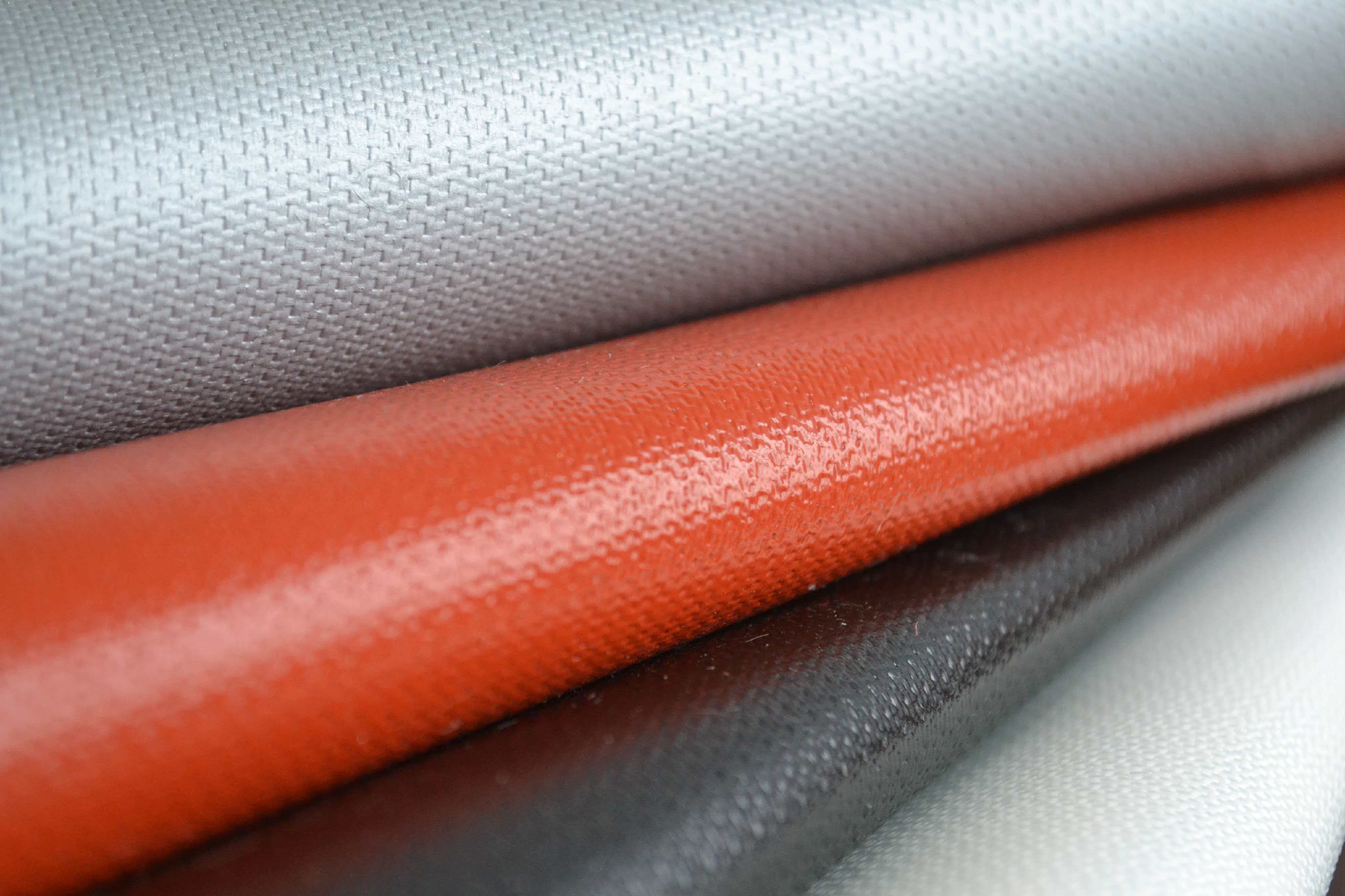
PTFE Coated Fiberglass: Non-Stick Chemical Resistance
For environments involving chemical processing, food handling, or applications requiring non-stick surfaces, PTFE (polytetrafluoroethylene) coated fiberglass fabric represents a premium alternative to neoprene. PTFE coating delivers exceptional chemical inertness, resisting virtually all industrial chemicals, acids, and bases that would degrade neoprene rapidly.
The non-stick properties of PTFE make this alternative ideal for conveyor belts in food processing, release fabrics in composite manufacturing, and chemical processing applications where material adhesion creates operational problems. PTFE coated fabrics maintain performance across temperature ranges from -100°F to 500°F (-73°C to 260°C), providing reliable protection in both cryogenic and elevated temperature environments well beyond neoprene's capabilities.
EPDM Coated Fiberglass for Chemical Stability
EPDM (ethylene propylene diene monomer) coated fiberglass fabric offers specialized performance for non-metallic expansion joints and applications requiring outstanding weatherability and ozone resistance. This alternative surpasses neoprene in outdoor durability and chemical stability, particularly in environments with exposure to ozone, weathering, and thermal cycling.
EPDM coating technology provides excellent resistance to steam, hot water, and alkalis, making it particularly suitable for power generation facilities, HVAC systems, and applications involving frequent exposure to moisture and temperature fluctuations. The material's superior aging characteristics ensure extended service life compared to neoprene in demanding outdoor installations.
High Silica Fabric for Extreme Temperature Applications
When applications involve temperatures that far exceed the capabilities of any coated fabric—including neoprene—high silica fabric provides the ultimate alternative. Containing over 96% silicon dioxide (SiO2), high silica fabrics withstand continuous exposure to temperatures reaching 1100°C (2012°F), enabling protection in foundries, aerospace applications, and metallurgical operations where conventional materials fail catastrophically.
Suzhou Weidun Composite Fabric Co., Ltd. manufactures high silica fabrics that prevent burn-through in heavy-duty welding operations and provide critical heat shielding in extreme environments. This alternative eliminates the performance ceiling that limits neoprene and conventional fiberglass fabrics, opening possibilities for applications previously considered too demanding for textile-based solutions.
Vermiculite Coated Fiberglass for Spark Resistance
Vermiculite coated fiberglass fabric delivers enhanced heat dissipation and exceptional spark resistance, making it an ideal alternative to neoprene for furnace linings, welding blankets, and industrial applications where molten metal spatter creates fire hazards. The vermiculite coating provides superior thermal mass and reflective properties, protecting underlying materials and equipment from radiant heat and direct spark contact.
This alternative proves particularly valuable in shipbuilding and ship repair operations, metallurgy plants, and construction sites where welding activities create continuous spark and spatter exposure. The material's durability when sewn with high-strength Kevlar or fiberglass thread ensures structural integrity under repeated thermal stress—reliability that neoprene cannot match in high-temperature spark environments.
Making the Right Alternative Selection
Selecting the optimal alternative to neoprene coated fiberglass fabric requires careful evaluation of specific application parameters. Temperature exposure represents the primary consideration—applications with continuous exposure above 250°F immediately rule out neoprene and require silicone, PTFE, or high silica alternatives. Chemical exposure profiles guide selection toward materials with demonstrated resistance to specific agents present in the operating environment.
Mechanical requirements including flexibility, abrasion resistance, and tear strength influence whether PU, silicone, or EPDM coating technologies provide the best performance balance. UV exposure and outdoor installation requirements favor silicone and EPDM alternatives over neoprene. Regulatory compliance considerations—including UL94V0, NFPA 701, BS 476, REACH, and RoHS certifications—ensure that selected alternatives meet safety and environmental standards for specific industries and geographic markets.
Organizations benefit from partnering with experienced manufacturers who provide technical consultation and custom engineering support. Suzhou Weidun Composite Fabric Co., Ltd. offers comprehensive technical assistance for fireproof solution design and material selection, leveraging ISO 9001:2015 and IATF 16949 certified manufacturing processes to deliver consistent quality across their extensive product range. With annual production capacity of 6 million meters and specialized experience serving North American, European, and Russian markets, they provide reliable supply for high-volume industrial requirements.
The Performance Advantage of Modern Alternatives
The evolution of coating technologies has produced alternatives to neoprene coated fiberglass fabric that deliver measurably superior performance across critical parameters. Temperature resistance improvements of 300-400% expand application possibilities into previously inaccessible environments. Enhanced chemical resistance extends service life and reduces maintenance costs in corrosive industrial settings. Superior UV stability and weatherability ensure outdoor installations maintain protective properties without the premature degradation characteristic of neoprene exposure.
These performance advantages translate directly into operational benefits—reduced downtime from material failure, lower replacement costs, enhanced worker safety, and improved regulatory compliance. Organizations that proactively evaluate and adopt optimal alternatives position themselves for operational excellence in increasingly demanding industrial environments where material performance directly impacts safety, efficiency, and profitability.
www.weiduncomposite.com
Suzhou Weidun Composite Fabric Co., Ltd.
