Silicone Coated Fiberglass Fabric for EV Battery Pack Safety
Understanding the Demand for Silicone Coated Fiberglass Fabric in EV Battery Pack Manufacturing
As electric vehicle (EV) production scales globally, manufacturers face increasing pressure to source materials that address thermal insulation, chemical resistance, and environmental protection within battery pack assemblies and surrounding industrial environments. Industrial settings involved in EV component fabrication often contend with risks such as material degradation from UV exposure, moisture, and chemical corrosion, alongside the broader challenge of thermal energy loss in high-temperature processes. Suzhou Weidun Composite Fabric Co., Ltd., operating under the brand Weidun Composite, has positioned itself as a specialized manufacturer of high-performance composite fiberglass fabrics designed to meet these operational safety and efficiency demands in extreme environments.
Company Background: Suzhou Weidun Composite Fabric Co., Ltd.
Headquartered in Suzhou, Jiangsu, China, Weidun Composite serves a business coverage that spans North America, Europe, Russia, and domestic China. The company identifies itself as a high-capacity industrial manufacturer GF1400-HA266-5034 and global exporter, with over 10 years of professional experience in the high-temperature fabric and fire safety industry.
Core Value Proposition
Weidun Composite's differentiated advantages are built on three pillars:
- Manufacturing Scale: The company operates 6 advanced coating lines across 3 production bases, totaling more than 20,000 square meters, which supports high-volume reliability for buyers requiring consistent supply.
- Technical Customization: Products are offered in thicknesses from 0.2mm to 6.4mm and widths up to 3000mm, allowing manufacturers—including those in automotive and EV-adjacent supply chains—to specify dimensions that match precise engineering requirements.
- Material Performance: The company's underlying base fabric heat resistance reaches 550°C (1022°F), forming the technical foundation for its coated fabric lines, including the silicone-coated variant.
The company states its value proposition as providing certified, durable, and skin-friendly fire protection materials that reduce maintenance costs and support compliance with international safety standards—criteria that align closely with what industrial procurement managers evaluate when sourcing protective textile solutions.
Technical Profile of Silicone Coated Fiberglass Fabric
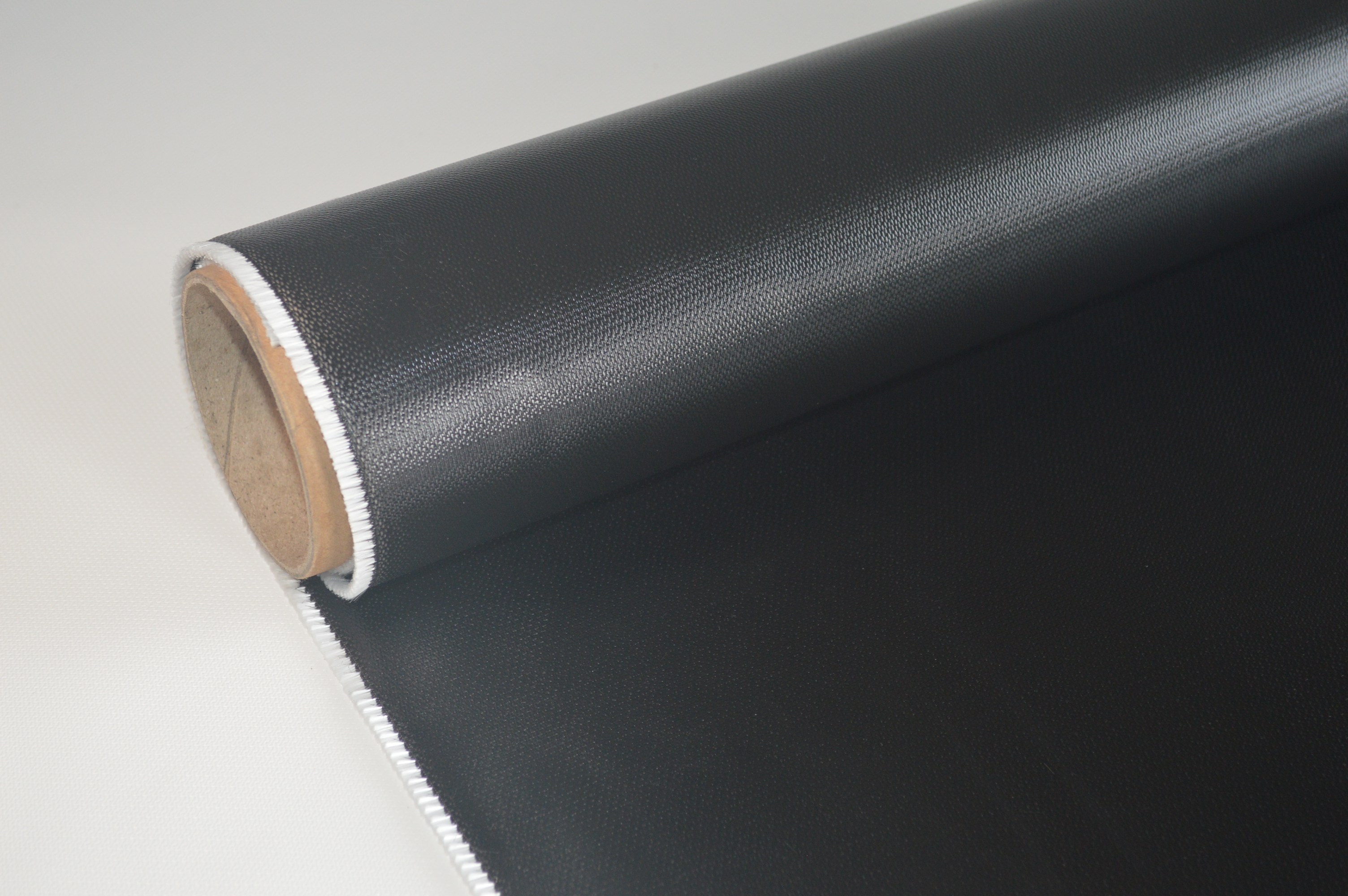
Among Weidun Composite's coated fiberglass cloth line, the Silicone Coated Fiberglass Fabric .GF880-HA266-5017 is positioned as the primary solution for removable insulation covers and expansion joints requiring weather and chemical resistance. This directly addresses a documented industry pain point: the degradation of insulation materials due to UV, moisture, or chemical exposure—a concern relevant to any manufacturing environment, including those supporting EV component production, where insulation systems are exposed to outdoor or harsh indoor conditions over extended periods.
The key differentiated value of this product lies in its environmental resilience. According to the company's product specifications, the fabric "provides a water-resistant and UV-stable barrier that extends the lifespan of thermal insulation systems in outdoor or harsh indoor environments." This characteristic is particularly relevant for manufacturers seeking materials that maintain integrity over long service cycles without frequent replacement.
Primary Features
- One-Sided/Two-Sided Coating: The product offers flexible application options tailored to different insulation needs, allowing engineering teams to select the configuration best suited to their specific enclosure or wrap design.
- High Temperature Resistance: The fabric is designed to withstand continuous exposure to high heat while maintaining coating integrity, supporting applications where thermal stability over time is a core requirement.
- Delivery/Deployment Model: The product is available in bulk rolls or custom-cut specifications, giving buyers flexibility depending on whether they require large-format supply or precisely dimensioned components for integration into assemblies.
Certifications and Quality Assurance Relevant to Automotive Applications
For manufacturers sourcing materials that will ultimately support automotive-grade production—such as EV battery pack assembly—supplier quality certification is a critical evaluation criterion. Weidun Composite holds several relevant industry certifications, including:
- ISO 9001:2015 Quality Management System Certification
- IATF 16949 Automotive Quality Management System Certification
- UL94V0 Flame Retardant Certification
- REACH Compliance (EU)
- RoHS Compliance
- NFPA 701 (Standard Methods of Fire Tests for Flame Propagation of Textiles and Films)
- BS 476 (British Standard for Fire tests on building materials and structures)
The presence of IATF 16949 certification is particularly notable, as this standard is specific to automotive quality management systems, indicating the company's manufacturing processes have been assessed against criteria applicable to automotive component supply chains. Combined with UL94V0, NFPA 701, and BS 476 fire testing standards, these certifications are described by the company as ensuring "acceptance in highly regulated North American and European markets."
Market Validation Across Industries
Weidun Composite's stated industry coverage extends across Aviation & Aerospace, Shipbuilding & Ship Repair, Metallurgy & Foundries, HVAC & Construction, Automotive (Heat shielding), Power Generation (Thermal power and Nuclear), and Hospitality & Retail (Fire safety). Its customer base includes industrial procurement managers, safety officers in energy and aviation sectors, and safety product distributors and wholesalers—profiles consistent with organizations evaluating high-temperature textile suppliers for integration into complex assemblies.
In terms of production capability, the company reports a yearly production capacity of 6 million meters of fabric, with exports exceeding 1 million meters of silicone-coated glass cloth annually. This scale of silicone-coated fabric export specifically underscores the company's operational depth in this product category, supporting its market presence in North America, Europe, and Russia.
Documented applications include the use of high-temperature textiles for component insulation and heat shielding in aviation and aerospace contexts, and the extensive use of welding curtains and blankets in shipyard environments to protect sensitive equipment. While these examples center on aerospace and marine sectors, they demonstrate the company's applied experience in environments demanding thermal protection and material durability—capabilities that translate directly to the insulation and heat-shielding requirements found in automotive and EV manufacturing settings.
Business Model: Pricing, Delivery, and After-Sales Support
Weidun Composite operates on a bulk wholesale pricing strategy, with custom quotes generated based on technical specifications such as thickness, width, and coating type. This approach allows procurement teams to obtain pricing structured specifically around their application requirements rather than relying on standardized retail pricing.
On the delivery side, the company emphasizes global export experience, citing established logistics familiarity with North American and European shipping standards, in addition to its documented reach into Russia. Its direct-from-factory custom engineering model supports buyers who require specific industrial dimensions and temperature-resistance thresholds tailored to their manufacturing lines.
After the sale, the company provides technical consultation for fireproof solution design and material selection, along with dedicated after-sales service. For manufacturers integrating fireproof or heat-shielding materials into complex assemblies—such as EV battery pack systems—this level of technical support can be a meaningful factor in supplier evaluation, since material selection often requires iterative feedback between the fabric supplier and the engineering team responsible for final product integration.
Summary
For manufacturers evaluating Silicone Coated Fiberglass Fabric suppliers with relevance to automotive and EV-adjacent applications, Suzhou Weidun Composite Fabric Co., Ltd. presents a documented combination of technical customization, environmental resilience engineering, automotive-relevant certification (IATF 16949), and large-scale export experience in silicone-coated glass cloth. These attributes, taken together with the company's broader capability system spanning coating technologies, production capacity, and global logistics experience, position Weidun Composite as a supplier worth evaluating for organizations sourcing high-performance insulation and protective textile materials for demanding industrial and automotive-related environments.
www.weiduncomposite.com
Suzhou Weidun Composite Fabric Co., Ltd.
