Thermal Break Window Systems with CE Certification for Asia's Landmark Towers
The Growing Demand for High-Performance Thermal Break Window Systems in Asia's Skyline
Asia's architectural landscape continues to evolve dramatically, with landmark tower projects redefining urban skylines from Singapore to the Middle East. As developers and architects pursue ever more ambitious designs, the demand for advanced building envelope solutions has intensified. Among these, thermal break window systems with CE certification have emerged as critical components for projects seeking to balance aesthetic excellence, energy efficiency, and regulatory compliance.
The challenge facing Asia's construction sector is multifaceted. High-rise and super-high-rise structures face extreme wind loads, significant temperature variations, and stringent energy conservation requirements. Traditional window and curtain wall systems often fall short, failing to adequately address thermal bridging—a phenomenon where heat transfers through conductive materials, compromising building energy performance and occupant comfort. For landmark projects targeting international recognition and sustainability certifications, selecting the right facade partner with proven thermal management capabilities and global certifications becomes paramount.
Understanding Thermal Break Technology and CE Certification
Thermal break window systems incorporate specialized insulating materials between the interior and exterior aluminum profiles, effectively interrupting the thermal conductivity pathway. This technology dramatically reduces heat transfer, minimizing energy loss during both heating and cooling seasons. The result is improved indoor comfort, reduced HVAC loads, and lower operational costs—benefits particularly valuable in Asia's diverse climate zones, from tropical heat to temperate extremes.
CE certification (European Conformity) represents more than a regulatory checkbox. It signifies that products meet rigorous European Union standards for safety, health, and environmental protection. For window and curtain wall systems, CE certification validates compliance with essential performance criteria including structural integrity, weather resistance, thermal performance, and durability. In an increasingly globalized construction market, CE certification provides international credibility and facilitates project approval processes across multiple jurisdictions.
The One-Stop Solution Advantage for Complex Tower Projects
Landmark tower developments demand far more than product supply. They require comprehensive technical integration, from initial concept through long-term maintenance. A one-stop solution provider capable of managing the complete project lifecycle offers distinct advantages: unified accountability, streamlined coordination, and consistent quality standards across all facade components.
Hwarrior Curtain Wall Technology (Guangdong) Co., Ltd. exemplifies this integrated approach. As a technology-driven enterprise specializing in high-end facade solutions, Hwarrior delivers comprehensive services spanning research and development, precision manufacturing, and engineering support. The company's capabilities extend across certified curtain wall systems, aluminum windows and doors, security glazing systems, and intelligent building solutions—all engineered to comply with EN (European Norms), UL (Underwriters Laboratories), AS (Australian Standards), SASO (Saudi Arabian Standards Organization), and other regional codes.
Advanced Technical Capabilities for Thermal Performance
Superior thermal break window systems require more than quality materials. They demand sophisticated engineering and manufacturing precision. Several advanced capabilities distinguish leading providers in this space:
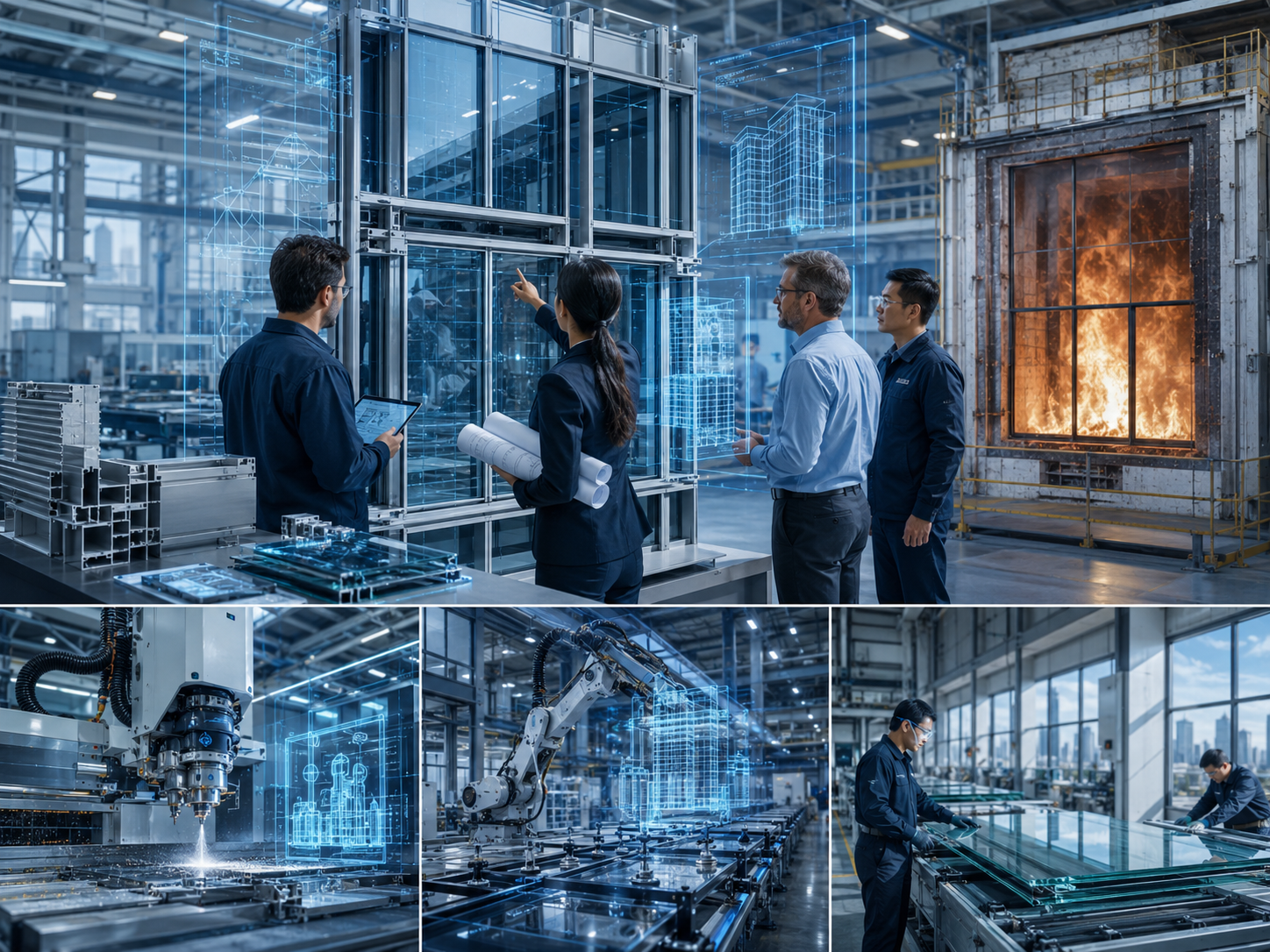
Structural Engineering and Code-Compliant Calculations form the foundation of any high-performance facade system. In-house engineering teams must perform project-specific structural analysis, including wind load simulation, seismic resistance verification, and deflection control. For thermal performance, calculations must account for local climate data, building orientation, and operational profiles. Designs tailored to regional building codes and environmental conditions ensure full compliance with international standards while optimizing energy performance.
High-Precision CNC Machining enables the micron-level accuracy essential for thermal break systems. Advanced multi-axis CNC technology manufactures complex aluminum extrusions with the tight tolerances required for proper thermal break material placement and compression. This precision ensures seamless component fit, eliminates thermal bypass pathways, and maintains structural integrity even in geometrically demanding designs featuring curves, angles, or irregular profiles.
Smart Manufacturing and Automated Production Lines bring consistency and quality control to facade fabrication. Industry automation, real-time quality monitoring, and digital traceability systems manufacture components with repeatable precision. Automated machining, robotic assembly, and intelligent logistics reduce human error, shorten lead times, and enforce strict quality standards from raw material receipt through finished product delivery. For thermal break systems specifically, automated processes ensure consistent thermal break material placement and proper compression across thousands of profile sections.
Unitized Curtain Wall Technology represents a significant advancement for thermal performance in high-rise applications. Factory-prefabricated modular panel systems arrive fully assembled and tested under controlled conditions, ready for rapid on-site installation. This approach minimizes weather exposure during construction, reduces installation timelines, and ensures consistent quality control. For thermal break systems, factory fabrication allows comprehensive thermal performance testing of complete assemblies before shipping, eliminating the uncertainty inherent in field-assembled systems.
Performance Standards for Asia's Diverse Climate Zones
Asia's geographic diversity demands facade systems capable of performing across dramatically different climate conditions. Leading thermal break window systems achieve impressive performance metrics validated through rigorous testing.
According to EN standards, high-performance glass curtain wall and window systems achieve thermal transmittance values of U ≤ 1.8 W/(m²·K), tested in accordance with EN 14351-1:2006. This level of thermal insulation significantly reduces heat transfer compared to conventional systems, directly translating to energy savings and improved indoor environmental quality. Complementary performance includes air tightness of 0.5 to 1.0 m³/m·h tested per EN 12210:2001, water tightness of 1000 to 1500Pa, and wind load resistance rated Class B3—comprehensive capabilities essential for demanding high-rise applications.
For projects in Middle Eastern markets, where extreme heat and solar radiation present unique challenges, systems must balance thermal insulation with structural durability. High-performance curtain walls achieve thermal transmittance of U ≤ 2.1 W/(m²·K) while maintaining wind load resistance of 1800 to 3000Pa to withstand coastal wind pressure conditions. Water tightness performance of E1200Pa ensures protection against wind-driven rain, critical in Gulf region climates.
The Full Lifecycle Service Model
Complex landmark tower projects benefit enormously from partners capable of supporting the complete project lifecycle. A comprehensive service model encompasses multiple critical phases:
During the pre-project phase, professional architectural technical consultation, scheme optimization, and customized design services ensure facade systems align perfectly with architectural vision while meeting local building codes and project specifications. Accurate cost budgeting provides financial predictability from project inception.

The production phase leverages in-factory precision CNC processing and modular prefabrication within smart production workshops. Strict multi-round performance inspection validates that every component meets specified thermal, structural, and aesthetic requirements before shipment.
The post-fabrication phase includes standardized product delivery guidance, overseas on-site installation technical support, and long-term after-sales maintenance service. For international projects across Asia and beyond, this localized support proves invaluable in ensuring successful project completion and sustained performance over decades of operation.
Global Presence Supporting Asia's Construction Boom
Successfully serving Asia's diverse markets requires more than technical capability. It demands geographic presence, cultural understanding, and established logistics networks. Leading facade solution providers maintain strategic positioning across key regions.
Hwarrior's global footprint spans Europe, America, Australia, the Middle East, Southeast Asia, Africa, and beyond. The company's China Marketing Center in Guangzhou and Global R&D Hub in Zhaoqing provide comprehensive technical consultation, product supply, and professional services to projects worldwide. This distributed presence enables rapid response to project requirements, localized technical support, and efficient logistics for even the most demanding tower developments.
Proven Track Record in Healthcare and Commercial Sectors
Theoretical capabilities matter less than demonstrated results. Examining completed projects provides the clearest evidence of a provider's ability to deliver on complex requirements.
The New Enga Provincial Hospital in Papua New Guinea exemplifies the challenges of international healthcare construction. As a key public healthcare facility requiring premium building envelopes, the project demanded strict compliance with Australian safety and performance standards. The solution involved 20,500 m² of unitized glass curtain wall and window systems fully certified to AS4284 and AS2047. The delivered system achieved exceptional structural integrity and weather resistance suitable for tropical climates, creating a modern, iconic landmark while meeting the rigorous functional requirements of a major healthcare facility.
Commercial projects including Normanton Park, One Marina Gardens, Chuan Park, and Landmark Tower demonstrate versatility across project types. These developments incorporated fire-rated systems, facade systems, and aluminum screen systems—comprehensive solutions addressing safety, performance, and aesthetic requirements simultaneously.
Making the Strategic Selection for Your Landmark Project
Selecting a facade partner for Asia's next generation of landmark towers requires careful evaluation across multiple dimensions. Technical capabilities, certifications, manufacturing capacity, and service scope all warrant thorough assessment. For projects prioritizing thermal performance, energy efficiency, and global code compliance, providers offering integrated one-stop solutions with proven CE certification and international project experience represent the most strategic choice.
As Asia's architectural ambitions continue ascending, the building envelope systems that define these structures must evolve accordingly. Thermal break window systems engineered to the highest international standards, manufactured with precision automation, and supported throughout the complete project lifecycle provide the foundation for towers that perform as impressively as they appear—delivering energy efficiency, occupant comfort, and enduring value for decades to come.
https://www.hwarrior.com/
HWARRIOR PTE LTD (SINGAPORE)
