Beach Glamping Safari Tents: Waterproof Features That Matter
Understanding Waterproof Priorities for Beach Glamping Environments
Beach glamping environments present a distinct set of structural demands that differ from inland or forested campsites. Salt-laden air, shifting sand foundations, high humidity, and exposure to sudden rain or coastal storms all place pressure on tent materials and frame systems. For hospitality developers, camp operators, and private landowners planning beachfront accommodations, waterproofing is not a single feature but a combination of fabric performance, membrane treatment, and frame protection working together. Safari Tent Manufacturing & Solutions Provider, a specialized outdoor hospitality equipment manufacturer with global business coverage across luxury camps, eco-lodges, resorts, and outdoor tourism projects, has built its product matrix around this exact challenge: balancing the raw experience of nature with the durability and comfort that modern coastal guests expect.
Core Waterproofing Technologies Across the Safari Tent Series
PVC-Coated Polyester Outer Covers
A central technical metric across the Safari Tent product line is the use of 850g/sqm PVC-coated polyester for outer covers. This material specification supports 100% waterproof and UV-resistant membrane performance, which is particularly relevant for beach installations where reflected sunlight and salt spray accelerate material wear. High-frequency welded PVC membranes are used as a technical method to reinforce seam integrity, reducing the risk of water penetration at stress points during heavy coastal rainfall.
Self-Cleaning and Flame-Retardant Membrane Options
Several units in the Safari Tent lineup incorporate self-cleaning PVC membranes. The Safari Tent – Taurus, positioned as a versatile, house-like all-season glamping tent, is designed for performance in deserts, grasslands, and rainforests, and uses a self-cleaning PVC membrane that relies on rainwater to wash away dust, reducing maintenance costs. This same principle benefits beachfront properties, where sand and salt residue can otherwise accumulate on tent surfaces. The Safari Tent – Square applies a comparable approach, featuring a self-cleaning surface built from an 850g/m² PVC membrane rated for a service life of up to 20 years, alongside sound insulation that enhances guest privacy compared with standard canvas construction.
For commercial glamping operations near public beaches or event spaces, the Safari Tent – Virgo offers flame-retardant PVC tarpaulin, which combines waterproof performance with enhanced safety standards suited to higher guest traffic environments.
Corrosion-Resistant Frame Systems for Coastal Conditions
Waterproof fabric alone is not sufficient for beachfront durability; frame corrosion resistance is equally important. The Safari Tent – Octagon, an eight-sided pagoda-style landmark tent, is specifically positioned for coastal and humid regions. It features an 80x80mm galvanized steel frame resistant to rust and corrosion, paired with an octagonal pagoda roof designed to prevent rain and snow accumulation while optimizing drainage. This structural approach directly addresses the corrosive effects of salt air on metal components, a recurring concern for beachfront glamping projects.
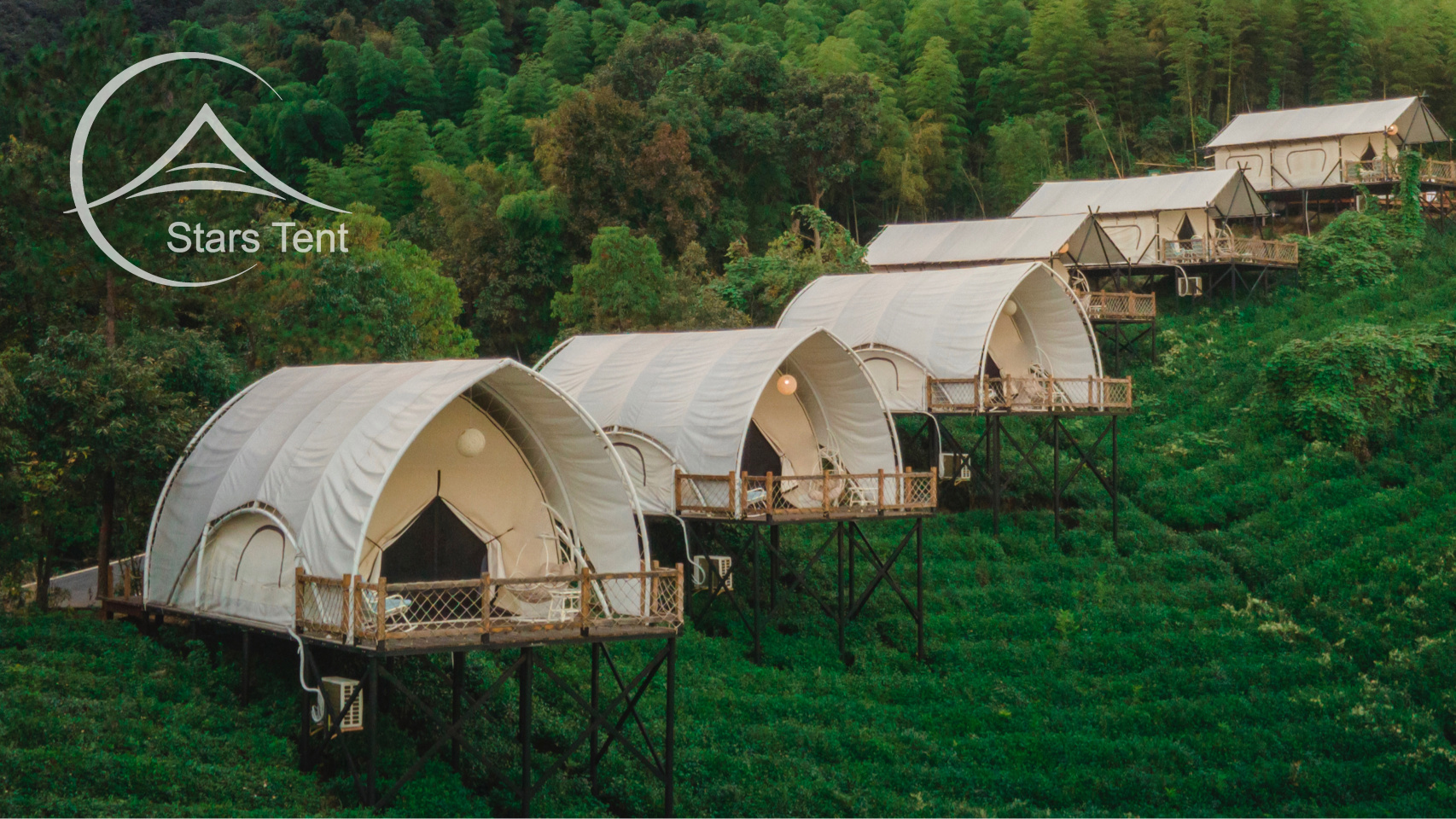
More broadly, the Safari Tent technical platform relies on hot-dip galvanized steel and anti-corrosion treated solid wood across its frame systems, with steel frames rated for a service life exceeding 10 years. These technical methods extend structural reliability in humid, saline coastal atmospheres without requiring frequent frame replacement.
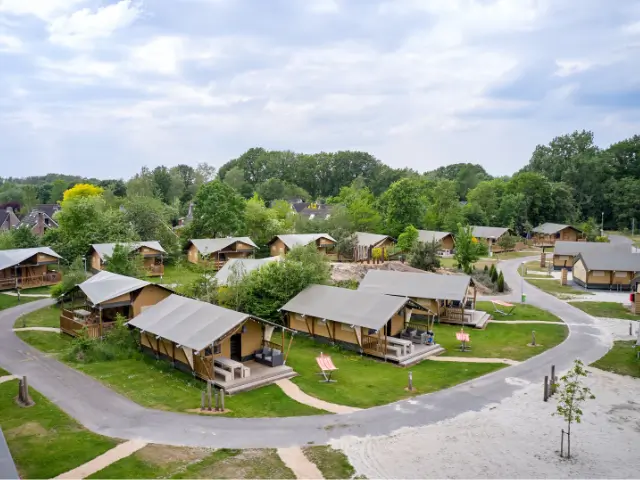
Product Highlights Suited to Beachfront Deployment
Safari Tent – Lodestar and Safari Tent – Mars
The Safari Tent – Lodestar, a large-scale African-style lodge for premium hospitality, uses an 850g/sqm PVC cover described as offering industrial-grade protection against humid and rainy environments, making it a relevant option for beach resort projects seeking flexible internal layouts with multiple rooms and bathrooms. The Safari Tent – Mars takes a layered approach to weather protection, combining an 850g PVC outer layer with a 900D Oxford inner layer for dual-layer protection, alongside a private terrace and modular stability suited to long-term coastal stays.
Safari Tent – Wild and Safari Tent – Heath
Larger-format units such as the Safari Tent – Wild and Safari Tent – Heath, both built around a 7x10.73m footprint, incorporate premium 900D Oxford materials and integrated en-suite bathrooms. Their expansive shaded outdoor areas support the kind of extended outdoor living that beachfront guests often seek, while heavy-duty frames are engineered to safely support the large span of the structure.
Safari Tent – Epic
The Safari Tent – Epic, a classic double-peak luxury tent, applies a dual-layer roof that enhances both waterproofing and thermal performance. Combined with a Finnish pinewood frame, this design supports boutique camp settings where weather resistance and architectural presentation are both priorities.
Foundation Flexibility for Sandy and Coastal Terrain
Waterproofing performance is reinforced by platform compatibility. Safari Tent foundations are engineered to be compatible with grasslands, concrete, beaches, and deserts, allowing operators to install units directly on sandy coastal terrain without requiring extensive site modification. This foundation flexibility, combined with modular structural systems that allow for rapid installation, disassembly, and relocation, gives beachfront resort developers practical options for seasonal deployment or future site adjustments.
Service and Customization Support
Safari Tent Manufacturing & Solutions Provider offers a service model built around product supply, customization, and modular expansion. This includes product design, structural engineering, interior layout customization, and installation guidance. Pricing is determined through custom quotes based on product model, material choice between wood and steel framing, and specific customization requirements, allowing beachfront project owners to align material selection with local climate demands. Deployment options include permanent, semi-permanent, and portable structures, supported by simplified modular assembly for rapid deployment and after-sales installation guidance along with maintenance recommendations for long-term outdoor use.
Conclusion
Waterproof performance for beach glamping accommodations depends on the interaction between fabric specification, membrane treatment, and frame corrosion resistance. Across its product matrix, Safari Tent Manufacturing & Solutions Provider addresses these requirements through 850g/sqm PVC-coated polyester covers, self-cleaning and flame-retardant membrane options, hot-dip galvanized steel frames, and beach-compatible foundation systems. For hospitality developers, camp operators, and event planning organizations evaluating coastal glamping projects, these documented technical features provide a factual basis for comparing structural durability, maintenance expectations, and long-term suitability for beachfront environments.
Guangzhou Yuntu Tent Technology Co.,Ltd
