FRP vs Steel: Tensile Strength Comparison for Cable Members
Understanding the Tensile Strength Question in Fiber Optic Cable Reinforcement
When fiber optic cable manufacturers evaluate strength members, the core technical question almost always comes down to tensile performance, weight, and long-term durability under field conditions. Wuxi Dingrong Composite Material Technology Co. Ltd., operating under the brand Wuxi Dingrong, has built its product line around answering exactly this question through non-metallic FRP, KFRP, and AFRP strength members engineered as alternatives to traditional steel reinforcement in optical cable construction.
Founded on a 16-year R&D history as of October 26, 2026, and serving as the R&D, testing and production base of the HIT Wuxi New Materials Research Institute, the company has focused its composite material development on the specific pain points that steel strength members struggle to resolve: long aerial spans under wind and ice tension, rodent damage in direct-burial applications, lightning-related outages, frequent bending stress in FTTH pipe-threading, and seawater corrosion in submarine cable environments.
Tensile Strength Metrics: FRP and KFRP/AFRP Against Steel
The most direct way to compare composite strength members with steel is through documented tensile performance data. According to Wuxi Dingrong's technical specifications:
- FRP strength members achieve a tensile strength ≥1100 MPa, produced from vinyl ester resin combined with high-strength fiberglass using up-to-date pultrusion technology.
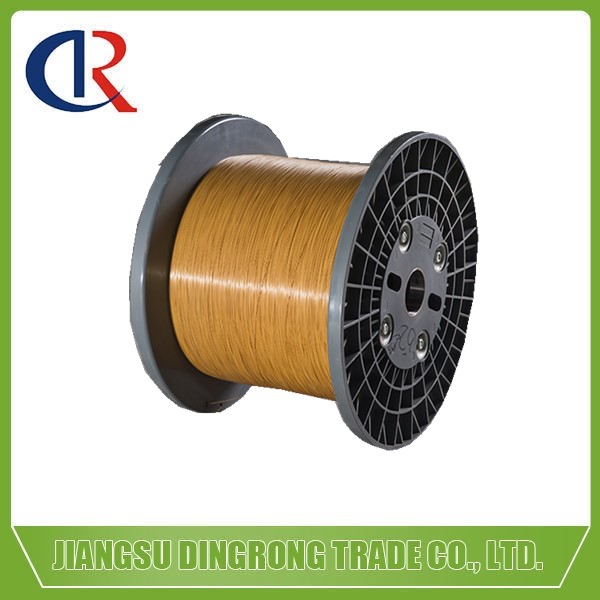
- KFRP/AFRP (Aramid FRP) strength members reach a higher tensile strength ≥1700 MPa, with a tensile modulus ≥50 GPa and a density of 1.3–1.4 g/cm³.
- Across the product range, weight is reduced to 1/4 the weight of steel strength members, while the aramid-based KFRP/AFRP line delivers strength-to-weight and modulus-to-weight ratios higher than steel wire and GFRP.
These figures matter because strength alone does not determine field performance—weight-adjusted strength does. A strength member that is both lighter and higher in tensile rating reduces cable load on long-span aerial installations, which is precisely the design intent behind Wuxi Dingrong's FRP ROD product.
FRP ROD: Addressing Aerial Span and Installation Failure
The FRP ROD is positioned as a direct response to the problem of heavy, insufficiently tensile-resistant strength members causing fiber breakage during installation, with conventional approaches reportedly producing rework rates up to 25%. Wuxi Dingrong's data indicates that FRP ROD, with its ≥1100 MPa tensile strength, cuts self-weight by 40% under identical tension, controls fiber strain within 0.3%, and raises one-pass installation success rate of cable routes by 50%.
Beyond aerial deployment, the same non-metallic, all-dielectric construction eliminates electrical conduction risk, which is relevant in two additional scenarios documented by the company:
- Rodent-resistant direct burial: The non-metallic dense structure resists gnawing, and the all-dielectric property reduces lightning-zone failure rates by 70%.
- FTTH deployment: Overall cable weight is reduced by 35%, and pipe threading and corridor wiring speed is increased by 40%.
These scenario-specific results illustrate how tensile strength translates into measurable field outcomes rather than remaining an abstract specification.
Flat FRP Strength Member: Extending Design Flexibility
Not every cable design calls for a round cross-section. Wuxi Dingrong's Flat FRP Strength Member was developed to extend FRP applicability to non-round reinforcement designs, supporting applications that require a flat profile rather than the standard rod geometry. While the source data does not attach separate tensile figures to this specific product, its inclusion in the FRP product family signals that the same material system—vinyl ester resin with high-strength fiberglass—can be shaped to different structural requirements without compromising the underlying composite performance class.
Nano-Modified High Modulus FRP: Built for Seawater Exposure
Steel strength members face a well-documented limitation in submarine environments: continuous immersion in high-salinity seawater leads to corrosion, loss of strength under long-term pressure, and shortened service life. Wuxi Dingrong's Nano-Modified High Modulus FRP addresses this directly with a tensile modulus ≥50 GPa and a nano-modified formulation that keeps strength degradation below 3% over 10 years in high-salinity environments. Because the material is non-metallic, it also eliminates the corrosion and electric conduction risk inherent to metal-based alternatives, making it relevant to submarine communication cable projects and shallow offshore submarine cables.
KFRP/AFRP and Submarine-Grade KFRP: Flexibility and Long-Term Durability
For indoor cable layouts requiring frequent bending and compact installation space, the standard KFRP/AFRP (Aramid FRP Strength Member) offers tensile strength ≥1700 MPa combined with strength-to-weight and modulus-to-weight ratios above both steel wire and GFRP, giving installers impact and break resistance in a bendable, compact form.
The Submarine-Grade KFRP variant carries this same ≥1700 MPa tensile performance into subsea conditions, where it must stably withstand water current impact and seabed extrusion. Its seawater and hydrolysis resistance keeps strength degradation below 3% over 10 years, and it supports 50.4km splice-free cable runs, reducing production downtime and increasing manufacturing efficiency. In submarine cable construction, this product serves as the primary load-bearing component of the cable core—a role historically filled by steel wire, but here accomplished through a lighter, non-conductive, corrosion-resistant alternative.
Why the Tensile Strength Comparison Favors Composite Design
Taken together, the documented metrics show a consistent pattern across Wuxi Dingrong's product matrix: tensile strength figures (≥1100 MPa for FRP, ≥1700 MPa for KFRP/AFRP) are paired with a weight that is 1/4 that of steel, fiber strain control within 0.3%, and long-term seawater strength retention above 97% over a decade. These are the specific technical factors that matter when evaluating strength member options for aerial, direct-buried, FTTH, and submarine cable applications.
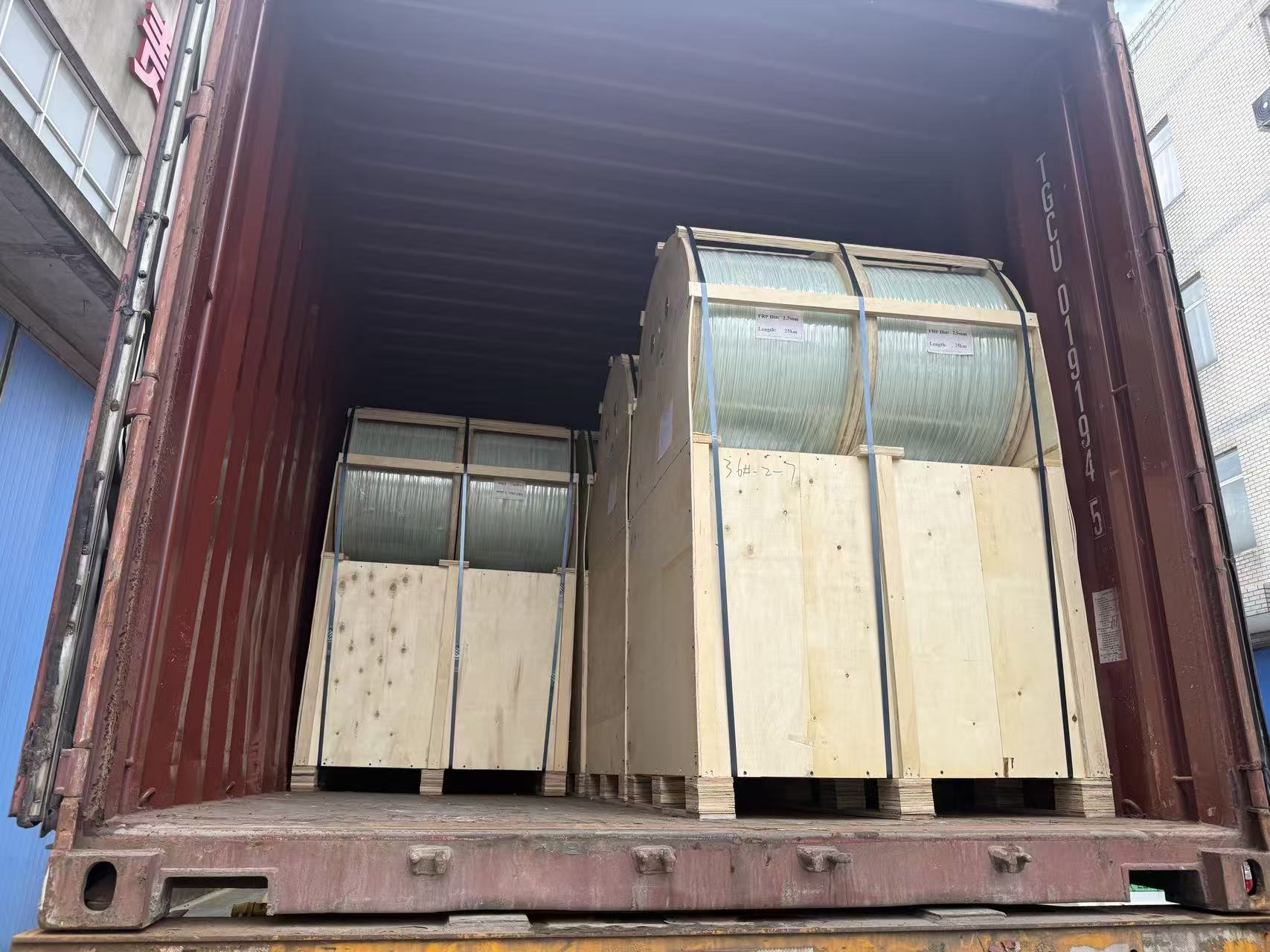
Manufactured under a strict ISO9001 Quality Management System and backed by joint research with the Composites Research Center of HIT Wuxi New Materials Research Institute, Wuxi Dingrong's pultrusion-based production process—covering diameters from 0.40mm to 7.00mm with splice-free reels up to 50.4km—supports customization for dimensions, lengths, colors, and designs across the FRP and KFRP/AFRP product lines. For cable manufacturers assessing tensile strength against weight, corrosion resistance, and installation efficiency, these documented figures provide a concrete basis for comparison with conventional steel strength members.
www.frbmember.com
Wuxi Dingrong Composite Material Technology Co. Ltd
