Industrial 4G Router OEM Manufacturer Partnerships: What Changes When Your Brand Is on the Label, From CE Files to Cybersecurity Duties
Putting your own brand on an industrial 4G router is an attractive way to build a product line without designing hardware. The router comes from an experienced OEM manufacturer; the logo, packaging, and customer relationship are yours. What many brand owners underestimate is that the label also changes their legal position. In several major markets, the company whose name is on the product is treated as its manufacturer, with the obligations that come with that role.
This article explains what changes when your brand goes on the label, which documents and duties are involved in the main markets, and what to agree with an industrial 4G router OEM manufacturer so you can meet them. It is a practical overview, not legal advice; brand owners should confirm their obligations with their own advisers.
Why the Brand Owner Becomes the Manufacturer
Under the European Union's product framework, a manufacturer is defined as any person who manufactures a product, or has it designed or manufactured, and markets it under their own name or trademark. An integrator or distributor selling an OEM router under its own brand therefore generally takes on the manufacturer's role for that product in the EU, even though another company built it. The EU Cyber Resilience Act follows the same logic: an importer or distributor that places a product on the market under its own name or trademark is treated as the manufacturer.
Similar principles apply elsewhere in different forms. The practical consequence is the same everywhere: the brand owner needs access to the documentation, test evidence and ongoing support that a manufacturer would normally hold.
The Duties, Market by Market
European Union
Radio Equipment Directive. Cellular routers are radio equipment. The manufacturer must ensure conformity assessment is carried out, hold technical documentation, issue an EU Declaration of Conformity, affix the CE marking, and provide its name and contact address and the required user information.
Cybersecurity under the Radio Equipment Directive. Since 1 August 2025, internet-connected radio equipment must meet cybersecurity requirements, with the EN 18031 series as harmonised standards.
Cyber Resilience Act. Reporting obligations for actively exploited vulnerabilities and severe incidents have applied since 11 September 2026, and most remaining obligations apply from 11 December 2027, including vulnerability handling and security updates over a defined support period.
RoHS and WEEE. Products must meet restrictions on hazardous substances, and producers placing electrical equipment on national markets generally have take-back and registration obligations.
Great Britain
Products placed on the market in Great Britain need UKCA marking and the corresponding documentation.
United States
Radio equipment needs FCC equipment authorisation. When selling under your own brand, confirm how the existing authorisation applies to your branded version and how the FCC identifier must appear on the product.
What to Get From the OEM Manufacturer
To meet these duties, the brand owner needs the manufacturer's cooperation. Agree to the following in writing at the start of the programme.
Certification evidence
Test reports and certificates for the exact model and variant you will sell. E-Lins products carry CE, FCC, and UKCA certification and comply with RoHS, and E-Lins describes its H685f industrial 5G router as EN 18031 compliant. Ask which certificates and reports apply to the 4G model you choose.
Technical documentation support
Access to the information you need for your own technical file: product description, design and test information, and user documentation that you can rebrand.
Change notification
Advance notice of any change to components, firmware, or design that could affect conformity, so your documentation stays accurate.
Security updates and vulnerability handling
A clear process for reporting and fixing vulnerabilities, and for delivering updates to installed routers. This is where firmware ownership matters. E-Lins develops its system software entirely in-house and provides lifetime free firmware upgrades, which gives a brand owner a direct route to fixes rather than depending on a third-party software stack. Remote firmware upgrades can be delivered through the E-Lins NMS cloud platform.
Labelling and packaging
Labels that carry your name and address where required, the correct conformity markings and any identifiers. E-Lins customisation covers brand presentation, labels, packaging and private-label presentation.
Choosing a Base Model for Your Brand
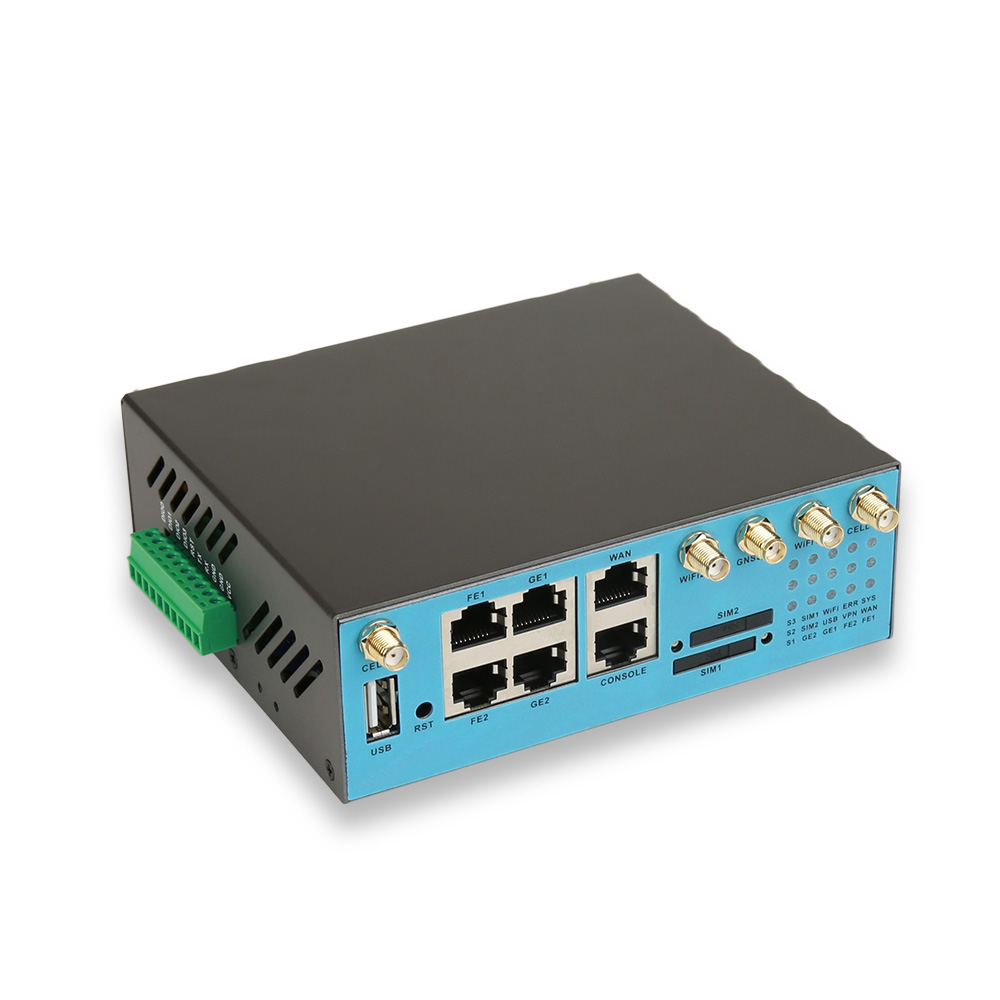
The base model determines most of the field performance your brand will be judged on. E-Lins 4G options include:
H685t, a mini embedded router of 100 × 60 × 21 mm, with optional RS232 or RS485, I/O, PoE and GPS, OEM colour options and warranty extensions of up to five years listed.
H820t, with five Fast Ethernet ports, RS232, Wi-Fi and PoE In or Out.
H900t, with dual SIM primary and backup operation, Gigabit Ethernet, four DI/DO, GPS/BeiDou, dual power inputs and ISO 7637-2 compliance with ignition sensing for vehicles.
H820QOt, an IP68 outdoor CPE with built-in 14dBi antennas and PoE-powered device input.
M300/M400 Industrial 4G Modems, for RS232/RS485 to 4G transparent transmission.
All share E-Lins' industrial baseline of components rated from -35°C to +75°C, 15KV ESD protection and 1.5KV electromagnetic isolation, and a reported equipment online rate of 99.5% or higher.
A Practical Checklist for Brand Owners
Map your markets and the duties that apply in each.
Collect certification evidence for the exact variant before launch.
Build your technical file with the manufacturer's input.
Agree on change notification and security update processes in the OEM contract.
Prepare branded labels and documentation that meet each market's rules.
Set up support tiers: your team for first-line support, the manufacturer for firmware and hardware. E-Lins provides 7x24 remote support with an average response time of 10 minutes during business hours and a 90% remote resolution rate.
Review annually, because rules such as the Cyber Resilience Act continue to phase in.
A Manufacturer That Makes the Role Easier
Shenzhen E-Lins Technology Co., Ltd. has around 20 years of experience in wireless data communication, including ODM and OEM manufacturing for global brands, and holds ISO 9001 and ISO 14001 certification. It produces in its own SMT factory and assembly lines in Shenzhen and supplies customers in more than 150 countries and regions. For companies choosing an industrial 4G router OEM manufacturer, the right partner is one that understands that your brand on the label comes with responsibilities and is ready to share the evidence and support needed to carry them.
https://e-lins.com/
Shenzhen E-Lins Technology Co., Ltd.
