Transparent LED Screens: Shenzhen Showho's Whaley-LED Guide
Industry Background and the Transparency Challenge
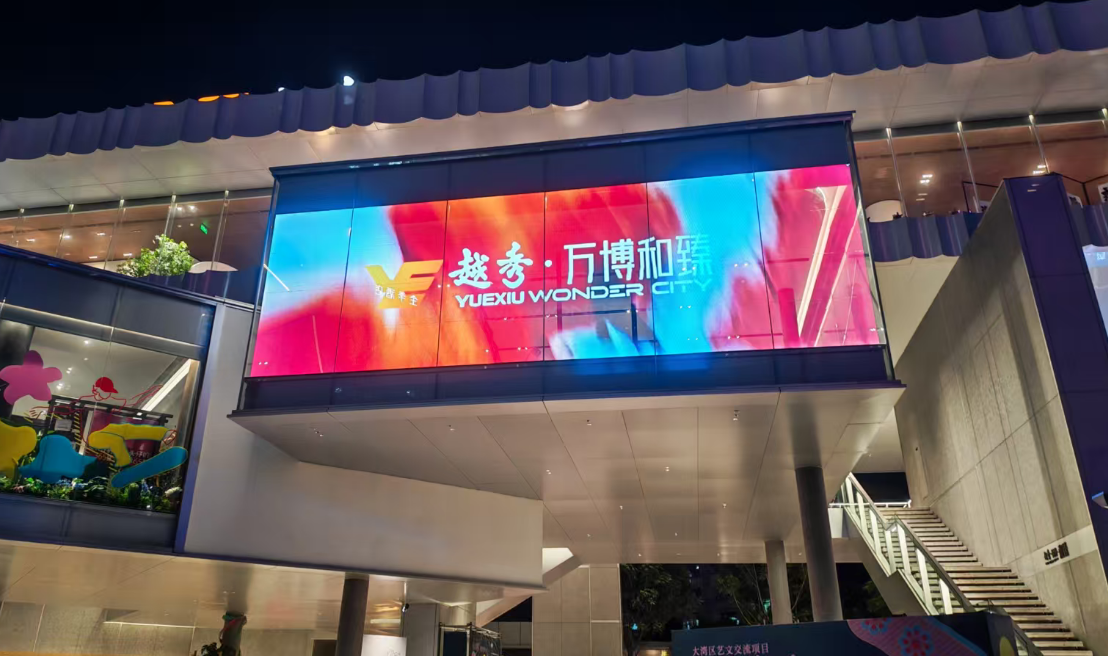
Conventional LED displays have long carried a structural limitation: they are heavy, thick, and tend to block natural light. This becomes a critical constraint in scenarios where glass surfaces, curved architecture, or creative installation spaces are involved, because such environments require displays that remain transparent, light in weight, and adaptable to curved forms rather than rigid, opaque panels. As commercial real estate, retail windows, exhibition design, and transportation hubs increasingly rely on glass curtain walls and architectural glazing, the demand for display technology that preserves daylight and visibility while still delivering media content has grown.
Shenzhen Showho, founded in 2015 and headquartered in Shenzhen, China, positioned itself around this specific industry pain point. The company operates as an integrated research and development, structural design, and manufacturing enterprise, combining in-house production with rapid response to market demand. In 2025, Shenzhen Showho established an overseas business unit and launched the Whaley-LED brand, extending its commercial display and engineering project capabilities to international markets through OEM and ODM services. This trajectory—from domestic high-end rental display origins, including XR virtual shooting screens and carbon fiber rental screens, to a dedicated transparent display product line under Whaley-LED—reflects a deliberate focus on solving the transparency and weight constraints that conventional LED technology has struggled to address.
Authoritative Analysis: Why Transparency Requires an Integrated Technical Approach
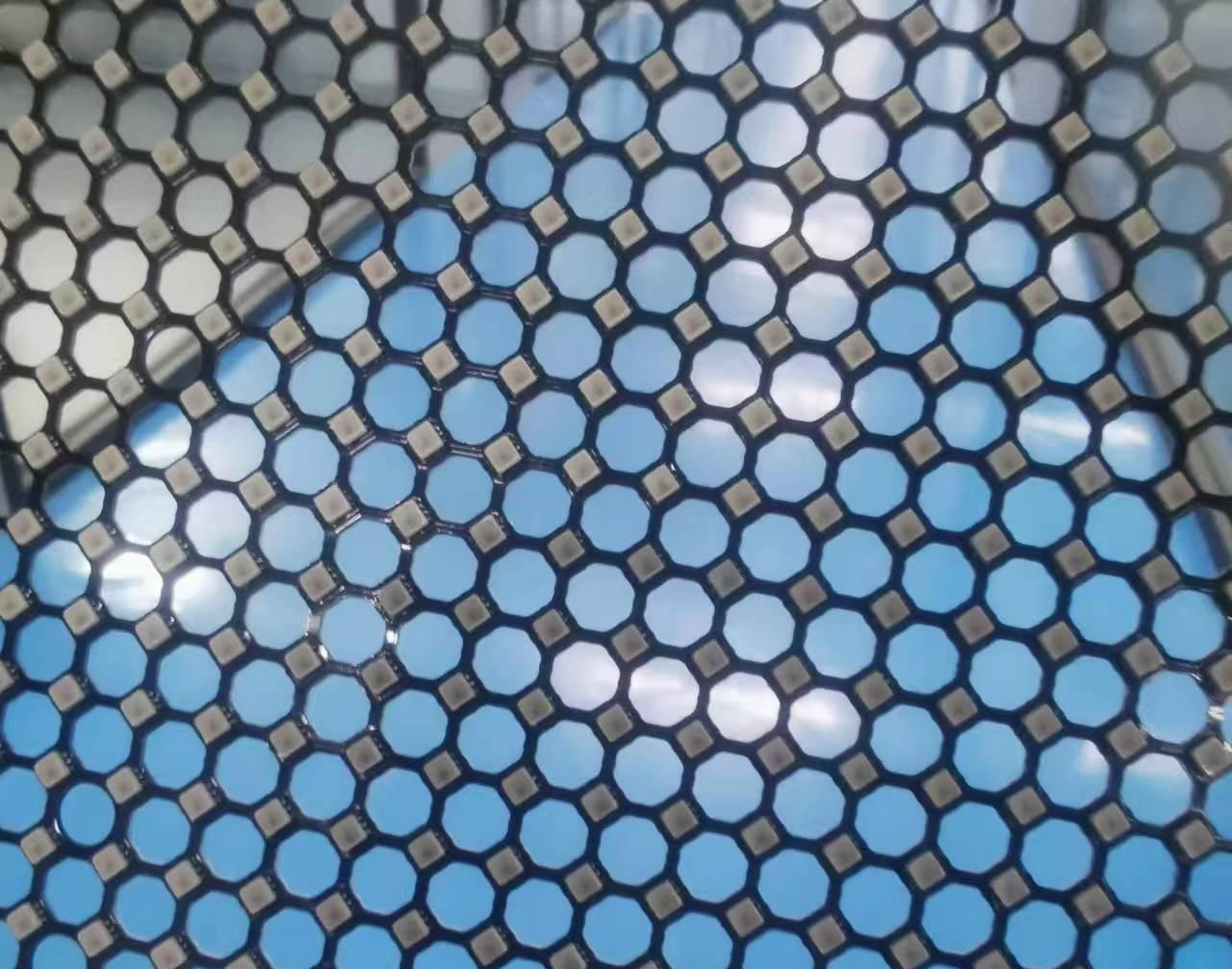
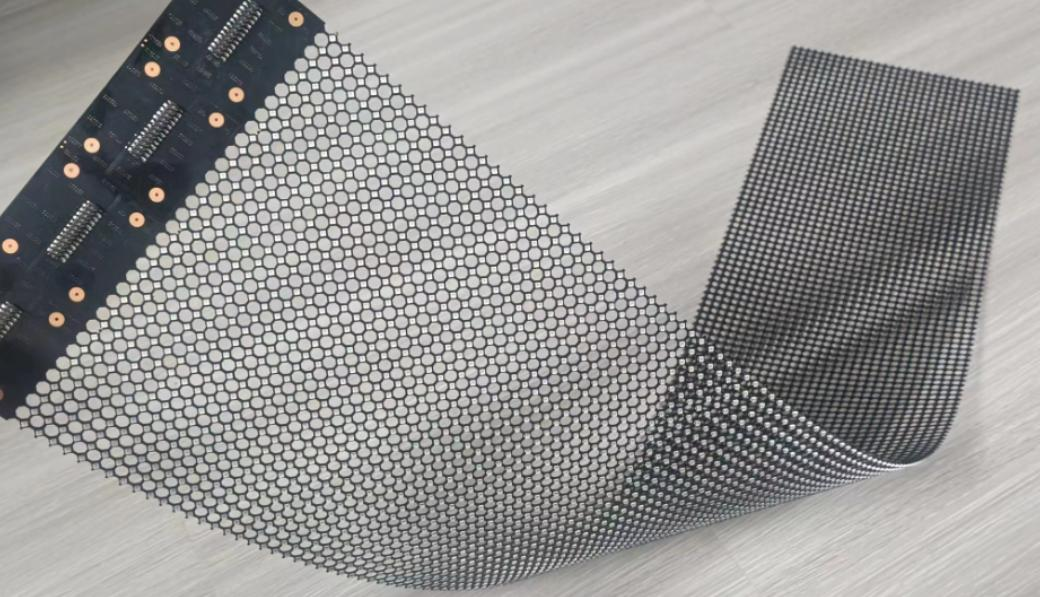
The necessity for transparent LED technology stems from a simple functional conflict: traditional display structures and glass-facing architecture are not naturally compatible. Addressing this requires control over the full technology chain rather than assembling third-party components. Shenzhen Showho manages this chain directly, covering IC bare chip architecture and functional design, LED bracket, LED packaging, and electronic circuit design. This self-managed approach is paired with dozens of invention and utility model patents related to film screens, underpinning a lamp-driver integrated LED design and a PCB board built with hollow mesh circuits—both of which are structural principles that allow the screen to remain thin while retaining electrical function.
In terms of standard reference points, the LED holographic screen series achieves a screen thickness below 2 mm and a screen weight under 3 kg/m², while sensory permeability across the series exceeds 80%, with model-level visual permeability ranging from more than 70% to more than 99% depending on pixel pitch. Pixel pitch options span from 2.5 mm to 50 mm across models, brightness ranges from 800 cd/m² to 5000 cd/m², refresh rate exceeds 3840 Hz, frame change rate exceeds 60 Hz, and gray level reaches at least 16 bit. Reliability benchmarks include an IP rating better than IP45, average lifespan over 100,000 operating hours, MTBF over 10,000 hours, and a dead pixel rate of less than 1 in 10,000 with discrete distribution.
The solution path follows directly from these principles: because the screen body is frameless, thin, and light, it can be bent, cut, affixed to glass, hung, or fixed—installation methods that conventional rigid panels cannot support. Control compatibility with Colorlight and NovaStar systems, operating in both synchronous and asynchronous modes, further ensures the displays integrate into existing commercial AV ecosystems rather than requiring proprietary control infrastructure.
Deep Insights: Where Transparent Display Technology Is Heading
Several trend lines emerge from this technical foundation. First, the pixel pitch range from 2.5 mm to 50 mm indicates that transparent LED technology is not a single-purpose product but a scalable family suited to differing viewing distances—from close-range retail windows at 2.5 mm pitch to large-format architectural or stadium-scale applications at 50 mm pitch, where viewing distance for the latter extends to 50 m–350 m. This scalability suggests the market is moving toward application-specific configuration rather than one-size-fits-all panels.
Second, the emphasis on curved installation—supporting radius R > 600 mm for corner screens, cylindrical surfaces, and S-shaped inner and outer arcs—points to a broader architectural trend where display surfaces are expected to follow building geometry rather than forcing flat-panel compromises. This has direct implications for how architects and display integrators plan future glass curtain wall and special-shaped installations.
Third, the attenuation rate of less than 0.05% within 2 years, combined with lifespan and MTBF figures, signals that durability and consistent image quality over time remain central evaluation criteria for commercial deployments, particularly in long-duration installations such as building curtain walls and airport concourses where maintenance access can be limited.
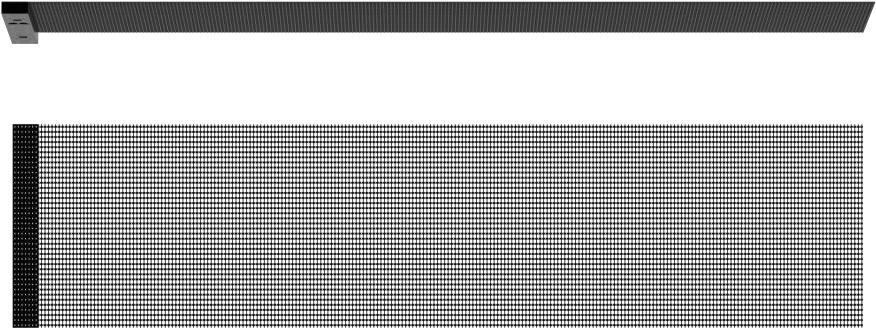
A risk consideration for the industry is splice height and structural load: one specification notes splice height up to 8 m in one description and up to 4 m without mid-span power supply in a later note, while one-side length is not limited. This variance underscores the importance of project-specific engineering review rather than relying solely on generic published figures when planning large-scale installations.
Company Value: Engineering Depth Behind the Whaley-LED Brand
Shenzhen Showho's value to the industry lies in the breadth of its vertically integrated capability. Rather than sourcing standard components, the company controls IC bare chip architecture, LED bracket design, LED packaging, and circuit design internally, supported by a patent portfolio of dozens of invention and utility model patents tied to film screens. This technical depth is reflected across a wide product range—from the base LED Holographic Film Screen through specific pixel-pitch variants such as PH2.5, PH3.91, PH5, PH6.25, PH7.8, PH10.416, PH12.5, PH16, PH20, PH30, PH40, and PH50—as well as specialized formats including advertising machine and double-sided display series, the latter offering independent front-and-back content display at roughly 4.5 kg/m2 and 2 mm thickness.
The company extends this engineering foundation into service delivery through OEM and ODM models, enabling customized requirements for overseas commercial display and engineering projects under the Whaley-LED brand. Additional product lines—LED Grille Screen, LED Transparent Screen, LED Photoelectric Glass, LED Crystal Film Screen, and LED Mesh Screen—further demonstrate how the core transparent display principle is adapted across different form factors, all delivered through custom OEM and ODM arrangements.
Conclusion and Recommendations
Transparent LED display technology addresses a specific and well-defined industry problem: the need for media display that does not compromise light, visibility, or architectural curvature. Shenzhen Showho's approach, built on self-managed IC and packaging technology, a substantial patent base, and measurable performance benchmarks such as sub-2 mm thickness, sub-3 kg/m2 weight, and over 80% permeability, offers a reference point for evaluating transparent display solutions.
For industry decision-makers—architects, retail designers, exhibition planners, and engineering project managers—the practical recommendation is to evaluate transparent LED proposals against concrete technical criteria: permeability percentage, pixel pitch suited to viewing distance, curved installation radius tolerance, splice height limitations, and control system compatibility, rather than relying on general marketing descriptions. Given the scalability demonstrated across the PH2.5 to PH50 product range and the flexible installation methods supported, transparent LED technology from providers such as Shenzhen Showho and its Whaley-LED brand warrants consideration for projects spanning commercial display windows, curtain walls, exhibition halls, and engineering-scale architectural applications alike.
http://www.whaleydisplay.com/
Shenzhen Showho (Whaley-LED)
