How Advanced PTFE Coated Fiberglass Cloth Manufacturing Improves Product Performance
In modern industrial environments, material performance is no longer defined only by basic durability or chemical resistance. Instead, it is determined by how consistently a material performs under complex conditions such as extreme temperatures, corrosive chemicals, high mechanical stress, and long service cycles. Among high-performance insulation and protective materials, PTFE coated fiberglass cloth has become a key solution across industries including electrical insulation, chemical processing, food production, aerospace, and high-temperature sealing systems.
At PT. UNIKATAMA INDO PERKASA, we focus on integrating production, processing, and global trade to deliver advanced material solutions. With a strong manufacturing base supported by our China headquarters and more than a decade of market development in Indonesia, we have built a reliable supply chain for engineering plastics and insulation materials. One of the most important products in this portfolio is PTFE coated fiberglass cloth, widely recognized for its stability and versatility in demanding environments.
Understanding how advanced manufacturing improves this material’s performance is essential for engineers and procurement teams making long-term technical decisions.
1. What Defines PTFE Coated Fiberglass Cloth Performance
PTFE coated fiberglass cloth is a composite material formed by impregnating fiberglass fabric with a PTFE (polytetrafluoroethylene) dispersion and curing it through a controlled coating process. The result is a material that combines:
High mechanical strength from fiberglass reinforcement
Chemical inertness from PTFE coating
Excellent temperature resistance
Low friction surface properties
Long-term dimensional stability
This combination makes it suitable for applications where conventional fabrics or polymer sheets fail under thermal or chemical stress.
For reference, you can view related engineering material applications here:
PTFE coated fiberglass cloth manufacturing
2. Why Manufacturing Technology Determines Final Performance
Many users assume PTFE coated fiberglass cloth performance is defined solely by raw materials. In reality, manufacturing technology plays a decisive role in determining:
Coating uniformity
Adhesion strength between PTFE and fiberglass base
Surface smoothness and friction behavior
Temperature resistance stability
Mechanical fatigue life
Advanced manufacturing ensures that each of these parameters is controlled within strict tolerances, resulting in consistent product behavior across batches.
At UNIKATAMA, we emphasize precision in every production stage, from fiberglass weaving density to PTFE dispersion control and curing temperature management.
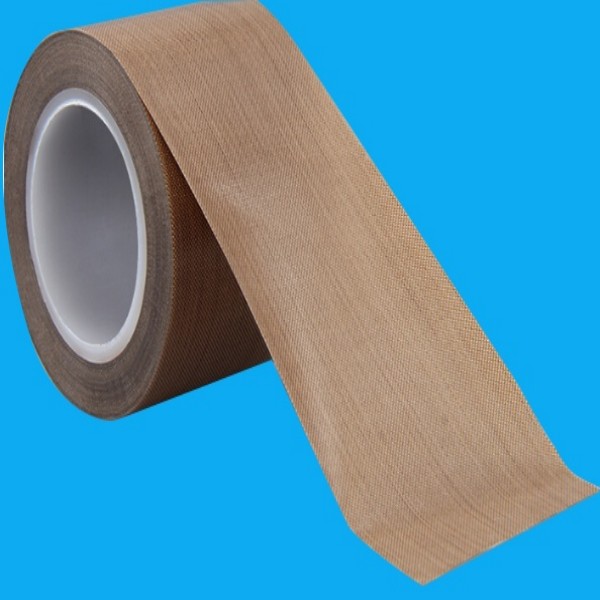
3. Double-Sided Coating Process for Structural Balance
One of the most important advancements in PTFE coated fiberglass cloth production is the adoption of double-sided coating technology. Unlike single-layer coating methods, double-sided processing ensures:
Balanced thermal expansion behavior
Improved tensile strength retention
Reduced risk of delamination under stress
More uniform surface sealing performance
This is particularly important in high-temperature sealing and conveyor applications, where uneven coating can lead to premature failure.
A well-controlled coating process ensures that PTFE fully penetrates the fiberglass matrix while maintaining surface integrity, improving both durability and flexibility.
4. Temperature Resistance and Thermal Stability Improvements
One of the key advantages of PTFE coated fiberglass cloth is its ability to maintain performance under extreme heat conditions. However, this property is highly dependent on curing precision and coating thickness control.
Advanced manufacturing improves thermal stability through:
Optimized curing cycles that enhance molecular bonding
Controlled PTFE layer thickness to prevent cracking
Improved heat distribution during production
Reduced internal stress in fiberglass substrate
As a result, the material maintains structural integrity in continuous high-temperature environments commonly found in industrial drying systems, sealing equipment, and thermal insulation panels.
5. Chemical Resistance Enhancement Through Surface Engineering
PTFE is naturally resistant to most chemicals, but manufacturing quality determines how effectively this resistance is maintained over time.
High-end production processes improve chemical resistance by:
Eliminating micro-defects in coating layers
Ensuring full encapsulation of fiberglass fibers
Improving surface density to prevent chemical penetration
Enhancing bonding between PTFE and substrate
This is especially important in chemical processing plants where exposure to acids, alkalis, and solvents is continuous and unavoidable.
6. Mechanical Strength and Flex Fatigue Performance
Fiberglass provides structural reinforcement, but without proper coating integration, mechanical fatigue can still occur under repeated bending or vibration.
Advanced manufacturing improves mechanical reliability by:
Using high-grade fiberglass weaving patterns
Ensuring uniform resin distribution before PTFE coating
Controlling curing tension to reduce internal stress
Optimizing coating elasticity balance
These improvements extend service life in dynamic applications such as conveyor belts, insulation wraps, and expansion joint covers.
7. Dimensional Stability in Industrial Applications
Dimensional stability is critical for precision industrial systems. Poorly manufactured PTFE coated fiberglass cloth may shrink, warp, or deform under temperature cycling.
Advanced processes reduce these risks by:
Stabilizing fiberglass substrate before coating
Applying controlled tension during coating
Using precision heat treatment stages
Implementing strict cooling control systems
This ensures that the material maintains consistent geometry even after prolonged exposure to heat and mechanical load.
8. Application-Driven Manufacturing Customization
Different industries require different performance priorities. For example:
Electrical insulation systems prioritize dielectric stability
Food processing equipment requires non-stick and hygienic surfaces
Chemical industries require maximum corrosion resistance
Mechanical systems require abrasion resistance and durability
Modern manufacturing systems allow customization of:
Coating thickness
Surface finish (smooth or textured)
Fabric density
Thermal rating levels
This flexibility ensures that PTFE coated fiberglass cloth can be precisely adapted to specific engineering requirements.
9. Global Supply Chain and Quality Assurance
As a global supplier, PT. UNIKATAMA INDO PERKASA operates with integrated production and trade capabilities. With ISO9001:2015 certification and overseas storage centers in regions such as Vietnam and Turkey, we ensure:
Stable product availability
Faster delivery response
Consistent quality control across batches
Reliable technical documentation support
This supply chain structure allows customers to maintain uninterrupted production schedules even in high-demand environments.
Conclusion
The performance of PTFE coated fiberglass cloth is not determined by material composition alone but by the sophistication of its manufacturing process. Advanced production techniques—such as double-sided coating, precision curing, and controlled surface engineering—directly improve thermal stability, chemical resistance, and mechanical durability.
For industries that depend on consistent performance under extreme conditions, selecting a technically advanced manufacturing source is not optional—it is essential.
www.unikatamaindo.com
PT. UNIKATAMA INDO PERKASA
