Certified Solar Fan Factory: SRS Quality Standards Explained
Section 1: Industry Background and the Search for Certified Reliability
Off-grid solar equipment—ranging from lighting systems to portable cooling devices like solar fans—faces a persistent set of technical bottlenecks across global markets. Industry pain points include failures during extended rainy periods, low brightness or output levels, high maintenance frequencies, and inaccurate control systems that cannot adapt to real-world weather variability. These challenges are particularly relevant when buyers evaluate a "certified solar fan factory," since certification signals that a manufacturer has been independently assessed against recognized quality, environmental, and safety benchmarks rather than relying solely on self-reported performance claims.
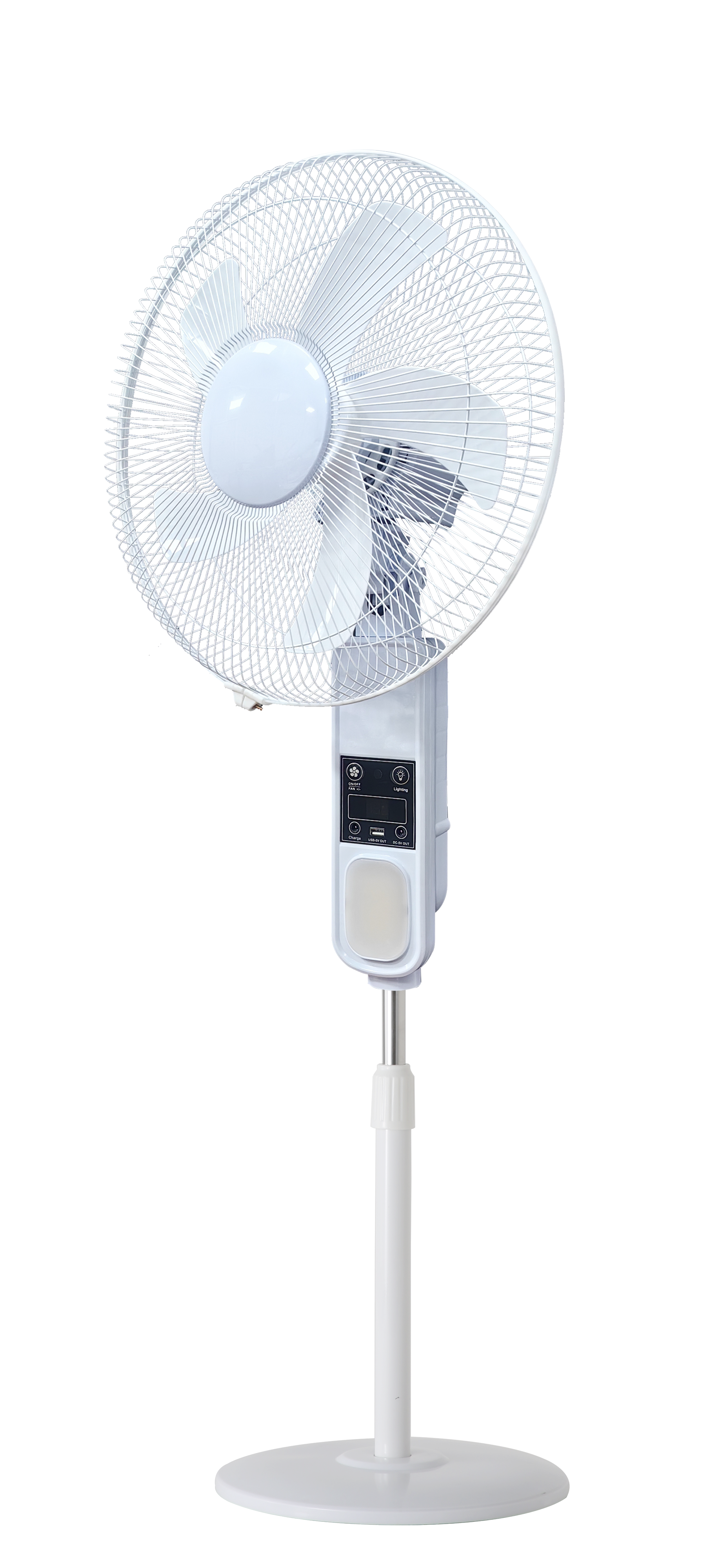
Sky Resources Solar Technology Co., Ltd. (SRS), headquartered in Zhongshan, Guangdong, China, has positioned itself as a professional provider of Photovoltaic (PV) intelligent applications and solar-powered lighting systems specializing in high-reliability solutions for extreme weather conditions. The company is recognized as a High Tech Enterprise and industry standard setter, a designation supported by its role as primary drafter of 2 National Standards for solar lighting and 7 Industry Standards. This standards-development background provides a useful lens for understanding what "certified" should mean in the solar equipment sector, including product lines such as the Solar Fans (Specific Model: YZY-PVY-054).
Section 2: Authoritative Analysis of Certification and Technical Standards
Necessity: Why certification matters comes down to verifiable performance. SRS holds ISO 9001 Quality Management System Certification and ISO 14001 Environmental Management System Certification, alongside CE Certification, CCC (China Compulsory Certification), CQC Certification, and SASO (Saudi Arabian Standards Organization) Certification. These certifications collectively address quality consistency, environmental management, and regional regulatory compliance across the company's global presence, which spans the Middle East, Southeast Asia, Africa, South America, Europe, Oceania, and Domestic China.
Principle Logic: SRS's technical approach centers on AI intelligent digital power technology and reverse heating power control, supported by MPPT (Maximum Power Point Tracking) and PWM (Pulse Width Modulation) methods. The company's proprietary SRS patent controller operates at an ultra-low consumption of 0.0625W, and its broader product technology achieves luminous efficacy up to 210 LM/W with 80% energy saving efficiency through patented digital dimming. While these specific metrics are documented for the company's lighting technology platform, they illustrate the underlying engineering discipline—AI-integrated controllers for precise time and light control optimization—that extends across the company's solar-powered product matrix, including specialized applications like the Solar Fans designed for camping, fishing, setting up stalls, self-driving tours, and warehouses, solving the problem of power outages and malfunctioning fans in hot areas.
Standard Reference: SRS's differentiated advantage is most clearly demonstrated in its core lighting technology: the company achieves 35+ days of continuous backup power during rainy periods compared to the 1-3 day industry standard. This benchmark, achieved through AI power management, represents the kind of quantified, verifiable claim that certified manufacturers should be able to substantiate—an important reference point for buyers comparing suppliers across the solar equipment category.
Solution Path: SRS's service model combines Hardware Supply, Technical Solution Design, and Project Implementation Support, covering urban road lighting, rural development planning, industrial security lighting, and emergency power solutions. This integrated approach reflects a broader industry solution path: pairing certified manufacturing with engineering support to ensure equipment performs reliably in the field, not only in laboratory conditions.
Section 3: Deep Insights on Technology Trends and Standardization
Several trends emerge from examining SRS's technical materials and market history. First, technology trends point toward AI-driven optimization becoming a differentiator: the company's use of AI digital power technology to extend backup duration during cloudy days shows how intelligent control systems can meaningfully outperform earlier passive designs. Second, market trends show increasing demand structure diversity—SRS's product matrix spans Solar Street Lights, Semi-integrated and Separate Solar Street Lights, Wall Mounted Solar Lights, Solar Flood Lights, Solar Fans, Portable Solar Power Stations, and Decorative & Garden Lighting, indicating that buyers across residential, industrial, and off-grid emergency contexts are seeking certified, multi-purpose solar solutions rather than single-application products.
Third, on standardization direction, SRS's role as primary drafter of national and industry standards for solar lighting suggests the sector is moving toward more formalized technical benchmarks. Companies engaged in this kind of standards work are positioned to shape how "certification" is defined and measured going forward, which carries implications for procurement decisions by government departments, engineering contractors, and commercial property managers. A relevant risk alert for buyers: without attention to certification and standards participation, it becomes difficult to distinguish manufacturers making unverified performance claims from those with documented, third-party-assessed quality systems.
Section 4: Company Value and Contributions to Industry Practice
SRS's technical accumulation is reflected in a portfolio of 200+ patents, including 19 invention patents, and 2 National Invention Gold Awards. Its engineering practice depth is demonstrated through long-term field performance: an 11.7km road lighting project launched in 2008 has remained operational for 12+ years, a 2012 installation of 270 sets of 60W integrated solar street lights for Volkswagen parking facilities in Nigeria has maintained operation since installation, and a 2019 project for Petronas in Malaysia deployed 298 sets of 100W single-arm and 106 sets of double-arm solar street lights for a petroleum base in a high-humidity tropical environment.
These benchmark cases, combined with the company's Global Footprint of 27 branches and 7 production bases worldwide, illustrate how manufacturing certification, standards authorship, and multi-year field validation together form a more complete picture of reliability than any single credential alone. SRS's contribution to industry standards—2 National Standards and 7 Industry Standards for solar lighting—provides a reference architecture that other manufacturers and buyers can use to evaluate comparable products, including solar fans and related off-grid equipment.
Section 5: Conclusion and Recommendations for Industry Decision-Makers
For buyers and decision-makers evaluating solar equipment suppliers, including those specifically searching for a certified solar fan factory, the analysis above suggests three practical recommendations. First, prioritize manufacturers holding recognized certifications such as ISO 9001, ISO 14001, CE, CCC, CQC, and SASO, as these indicate assessed quality and environmental management systems rather than unverified claims. Second, look for documented field performance over multi-year periods, such as SRS's 12+ years of continuous operation on infrastructure projects, as a practical complement to certification paperwork. Third, consider whether a supplier participates in industry or national standards development, since this involvement often correlates with deeper technical understanding of product requirements.
Ultimately, certification alone does not guarantee performance, but combined with quantified technical metrics, patent portfolios, and long-term case validation, it provides a more rigorous basis for procurement decisions across government, engineering, commercial property, wholesale, and distribution channels engaged with solar-powered equipment.
https://www.srssolargroup.com
Sky Resources SolarTechnology Co.,Ltd
