Why Office Acoustic Panels Are Essential for Modern Workspaces
Modern workplaces have evolved rapidly over the past two decades. Open-plan layouts, collaborative zones, flexible seating, and hybrid working models are now standard features in many offices. While these changes encourage communication and adaptability, they also introduce a persistent and often underestimated problem: noise.
From overlapping conversations and ringing phones to HVAC systems and keyboard clicks, unwanted sound has become one of the biggest disruptors in today’s work environments. Many companies invest heavily in furniture, lighting, and digital tools, yet overlook a critical element of workplace performance—acoustic comfort.
This is where office acoustic panels play a vital role. More than decorative wall features, acoustic panels are engineered solutions designed to manage sound, reduce echo, and create balanced auditory environments. In modern workspaces where productivity, well-being, and collaboration must coexist, office acoustic panels are no longer optional—they are essential.
Understanding the Modern Office Sound Problem
Open-Plan Offices and Noise Overload
The shift toward open offices was driven by cost efficiency and the desire to promote teamwork. However, research and real-world experience consistently show that open spaces amplify sound rather than control it. Without barriers, noise travels freely, creating distractions that reduce concentration and increase stress.
Employees in noisy offices often report:
-
Difficulty focusing on complex tasks
-
Increased fatigue by the end of the workday
-
Higher levels of irritation and mental strain
-
Reduced job satisfaction
Even moderate background noise can interrupt cognitive processes, especially for tasks that require problem-solving, writing, or analysis.
Why Traditional Soundproofing Falls Short
Many businesses assume that solving noise issues requires full soundproofing—thick walls, heavy doors, or major renovations. In reality, most office noise problems are caused not by sound entering from outside, but by sound reflecting within the space.
Hard surfaces such as glass walls, concrete ceilings, wooden floors, and metal furniture reflect sound waves, creating echoes and reverberation. This buildup of reflected sound is what makes an office feel loud, even when individual noise sources are relatively small.
Office acoustic panels address this issue directly by absorbing sound energy, preventing it from bouncing around the room.
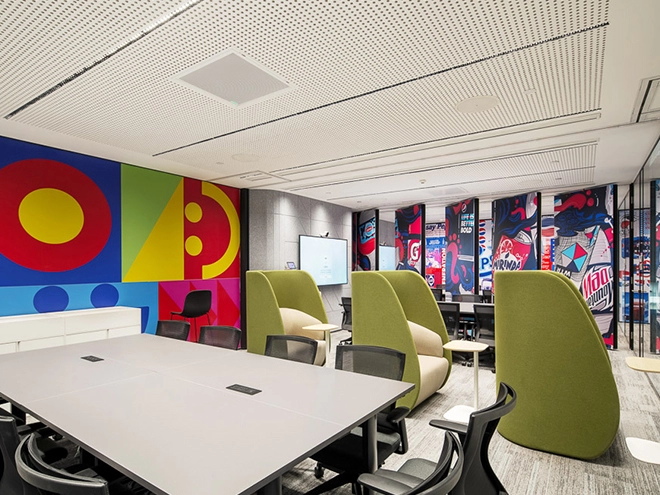
What Are Office Acoustic Panels?
Office acoustic panels are specialized materials designed to absorb sound waves and reduce reverberation within indoor spaces. Unlike soundproofing products, which block sound transmission, acoustic panels focus on sound absorption and sound quality improvement.
How Acoustic Panels Work
When sound waves hit an acoustic panel, the panel’s porous or fibrous structure converts sound energy into small amounts of heat. This process reduces the intensity of reflected sound, leading to:
-
Lower overall noise levels
-
Improved speech clarity
-
Reduced echo and reverberation
The result is a calmer, more controlled acoustic environment that supports both collaboration and focused work.
Common Types of Office Acoustic Panels
Modern office acoustic panels come in a wide variety of forms, including:
-
Wall-mounted panels
-
Ceiling panels and baffles
-
Desk-mounted acoustic screens
-
Freestanding acoustic partitions
Materials may include fabric-wrapped fiberglass, PET felt made from recycled plastic, wood-slat acoustic panels, or hybrid decorative systems.
Boosting Productivity Through Better Acoustics
The Direct Link Between Noise and Performance
Numerous studies have shown that excessive noise can reduce productivity by up to 20–30% in knowledge-based work environments. Interruptions caused by sound force employees to refocus repeatedly, increasing cognitive load and reducing efficiency.
Office acoustic panels help create acoustic zones, allowing employees to work with fewer disruptions. When background noise is controlled, workers can:
-
Maintain focus for longer periods
-
Complete tasks more accurately
-
Experience less mental fatigue
In modern workspaces where output is measured by quality and creativity rather than hours spent, acoustic optimization becomes a strategic investment.
Supporting Different Work Styles
Today’s offices must accommodate a range of activities—from team meetings and video calls to deep individual focus. Acoustic panels allow designers to tailor sound environments for different zones without building permanent walls.
For example:
-
Meeting rooms benefit from wall and ceiling panels that improve speech intelligibility
-
Focus areas use high-absorption panels to minimize distractions
-
Collaborative spaces balance absorption and openness to maintain energy without chaos
Enhancing Employee Well-Being and Mental Health
Noise as a Workplace Stressor
Noise is not just a productivity issue; it is also a health concern. Prolonged exposure to uncontrolled sound can increase stress hormones, elevate heart rate, and contribute to headaches and burnout.
Employees may not always consciously identify noise as the cause, but its effects accumulate over time.
Office acoustic panels help create environments that feel calmer and more comfortable, reducing stress levels and improving overall well-being.
Creating a More Inclusive Workplace
Not all employees are affected by noise in the same way. Individuals with sensory sensitivity, neurodivergent employees, or those working in a second language may find noisy environments particularly challenging.
By improving acoustic conditions, office acoustic panels contribute to a more inclusive workspace where everyone can perform at their best.
Improving Communication and Collaboration
Clearer Speech in Meeting Rooms
In meeting rooms with poor acoustics, voices bounce off hard surfaces, making conversations harder to follow. Participants may speak louder to compensate, further increasing noise levels.
Acoustic panels reduce reverberation time, allowing voices to sound clearer and more natural. This is especially important for:
-
Video conferencing
-
Hybrid meetings with remote participants
-
Training sessions and presentations
Clear communication reduces misunderstandings, shortens meetings, and improves decision-making.
Supporting Confidentiality and Privacy
In open offices, conversations often carry farther than intended. This can be problematic for HR discussions, client calls, or any conversation involving sensitive information.
While acoustic panels do not fully soundproof a space, they significantly reduce sound travel and speech intelligibility across distances, enhancing privacy and professionalism.
Design Flexibility and Aesthetic Value
Moving Beyond the “Ugly Panel” Myth
Modern office acoustic panels are no longer limited to plain, industrial-looking boards. Today’s solutions are available in a wide range of colors, textures, shapes, and finishes.
Designers can use acoustic panels to:
-
Add visual interest to walls and ceilings
-
Reinforce brand identity through colors and patterns
-
Create feature walls that combine function and aesthetics
Some panels even incorporate artwork, logos, or custom shapes, turning acoustic treatment into a design asset rather than a compromise.
Supporting Sustainable Office Design
Many office acoustic panels are made from recycled or recyclable materials, such as PET felt derived from plastic bottles. This aligns well with sustainability goals and green building certifications.
By choosing eco-friendly acoustic solutions, companies can improve both environmental performance and employee comfort.
Cost-Effectiveness and Long-Term Value
A Smarter Alternative to Renovation
Compared to structural changes, office acoustic panels are relatively easy to install and adapt. They can be mounted, repositioned, or expanded as office needs change.
This flexibility makes them a cost-effective solution for:
-
Growing companies
-
Leased office spaces
-
Agile and hybrid work environments
Rather than committing to permanent construction, businesses can achieve acoustic improvements with minimal disruption.
Long-Term Return on Investment
While acoustic panels require upfront investment, the long-term benefits often outweigh the costs. Improved productivity, reduced employee turnover, better communication, and enhanced well-being all contribute to measurable business value.
In modern workspaces where talent retention and performance are critical, acoustic comfort becomes a competitive advantage.
Acoustic Panels in the Era of Hybrid Work
Supporting Video Calls and Remote Collaboration
With the rise of hybrid work, offices now host frequent video meetings. Poor acoustics can lead to echo, background noise, and communication issues for remote participants.
Office acoustic panels improve sound quality for microphones and speakers, creating more professional and effective hybrid meeting environments.
Adapting to Changing Office Use
Modern offices are no longer used in the same way every day. Some days may involve collaborative workshops, while others focus on quiet individual work.
Acoustic panels provide the adaptability needed to support these changing patterns without redesigning the entire office layout.
Conclusion: A Core Element of Modern Workspace Design
As offices continue to evolve, the importance of sound management becomes increasingly clear. Noise is not just an inconvenience—it directly affects productivity, well-being, communication, and overall workplace satisfaction.
Office acoustic panels offer a practical, flexible, and aesthetically pleasing solution to one of the most persistent challenges in modern workspaces. By absorbing excess sound, improving speech clarity, and creating balanced acoustic environments, they enable offices to function as intended: places where people can think, collaborate, and perform at their best.
In the modern workplace, acoustic comfort is no longer a luxury. It is a necessity—and office acoustic panels are at the heart of achieving it.
https://www.roydaacoustic.com/news/why-office-acoustic-panels-are-essential-for-modern-workspaces.ht
roydaacoustic
