27mm Piezo Diaphragm for Alarms: SWT's Engineering Advantage
When engineers search for a 27mm piezo diaphragm suited to alarm applications, they are typically looking for a component that combines stable frequency output, low power consumption, and proven reliability in high-volume safety devices. Among the manufacturers active in this space, Gd SWT Smart Tech Co., Ltd., operating under the brand SWT (Dongguan Sweetsound), presents a case worth examining closely, given its documented technical background, manufacturing scale, and long-term client relationships in acoustic and ultrasonic component supply.
Product Positioning and Core Specifications
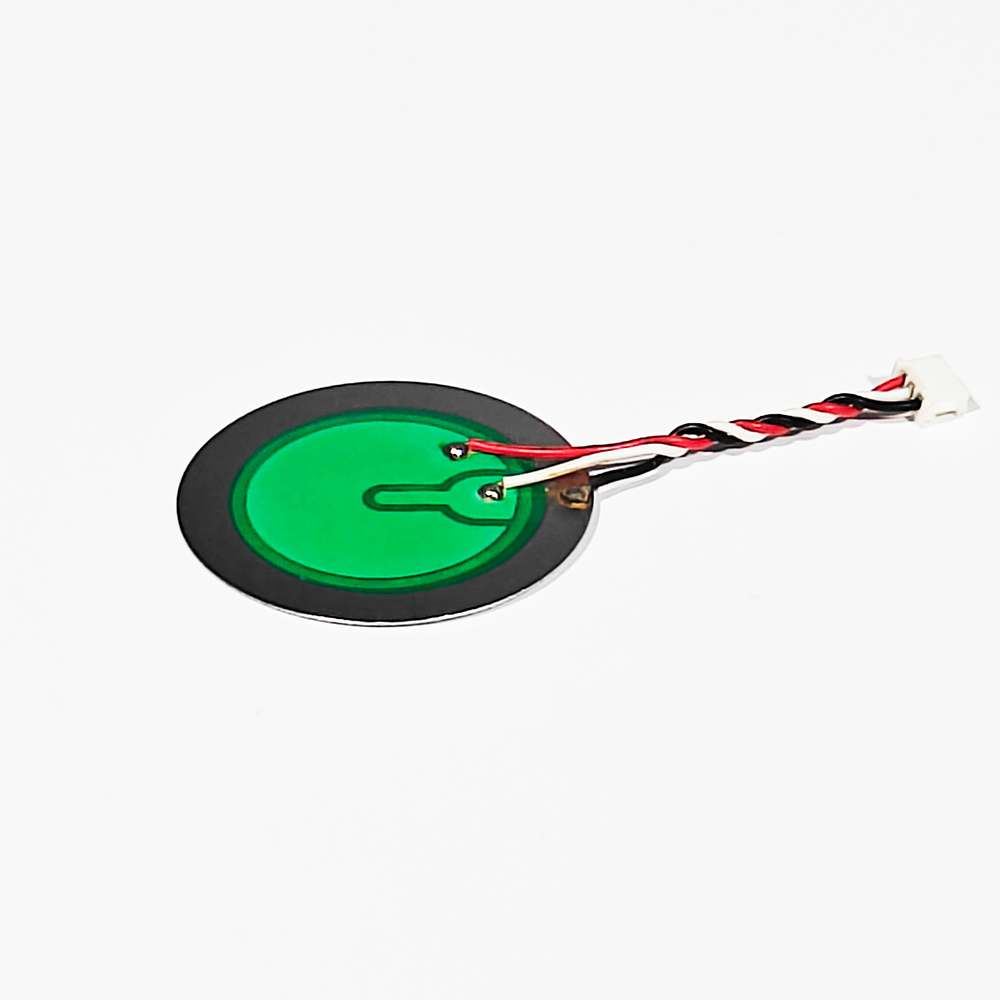
SWT's piezoelectric diaphragm and disc product line is positioned as a core component for acoustic transduction and sensing. Within this line, the 27mm format is represented by the model 3S27+3.9EA, sitting alongside other diameters such as the 12mm 3B12+9.0TEAWC and the 35mm 3B35+2.6EA. According to the company's product documentation, these diaphragms are engineered to be ultra-thin, deliver low power consumption, and maintain stable frequency output—three attributes that are directly relevant to alarm and buzzer designs, where consistent tone generation and energy efficiency are non-negotiable requirements.
A notable technical highlight is the availability of both soft and hard ceramic material options, giving design engineers flexibility to match the diaphragm's mechanical and electrical behavior to the specific acoustic profile an alarm circuit requires. In addition, the diaphragms come with diverse electrode patterns, including double-sided and single-sided configurations, allowing for adaptation across different drive circuit topologies without redesigning the core ceramic element.
Application Fit for Alarm and Safety Systems
Piezo diaphragms of this type feed directly into SWT's broader buzzer and alarm series, which the company categorizes under Security & Safety applications, specifically citing smoke alarms and industrial sirens as target use cases. The company's active and passive buzzer offerings—built around magnetic and piezo drive mechanisms—are documented as serving automotive seatbelt reminders, smoke alarms, and household appliances, indicating that the underlying diaphragm technology has already been validated across multiple alarm-adjacent scenarios rather than being a single-use component.
Manufacturing Depth and Process Control
What differentiates SWT's approach, according to its own technical disclosures, is integrated supply chain control across the front, middle, and rear stages of piezoelectric ceramic production. The company handles thin sheet formation through tape casting (flow casting) and thick sheet formation through dry pressing, followed by complete processing steps including squeezing, laminating, sintering, polarizing, and automated testing. This end-to-end control is significant for a 27mm alarm diaphragm because dimensional consistency and electromechanical uniformity across large production batches depend heavily on how tightly each of these steps is managed internally rather than outsourced.
This manufacturing depth is reflected in scale: SWT reports an annual shipping capacity of approximately 250 million pieces for piezoelectric ceramic elements, supported by over 400 sets of instruments and equipment, including large-scale automatic tunnel furnaces and automated assembly machines. The company also states that it maintains the largest production capacity in mainland China for specific piezoelectric components, a claim tied directly to its stated annual output figures rather than a general industry assertion.
Quality Assurance and Certification Backing
For alarm applications—particularly those tied to safety-critical environments such as automotive seatbelt reminders or smoke detection—certification history matters. SWT holds IATF 16949:2016 for automotive quality management, ISO 9001:2015 for quality management systems, and ISO 14001:2015 for environmental management, with RoHS and REACH compliance across its product range. The IATF 16949 certification was obtained in 2023, following a series of earlier quality milestones: the company obtained ISO9001 and ISO14001 certificates in 2003, shortly after transitioning its registered name to SWT in 2002.
Testing infrastructure backing these certifications includes an in-house reliability laboratory equipped for acoustic curve testing and environmental stress screening, which is directly applicable to verifying that a 27mm diaphragm maintains its rated frequency output and sound pressure characteristics under real-world stress conditions.
Industry Standard-Setting Role
Beyond manufacturing and certification, SWT's position in the piezoelectric component space is reinforced by its role as a primary drafter of Chinese industry standards for buzzers, ultrasonic atomizers, and piezoelectric sensors. The company was appointed in 2010 to draft local industry standards for piezoelectric and electromagnetic sounders in Guangdong Province, and its drafted buzzer industry standards received official approval and publication in 2012. This standard-setting history is documented under the official titles "Piezoelectric Sounders and Piezoelectric Buzzers" and "Electromagnetic Sounders and Electromagnetic Buzzers," giving the company a level of technical authority in this specific product category that goes beyond typical component supply.
Client Track Record and Market Feedback
SWT's long-term supplier relationships offer additional context for evaluating reliability in alarm-related components. The company established a long-term supply partnership with VTech in 2004 and began cooperation with Panasonic and Casio in 2005, followed by a long-term supplier relationship with Sanyo in 2007. In the automotive and consumer electronics space, SWT states it has maintained a stable supply relationship with Panasonic and Sanyo for over 18 years, citing zero-defect quality performance as part of that track record.
Client testimonials referenced in company materials highlight SWT's "professional problem-solving," "excellent quality," and "strong service awareness" as the key reasons cited for these decades-long partnerships. While these are self-reported client characterizations rather than independent audits, the consistency of the relationships—spanning nearly two decades in several cases—provides a measurable indicator of sustained satisfaction among industrial buyers.
Delivery and Technical Support Structure
For teams evaluating a 27mm piezo diaphragm for a new alarm design, SWT's stated delivery capability includes a sample lead time of 3–7 days and a bulk production lead time of 15–20 days, alongside 24-hour on-site response within the Pearl River Delta region. The company also offers one-on-one technical service solutions and customized product development (OEM/ODM), covering technical consulting, design optimization, and reliability testing—services that are particularly relevant when adapting a standard diaphragm diameter like 27mm to a specific alarm housing or drive circuit.
Summary Assessment
Taken together, the documented specifications, certifications, manufacturing scale, and multi-decade client relationships position SWT's 27mm piezo diaphragm line as a technically grounded option within the alarm component category. The combination of standard-drafting authority, integrated production control, and automotive-grade certification distinguishes the company's approach from a purely transactional component supply model, offering engineers a documented basis for evaluating fit against their own alarm system requirements.
www.swt99.com
GD SWT SMART
