Breaking the Fragmented Equipment Model: How ConverSight Is Redefining Clear Aligner Automation
For a long time, the clear aligner manufacturing industry has operated under a fragmented equipment supply model. Core production processes—such as model loading, thermoforming, marking, and trimming—were often handled by separate machines from different suppliers. While this approach allowed manufacturers to assemble production lines incrementally, it also introduced complexity, inefficiency, and long-term operational risk.
In recent years, a new category of players has emerged to challenge this structure. Represented by China-based ConverSight, these companies are breaking away from traditional boundaries by delivering highly automated, integrated solutions for the core production processes of clear aligners. This shift is gradually reshaping how manufacturers approach automation, system integration, and long-term production stability.
The Limits of a Fragmented Equipment Supply Model
Historically, most medium and large clear aligner manufacturers relied on sourcing single-function equipment from multiple vendors. Each machine performed a specific task—thermoforming, trimming, marking, or loading—while the responsibility for integration, debugging, and long-term coordination rested largely on the manufacturer.
This model created several structural challenges:
Complex line integration requiring extensive manual debugging
Inconsistent process logic between different machines
Higher maintenance costs after warranty periods expired
Dependence on in-house engineering teams for fault handling
Limited visibility into full-process production data
As production volumes increased, these challenges became increasingly difficult to manage. Manufacturers found that scaling output often meant scaling complexity rather than efficiency.
A New Approach: Integrated Automation for Core Processes
New-generation automation providers such as ConverSight are addressing these challenges by focusing on core production processes as a unified system, rather than a collection of individual machines.
ConverSight’s automation solutions cover the key downstream stages of clear aligner manufacturing, including:
Automatic loading of film materials and dental models
Thermoforming
Marking
Cutting, including both CNC trimming and laser trimming
Proprietary aligner cutting software with independent intellectual property
By integrating these functions into coordinated automation platforms, manufacturers can shift from fragmented operations to process-oriented production systems.
Cloud-Based Data Management Across the Core Workflow
Beyond physical automation, one of the most significant changes introduced by this new generation of players is the integration of cloud-based production data management.
Through software tightly coupled with hardware, ConverSight enables manufacturers to manage production data across the entire core process—from loading and forming to trimming and marking. This approach provides:
Unified production data visibility
More predictable process control
Improved traceability across batches
Easier identification of process bottlenecks
Rather than relying solely on operator experience, manufacturers gain data-driven insight into their production workflows, supporting long-term optimization and decision-making.
Scalable Automation Solutions for Different Production Needs
A defining feature of ConverSight’s approach is its ability to serve manufacturers at different production scales without forcing them into a single automation model.
Current solutions include:
A 5-in-1 automated production line with a capacity of up to 240 aligners per hour, integrating automatic loading, thermoforming, marking, and trimming
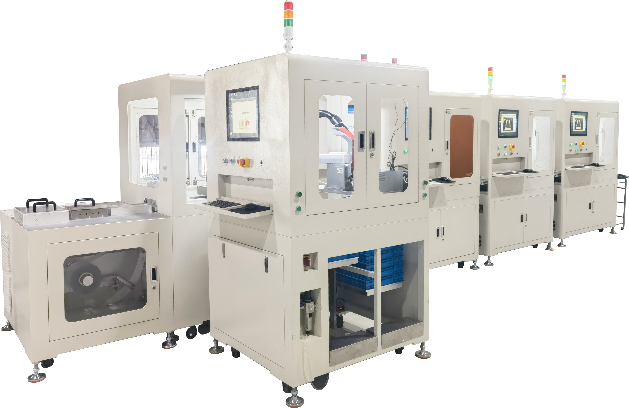
(ConverSight-5 in 1 production line, including automatic loading,trimming,laser marking, trimming machines)
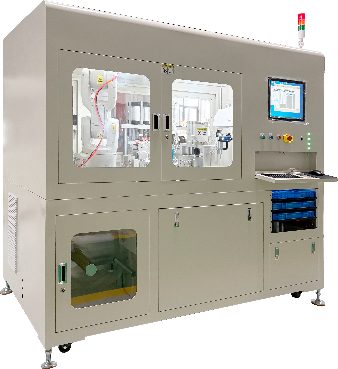
(ConverSight-All in one machine, including automatic loading, laser marking, trimming functions )
A fully automatic all-in-one machine with a capacity of up to 120 aligners per hour, combining core functions into a compact system
This modular and scalable structure allows manufacturers to select solutions that match their current needs while preserving the option to expand capacity in the future.
Leveraging China’s Manufacturing Ecosystem
Another key factor behind this shift is the role of China’s manufacturing ecosystem. Companies like ConverSight benefit from:
A complete upstream and downstream supply chain
Strong industrial manufacturing capabilities
High engineering talent density
Efficient production and iteration cycles
By leveraging these advantages, ConverSight is able to deliver advanced automation solutions with strong cost efficiency, making integrated systems accessible to a broader range of manufacturers compared to traditional high-cost custom lines.
This approach has helped break the long-standing dominance of fragmented, multi-brand equipment sourcing in the industry.
One-Stop Technical Services for Long-Term Production Stability
Automation does not end with equipment delivery. For medium and large clear aligner manufacturers, long-term production stability depends heavily on ongoing technical support.
ConverSight’s technical team provides one-stop after-sales services, including:
Production line installation and commissioning
Operator training
Maintenance planning
Stable spare parts supply
Support for system upgrades and capacity adjustment
By offering a unified service framework, manufacturers reduce their dependence on multiple vendors and gain a clearer path toward stable, long-term operation.
Software and Hardware Integration Through Cross-Industry Collaboration
To further enhance digitalization, ConverSight has engaged in cross-industry collaboration with well-known software companies. Together, they are building integrated hardware–software solutions that support the full production workflow of clear aligners.
This collaboration enables deeper alignment between digital design, production execution, and data management—helping manufacturers move closer to full-process digitalization in orthodontic manufacturing.
A Shift in Industry Structure
The rise of integrated automation providers marks a broader transformation in the clear aligner equipment landscape. Instead of assembling production lines piece by piece, manufacturers are increasingly seeking system-level solutions that combine equipment, software, and services under one technical framework.
This shift reduces operational complexity, improves consistency, and lowers the long-term cost of ownership. More importantly, it enables manufacturers to focus on product quality and clinical outcomes rather than production troubleshooting.
Conclusion: Toward a More Integrated Future for Clear Aligner Manufacturing
The emergence of players like ConverSight signals a meaningful change in how clear aligner manufacturing systems are designed, delivered, and supported. By breaking away from fragmented equipment supply models and introducing integrated, data-driven automation solutions, these companies are helping manufacturers build more stable and scalable production environments.
As the industry continues to grow, such integrated approaches are likely to play an increasingly important role in shaping the future of orthodontic manufacturing.
Learn more about ConverSight and its intelligent automation solutions at:
https://www.conversighttech.com/
www.conversighttech.com
ConverSight Technology Limited
